
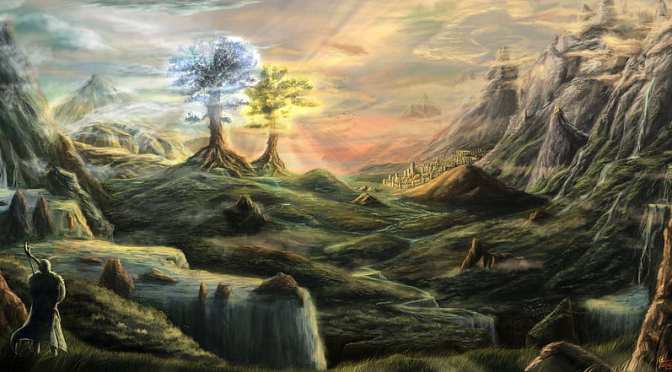
“The Silmarillion” by J.R.R. Tolkien is a monumental and ambitious work that delves deep into the mythological history of Middle-earth. Published posthumously in 1977, the book serves as a comprehensive collection of Tolkien’s mythopoeic writings, weaving together tales of creation, heroic deeds, tragic battles, and the rise and fall of empires. With its rich tapestry of stories, “The Silmarillion” provides invaluable insight into the vast and intricate universe that serves as the backdrop to Tolkien’s renowned “The Lord of the Rings” trilogy.
Summary:
“The Silmarillion” is divided into several distinct parts, each presenting different epochs and pivotal events in the history of Arda, the fictional world Tolkien created. It begins with the creation myth, the Ainulindalë, where the omnipotent deity Eru Ilúvatar brings forth the Ainur, powerful angelic beings who shape the fabric of the world through their music. This creation myth sets the stage for the subsequent stories and themes explored throughout the book.
The narrative then moves into the Valaquenta, which provides a detailed account of the Valar, the gods and goddesses who descended to Arda to shape its lands and guide its inhabitants. Tolkien introduces the reader to characters such as Manwë, Ulmo, and Melkor, the rebellious Vala whose actions drive much of the conflict in the later tales.
The core section of the book, the Quenta Silmarillion, focuses on the tumultuous events of the First Age of Middle-earth. It introduces the Elves, their rise to power, and their struggles against Melkor, who becomes known as Morgoth, the Dark Enemy. These stories follow prominent Elven characters such as Fëanor and his sons, as they embark on quests to retrieve the stolen Silmarils, three precious gems crafted by Fëanor that become the center of much of the tale’s conflicts.
The Quenta Silmarillion also encompasses the epic wars and tragedies that shaped Middle-earth, including the battles between the Elves and Morgoth, the rise and fall of Númenor, the creation of the Rings of Power, and the Last Alliance of Elves and Men against Sauron, setting the stage for the events of “The Lord of the Rings.”
Key Themes:
1. Creation and Mythology: “The Silmarillion” explores the mythical origins of Tolkien’s world, delving into themes of creation, divine intervention, and the shaping of destiny. The book portrays a rich mythology that emphasizes the importance of individual choices and the consequences they bring.
2. The Struggle Between Good and Evil: Central to the narrative is the ongoing conflict between the forces of light and the forces of darkness. Tolkien weaves a complex tapestry of moral choices, illustrating how corruption and greed can lead to catastrophic consequences, while acts of selflessness and sacrifice can bring about redemption.
3. Mortality and Immortality: The dichotomy between the immortal Elves and the mortal Men is a recurring theme in the book. Tolkien explores the blessings and burdens associated with both states, as well as the longing for immortality and the acceptance of mortality.
4. Heroism and Tragic Fate: “The Silmarillion” showcases the tragic nature of heroism. Characters such as Fëanor and Túrin Turambar exemplify this, as their heroic deeds are often intertwined with personal flaws and the heavy weight of destiny, resulting in dire consequences for themselves and those around them.
Conclusion:
“The Silmarillion” is a monumental work of fantasy literature that expands upon the rich tapestry of Middle-earth, exploring the mythology and history of Tolkien’s captivating universe. Through its intricate narratives and deep themes, the book offers readers a profound understanding of the origins, struggles, and triumphs of the various races and characters that populate Middle-earth. With its grand scope and masterful storytelling, “The Silmarillion” stands as a testament to Tolkien’s unparalleled imagination and serves as an indispensable companion to his beloved “The Lord of the Rings” Trilogy
 3 Pillars Podcast
The creation myth in this book is one of my favorites
LikeLiked by 1 person
It’s so beautifully written. Incredibly imaginative and strung together
LikeLike