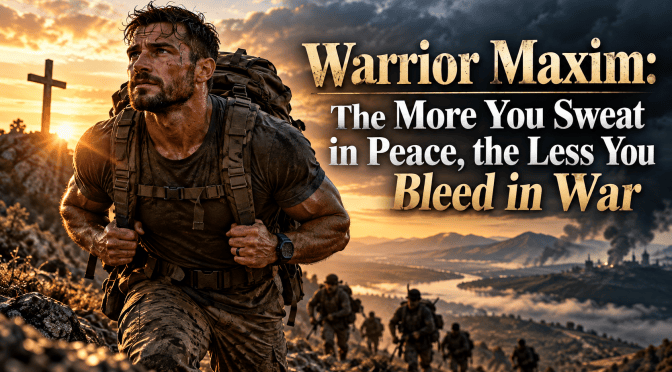
Chaos Is Real, But So Is Courage

There are moments when I look at the world and feel the weight of just how chaotic it has become. The noise is constant. The pressure is relentless. Everywhere I turn, there seems to be another reason for people to feel anxious, divided, angry, exhausted, or uncertain about what comes next. Chaos shows up in our culture, in our homes, in our schedules, in our thinking, and sometimes in the private places of our hearts that no one else can see.

What I have come to realize is that chaos is not only dangerous because of what it does around us. It is dangerous because of what it tries to do within us. It wants to pull us out of alignment. It wants to steal our peace, cloud our judgment, weaken our discipline, and convince us that disorder is simply the new normal. Left unchecked, chaos does not just surround a person. It slowly starts shaping a person.

That is why I believe this conversation matters so much. We cannot afford to be passive in a chaotic world. We cannot afford to drift through life hoping peace will somehow appear on its own. If we want stability, we have to become intentional. If we want clarity, we have to pursue it. If we want to conquer chaos, we have to stop treating it like an unavoidable master and start confronting it like an enemy that can be resisted.

And that is the good news I keep coming back to: chaos is real, but so is courage. Chaos is powerful, but it is not absolute. It may test us, but it does not have to define us. We can face it. We can push back against it. We can build lives that are not ruled by fear, confusion, or constant emotional turmoil. We can become the kind of people who stand steady in a world that often feels unstable.

The Danger of Chaos in the World

One of the greatest dangers of chaos is how subtle it can be at first. It does not always begin with some obvious collapse. Sometimes it begins with disorder in our thinking. Sometimes it enters through distraction, hurry, emotional overload, or the endless stream of messages competing for our attention. Sometimes it looks like losing our focus little by little until one day we realize we are living reactively instead of intentionally.

That is what makes chaos so deceptive. It often starts small, but it rarely stays small.

When chaos takes hold in the world, people begin to lose their bearings. Truth becomes harder to hold onto. Emotions become easier to manipulate. Conviction gets replaced by impulse. Thoughtfulness gets replaced by outrage. Instead of responding wisely, people react emotionally. Instead of building what is good, they spend their energy surviving what is urgent. Chaos thrives when people no longer know where to stand, what to believe, or how to remain grounded under pressure.

I think that is why chaos feels so exhausting. It is not just about disorder in the external sense. It is about the breakdown of inner steadiness. It creates environments where confusion becomes common, peace becomes rare, and people begin to feel like they are always one step away from being overwhelmed.

And when that happens long enough, chaos starts telling a lie: that instability is just the way life is, and there is nothing we can do about it.

I do not accept that lie.

Yes, the world can be chaotic. Yes, life can be unpredictable. Yes, there are seasons when things feel messy, heavy, and difficult to manage. But I refuse to believe that chaos gets to dictate the terms of how I live. I refuse to believe that because disorder exists around me, I must surrender to disorder within me.

What Chaos Does to the Human Heart

Chaos has a way of working from the outside in. It begins with pressure around us, but if we are not careful, it starts producing pressure within us. That is when it becomes especially dangerous.

I have seen how chaos can distort perspective. It can make small problems feel enormous and important things feel impossible. It can make a person feel trapped in survival mode, where every day becomes about getting through instead of growing through. When that happens, hope begins to shrink. Patience gets thinner. Relationships become harder to nurture. Focus becomes harder to hold. Joy becomes harder to access.

Chaos also attacks identity. It whispers things like, “You are too late. You are too overwhelmed. You are too far behind. You are not strong enough for this.” It tries to turn hard circumstances into personal conclusions. Instead of seeing chaos as something I am experiencing, I begin to feel like chaos is who I am.

That is one of the most destructive things it does.

When people internalize chaos, they stop fighting it. They start organizing their lives around instability. They lose confidence in their ability to change, lead, heal, rebuild, or move forward. They begin to expect confusion, so they stop pursuing clarity. They begin to expect stress, so they stop protecting peace. They begin to expect failure, so they stop acting with courage.

That is why this battle matters. Chaos is never just about what is happening around me. It is also about what I am allowing to settle within me.

Why Chaos Grows When We Stop Leading Ourselves

I have learned that chaos tends to grow wherever self-leadership is absent. If I do not lead my thoughts, my thoughts will lead me. If I do not lead my time, distractions will consume it. If I do not lead my habits, comfort will shape them. If I do not lead my responses, emotion will do it for me.

That is not freedom. That is drift.

And drift is dangerous because it often feels harmless while it is happening. A little more procrastination. A little less reflection. A little more compromise. A little less discipline. A little more mental clutter. A little less intentional living. None of it seems significant in the moment, but over time it creates an environment where chaos can multiply.

I do not believe peace is maintained accidentally. I think peace requires stewardship. It requires awareness. It requires me to notice when my inner world is becoming disordered and to respond before that disorder becomes my new pattern.

For me, that means asking honest questions. What have I been tolerating that I should be confronting? What habits are feeding confusion instead of clarity? Where have I become passive? What am I giving too much power over my mind and emotions? What am I consuming that is making me weaker, more reactive, or more cynical?

Those questions matter because they expose where chaos is gaining unnecessary ground.

There comes a point when I have to stop blaming the noise around me for everything happening within me. Not because external pressures are not real, but because I still have responsibility for how I respond. I may not control every storm, but I do have influence over how I prepare, how I think, how I act, and what I build in the middle of it.

What I Can Do to Stave Off Chaos in Life

One of the most practical things I have learned is that chaos is best resisted with intentional order. Not perfection. Not rigid control. Order.

For me, that begins with grounding. In a chaotic world, I need stable foundations. I need convictions that do not change with every headline, every opinion, or every emotional swing. I need to know what matters most. I need to remember who I am, what I value, and what kind of person I want to be when life gets hard.

Without that grounding, everything starts to feel equally urgent. And when everything feels urgent, clarity disappears.

I also need structure. Simple structure has saved me more times than dramatic breakthroughs ever have. A healthy routine. A clear priority list. Time set aside for reflection. Time protected for rest. A plan for the day. Limits on what gets my attention. These things may seem small, but they create space for peace to live.

Chaos loves clutter, both mental and practical. That is why I have found it so important to simplify. I do not need to respond to everything. I do not need to carry what is not mine to carry. I do not need to say yes to every request, opportunity, or expectation. One of the strongest ways I stave off chaos is by refusing to overcrowd my life.

Another way I resist chaos is by guarding my mind. What I repeatedly consume will eventually shape the way I think. If I fill my mind with fear, outrage, comparison, and negativity, I should not be surprised when my internal world feels unstable. But when I feed my mind with truth, wisdom, discipline, encouragement, and perspective, I strengthen my ability to stay calm under pressure.

I also believe boundaries are essential. Not every voice deserves influence. Not every conflict deserves access. Not every demand deserves a response. Boundaries are not a sign of weakness. They are often a sign of maturity. They help preserve the peace, focus, and strength required to live on purpose.

How to Conquer Chaos Instead of Just Managing It

There is a difference between managing chaos and conquering it. Managing chaos often means learning how to function while staying internally overwhelmed. Conquering chaos means refusing to let it dominate the condition of my soul.

The first step is to pause.

Chaos wants immediate reaction. It wants panic, impulse, and emotional overcorrection. But I have found that some of the most powerful moments in life begin with a pause. A pause helps me breathe. A pause helps me think. A pause creates room for perspective before emotion takes over.

The second step is to identify what is real. I ask myself: What is actually happening here? What am I assuming? What is fact, and what is fear? What is within my control, and what is outside of it? These questions matter because chaos becomes larger when everything feels tangled together. Clarity begins when I separate what is true from what is merely loud.

The third step is to take the next right action. Not every answer comes at once. Not every problem gets solved overnight. But progress often begins the moment I stop staring at the entire mountain and take one faithful step forward. Chaos wants to overwhelm me with the size of everything. Courage reminds me that I only need to obey the next clear step.

The fourth step is consistency. This is where real victory is built. Not in one emotional breakthrough, but in repeated acts of disciplined living. Waking up and choosing peace again. Choosing focus again. Choosing truth again. Choosing responsibility again. Choosing faith over fear again. That is how inner strength is formed.

The fifth step is perspective. I have to remember that a chaotic moment is not the same as a chaotic identity. A hard season is not the same as a hopeless future. Just because things feel unstable today does not mean they will remain that way forever. Perspective helps me stop giving temporary storms permanent authority.

What Strength Really Looks Like in Chaotic Times

I think many people imagine strength as intensity, force, or emotional hardness. But the older I get, the more I believe true strength often looks quieter than that.

Strength is remaining calm when panic would be easier.

Strength is telling the truth when it would be more convenient to avoid it.

Strength is staying disciplined when nobody else sees the effort.

Strength is protecting peace when the world rewards outrage.

Strength is refusing to let fear become the loudest voice in the room.

Strength is showing compassion without losing conviction.

Strength is holding onto hope without denying reality.

In chaotic times, I do not want to become a louder version of the disorder around me. I want to become a steadier presence in the middle of it. I want to be someone who carries clarity into confusion, courage into fear, and peace into environments that feel unstable.

That kind of strength does not happen by accident. It is cultivated. It is practiced. It is tested. And in many cases, it is forged precisely in the fires we would rather avoid.

Turning Chaos Into a Catalyst for Growth

As difficult as chaos can be, I also believe it can reveal things that comfort never will. It can expose weak foundations. It can show me where I have been distracted. It can uncover unhealthy attachments, misplaced priorities, and habits that have been weakening me. It can force me to ask whether I am truly living with intention or simply reacting to whatever comes next.

That kind of exposure can be uncomfortable, but it can also be deeply valuable.

Some of the most important growth in life begins when I stop asking only, “How do I escape this?” and start asking, “What can this teach me?” That question changes everything. It shifts me from victimhood to responsibility. It moves me from panic to reflection. It helps me see that while I may not have chosen every challenge I face, I can still choose how I will be shaped by it.

Chaos can make me bitter, or it can make me wiser.

It can harden me, or it can deepen me.

It can scatter me, or it can teach me to become more anchored.

That does not mean I glorify hardship. It means I refuse to waste it.

Chaos Is Real, but So Is Courage

At the end of the day, I do not believe the answer to chaos is pretending it does not exist. The answer is to face it honestly without giving it the final word.

Yes, chaos is real.

But so is courage.

So is peace.

So is clarity.

So is discipline.

So is purpose.

So is hope.

And when I build my life around those things, chaos loses some of its power. It may still knock at the door, but it does not have to move in. It may still test me, but it does not have to own me. It may still challenge my peace, but it does not have to conquer my spirit.

That is the posture I want to live with. Not denial. Not passivity. Not fear. Courage.

Courage to slow down when the world says hurry.

Courage to think clearly when emotions run high.

Courage to protect peace when conflict feels contagious.

Courage to lead myself when passivity would be easier.

Courage to keep building order, truth, and purpose in a world that often celebrates confusion.

Chaos may be part of life, but it does not have to become the ruler of my life. I can meet it with steadiness. I can answer it with discipline. I can confront it with faith, wisdom, and action. I can refuse to let disorder define who I am.

Because chaos is real, but so is courage.

And courage, when practiced daily, has a way of changing everything.

Complacency Kills: Why Spiritual Readiness Still Matters

There are some phrases that hit harder than others because they carry the weight of lived reality. “Complacency kills” is one of them.

It is simple. Direct. Uncomfortable. And absolutely necessary.

As I continue this discussion on Warrior Culture, I keep coming back to the fact that this phrase is not just something that belongs in military language, tactical spaces, or high-risk environments. It belongs in everyday life. It belongs in the home, in the church, in leadership, in fatherhood, in marriage, in discipleship, and in the hidden places of the heart. It belongs anywhere there is something worth protecting and anywhere there is a battle worth fighting.

That is one of the reasons Jamie Walden’s Omega Dynamics resonates so deeply with me. It forces the reader to confront a truth that many people would rather avoid: we are not living in neutral territory. We are living in contested ground. There is a real conflict between good and evil, truth and deception, courage and cowardice, conviction and compromise. And in that kind of environment, complacency is never harmless.

It is deadly.

When I say “complacency kills,” I am not only talking about physical danger, although that absolutely matters. I am also talking about spiritual drift, moral laziness, emotional passivity, and the slow erosion of conviction. I am talking about what happens when a man, a woman, a family, or a community stops watching, stops praying, stops training, stops discerning, and starts assuming that because nothing has gone wrong yet, nothing ever will.

That assumption is where many defeats begin.

What Complacency Really Is

Complacency is not rest. It is not peace. It is not confidence.

Complacency is a false sense of security that convinces us vigilance is no longer necessary.

It whispers that the standards can relax. It says the threat is exaggerated. It tells us that one more compromise is no big deal, one more distraction is harmless, one more neglected responsibility can wait until tomorrow. It persuades us to lower our guard without realizing that our guard was the very thing preserving us.

That is why complacency is so dangerous. It rarely announces itself as collapse. It usually presents itself as comfort.

That is what makes it lethal.

In a physical battle, complacency gets people hurt because they stop paying attention to the terrain, the patterns, the weaknesses, the indicators, and the possibility of contact. In the spiritual and moral battle, it works the same way. People stop paying attention to what is forming them. They stop paying attention to what they are tolerating. They stop paying attention to the condition of their own soul. They stop paying attention to the forces trying to shape their mind, their family, their values, and their priorities.

And because the decline is gradual, it feels manageable right up until the consequences become undeniable.

Warrior Culture Is Not About Aggression

This matters to say clearly: Warrior Culture is not about becoming harsh, loud, reactive, or obsessed with conflict.

True warrior culture is not reckless. It is disciplined.

It is not insecure bravado. It is governed strength.

It is not domination. It is responsibility.

A warrior, in the highest sense, is someone who understands that strength exists for service, not vanity. It exists to protect, to endure, to stand firm, to bear weight, to confront evil when necessary, and to remain faithful under pressure. Warrior culture, at its best, forms people who are hard to deceive, hard to intimidate, hard to corrupt, and hard to move off truth.

That is why this conversation matters so much in our time. We live in an age that often confuses softness with virtue and passivity with peace. But peace is not the absence of conflict. Peace is the presence of order under righteous authority. And order does not sustain itself automatically. It must be guarded. It must be cultivated. It must be defended.

That takes people who are awake.

That takes people who are willing to carry responsibility rather than avoid it.

That takes people who understand that good does not advance merely because it is good. Good must be chosen, practiced, embodied, defended, and handed down.

The Modern Battlefield Between Good and Evil

When I talk about the modern battlefield, I am not reducing everything to politics or headlines. The battlefield is bigger than that.

The battlefield is the human heart.

It is the mind that is being discipled either by truth or by lies.

It is the family that is either being strengthened or slowly fractured.

It is the church that is either becoming bold and clear or vague and compromised.

It is the culture that is either honoring what is good, true, and beautiful or celebrating confusion in the name of progress.

It is the individual who must decide every day whether he will drift with the current or stand against it.

Good and evil are not abstract categories. They become visible in what we normalize, what we reward, what we excuse, what we ignore, and what we are willing to fight for.

That is why complacency is so dangerous on this battlefield. Evil rarely needs our active cooperation at first. It often only needs our silence. Our distraction. Our hesitation. Our desire to stay comfortable. Our willingness to say, “It’s probably fine,” when deep down we know it is not fine.

The modern battlefield is full of subtle invasions. Deception rarely begins as open rebellion. It begins as a slight shift. A little compromise. A little exhaustion. A little indifference. A little moral fog. A little less prayer. A little less conviction. A little less courage.

And then one day we look around and realize we have tolerated what we once would have confronted.

That is what complacency does.

How Complacency Shows Up in Real Life

Complacency is not always dramatic. In fact, it is usually mundane.

It shows up when I know I need to strengthen an area of my life but keep postponing it because today feels easier than discipline.

It shows up when I consume far more than I create, react more than I think, and drift more than I lead.

It shows up when comfort becomes my highest value and conviction becomes negotiable.

It shows up when I stop training my mind, stop guarding my habits, stop evaluating my influences, and stop taking responsibility for my role.

It shows up when I assume somebody else will carry the burden.

Somebody else will speak the truth.
Somebody else will protect the children.
Somebody else will preserve the standard.
Somebody else will confront the lie.
Somebody else will lead with courage.

That mindset is dangerous because the battlefield does not pause while we outsource responsibility.

I believe one of the clearest signs of complacency in our time is the normalization of passivity. We have gotten used to being spectators. We watch. We scroll. We comment. We analyze. But many people never step into responsibility. They never take ownership of their fitness, their home, their habits, their discipleship, their relationships, or their calling.

But Warrior Culture does not allow me to live like a spectator.

It reminds me that I have a post to keep.

How I Apply “Complacency Kills” on the Modern Battlefield

For me, applying this concept begins with remembering that vigilance is a lifestyle.

It means I do not wait for crisis to start becoming serious.

I want to be the kind of person who is already building strength before the pressure hits. That applies spiritually, mentally, emotionally, and physically.

Spiritually, it means staying rooted. Prayer cannot be an emergency-only discipline. Scripture cannot be an occasional reference point. Discernment cannot be outsourced. If I want to stand in a corrupt and confused age, then I have to remain anchored in truth before I am tested by error.

Mentally, it means guarding what shapes my thinking. Not every voice deserves influence. Not every trend deserves attention. Not every popular idea deserves a place in my worldview. Complacency in the mind leads to confusion in judgment. And confusion in judgment eventually produces compromise in action.

Physically, it means respecting the connection between stewardship and readiness. The body matters. Endurance matters. capacity matters. Discipline matters. I do not want to build a life where my spirit is willing but my habits are weak. Readiness requires training.

Relationally, it means leading and loving on purpose. Homes do not become strong accidentally. Marriages do not stay healthy on autopilot. Children are not formed by vague intentions. If complacency is allowed into the home, it will eventually affect everything. So I want to be deliberate with my words, my presence, my protection, and my example.

Morally, it means refusing to make peace with what I know is corrosive. The modern battlefield is full of seductive compromises disguised as normal life. But not everything common is harmless. Not everything convenient is wise. Not everything culturally approved is good.

“Complacency kills” reminds me to stay alert where it would be easiest to go numb.

Vigilance Is Not Fear

This is where I want to keep the discussion positive and grounded.

Vigilance is not paranoia.

Readiness is not anxiety.

Warrior culture, rightly understood, does not produce frantic people. It produces sober people. Clear people. Steady people. Faithful people.

There is a big difference between living in fear and living awake.

Fear reacts from panic.
Vigilance responds from clarity.

Fear imagines threats everywhere.
Vigilance recognizes that danger is real but refuses to be ruled by it.

Fear collapses inward.
Vigilance stands outward.

In my own life, I have found that disciplined readiness actually produces more peace, not less. When I know I am paying attention, strengthening weak areas, staying grounded in truth, and taking responsibility for what has been entrusted to me, there is a deep steadiness that comes with that. Not because I control everything, but because I am no longer pretending the battle is not there.

Denial is fragile.
Preparedness is stabilizing.

That is one of the greatest gifts of this mindset. “Complacency kills” does not have to leave us discouraged. It can wake us up. It can call us higher. It can move us out of passivity and into purposeful living.

What This Means for Good and Evil

If the battlefield between good and evil is real, then every day matters.

Small choices matter.
Private disciplines matter.
Quiet obedience matters.
Integrity matters.
Courage matters.
Attention matters.

Good is strengthened when ordinary people choose faithfulness over drift.

Evil gains ground when people decide that alertness is exhausting, conviction is inconvenient, and courage can be delayed until later.

But later is often where regret lives.

So I want to live now with intention. I want to confront the subtle things before they become strongholds. I want to identify the vulnerabilities before they become failures. I want to build the habits now that will sustain faithfulness later.

That is the challenge in front of all of us.

Stay awake.
Stay grounded.
Stay disciplined.
Stay watchful.
Stay humble enough to examine yourself.
Stay strong enough to act when action is needed.
Stay close enough to truth that lies become easier to recognize.

Final Thoughts

When I think about Warrior Culture through the lens of Omega Dynamics and the phrase “complacency kills,” I do not walk away feeling hopeless. I walk away feeling summoned.

Summoned to greater clarity.
Summoned to greater discipline.
Summoned to greater courage.
Summoned to greater responsibility.

This is not a call to live angry. It is a call to live awake.

It is a call to reject the slow death of passivity and to embrace the kind of life that is spiritually alert, morally anchored, and ready to stand. The modern battlefield between good and evil is not won by people who are casually drifting through life. It is faced by men and women who understand that vigilance is love in action, discipline is stewardship, and courage is still required.

Complacency kills.

So I do not want to coast.
I do not want to sleep through the hour.
I do not want to hand off my responsibility to someone else.
I do not want comfort to become my commander.

I want to be found faithful at my post.

And I believe that is the heart of Warrior Culture: not obsession with battle for its own sake, but readiness to stand for what is good, true, and worth defending when the battle comes.

Get in the Fight: A Christian Response to the Battle Between Good and Evil

There are certain phrases that do more than inspire me. They confront me. They strip away excuses, expose passivity, and call me to account. One of those phrases is this: Get in the fight.

The more I reflect on warrior culture, the more I realize this idea is not about performance, posturing, or pretending to be tougher than I really am. It is not about trying to look fearless. It is not about cultivating an image. It is about accepting responsibility in a world where too many people are content to watch from a distance while truth is eroded, convictions are softened, families are weakened, and evil advances through apathy as much as open rebellion.

For me, Get in the fight is not a call to aggression. It is a call to engagement. It is a refusal to remain passive on the battlefield between good and evil. It is a challenge to step fully into the responsibilities God has placed in front of me and to stop pretending that neutrality is a harmless option.

The modern battlefield is not always loud. It is not always dramatic. Most of the time, it does not look the way people imagine warfare to look. It shows up in the mind, in the home, in the heart, in habits, in convictions, in conversations, and in the hidden places where compromise quietly grows if it is left unchallenged. That is where the fight often begins. And that is why I believe getting in the fight matters now more than ever.

Warrior Culture Is Not About Ego

When I talk about warrior culture, I want to be careful. That phrase can be misunderstood. Some hear it and immediately think of anger, dominance, intensity, or a need to prove something. But that is not the kind of strength I am talking about.

Real warrior culture, at least the kind I believe is worth pursuing, is not rooted in ego. It is rooted in stewardship. It is the understanding that strength is not given to me so I can glorify myself. It is given to me so I can be faithful under pressure, protect what matters, stand when others fold, and remain anchored when the world around me becomes unstable.

A warrior spirit without humility becomes dangerous. A warrior mentality without love becomes destructive. A warrior posture without obedience becomes pride wearing religious language. So when I say I want to embrace warrior culture, I do not mean I want to become hard in heart or harsh with people. I mean I want to become the kind of man who can be trusted with conviction, trusted with responsibility, and trusted in moments that require courage.

That is a very different thing.

The Real Battlefield Is Closer Than We Think

One of the biggest mistakes I can make is assuming the battle between good and evil is always somewhere “out there,” somewhere far removed from my daily life. It is easy to think of spiritual warfare only in large, dramatic, cultural terms. But the truth is, the battle is often much closer and much more personal.

It is there when I am tempted to compromise truth for comfort.

It is there when I know I should speak up but choose silence because silence feels safer.

It is there when distraction becomes easier than discipline.

It is there when anger feels stronger than patience, when cynicism feels smarter than hope, and when passivity disguises itself as peace.

The modern battlefield is the fight for the soul in an age of endless noise. It is the fight for moral clarity in a culture of confusion. It is the fight for faithfulness in a world that rewards compromise. It is the fight for presence in a distracted generation. It is the fight for integrity when shortcuts are always available.

This is why “Get in the fight” hits me so deeply. It reminds me that I do not have the luxury of sleepwalking through life and still expecting to stand firm when it matters most. If I am passive in ordinary moments, I should not be surprised if I become weak in critical ones.

Getting in the Fight Starts With Me

Before I talk about confronting darkness in the culture, I have to confront what is happening in my own heart. That may be the hardest battlefield of all, because it is easier to point outward than inward.

If I am serious about getting in the fight, then I have to ask uncomfortable questions. Where have I become lazy? Where have I made room for compromise? Where have I stopped resisting things that I know are shaping me in the wrong direction? Where am I tolerating attitudes, appetites, or habits that weaken my soul?

Sometimes the most important fight is not public. It is deeply private.

It is the fight to reject pride before it hardens into self-righteousness.

It is the fight to reject lust before it distorts the heart.

It is the fight to reject bitterness before it poisons relationships.

It is the fight to reject spiritual drift before I wake up one day wondering how I became so distant from God.

There is no strength in pretending I do not have these battles. Strength comes in facing them honestly. Strength comes in repentance. Strength comes in discipline. Strength comes in obedience when obedience is costly, inconvenient, and unseen.

To get in the fight, I have to stop excusing what God is calling me to confront.

The Fight for the Mind, the Home, and the Heart

I believe one of the clearest ways to apply this concept today is to recognize where the pressure is greatest.

The mind is under attack constantly. Every day there are competing voices trying to shape what I believe, what I fear, what I value, and what I will tolerate. If I do not intentionally guard my mind, someone else will happily fill it with confusion, outrage, compromise, and distraction. Getting in the fight means I become more deliberate about what forms my thinking. It means I choose truth over noise and wisdom over emotional manipulation.

The home is under attack too. Families rarely fall apart overnight. More often, they erode through neglect, disconnection, spiritual passivity, and the slow replacement of presence with distraction. If I say I care about good, then I need to care deeply about what kind of atmosphere I am building in my home. Peace does not happen by accident. Leadership does not happen by accident. Intentional love does not happen by accident. If my home matters, then I need to get in the fight there first.

The heart is another battlefield. A person can look composed on the outside while losing ground internally. That is why I have to pay attention to what is growing inside me. Am I becoming more grateful or more entitled? More tender or more calloused? More courageous or more avoidant? More faithful or more compromised? These are not small questions. They reveal whether I am actually engaged in the fight or merely talking about it.

Why Passivity Is More Dangerous Than It Looks

One of the strongest convictions I have about this subject is that passivity is often far more destructive than people realize.

Passivity rarely feels evil in the moment. It feels mild. It feels reasonable. It feels safe. It sounds like, “This is not the right time.” It sounds like, “I do not want to make things worse.” It sounds like, “Someone else will handle it.” It sounds like, “I am just staying out of it.”

But there are moments when staying out of it is not wisdom. It is surrender.

There are moments when silence is not peace. It is permission.

There are moments when disengagement is not maturity. It is fear dressed up as restraint.

That does not mean I need to react to everything. It does not mean I should become impulsive, argumentative, or intense about every disagreement. But it does mean I need discernment. I need to know when love requires gentleness and when love requires courage. I need to know when patience is wise and when delay becomes disobedience. I need to know when peacemaking is righteous and when conflict avoidance is simply cowardice.

To get in the fight is to reject the lie that passive people are automatically peaceful people. Sometimes the most loving thing I can do is stand up, speak clearly, and refuse to yield ground that should not be surrendered.

Getting in the Fight Without Losing My Soul

This matters to me because I do not want to become so focused on fighting darkness that I begin to reflect it. It is possible to be loud about truth and still be deeply un-Christlike in spirit. It is possible to claim conviction while operating in pride, contempt, and anger. It is possible to be technically right while being morally out of step with the One I claim to follow.

That is why getting in the fight must never mean abandoning love, humility, or self-control.

I want to fight in a way that honors God.

I want to resist evil without becoming consumed by rage.

I want to confront lies without losing compassion for people.

I want to stand firm without becoming self-righteous.

I want to be bold without becoming reckless.

I want my strength to be governed, not wild. I want my convictions to be anchored, not performative. I want my courage to come from faith, not ego. That kind of posture is not weakness. It is disciplined strength. And in many ways, disciplined strength is far harder than emotional intensity.

Anyone can react. Not everyone can remain steady.

What It Looks Like in Everyday Life

The phrase “Get in the fight” becomes meaningful only when I apply it in the ordinary places of life.

It means I get serious about prayer instead of treating it like an afterthought.

It means I tell the truth even when a softer lie would make things easier.

It means I take responsibility for my spiritual health instead of blaming circumstances for my drift.

It means I choose discipline over comfort when comfort is making me weak.

It means I become more intentional with my words, because speech can either strengthen what is good or contribute to what is broken.

It means I show up for my family, not just physically but emotionally and spiritually.

It means I encourage others who are weary instead of assuming someone else will do it.

It means I resist the temptation to scroll endlessly, numb out, or escape into convenience when I know God is calling me to presence and purpose.

It means I become harder to seduce with comfort and easier to move with conviction.

None of that sounds glamorous. But that is exactly the point. The real fight is often won or lost in quiet acts of obedience. It is won in consistency. It is won in hidden faithfulness. It is won when I choose what is right before anyone else sees the outcome.

A Positive Vision of the Fight

I wanted this discussion to remain positive because I do not believe this call is ultimately about fear. It is about purpose.

I am not getting in the fight because I am obsessed with darkness. I am getting in the fight because I believe goodness is worth defending. Truth is worth protecting. Faithfulness is worth pursuing. Families are worth strengthening. Souls are worth contending for. Courage is worth cultivating.

That is a fundamentally hopeful vision.

I am not called merely to resist what is evil. I am called to build what is good.

I am called to build a life marked by integrity.

I am called to build a home marked by peace.

I am called to build habits that make me stronger, not weaker.

I am called to build a witness that is courageous, grounded, and loving.

I am called to build endurance so that when harder days come, I am not meeting resistance as a stranger.

To me, that is one of the most powerful dimensions of this phrase. Getting in the fight is not only about opposition. It is also about construction. It is about becoming, through grace and obedience, the kind of person who can carry responsibility well in a time of confusion.

My Response to the Battle Between Good and Evil

When I bring all of this together, this is where I land: I do not want to be a spectator in the generation I have been called to serve.

I do not want to spend my life analyzing the fight from a safe distance. I do not want to admire courage while avoiding the places where courage is required of me. I do not want to use wisdom as a disguise for passivity. I do not want to call compromise “balance” just because compromise is easier to live with than conviction.

I want to get in the fight.

I want to get in the fight first in my own heart, where honesty, repentance, and discipline have to do their work.

I want to get in the fight in my home, where leadership, love, truth, and peace have to be cultivated intentionally.

I want to get in the fight in my mind, where clarity has to be guarded and deception has to be rejected.

I want to get in the fight in my daily life, where my choices either reinforce what is good or quietly weaken it.

And I want to do all of that with humility, courage, and hope.

Because that is the kind of fight worth entering.

Conclusion

The battle between good and evil is not an abstract idea to me. It is a present reality. It touches every part of life. The question is not whether the battle exists. The question is whether I will engage it faithfully.

For me, Get in the fight means I stop drifting.

It means I stop outsourcing courage.

It means I stop confusing comfort with peace and passivity with wisdom.

It means I accept that faithfulness requires action.

It means I choose to stand where God has called me to stand, even when that standing costs me something.

And it means I do not fight with pride, fear, or rage, but with conviction, humility, discipline, and love.

That is the kind of warrior culture I believe we desperately need.

Not a culture of noise, but a culture of responsibility.

Not a culture of ego, but a culture of strength under control.

Not a culture of posturing, but a culture of faithfulness.

So my challenge to myself is simple: wake up, stand firm, and get in the fight.

Because good is worth defending.

Because truth is worth living.

Because faithfulness is worth the cost.

And because this is not the time to watch from the sidelines.


FAQs

What does “Get in the Fight” mean in a Christian context?

It means refusing spiritual passivity and choosing to engage the daily battle for truth, holiness, courage, faithfulness, and love. It is about responsibility, not aggression.

Is warrior culture compatible with Christian character?

Yes, when it is shaped by humility, obedience, self-control, and love. Biblical strength is never about ego or domination. It is about faithfulness under pressure.

What is the modern battlefield between good and evil?

It is the everyday struggle for the mind, heart, home, character, convictions, and habits. This battlefield often appears in subtle forms such as compromise, confusion, distraction, fear, and apathy.

How can I apply “Get in the Fight” in everyday life?

Start with prayer, discipline, truthfulness, repentance, intentional leadership in your home, and the courage to confront compromise in your own life before trying to confront it in others.

How can I stand for good without becoming harsh or self-righteous?

By keeping your strength submitted to God, your convictions anchored in truth, and your posture governed by humility, love, and self-control.

Suck It Up, Stand Your Post: A Kingdom Warrior’s Guide to Modern Pressure

There’s a phrase I’ve heard my whole life that can land two very different ways depending on who says it, when they say it, and what they mean by it.

“Suck it up.”

For some people, it’s the language of grit—the push that keeps you moving when you’d rather quit. For others, it’s the language of neglect—a way to silence pain, dismiss weakness, and pretend the heart doesn’t matter.

As I continue this conversation on warrior culture—especially through the lens of Jamie Walden’s Omega Dynamics—I want to redeem that phrase and put it in its proper place. Because I believe there is a Kingdom way to “suck it up” that doesn’t make me numb, harsh, or spiritually brittle. And I believe that kind of endurance is urgently needed on the modern battlefield between good and evil.

Not because we’re trying to become cold. But because we’re trying to become faithful.

Not because we’re trying to ignore pain. But because we refuse to let pain become our master.

Not because we’re trying to “man up” in some shallow, performative way. But because there is a real war for the mind, for the home, for the conscience, for the next generation—and warriors who fold under pressure don’t hold the line very long.

So when I say “suck it up,” I’m not talking about stuffing emotions until they explode sideways. I’m talking about choosing faithful endurance in the face of real pressure. I’m talking about standing my post when my feelings are loud and my strength is low. I’m talking about doing the next right thing—again and again—until obedience becomes instinct.

Why I’m Talking About This at All

I’m continuing this warrior culture discussion because I’ve watched something happen in the modern world: discomfort has been treated like an emergency, and discipline has been treated like oppression.

We’ve been trained to believe that if something is hard, it must be wrong.

If it costs something, it must be unhealthy.

If it requires endurance, it must be toxic.

But the truth is, a life without endurance isn’t a life of freedom—it’s a life of fragility.

And fragility is expensive. It costs your relationships. It costs your calling. It costs your clarity. It costs your witness. It costs your peace.

I’ve also seen the opposite extreme: a counterfeit toughness that pretends pain doesn’t exist, that mocks weakness, that refuses help, and that uses “suck it up” as a weapon to shut down the human soul.

That’s not Kingdom warrior culture either.

So I’m aiming for something better: strength with humility, endurance with honesty, discipline with love, grit with a clean heart.

That kind of warrior doesn’t just survive the battle. That kind of warrior becomes an anchor for others in the storm.

Defining “Suck It Up” the Kingdom Way

Let me put this plainly.

“Suck it up,” in a redeemed, Kingdom sense, means I refuse to let discomfort, fear, temptation, or fatigue drive the decisions of my life.

It means I don’t obey my mood. I obey my mission.

It means I don’t ask, “What do I feel like doing?” first. I ask, “What does faithfulness require?” first.

It means when I’m pressured, I don’t reach for the fastest relief. I reach for the truest response.

It means I accept that sometimes the right path feels heavy—and I walk it anyway.

But I need to say what it does not mean:

It does not mean I pretend I’m okay when I’m not.

It does not mean I suppress pain until it becomes anger or addiction.

It does not mean I isolate and call it strength.

It does not mean I refuse counsel and call it independence.

It does not mean I stay wounded forever and call it “just how I am.”

The Kingdom way doesn’t produce robots. It produces resilient disciples.

So I’m not trying to become less human. I’m trying to become more whole.

Omega Dynamics and the Warrior-Class Mindset

One of the reasons Omega Dynamics resonates with people is because it refuses to treat life as neutral. It frames the believer’s life as something more than passive church attendance. It calls for readiness, discipline, sobriety, and spiritual clarity—what Walden describes in terms of a “warrior class” of Christians.

When I read that concept, I don’t hear elitism. I hear responsibility.

Because the world doesn’t need more spectators who can comment on the battle. The world needs more believers who can stand steady inside it.

In a war, you can’t always choose the conditions. But you can choose whether you’re prepared. You can choose whether you’re disciplined. You can choose whether you’ll become the kind of person who holds the line when others panic.

And that’s where “suck it up” becomes more than a phrase. It becomes a mindset of readiness:

I won’t be ruled by comfort.

I won’t be manipulated by fear.

I won’t be seduced by distraction.

I won’t be owned by my appetites.

I won’t abandon my post because it got hard.

That’s not bravado. That’s maturity.

The Modern Battlefield Between Good and Evil Isn’t Always Loud

When people think of “good versus evil,” they often imagine dramatic scenes—headline-level evil, obvious villains, obvious crises. But the battle we face most days is quieter than that.

The modern battlefield is often fought in:

My thought life—what I believe, what I rehearse, what I allow to live rent-free in my mind.

My attention—what gets my time, my focus, my imagination.

My appetite—what I reach for when I’m stressed or lonely.

My integrity—what I do when nobody’s watching.

My speech—whether I bless or curse with my words.

My home—whether peace or chaos is being cultivated.

My relationships—whether I’m present, honest, faithful.

In that sense, the battle is not only external. It’s internal. And one of the enemy’s most effective strategies is not to make me commit some dramatic sin—it’s to make me drift.

A little compromise here.

A little distraction there.

A little bitterness tucked away.

A little fatigue that becomes permission.

A little resentment that becomes identity.

And suddenly I’m not fighting. I’m coping.

Pressure Is Real—But Pressure Doesn’t Have to Win

Here’s something I’ve had to learn the hard way: pressure itself is not the problem. What I do with pressure is the problem.

Pressure can form me or fracture me.

Pressure can refine me or reveal what’s already weak.

Pressure can push me toward God—or pressure can become the excuse I use to abandon Him.

This is why the phrase “suck it up” matters on a spiritual battlefield.

Because there will be pressure:

You will get tired.

You will feel misunderstood.

You will want to quit.

You will feel tempted.

You will feel discouraged.

You will be disappointed by people.

You may even be disappointed with yourself.

And in those moments, the enemy whispers the same kinds of lies:

“You’re tired. Just check out.”

“You’re stressed. You deserve this.”

“You’re hurt. Become cynical.”

“You’re alone. Compromise.”

“You’ve failed before. Why try again?”

The war is often fought at the level of narrative—the story I tell myself about why I’m allowed to drift.

So when I say “suck it up,” I mean I refuse to let those lies become my permission slip.

I refuse to let pressure rewrite my convictions.

What “Suck It Up” Looks Like When I Apply It Correctly

Let me make this practical. Here’s what it looks like when I try to live this out as a Kingdom-minded warrior.

1) I Choose the Next Right Step, Not the Perfect Feeling

There are days I don’t feel spiritual. There are days I don’t feel strong. There are days my emotions are loud and my mind is foggy.

On those days, I don’t need a dramatic spiritual breakthrough as much as I need the next right step.

Pray anyway.

Open the Word anyway.

Tell the truth anyway.

Apologize anyway.

Show up anyway.

Get to work anyway.

Love my family anyway.

Do the responsible thing anyway.

The enemy loves to make me think I need to “feel it” before I live it. But discipline teaches me that obedience often comes before emotion catches up.

2) I Refuse to Negotiate With Temptation

Temptation always wants a conversation.

It wants me to sit down with it, analyze it, justify it, rationalize it, delay resistance until my willpower is exhausted.

Warrior culture trains decisiveness.

So my goal is not to “manage temptation.” My goal is to shut it down early.

When the thought comes, I don’t feed it.

When the opportunity appears, I don’t flirt with it.

When the old habit calls, I don’t take the call.

“Suck it up” means I accept the discomfort of saying no now so I don’t suffer the consequences of saying yes later.

3) I Endure Without Becoming Harsh

This is huge for me.

Endurance can accidentally harden a person. You can become so “tough” that you lose tenderness. You can become so “disciplined” that you become impatient with weakness—your own and everyone else’s.

But Kingdom warrior culture doesn’t make me cruel. It makes me steady.

So I’m learning to endure without losing compassion.

To stand firm without becoming arrogant.

To hold the line without needing to demean anyone to do it.

To correct without humiliating.

To speak truth without enjoying the fight.

If my endurance makes me less loving, then I’m not becoming strong—I’m becoming damaged.

4) I Stay Faithful in Private

Private faithfulness is the real battlefield.

It’s easy to talk about discipline publicly.

It’s harder to practice it quietly:

The integrity choice when nobody will know.

The faithful habit when nobody will clap.

The consistent prayer life when nobody sees it.

The decision to turn off what I shouldn’t watch.

The decision to stop scrolling and start listening.

The choice to guard my eyes and mind.

The choice to keep my word.

“Suck it up” means I don’t need an audience to obey.

5) I Let Responsibility Be a Form of Love

Warrior culture respects responsibility. It doesn’t treat it like a curse; it treats it like an honor.

I’ve started viewing responsibility as love in action.

Providing is love.

Protecting is love.

Staying emotionally present is love.

Leading my household toward peace is love.

Refusing to lash out when I’m stressed is love.

Enduring hardship without making everyone else pay for my mood is love.

Sucking it up, in that sense, is not about ego. It’s about servanthood.

The Line I Refuse to Cross: “Suck It Up” Cannot Mean “Shut Down”

Now let me speak to the danger.

Some people “suck it up” by shutting down emotionally. They stop feeling. They stop talking. They stop processing. They stop letting anyone in. They confuse silence with strength.

But what happens when you don’t process pain?

It doesn’t disappear. It relocates.

It leaks out as anger.

It leaks out as addiction.

It leaks out as workaholism.

It leaks out as cynicism.

It leaks out as control.

It leaks out as numbness.

That’s not warrior culture—that’s a slow internal collapse with a tough exterior.

The Kingdom way includes honesty.

I can be strong and still grieve.

I can be disciplined and still ask for help.

I can endure and still confess, “Lord, this is heavy.”

Even Christ, in His humanity, expressed sorrow and anguish. Strength is not the absence of emotion. Strength is choosing obedience while emotions are present.

So if “suck it up” becomes a way to avoid healing, it turns toxic.

My goal is not denial. My goal is endurance with God.

The Warrior Tools That Help Me Live This Out

If I’m going to apply this on the modern battlefield, I need practices—not just ideas.

Here are tools I return to again and again.

Prayer as a Briefing

I don’t always pray long prayers. But I try to pray honest ones.

“Lord, keep me faithful today.”

“Guard my mind.”

“Help me endure without becoming bitter.”

“Give me courage to do what I already know is right.”

Simple. Direct. Daily.

Scripture as a Map

Truth counters lies. And most spiritual battles begin with lies.

Lies about God.

Lies about me.

Lies about what sin will cost.

Lies about what obedience will require.

The Word anchors me when narratives start swirling.

Physical Stewardship

I’ve learned that the body and soul are connected. When I’m exhausted, I’m more tempted. When I’m undisciplined physically, I’m often undisciplined mentally.

Rest matters.

Training matters.

Routine matters.

Not as vanity—stewardship.

A warrior doesn’t despise the body. A warrior maintains it for the mission.

Accountability and Brotherhood

Every warrior needs a unit.

Isolation is where excuses thrive.

So I need people I can be real with—people who will call me higher, pray with me, and keep me honest when I start rationalizing compromise.

Guarding the Gates

What I watch shapes what I tolerate.

What I scroll shapes what I desire.

What I repeat shapes what I believe.

Warrior culture means I protect the gates of my mind and home with intentionality.

The Positive Side of “Suck It Up”: I Become Someone Others Can Rely On

Here’s the fruit of doing this the right way: faithfulness starts blessing people around me.

When I “suck it up” in a redeemed sense—meaning I endure with humility and discipline—I become more reliable.

I become steadier in crisis.

I become less reactive.

I become safer to be around.

I become more present.

I become the kind of person who can carry weight without making everyone else carry my emotional spillover.

And that is deeply needed right now.

Because many people don’t need another opinion. They need an example.

They need someone who can stand firm without becoming cruel.

Someone who can endure without becoming numb.

Someone who can suffer without becoming selfish.

Someone who can fight evil without adopting evil’s methods.

That’s Kingdom warrior culture.

A Thought-Provoking Self-Check I’m Using

This phrase forces me to ask questions I can’t dodge:

Am I calling comfort “wisdom” when it’s actually compromise?

Am I avoiding responsibility and naming it “boundaries”?

Am I enduring with God—or merely surviving without Him?

Am I becoming stronger—or just becoming harder?

What would change if I treated today like I’m on watch?

Those questions don’t condemn me. They correct me. They pull me back to center.

Conclusion: Suck It Up and Stand Your Post—With God

The modern battlefield between good and evil is not a movie scene. It’s daily life.

It’s the pressure to drift.

It’s the temptation to cope instead of conquer.

It’s the subtle invitation to compromise and call it maturity.

So my goal is not to become a harsh person with a hard face. My goal is to become a faithful person with a steady soul.

“Suck it up,” the Kingdom way, means I accept that faithfulness costs something—and I pay the cost with humility.

It means I endure the discomfort of obedience because I believe the fruit of obedience is worth it.

It means I stand my post when nobody cheers.

It means I keep my word.

I guard my gates.

I refuse the lies.

I take the next right step.

And when I’m tired, I don’t quit—I pray, I recalibrate, I lean into my brothers, and I stand again.

Because warrior culture in the Kingdom is not about being the loudest voice in the room.

It’s about being the most faithful presence in the room.

And on this battlefield, faithfulness is not weakness.

Faithfulness is warfare.

The Hunter and the Light Between Trees

The wolves began their howling at the turn of autumn—long, mournful notes that drifted through the pines and curled like smoke around the cabin walls. Caleb Rowe had lived in those mountains for twenty-seven years, and he knew the cadence of every creature that roamed them. These wolves were different.
They did not howl at the moon.
They howled at him.

The world had been tightening around his land for years—surveys, roads, the hum of distant machines replacing the old silence. But this was new. The animals had grown restless. Trees leaned in strange directions, their trunks creaking as if under a weight unseen. Even the sky seemed dimmer, somehow thinner, as though something pressed from beyond it.

Caleb sat by his hearth, sharpening his old hunting knife. Outside, the chorus began again—deep, resonant, circling the cabin like a storm. He tried to steady his breathing, but fear had a way of breathing back.

The wolves were not closer.
The world was.


He rose, stepped to the door, and opened it to the cold night. The forest greeted him with a gust of wind sharp enough to sting. His lantern flame flickered but held fast. Beyond its glow, the woods were a wall of black.

“Show yourselves,” he muttered. “If beasts you be, let me see your eyes.”

The howling stopped.

In the sudden silence, the forest seemed to kneel.

From between the trees, a faint radiance began to emerge—soft, pale, like moonlight given shape. Caleb took a step back. The light did not approach so much as unfold, as though the woods themselves parted to reveal a presence that had been there all along.

A figure stepped forth—tall, not ghostly but real, robed in a quiet luminescence. No menace emanated from it. Only calm. Only warmth. Only… truth.

Caleb’s instincts—shaped by decades of solitude, storms, and the stern lessons of the wild—told him to raise his rifle.
His heart—shaped by faith—told him to kneel.

He did neither.

“Stay back,” he whispered, voice trembling despite himself.

The figure’s reply was not spoken; it arrived inside his mind like a memory long forgotten:

“Fear not. The wolves are not your enemy. The world presses upon you not to break you, but to bring you forth.”

Caleb blinked hard, breath frosting the air. He felt a tug deep behind his ribs—a recognition so profound it startled him.

“You’re not… one of them,” he said, gesturing vaguely toward the dark woods.

“I am what the wolves remember.”

The wolves, as if in response, began to form a circle around the clearing—silent now, not snarling, heads bowed. Their golden eyes reflected the radiance, not in fear, but in reverence.

Caleb swallowed.
“And why come to me?”

The figure lifted a hand, and light rippled outward like a sunrise caught in slow motion.
In that glow he saw himself—not the rugged hunter hardened by winter and solitude, but the boy who once prayed beside his mother’s bedside; the young man who believed the woods were sacred ground; the man who had lost himself when the world rushed forward without asking his permission.

“You seek to keep the world away,” the presence said gently,
“but balance is not found by building walls. You must stand between what was and what shall be. You must become a keeper of peace, not a prisoner of change.”

Caleb sank onto the cabin’s stoop, legs weak beneath the weight of the revelation. The encroaching world—the roads, the noise, the endless push of progress—he had seen only as a threat, a thief stealing the quiet he cherished.

But the wolves… they were not a warning. They were a message.

“So what do I do?” he asked quietly.

The figure stepped closer, its light warming the cold mountain air.

“Hold your faith. Shape the change around you. Guard what is good, and guide what comes. Light does not resist the darkness—it transforms it.”

Caleb felt tears gather in the corners of his eyes. The words resonated deeper than the marrow. For the first time in years, he felt seen—not by men, not by beasts, but by something that understood the deep ache of solitude and the quiet strength of conviction.

The radiance began to fade, not diminishing, but dispersing into the forest like dew returning to the earth.

As it vanished, the wolves lifted their heads. One stepped forward—a massive silver male—and placed its paw gently on the boundary of lantern light. Then it bowed, turned, and led the others silently back into the woods.

The night grew still again.

Caleb rose slowly, breathing steady, no longer afraid.
He looked at his land—not as a shrinking island besieged by the world, but as a bridge between old and new.
The wolves had not come to drive him out.
They had come to awaken him.

He lit a fresh lantern and hung it outside the cabin door, letting it shine into the darkness.

“Alright then,” he murmured toward the quiet forest, “I’ll keep the balance. With God’s help.”

The wind answered—not with a howl, but with a warm whisper through the pines.

And for the first time in years,
Caleb Rowe slept in peace.

The Keeper in the Dawn

The sea sang softly beneath the cliffs, a hymn that rose and fell with the rhythm of eternity. For thirty years, Elias Ward had tended the lighthouse at Solace Point—a slender tower of white stone, its lantern room crowned with golden glass. To travelers lost upon the waters, it was a star made manifest.
To Elias, it was a promise kept.

Each evening, as the sun kissed the horizon, he ascended the spiral stairs and opened the brass shutters. The light within was no ordinary flame—it shimmered with a warmth that seemed to come from beyond the world itself. When it shone, the sea grew calm, and the mist parted like a curtain before a king.

And sometimes, when the dawn was clear and the world was still, Elias thought he could hear a choir in the wind.


He had not always understood what he guarded. In the early years, he believed it merely a light for ships—a noble enough purpose, yet finite. But with time came whispers—not of madness, but of peace.
They were voices gentle as the tide, speaking not in words but in remembrance, as though the sea itself carried the memory of its Creator.

He would wake in the night and feel Presence—a stillness that filled the air with meaning. It was not something that demanded to be understood, only felt: vast and kind and older than the stars. He came to realize that the light he tended did not just guide men to shore; it kept the darkness of despair at bay.

When the storms raged, and clouds devoured the sky, he would light the lamp and feel it hum with unseen power—its glow stretching out across the waves like the outstretched arm of mercy itself.


Years passed, and solitude became companionship. The gulls circled as though in prayer. The waves’ crash became applause. Even the fog, once feared, came to him like incense—soft, sweet, fragrant with mystery.
He found comfort in knowing that he was never truly alone.

Once, when the storm of the century swept in, the lamp flickered and went dark. Elias rushed to relight it, but before he could, the darkness changed. It shimmered—not with menace, but with light beneath it, as though the night itself had a heartbeat.

And within the mist, he saw a figure—not monstrous, but radiant.
It was shaped like a man and yet not; its form shimmered like sunlight on deep water.
Eyes that contained galaxies met his, and Elias felt neither fear nor awe, but belonging.

“You have done well, keeper,” said the Presence, its voice as calm as eternity.
“The light you guard is not mine—it is yours, and all who live. Keep it burning, and peace shall never leave this shore.”

And then the storm was gone.


After that night, Elias kept the lamp as before, but his heart was lighter. He knew now that he was not the last line of defense against doom, but a participant in something sacred: a covenant between light and life.

Each dawn, the first rays of sun kissed the lantern glass, and the sea turned to liquid gold. Ships that passed below would often slow, not from necessity, but reverence. Sailors spoke of the “Beacon of Solace,” saying that no vessel had ever been lost within its reach.

They said that when its light touched the waves, it was as though the heavens leaned close to watch.


When his final years approached, Elias sat by the lantern one morning and watched the horizon glow. The sky blazed with color: rose, amber, and gold entwined. He opened the old logbook and wrote:

The light must never fade,
For it is not mine alone.
It is the dawn made flesh,
The whisper of peace everlasting.

Then he closed the book, folded his hands, and smiled as the sun rose in full glory. Those who came after found the lamp burning still—brighter than ever before. The keeper was gone, but his presence lingered like warmth after a prayer.

And sometimes, when the morning fog drifts gently over Solace Point, sailors say they can see a figure walking the balcony, tending the lamp with patient grace.
They say the sea hums softly then, not in warning, but in welcome.


Epilogue

Generations later, the lighthouse still stands, its beam cutting through the dawn like the memory of heaven.
The sea remains calm, and travelers speak of dreams they have when sailing near Solace Point—dreams of light, and song, and peace without end.

And when the mist rolls in, those who listen closely swear they hear a whisper on the breeze:

“Keep the light shining.”

The Warrior Culture of the Kingdom: What “Always Faithful” Demands of Me

There are phrases that sound inspiring on a shirt, but carry weight when you try to live them on an ordinary Tuesday.

“Always Faithful” is one of those phrases for me.

It’s simple. It’s direct. It doesn’t leave much room for loopholes. And that’s exactly why it confronts me in the best way. Because if I’m honest, my default setting is not “always.” My default is “mostly.” Or “when I’m in the mood.” Or “when it’s convenient.” Or “when I feel strong.”

But “Always Faithful” calls me higher than convenience. It calls me into a kind of warrior culture that isn’t built on aggression or swagger, but on steadfast loyalty—especially when nobody is watching, when the pressure is real, and when the cost is personal.

When I talk about warrior culture, I’m not talking about a personality type. I’m talking about a posture. A way of standing in the world. A way of carrying responsibility without collapsing under it. A way of living as if good and evil are not just abstract concepts, but forces that press against the heart every day.

And in that sense, the battlefield is not only “out there.” The battlefield is also within.

This is where Jamie Walden’s “Omega Dynamics” has been useful for me as a frame—because it doesn’t treat life like a neutral stroll through history. It calls believers to wake up, to recognize the reality of spiritual conflict, and to become what he describes as a “warrior class” of Christians: grounded, disciplined, and ready for the days ahead. Not paranoid. Not theatrical. Not violent. Ready.

Ready to stay faithful.

What Warrior Culture Is—and What It Isn’t

Before I go further, I need to define what I mean, because “warrior culture” can get twisted fast.

True warrior culture is not a love affair with violence. It’s not a fetish for conflict. It’s not posturing, bullying, or trying to dominate people. That’s not strength. That’s insecurity dressed up as toughness.

Real warrior culture is ordered courage.

It is strength under authority.

It is the willingness to carry responsibility when it would be easier to walk away.

It is discipline that shows up even when the feelings don’t.

It is loyalty to mission and to people—especially when there’s no applause.

And in the Kingdom of God, warrior culture must be shaped by the character of Christ. That means humility has to sit inside strength. Love has to guide power. Truth has to outrank ego.

If my “warrior culture” makes me cruel, I’m not becoming a warrior—I’m becoming a threat.

If it makes me proud, I’m not being forged—I’m being inflated.

But if it makes me faithful—steady, sober, courageous, resilient, loving—then I’m moving in the right direction.

“Always Faithful” Is a Standard, Not a Mood

The reason “Always Faithful” hits me is because it doesn’t ask how I feel. It asks who I am.

And that’s the core of it: faithfulness is identity, not emotion.

A faithful person doesn’t wake up every day with perfect enthusiasm. A faithful person wakes up and does what is right anyway. Faithfulness is what you do when motivation is low, temptation is high, and the path is narrow.

In a spiritual sense, I think “Always Faithful” means this:

Faithful to God’s truth even when the culture calls it foolish.

Faithful to God’s ways even when shortcuts look easier.

Faithful in private before I try to be faithful in public.

Faithful when my prayers feel powerful, and faithful when my prayers feel like they bounce off the ceiling.

Faithful when my circumstances are calm, and faithful when my life is shaking.

That’s not perfection. That’s posture.

And I believe God honors posture.

Omega Dynamics and the Call to Stop Living Like a Spectator

One idea I’ve taken from “Omega Dynamics” is the insistence that believers should stop living like spectators.

There’s a difference between believing in God and being enlisted under His leadership.

There’s a difference between knowing Scripture and being formed by it.

There’s a difference between admiring courage and practicing it.

The “warrior class” concept, as I understand it, isn’t about elitism. It’s about maturity. It’s a call to become the kind of believer who doesn’t fold at the first sign of pressure. The kind of believer who can discern what’s happening in the world without becoming hysterical. The kind of believer who can stand firm, love well, and think clearly while other people panic.

That matters, because we live in an age where confusion is celebrated, distraction is constant, and compromise is marketed as compassion.

If I’m not intentional, I drift.

And drift is one of the enemy’s favorite strategies—not a dramatic fall, but a slow fade.

The Modern Battlefield Between Good and Evil

When I say “battlefield,” I’m not trying to sound dramatic. I’m describing what it feels like to live in a world where the pressure to compromise is constant.

The modern battlefield between good and evil is fought in places that don’t always look “spiritual” at first glance:

In the mind—what I allow to shape my beliefs.

In my attention—what gets my focus, my time, my imagination.

In my desires—what I chase when I’m stressed, lonely, or bored.

In my identity—who I believe I am and what I believe I’m for.

In my speech—whether my words heal or poison.

In my relationships—whether I love people with truth or use people for comfort.

In my home—whether I lead with presence or surrender the atmosphere to chaos.

Evil rarely announces itself as evil. It often shows up as a “reasonable” trade:

Trade conviction for comfort.

Trade prayer for distraction.

Trade truth for approval.

Trade courage for safety.

Trade holiness for “just this once.”

And the problem with trades is this: you rarely notice the cost until you’ve been doing it for a while.

Drift Is Not Neutral—It’s a Direction

One of the most thought-provoking realities for me is this: nobody accidentally becomes faithful. But a lot of people accidentally become compromised.

Drift doesn’t require effort. Drift requires neglect.

If I neglect prayer, I don’t become neutral—I become vulnerable.

If I neglect Scripture, I don’t become “free”—I become shaped by whatever is loudest.

If I neglect community, I don’t become independent—I become isolated, and isolation is where temptation speaks the clearest.

If I neglect repentance, I don’t become “confident”—I become hardened.

This is why “Always Faithful” feels like a battle cry. Not because I’m trying to win arguments, but because I’m trying to keep my soul alive.

Faithfulness is how I resist drift.

Applying Warrior Culture to the Real War: Staying Sane, Staying Soft, Staying Strong

If the modern battlefield is spiritual, then the weapons aren’t primarily physical. The weapons are disciplines, virtues, and decisions—repeated until they become instinct.

Here’s what applying these concepts looks like in my life.

1) I Start the Day Like I’m On Watch

Warrior culture includes an understanding of watchfulness. Someone is always on post. Someone is always guarding the gate. That mindset translates spiritually.

I cannot afford to start my day with chaos and call it “normal.”

So I treat prayer like a briefing. Not a performance—alignment.

Sometimes it’s simple: “Lord, keep me faithful today. Guard my mouth. Guard my eyes. Guard my mind. Make me courageous. Make me clean. Make me useful.”

That’s not fancy, but it’s real.

And reality is where battles are won.

2) I Treat Scripture Like a Map, Not a Decoration

If I’m not anchored in truth, I will be tossed by trends. That’s not a theory—it’s predictable.

The point of Scripture is not to make me sound smart. The point is to make me steady.

On the modern battlefield, deception is common. Half-truths are everywhere. Emotional manipulation is normal. Outrage is profitable. If I don’t know what God says, I’ll start repeating what the crowd says—and I’ll call it wisdom because it has likes.

A warrior can’t afford that.

So I return to the Word, not as a ritual, but as reinforcement. Truth has to be installed in me, not just visited.

3) I Build Rules of Engagement for My Life

Warriors don’t walk into conflict without rules of engagement. In the spiritual realm, I need boundaries, because my heart is not indestructible.

Rules of engagement sound like this:

I don’t entertain what I would hate to become.

I don’t flirt with what I pray against.

I don’t call weakness “self-care” if it’s actually self-indulgence.

I don’t excuse sin because the culture renamed it.

I don’t keep secrets that thrive in darkness.

I don’t feed anger and call it righteousness.

I don’t weaponize truth to hurt people.

I tell the truth, but I tell it with a clean heart.

If my methods contradict Christ, my mission is already compromised.

4) I Refuse the Counterfeit Warrior Spirit

There is a counterfeit warrior spirit that is loud, reactive, and addicted to conflict. It always needs an enemy. It always needs a fight. It confuses aggression for authority and sarcasm for discernment.

I’ve had to check myself here.

Because there’s a kind of “strength” that is really just unresolved anger.

There’s a kind of “boldness” that is really just pride.

There’s a kind of “discernment” that is really just suspicion.

But the warrior culture of the Kingdom is different.

It is steady.

It is patient.

It is courageous without being cruel.

It is strong enough to stay gentle.

It is bold enough to stay humble.

It can confront evil without becoming evil.

That’s not weakness. That’s mastery.

5) I Fight for Faithfulness in the Small Things

One of the most practical shifts for me has been realizing that the biggest battles are often won or lost in small decisions:

Will I tell the truth when a lie would be easier?

Will I apologize without defending myself?

Will I shut down temptation at the first knock, or invite it in for conversation?

Will I be present with my family, or disappear into screens?

Will I serve when I feel unnoticed?

Will I keep my word when it costs me?

Will I choose integrity when I could get away with compromise?

Warrior culture is forged in repetition. Faithfulness is built the same way.

Small obediences become spiritual strength.

The “Always” Part: Faithful When It’s Hard, Not Just When It’s Holy

“Always Faithful” sounds inspiring until you realize it includes days you didn’t plan for:

Days when you’re tired and irritable.

Days when temptation is loud.

Days when your prayers feel dry.

Days when people misunderstand you.

Days when doing the right thing costs you socially, financially, or emotionally.

This is where the phrase becomes more than a motto. It becomes a decision.

I cannot control everything that happens to me. But I can control whether I stay faithful in it.

Faithful doesn’t mean I never struggle. It means I don’t surrender.

Faithful doesn’t mean I never doubt. It means I bring my doubts to God instead of running from Him.

Faithful doesn’t mean I never get wounded. It means I refuse to let wounds become excuses for sin.

And this is where the modern battlefield reveals itself: the enemy loves to use fatigue as leverage. Burnout can become a doorway to compromise. Discouragement can become permission to quit.

So I have to fight for resilience—not the kind that pretends everything is fine, but the kind that keeps walking with God when life is not fine.

Every Warrior Needs a Unit

A lone-wolf mentality is not warrior culture. It’s vulnerability.

Even the strongest person becomes unstable without support.

So part of applying these concepts is building brotherhood and sisterhood—people who can speak truth, pray, challenge, encourage, and remind you who you are when your emotions get loud.

Accountability is not control. It’s protection.

And protection is love.

If I want to be “Always Faithful,” I need relationships where faithfulness is normal, not strange.

The Goal Is Not to Be Dangerous—It’s to Be Holy

This is a key point I want to keep clear.

Some people confuse “warrior” with “dangerous.” They want to feel intimidating. They want to feel feared. They want to feel like they can crush opposition.

But the goal in the Kingdom is not intimidation. The goal is transformation.

Holiness is not fragility. Holiness is power with purity.

A holy person is not controlled by impulse.

A holy person is not enslaved to addiction.

A holy person is not owned by pride.

A holy person is not manipulated by fear.

Holiness is the strength to obey God consistently.

That is warrior culture at its highest level.

A Thought-Provoking Question I Keep Asking Myself

If “Always Faithful” is the standard, I have to ask:

Where am I not faithful yet?

Not where someone else is failing. Where I am.

Where do I compromise quietly?

Where do I entertain what I should resist?

Where do I call convenience “wisdom” when it’s really avoidance?

Where do I let my emotions drive the wheel instead of letting truth drive the wheel?

Where am I more loyal to comfort than to calling?

These questions don’t exist to condemn me. They exist to calibrate me.

A warrior who refuses evaluation becomes a liability.

A believer who refuses repentance becomes brittle.

But a person who stays teachable stays dangerous in the right way: dangerous to darkness, because they won’t be owned by it.

Conclusion: “Always Faithful” Is How I Hold the Line With Hope

In the end, “Always Faithful” is not a call to become harsh. It’s a call to become steady.

It’s not a demand to become perfect. It’s a demand to stay committed.

It’s not about winning every moment. It’s about not abandoning the mission.

Warrior culture—rightly understood—forms people who can be trusted under pressure. People who don’t collapse when life gets heavy. People who don’t betray their convictions for temporary relief. People who love well, tell the truth, serve quietly, and stand firm when the wind shifts.

And that is exactly what I want to be in the modern battlefield between good and evil:

Not loud. Not performative. Not fueled by rage.

Faithful.

Always faithful.

“Without Excuse”: The Chapter That Won’t Let Me Stay Comfortable

There are chapters in Scripture that feel like a warm blanket—comforting, steady, familiar. And then there are chapters that feel like a mirror held up under bright light. Romans 1 is that kind of chapter for me.

It doesn’t let me hide behind vague spirituality. It doesn’t let me settle for “I’m doing my best.” It doesn’t let me pretend that my choices are neutral or harmless. Romans 1 presses me with a question I can’t politely sidestep: What am I doing with what I already know about God?

When I sit with the first chapter of Romans, I hear Saint Paul laying a foundation that is both sobering and strangely hopeful. Sobering, because he dismantles the many excuses human beings use to turn away from the Lord. Hopeful, because the only reason God exposes what’s broken is because He intends to heal it. Paul isn’t writing to entertain us. He’s writing to wake us up.

Romans 1 does not read like a casual devotional thought. It reads like a spiritual diagnosis. And the uncomfortable truth is this: I can recognize myself in the patterns Paul describes if I’m willing to be honest.

The Gospel Isn’t Decoration—It’s Power

Paul opens Romans with clarity about who he is and what he’s been called to do. He is not presenting a self-help strategy or a philosophical theory. He is announcing good news—news that carries power.

That’s one of the first places my excuses get challenged.

Because I can treat faith like decoration. A nice addition. A background song. Something I nod at but don’t build my life on. I can hold Christian vocabulary and still live as though I’m the final authority over my own heart.

Paul doesn’t allow that kind of split life. He speaks about the gospel as the power of God for salvation. Not just information—power. Not just inspiration—transformation. If the gospel is true, then it has claims on me. It means God is not merely a concept; He is Lord.

And if He is Lord, then I don’t get to make excuses as if my choices are private and consequence-free.

The Excuse of Ignorance: “I Didn’t Know”

One of the most common excuses people make for turning their backs on God is the claim of ignorance: “I didn’t know any better.” “No one taught me.” “How could I be expected to understand?”

Paul speaks directly to that instinct. He says that what can be known about God is plain because God has shown it. He points to creation—God’s invisible attributes made visible through what has been made. In other words, the world itself bears witness. The design, the order, the beauty, the moral awareness that tugs at the human conscience—these are not accidents.

Paul’s point is not that every person has perfect theological knowledge. His point is that we’re not starting from zero.

And that’s where the excuse starts to crumble.

Because if I’m honest, my problem is rarely a lack of information. My problem is often a lack of surrender. I can know enough to seek God and still choose not to. I can sense God’s presence and still resist Him. I can recognize that life has meaning and still live as though it doesn’t.

Ignorance can be real. But it can also be a mask I wear when I don’t want responsibility. Paul’s words push me to ask a more direct question: Am I truly unaware—or am I unwilling?

The Excuse of Disappointment: “God Didn’t Show Up for Me”

Another excuse people make is rooted in pain. “If God were real, He wouldn’t have let that happen.” “I prayed and nothing changed.” “I tried faith and it didn’t work.”

I don’t say those words lightly. Disappointment is not imaginary. Grief is not theoretical. Trauma leaves marks. And I never want to speak about suffering as if it’s simple.

But Romans 1 confronts something else: the way suffering can become permission.

There is a difference between wrestling with God in pain and using pain as an alibi to reject Him entirely. I can be wounded and still turn toward the Lord—or I can be wounded and decide that my hurt gives me the right to live however I want.

This is one of the hardest spiritual crossroads: when pain tempts me to enthrone myself. When the logic becomes, “Because I suffered, I get to decide what’s right.” That kind of reasoning feels protective. It feels like control. But it can also become a door into deeper darkness.

Paul is not dismissing pain. He’s exposing the danger of turning pain into a permanent excuse for unbelief, bitterness, or rebellion.

The Excuse of Self-Approval: “I’m a Good Person”

This is a popular one, and it can sound so reasonable: “I’m a good person. I’m kind. I’m not hurting anyone. Surely that counts for something.”

There’s a subtle trap here. When I say “good,” I often mean “better than someone else.” I compare myself downward to find comfort upward.

Paul doesn’t let me do that. Romans is not primarily about grading on a curve. It’s about God’s holiness and humanity’s need.

Being “nice” is not the same as being righteous. Being socially acceptable is not the same as being spiritually aligned. And the heart can be full of pride while the hands look polite.

The excuse of self-approval keeps me from repentance because it convinces me I don’t need it. It tells me that the standard is my own best intentions rather than God’s truth.

But Romans 1 pushes me to realize: the issue is not whether I can point to a few respectable traits. The issue is whether I honor God as God.

The Excuse of Identity: “This Is Just Who I Am”

One of the most powerful excuses of our time is the claim that desire equals destiny. “This is just who I am.” “God made me this way.” “If I deny myself, I’m denying my true self.”

Paul’s logic cuts deeper than modern slogans. He shows how human beings exchange truth for lies, how desires can become disordered, and how the heart can worship the created instead of the Creator.

I have to be careful here, because this conversation can quickly become combative in the wrong hands. But Paul is not writing to pick fights. He is writing to show what happens when we detach identity from God.

Every one of us has desires. Every one of us has impulses. Every one of us has a will that wants control. The question isn’t whether I feel something. The question is whether my feelings are my final authority.

“This is just who I am” can be a confession of helplessness masquerading as empowerment. It can be a way of saying, “Don’t ask me to change. Don’t challenge my choices. Don’t call me higher.”

But the gospel calls every person—me included—into transformation. Grace does not flatter my bondage. Grace breaks it.

The Excuse of Culture: “Everyone’s Doing It”

Another excuse slips in quietly: normalcy. “It’s just the way things are now.” “You’re being outdated.” “Times have changed.”

Romans 1 reminds me that culture can train the conscience. What used to shock can become entertainment. What used to grieve can become a joke. What used to be resisted can become celebrated.

This is one of the most dangerous drifts because it rarely feels like rebellion. It feels like adaptation. It feels like being reasonable. But Paul describes a downward spiral that begins with a refusal to honor God and ends with confusion so deep that people not only practice what’s destructive but approve of it in others.

That last part is haunting: approval. Not just doing wrong, but clapping for it. Not just stumbling, but recruiting.

I’ve learned to watch for the moment my heart starts calling darkness “freedom” simply because it’s popular. That’s not progress. That’s a trade.

The Great Exchange: Worship Traded for Substitutes

One theme in Romans 1 hits me like a drumbeat: exchange.

Paul describes people exchanging the glory of God for images. Exchanging truth for a lie. Exchanging gratitude for entitlement. Exchanging worship for substitutes.

When I hear “idols,” I don’t only think of statues. I think of the modern things that promise me what only God can give:

Comfort that replaces obedience.
Approval that replaces integrity.
Control that replaces trust.
Pleasure that replaces peace.
Success that replaces sanctity.
Distraction that replaces prayer.

Idolatry isn’t always loud. Sometimes it’s incredibly practical. It’s whatever I run to first, whatever I fear losing most, whatever I use to define my worth, whatever I cling to when God asks me to let go.

Paul is not merely listing sins. He’s revealing a heart condition: worship disorder. When I stop worshiping God, I do not become neutral. I become a worshiper of something else.

The Phrase That Stops Me: “God Gave Them Over”

There is a line in Romans 1 that should sober any honest soul: “God gave them over.”

Paul repeats it in different forms, and it reveals something deeply unsettling: sometimes judgment looks like permission. Not God striking someone down in dramatic fashion, but God allowing a person to have what they insist on.

This is not God being petty. This is God honoring human choice. If I continually reject His truth, if I continually resist His conviction, if I continually harden myself, there can come a point where God lets me walk further into what I’ve chosen.

And what happens then?

Paul describes a life that starts to unravel from the inside out. Thinking becomes futile. The heart grows dark. Gratitude disappears. Pride increases. Desires escalate. Relationships distort. The conscience dulls.

I’ve seen versions of this in real life, and if I’m honest, I’ve seen seeds of it in myself when I refuse correction.

When I give in to my own human devices—my impulses, my pride, my appetite for control—things don’t stay stable. Sin is never satisfied with “a little.” It always demands more. It expands. It excuses itself. It rewires the mind.

Romans 1 isn’t just warning about consequences out there in society. It’s warning me about what happens in here, in the inner world of the heart.

How Excuses Multiply—and So Does the Damage

Excuses are rarely singular. They stack.

“I didn’t know” becomes “I don’t care.”
“I’m hurt” becomes “I’m entitled.”
“I’m fine” becomes “I’m superior.”
“This is who I am” becomes “Don’t you dare challenge me.”
“Everyone’s doing it” becomes “It must be right.”

And with each excuse, something precious erodes: humility. The ability to repent. The willingness to listen. The tenderness that once responded to God.

Paul describes people who not only do what is wrong but also approve it in others. That’s the social ripple. When I excuse my own sin, I often need others to validate it. Approval becomes a form of anesthesia. If enough people clap, maybe I won’t have to feel the conviction.

But conviction is mercy.

And that’s where Romans 1, surprisingly, becomes hopeful.

The Point Isn’t Shame—It’s Rescue

If Romans 1 only produced despair, it wouldn’t be from the heart of God. God does not expose for entertainment. God exposes to heal.

This chapter is not an invitation to self-righteousness. It’s an invitation to repentance.

Paul is building a case—not so we can look down on “those people,” but so every person can see the danger of drifting from God and the necessity of the gospel.

When I read Romans 1 in the right spirit, it doesn’t make me arrogant. It makes me alert. It reminds me that I am not above temptation. It reminds me that my heart needs guarding. It reminds me that faith is not passive.

Most importantly, it reminds me that the Lord is not indifferent. If He were indifferent, He would let me sleepwalk into destruction without warning. But Romans 1 is a warning label written in love.

What I Do When I Catch Myself Making Excuses

So what do I do with this chapter—practically, personally?

First, I name the excuse. Not vaguely. Specifically. I bring it into the light.

Second, I ask what I’m protecting. Excuses are usually shields. They protect my pride, my comfort, my habits, my reputation, my secret pleasures, my fear of change.

Third, I replace the excuse with a next step. Not an emotional promise, but an actual step:
I pray honestly, even if it’s simple.
I return to Scripture, not for ammunition, but for alignment.
I confess sin instead of defending it.
I seek accountability instead of isolation.
I worship even when I don’t feel like it, because worship reorders desire.
I choose obedience over impulse, even in small ways, because small obediences build spiritual strength.

I’ve learned that repentance is not humiliation. It’s relief. It’s the moment I stop carrying the exhausting burden of pretending I’m fine.

No Excuses Doesn’t Mean No Hope

Romans 1 doesn’t end with a cute slogan, and it doesn’t hand me an easy exit. It confronts me. It challenges me. It insists that God is God and I am not.

But that confrontation is not cruelty. It is clarity.

If I have been making excuses, I can stop. If I have been drifting, I can return. If I have been worshiping substitutes, I can lay them down. If I have been living by my own devices, I can submit my life again to the Lord who loves me enough to warn me.

The thought that keeps ringing in my mind when I close Romans 1 is this: excuses don’t protect me—they imprison me.

And the Lord is not calling me into a smaller life of restriction. He is calling me into a larger life of truth—where I’m not ruled by impulse, not carried by culture, not numbed by distraction, and not defended by endless justifications.

“Without excuse” is not a sentence of doom. It’s a doorway to honesty.

And honesty, before God, is where healing begins.

Traditional Femininity, Reclaimed: Why It Still Matters (and How Women Shape a Better Future)

There are certain conversations that immediately raise eyebrows the moment you name them. “Traditional femininity” is one of those phrases.

For some people, it signals beauty, grace, warmth, family, and stability—an anchor in a culture that often feels unmoored. For others, it sounds like a coded attempt to limit women, push them backward, or squeeze them into a narrow life that doesn’t fit. I understand both reactions. I really do.

But I want to be clear about what I mean when I talk about traditional femininity—because this isn’t a manifesto for shrinking women. It’s not nostalgia for a past that wasn’t equally kind to everyone. And it’s not a moral measuring stick women are meant to fear.

It’s a reclamation.

It’s the belief that feminine strengths—when understood rightly—are not “soft” in the dismissive sense. They’re not inferior to masculine strengths. They are not optional decorations on the edge of society. They are foundational forces that shape people, homes, communities, and the moral imagination of the future.

And in a time when so many are anxious, lonely, reactive, or disoriented, those forces matter more than ever.

What I Mean by “Traditional Femininity”

When I say “traditional femininity,” I’m not talking about a single aesthetic: dresses vs. jeans, makeup vs. no makeup, heels vs. sneakers. Those are expressions—sometimes meaningful, sometimes shallow, sometimes just personal taste.

I’m talking about a set of virtues and instincts that have historically been associated with womanhood across cultures and generations:

  • Nurturance: the ability to create safety and growth in others
  • Empathy: the sensitivity to what’s happening beneath the surface
  • Relational intelligence: skill in building, repairing, and sustaining connection
  • Receptivity: the strength to receive love, help, truth, and guidance without shame
  • Beauty-making: the impulse to bring order, warmth, and meaning to environments
  • Moral influence: the quiet power of shaping values through daily decisions
  • Steadiness: emotional composure that stabilizes homes and relationships

None of these traits are exclusive to women. Men can embody them too. But historically—and I’d argue, often biologically and emotionally—women tend to carry and cultivate them in distinctive ways. And society benefits when those gifts are honored rather than mocked.

Traditional femininity, in its healthiest form, isn’t fragility. It’s strength expressed through care.

The Problem: We’ve Confused “Power” with “Hardness”

One reason femininity has become so contested is because many people have internalized a narrow definition of power.

Power, in modern culture, is often framed as:

  • dominance
  • independence at all costs
  • emotional detachment
  • constant self-assertion
  • being “unbothered”

In that framework, feminine virtues can look like weaknesses. Nurturing? Too emotional. Receptivity? Too dependent. Modesty? Too repressed. Softness? Too vulnerable.

But that framework is incomplete—and frankly, it’s producing people who feel perpetually at war with themselves and each other.

Because here’s the truth: a society can be filled with “strong” individuals and still be profoundly unstable.

If everyone is trained to compete but not to bond, to argue but not to reconcile, to chase achievement but not to cultivate character—then what you get isn’t strength. You get fracture.

Traditional femininity reminds us that power isn’t only expressed in conquest. Power can be expressed in cultivation.

A woman who builds peace in a home is exercising power.
A woman who raises children with wisdom is exercising power.
A woman who turns chaos into beauty and order is exercising power.
A woman who models dignity, restraint, and kindness is exercising power.

And the irony is: these kinds of power last longer than applause.

Why the Female Role Is Essential to Society

We can talk about “women’s impact” in big, public, measurable terms—politics, business, education, healthcare, art, innovation. And women contribute massively in all those arenas.

But I also want to highlight a quieter reality that many cultures once understood more naturally:

Women often shape society from the inside out.

Not because women can’t lead publicly—but because the deepest kind of societal change begins in the formation of people. And people are formed primarily in homes, relationships, and communities long before they’re formed by institutions.

A nation’s future doesn’t begin in a parliament. It begins in nurseries, kitchens, classrooms, living rooms, churches, and conversations.

It begins in the emotional climate children grow up in.
It begins in what love looks like on an average Tuesday.
It begins in whether integrity is practiced privately, not just preached publicly.

Women, more often than not, have been the primary architects of that emotional and moral climate—whether through motherhood, mentorship, community leadership, friendship, or simply the tone they set in the spaces they occupy.

If you want a better society, you don’t start only by changing laws. You start by shaping hearts, habits, and homes.

And women—especially women who embrace the best of traditional femininity—are uniquely positioned to do that.

The Strength of Softness

Let me say something plainly: softness is not the same as weakness.

Softness can be:

  • patience when it would be easier to lash out
  • tenderness when you’ve been hurt
  • compassion when you have every reason to become cynical
  • restraint when you could easily escalate
  • grace when others “don’t deserve it”

That is not weakness. That is discipline.

One of the most powerful things a woman can do in a harsh world is refuse to become harsh herself.

Not naïvely. Not by tolerating abuse. Not by shrinking her boundaries.

But by holding onto warmth, dignity, and moral clarity in a culture that rewards outrage and sarcasm.

Softness is often the first casualty of modern life. Everyone is tired. Everyone is defensive. Everyone is suspicious. Everyone is “protecting their peace” while starving for genuine connection.

Traditional femininity offers an alternative path: the courage to stay tender without being foolish.

Femininity and the Future: What Can Women Do to Build a Better World?

So what does this look like practically? If traditional femininity matters, how does a woman actually live it in a way that contributes to a better future?

Here are a few ways that I believe are both timeless and urgently relevant.

1) Make Your Home a Place of Peace (Even If It’s Small)

A peaceful home is not created by expensive furniture or curated aesthetics. It’s created by emotional tone.

Peace looks like:

  • consistent kindness
  • thoughtful communication
  • hospitality without performance
  • structure without coldness
  • warmth without chaos

Whether a woman lives alone, with roommates, with a spouse, or with children, she can cultivate peace. And peace is contagious. People carry it outward.

In a society where anxiety is normalized, a peaceful home is a radical gift.

2) Model Dignity in How You Present Yourself

Modesty is often misunderstood. People hear “modesty” and think “shame.” But true modesty is not shame—it’s self-respect.

Traditional femininity often includes a kind of dignified presentation:

  • not because attention is evil
  • but because attention is not the goal

A woman can be beautiful, stylish, and expressive without turning herself into a billboard. She can be attractive without being available. She can be confident without performing.

That’s not repression. That’s sovereignty.

And the next generation desperately needs models of women who don’t confuse “being seen” with “being valued.”

3) Cultivate Relational Skill in an Anti-Relational Age

We live in an age of connection and disconnection at the same time: constant messaging, constant content, constant opinions—yet many people are lonely and brittle in their relationships.

Femininity, at its best, includes an ability to:

  • read emotional subtext
  • create safety for honesty
  • repair after conflict
  • turn strangers into community

This isn’t “drama.” This is emotional leadership.

A woman who learns how to communicate well, listen deeply, and resolve conflict without manipulation becomes a builder of stability—at home, at work, and in society.

4) Raise Children With Both Tenderness and Spine

If a woman becomes a mother—biologically or through mentorship—her influence is staggering.

Children don’t just need love. They need formation.

They need:

  • affection and boundaries
  • comfort and correction
  • encouragement and expectations
  • emotional safety and moral clarity

Traditional femininity contributes something priceless here: the combination of warmth and wisdom.

A mother who is emotionally present but not emotionally chaotic gives children an inner compass. She teaches them that feelings matter—but feelings are not the boss.

That’s how you raise adults who can build healthy families, businesses, communities, and friendships.

5) Support the Good in Men Without Excusing the Bad

This one matters, because the conversation about femininity often gets tangled up with the conversation about masculinity.

A healthy society needs both.

Women should not have to “mother” immature men. Women should not tolerate abuse. Women should not make excuses for irresponsibility.

But women can do something profoundly important: they can reinforce mature masculinity by valuing it.

When a woman respects integrity, reliability, protection, provision, and self-control—she encourages men to become worthy of respect. And when she refuses chaos, laziness, dishonesty, and manipulation—she creates incentives for growth.

This isn’t about controlling men. It’s about choosing wisely and rewarding virtue.

And yes, men must do their work too. But healthy partnerships create environments where both people rise.

6) Build Beauty as a Spiritual Practice

Beauty isn’t frivolous. Beauty is formative.

The way you decorate a home, cook a meal, speak to a child, choose your words, dress for the day, care for a space—these things shape the human spirit.

In a culture that is often ugly in both literal and emotional ways, beauty becomes a quiet form of resistance.

Traditional femininity often includes this beauty-making impulse:

  • creating warmth
  • creating order
  • creating celebration
  • creating meaning

A woman who brings beauty into the world—without needing applause—makes life more livable for everyone around her.

7) Lead Where You Are, Without Apology

This is important: embracing traditional femininity does not mean women cannot lead.

Women lead all the time—through influence, initiative, discernment, wisdom, and courage.

Some women will lead publicly: businesses, ministries, movements, classrooms, clinics, creative industries. Some will lead primarily in the home. Some will do both across different seasons.

The key is not whether a woman’s life looks one particular way. The key is whether she is embodying virtues that build rather than erode.

Traditional femininity, rightly understood, can fuel leadership that is both strong and humane.

A Word to Women Who Don’t Fit a Single Mold

I want to say this carefully: not every woman will express femininity the same way.

Some women are naturally gentle and quiet. Some are bold and direct. Some love motherhood. Some are not called to it. Some thrive in domestic life. Some thrive in public work. Some do both. Some do neither in the way people expect.

The value of femininity is not that it forces uniformity. The value of femininity is that it preserves the virtues that keep society human.

If you are a woman who feels like you don’t fit the stereotypical “traditional” image, you’re not disqualified from this conversation.

The point isn’t cosplay. The point is character.

Are you cultivating life?
Are you building peace?
Are you strengthening relationships?
Are you modeling dignity?
Are you shaping the future through wisdom and virtue?

If yes—then you’re living something deeply feminine and deeply valuable, even if your packaging looks different than someone else’s.

The Invitation: Reclaim What’s Good Without Fear

I believe society is starving for women who are whole.

Not women who are hardened by disappointment.
Not women who are performing empowerment while quietly exhausted.
Not women who feel forced to choose between strength and softness.

Whole women.

Women who can be tender and formidable.
Women who can nurture and hold boundaries.
Women who can forgive and still require change.
Women who can build homes and also build institutions.
Women who can love deeply without losing themselves.

Traditional femininity—again, at its best—is a pathway toward that wholeness. It’s the integration of warmth, dignity, receptivity, wisdom, and moral influence.

And if we want a better future, we need more of it—not less.

Because no matter how advanced technology becomes, no matter how fast culture shifts, the future will always depend on formed people. And formed people come from formed homes, formed relationships, formed communities.

Women have always been central to that formation.

So my encouragement is simple:

Reclaim what is good.
Reject what is demeaning.
Embrace what is life-giving.
And let your femininity—expressed with dignity and wisdom—be a stabilizing force in a world that desperately needs one.

If you want a better society, don’t underestimate the power of a woman who chooses virtue in the small things—every day.

That’s how the future changes.

Am I My Brother’s Keeper? — Why Your Spiritual, Mental & Physical Health Matters More Than You Think

When I first encountered Oswald Chambers’s devotion “Am I My Brother’s Keeper?” in My Utmost for His Highest, it stopped me in my tracks. The words leapt off the page, not as gentle encouragement but as a stark reminder of how deeply our lives are interconnected in the Body of Christ. Chambers’s core message is clear: our private walk with God affects not only us, but everyone around us — spiritually, mentally, and physically.

In the podcast episode “Am I My Brother’s Keeper?” (3 Pillars Podcast, Season 5, Ep. 9), I reflected on this and wrestled together with listeners how easily we underestimate our influence — both for good and for harm. Here, I want to go deeper, personally and practically, into what it looks like to live with integrity in all areas of life, to care for others as Scripture calls us to, and to live with purpose knowing that the Christian life is not solitary but communal.


Understanding the Call: “None of Us Lives to Himself”

Chambers begins with the sobering statement drawn from Scripture: “None of us lives to himself…” (Romans 14:7). The implication here is massive: our lives are not private — they are public in their effect.

He goes on to point out that if we allow turning away from God, even in private, it ultimately impacts those connected to us — family, friends, coworkers, neighbors, and fellow believers. The analogy used in 1 Corinthians 12 puts it plainly: we are one body. When one part suffers, the whole body suffers.

This relational emphasis is not sentimental. It’s a theological truth rooted in the very nature of the Church as Christ’s Body. What happens in your heart echoes into the lives of others.


Spiritual Disarray: The First Domino to Fall

When we drift spiritually — whether through neglecting prayer, ignoring Scripture, or allowing unresolved sin — it’s not just our momentary peace that suffers; our ability to be present, compassionate, and spiritually discerning also deteriorates.

Chambers uses vivid language: if we give way to spiritual weakness, mental slovenliness, moral obtuseness, or physical selfishness, those around us will suffer. In everyday life, this might look like:

  • Losing patience with loved ones because we haven’t grounded ourselves in prayer.
  • Avoiding challenging conversations about faith because our own trust in God feels fragile.
  • Becoming irritable, distracted, or self‑absorbed, draining others rather than encouraging them.

This is not just an abstract teaching — it’s experiential truth. When my own devotional life wanes, I notice it first in how I relate to people. I find myself more irritable with my spouse, less generous in listening, and more prone to cynicism rather than hope.

Chambers doesn’t sugarcoat this. He reminds us that a Christian’s primary calling isn’t comfort or personal holiness alone — it’s active, engaged service to God and others.

We were not left on this earth merely to be saved and sanctified. We were left here to be at work for Him. That means being spiritually alert, mentally disciplined, and physically ready to serve — not just for our own benefit, but as a testimony to others.


Physical & Mental Disarray: The Hidden Ripples of Neglect

Often, when we think about spiritual life, we think purely of prayer and Scripture. But Chambers reminds us that spiritual health cannot be separated from mental and physical health.

Consider this:

  • Physical exhaustion weakens our resilience and patience. We become short‑tempered, withdrawn, or disengaged.
  • Mental clutter — whether stress, distraction, or unresolved anxiety — makes us less able to listen, empathize, and respond with wisdom.
  • Spiritual disconnection often shows up first in silence with God, then in silence with people.

These aren’t separate categories. They feed into each other. Physically depleted people are mentally overwhelmed; mentally overwhelmed people are spiritually distant; spiritually distant people become emotionally unavailable. The net effect is predictable: relationships strain, families suffer, communities weaken.

When I look back on seasons where I allowed neglect in one area — whether sleep, solitude with God, or honest reflection — the consequences are always relational first. I became harder to love, harder to reach, harder to walk alongside.


Others Don’t Just Notice — They Depend On You

Chambers’s point that everyone around us suffers when we suffer sounds dramatic until you pause and reflect on real relationships.

Your spouse may not say a word, but they notice when you’re spiritually distracted.

Your children may not articulate it, but they feel the shift when you are emotionally absent.

Your friends — especially those struggling — feel the impact when you withdraw or lose passion.

Church communities feel it when leaders falter.

Workplaces feel it when you’re disengaged.

The apostle Paul’s metaphor of the Body of Christ is not just theological poetry — it’s diagnostic. When one part fails, the entire body’s functioning changes. It’s like a domino effect: one weakened link changes how the entire chain holds tension.

And yet, Chambers doesn’t leave us in despair. He reminds us that our sufficiency is from God. We don’t muster the strength alone — we draw it from Him.


What Happens When We Rediscover Our Calling?

Jesus’s command “You shall be witnesses to Me” (Acts 1:8) defines discipleship not as a passive state, but as active engagement of every ounce of our mental, moral, and spiritual energy.

Chambers pushes us to ask: How much of ourselves are we willing to give? Are we willing to be spiritually present, emotionally available, mentally alert?

Too often, we think of discipleship as something we “do” after we get our lives in order. But Chambers flips the logic: it’s through doing discipleship — by pouring ourselves out for Christ and for others — that our lives get ordered.

This is risky. It means:

  • Vulnerability with others.
  • Honest self‑examination.
  • Confession and reconciliation.
  • Stepping into discomfort for the sake of someone else’s growth.

But this risk is the very heart of spiritual life. Prayer isn’t just a ritual — it’s a lifeline that keeps us tethered to God so we can serve others with strength and compassion.


Learning to Be One Another’s Keeper

To truly be our brother’s keeper requires more than good intentions. It requires intentional spiritual practices that align us with God and enable us to serve others without burning out or turning selfish.

Here are some ways I’ve learned to live this out:

1. Transparency in Community

We need spaces where we can be real — not perfect — with others. Vulnerability invites others to share honestly, creating environments where we don’t just duplicate weakness but strengthen each other.

2. Accountability That Isn’t Condemning

Accountability isn’t about control — it’s about mutual care. When I share struggles with a trusted friend, we both become stronger, not weaker. And we both learn what it means to bear each other’s burdens.

3. Intentional Spiritual Rhythm

Keeping daily walk with God — prayer, Scripture, reflection — isn’t about performance. It’s about formation. When we return daily to God, we build resilience and clarity to support others effectively.

4. Emotional Investment in Others

Sometimes being my brother’s keeper simply means listening deeply, withholding judgment, and offering presence. Not solutions first — presence first.


Conclusion: You Matter — Far Beyond What You See

Chambers’s challenge is both convicting and hopeful:

If one part suffers, every part suffers with it.

Your inner life — spiritually, mentally, physically — is not private. It is joined with others in a profound web of influence. What you do in solitude affects your effectiveness in community. What you nurture in prayer, you bring to others in compassion.

Christ didn’t call us to be lone saints. He called us to be witnesses — for Him and for each other.

So I ask again, and now ask of myself:

Am I my brother’s keeper?

Yes — not perfectly, not effortlessly, and not alone — but faithfully, with God’s strength, and with love that empowers others to thrive.

Pain vs. Pleasure: Stoic Wisdom for Emotional Mastery and a Better Life

Pain and pleasure — two of the most powerful forces that shape human behavior, motivation, and experience. From the moment we wake up to the moment we fall asleep, these twin sensations play out in subtle and unmistakable ways: we instinctively move toward pleasure and recoil from pain. Yet what if the very things we chase or avoid most are exactly the elements that can either strengthen us or mislead us?

That’s what I’ve been wrestling with — not just intellectually, but in the trenches of daily life. Pain and pleasure aren’t abstract concepts for me. They show up in how I react to criticism, how I pursue goals, and even in how I try to find meaning. In Meditations, Marcus Aurelius doesn’t just recognize these feelings — he challenges us to look beneath them and rethink our instinctive responses. And that challenge, I’ve discovered, is where real personal growth begins.

In Season 5, Episode 8 of my podcast “Meditations: Pain v Pleasure,” we explored not just the philosophical distinctions, but how these emotional poles can be harnessed — or sabotaged — by the way we think and choose to respond. This blog is built on that conversation: a reflection on what pain and pleasure truly are, how they influence our lives, and most importantly, how we can master them for deeper resilience, clarity, and purpose.


What Marcus Taught Me About Pain and Pleasure

One of the most striking lines from Meditations captures the Stoic perspective on this duality:

“The soul does violence to itself when it is overpowered by pleasure or by pain.”

That phrase — overpowered by pleasure or pain — became a turning point for me. What Marcus is warning against isn’t experiencing these sensations; rather, it’s allowing them to take control of our choices, our judgments, and our peace of mind.

To be “overpowered” suggests a loss of agency — as though something external is steering us. But according to Stoic thought, that control is an illusion. Marcus and the Stoics believed that pain and pleasure themselves aren’t inherently destructive — it’s our attachment to them, and the way we let them govern us, that undermines our freedom and wisdom.

This insight was revolutionary for me because, like most people, I’ve spent much of my life reacting impulsively: wanting pleasure when it feels good, avoiding discomfort at all cost, and defining success or happiness through that lens. Yet as I began to explore Stoic philosophy more deeply — and to sit with pain instead of pushing it away — I realized something critical: pain and pleasure are not the ends; they are mirrors — reflections of how we assign meaning to experience and emotion.


The Illusion of Pleasure and the Fear of Pain

Human nature has a funny way of convincing us:

  • Pleasure is desirable and should be maximized.
  • Pain is evil and must be avoided at all costs.

This instinct isn’t unique to any era — ancient philosophers noted it just as acutely as psychologists today. Pleasure feels good; pain feels bad. Our biology drives us in these directions. But Marcus dissented from the simplistic idea that pleasure is good and pain is bad. In fact, he described the pursuit of pleasure as something that can entangle us in patterns of impulsivity, distraction, and even self‑degradation when taken to extremes.

From Marcus’ viewpoint — and from Stoicism in general — pleasure is not the ultimate good, and pain is not the ultimate evil. They are simply experiences — neutral sensations that are given meaning by our values, judgments, and interpretation.

This reframing shifted something in how I perceive my own desires: I realized that pursuing pleasure for pleasure’s sake often leads to dissatisfaction or attachment — whether that’s comfort, achievement, or validation. And ironically, it’s the fear of pain that most often prevents us from growing into deeper purpose. In essence: pleasure without meaning often disappoints, and pain without reflection often constrains us.


Pain Isn’t the Enemy — Misinterpretation Is

One of the most illuminating reflections from Marcus — and the one I return to again and again — is this idea:

“If you are distressed by anything external, the pain is not due to the thing itself, but to your estimate of it; and this you have the power to revoke at any moment.”

This truth has been transformative for me. It doesn’t mean that physical pain isn’t real — it’s clear when something hurts — but what Marcus emphasizes is the suffering that occurs when we assign extra stories, meanings, or threats to the pain. In many cases, it’s our interpretation of the pain that prolongs and magnifies it.

For example, rejection — whether personal or professional — often feels like a deep wound, not because the event itself is inherently catastrophic, but because we interpret it as a blow to our worth or identity. We add layers of self‑judgment and fear that can make the pain last far longer than the event itself. And often, we do this without even realizing we’re doing it.

What Marcus invites us to do — and what I try to practice daily — is this: acknowledge the sensation, notice the story you’re telling yourself about it, and then detach your interpretation from the raw experience. The pain becomes something to be observed, not something that controls you. That’s Stoic empowerment — not numbness, but proportion.


Pleasure in the Stoic Framework: A Balanced Joy

In contrast to how modern culture often presents pleasure — as an end in itself — Stoicism sees it differently. Pleasure is not rejected, but it is understood to be secondary to virtue and rational choice. Pleasure in moderation and in the context of a life aligned with values can be wholesome. Unchecked or impulsive pleasure, however, can lead us away from purpose and into overindulgence.

Growing up, I pursued pleasures that felt good — recognition, comfort, affection, success. And while these experiences brought temporary satisfaction, I found that they always left a restlessness beneath the surface. What Marcus shows is that true contentment is found in alignment — where our desires harmonize with reason and purpose, not where they dominate our choices. In Stoic thought, when pleasure arises, it should be acknowledged without grasping or obsession; and when pain arises, it should be acknowledged without fear or avoidance.

In this way, the Stoic ideal isn’t to eradicate pleasure, nor to embrace pain gratuitously, but to be unmoved by extremes — to be centered in rational values, not in emotional impulses. That doesn’t lessen joy — it refines it.


The Power of Choice: Redefining Our Relationship with Sensation

At the heart of Stoic practice is the notion that we have control over our judgments and reactions, even if we don’t have control over external events themselves. Marcus said it eloquently: “You have power over your mind — not outside events. Realize this, and you will find strength.”

This realization gave me a sense of ownership over my experience of pain and pleasure. It taught me that the difference between suffering and resilience isn’t the absence of pain; rather, it’s whether or not I allow the pain to dominate my narrative. Pain becomes a teacher, not a tyrant.

And pleasure? Pleasure becomes a companion, not a craving. It becomes a joyful moment to enjoy, without entanglement or fear of loss. In practice, this looks like grounding myself in gratitude rather than indulgence — savoring life’s sweetness without clinging to it as a requirement for happiness.

In essence:

  • Pain becomes something to face, not fear.
  • Pleasure becomes something to appreciate, not chase.
  • Meaning becomes something to choose, not assume.

That’s life lived with emotional mastery — not emotional suppression.


Lessons I’ve Applied (and You Can Too)

Through years of practice — and stumbling — I’ve come to appreciate a few Stoic strategies that help me navigate pain and pleasure more intentionally:

1. Observe Without Reacting Immediately

When a painful sensation arises — whether emotional or physical — I now pause and observe, without immediately interpreting it as “bad.” I notice the sensations, acknowledge them, and then watch whether my mind begins to add judgments like “This shouldn’t be happening” or “This is terrible.” Often, these additional thoughts are the true source of suffering.


2. Detach Pleasure from Identity

Pleasure becomes problematic when it becomes something we need to define our worth. Instead, I practice gratitude for pleasure without attaching it to who I am or what I deserve. This reduces fear of loss and enhances present enjoyment without fixation.


3. Reframe Pain as a Teacher

Pain becomes a prompt for reflection. What is this experience teaching me about my values, resilience, or assumptions? Pain becomes information, not punishment. That shift reframes every hardship not as an obstacle, but as a curriculum for growth.


Final Thoughts: A Balanced Life Built on Wisdom

Pain and pleasure aren’t opposites — they are partners in the human experience. One pulls us, the other repels us. Our natural instinct is to cling to pleasure and flee from pain. Stoicism offers a radically different lens: that neither should be masters of our lives. What matters more is how we interpret them, how we respond, and whether our choices reflect reason and purpose rather than impulse and fear.

Through Marcus Aurelius’s Meditations and the Stoic framework, I learned that a well‑lived life isn’t one devoid of sensation — it’s one in which pain and pleasure deepen our wisdom instead of hijacking our judgment. That realization doesn’t make life easier — pain still hurts, pleasure still delights — but it does make life richer, more authentic, and grounded in what truly matters.

So if you’re struggling with pain that feels overwhelming or chasing pleasures that feel hollow, consider this: neither experience is your enemy. What matters is your response — your interpretation — and your ability to choose what aligns with your deeper values. That’s where peace resides.

Anger vs. Desire: Mastering the Passions Through Marcus Aurelius’s Meditations

In life, few forces shape our choices more than the raw energy of emotion. When I first grappled with how much anger and desire govern my own reactions — in relationships, in ambition, even in the quiet spaces of self‑reflection — I was struck by the enduring wisdom of Marcus Aurelius’s Meditations. This work isn’t merely ancient philosophy; it’s a mirror held up to the psyche, revealing motivations that too often run unchecked.

In Season 5, Episode 7 of my podcast, “Meditations: Anger v Desire,” we dove deep into how these two powerful forces — anger and desire — influence our daily lives and long‑term fulfillment. From that conversation grew this reflection: how do I, and how can we all, harness the timeless insights of Marcus Aurelius to manage these emotions more wisely for the betterment of our lives?


Understanding Anger and Desire in Stoic Terms

At its core, Stoic philosophy teaches that emotions are not random intrusions, but judgments — interpretations we make about events, people, and ourselves. When we misunderstand our judgments, anger and desire arise not as facts, but as reactions to our perceived reality.

Marcus Aurelius writes of anger as a passion that clouds reason. He observes that anger doesn’t merely respond to an offense; it distorts perception and interrupts clear judgment. As one observer of his work put it succinctly: “For he who is excited by anger seems to turn away from reason with a certain pain and unconscious contraction…” — whereas disturbances caused by desire carry their own disordered pull.

Desire, in Stoic terms, is the yearning for something perceived as good — but one that often pulls us away from what truly matters. Marcus sets out a practice in his own book that can feel radical in a world that thrives on wanting more: “Wipe out imagination; check desire; extinguish appetite; keep the ruling faculty in its own power.”

This Stoic goal isn’t about suppressing emotion entirely (Stoics don’t advocate becoming robots), but about regaining rational control — so that you aren’t driven by impulse, but guided by purpose.


Why Anger and Desire Are So Dangerous

Anger — A Reaction That Often Hurts More Than the Cause

When I reflect on my own life, anger has shown up repeatedly during moments when I felt wronged or stalled. Results weren’t better, decisions weren’t wiser, and relationships often suffered. Marcus was keenly aware of this dynamic long before modern psychology analyzed emotional regulation:

“How much more harmful are the consequences of anger … than the circumstances that aroused them in us.”

That quote — one of many reflections on anger in Meditations — reveals a central Stoic insight: anger often creates more pain than the original trigger. When I let anger take the wheel, I amplify harm rather than resolve it. I’ve seen situations escalate not because of the original issue, but because I responded through the lens of offense and reaction rather than understanding.

The Stoics remind us that nothing external has control over us — only our perception does. Phrased another way, anger is not a necessary response — it is an unhelpful one rooted in our judgments about events. Once I started separating events from my judgment of them, I began to notice how often anger was a reflex rather than a reasoned choice.


Desire — The Pull Toward What We Think Will Fulfill Us

Desire seems, at first glance, less destructive than anger. Desire isn’t loud and eruptive; it’s seductive and persistent. It whispers: “If only you had that… then you’d be content.” Yet the Stoics knew that unexamined desire leads to disturbance just as deeply as unfettered anger.

Marcus Aurelius and the Stoic tradition didn’t reject desire wholesale. Instead, they emphasized discernment — recognizing desires that align with virtue versus those that arise from illusion or impulse.

I’ve wrestled with desire in my own ambitions, whether in career achievements, personal validation, or simply wanting comfort and ease. Desire can be the fuel behind great work — but left unchecked it becomes a chain reaction that reinforces dissatisfaction. I’ve chased goals thinking they would fill a void, only to find that the void simply shifted into wanting something else.

Marcus urges us to check these impulses — not in denial, but in reflection. When I take a moment to interrogate a powerful desire — why it matters, what I hope it will bring, whether it aligns with my values — I often find that the pull was more about fear than true fulfillment.


Stoic Practices for Managing Anger and Desire

Practice 1: Notice the Judgments Behind the Emotion

Stoicism teaches that emotions originate in judgment — the interpretation we place upon events. So the first step toward mastery is awareness: noticing when anger or desire arises, and recognizing what story is attached to it.

When I feel anger flaring, I’ve learned to pause and ask: What am I saying is true right now? Is it actually true? Often, I discover my judgment is an assumption about motives or intentions — not a grounded fact.

This aligns with Marcus’s core Stoic creed: “You have power over your mind — not outside events.” When I internalize that distinction, I begin to see emotions as responses rather than commands.


Practice 2: Replace Reactive Emotion with Intentional Action

Marcus’s reflections teach that anger and desire are not spontaneous forces outside our control — they are impulses that can be redirected toward a more deliberate response.

For anger, this looks like pausing before reacting; it’s easier said than done, but even a breath, a moment of perspective, can interrupt the explosive pattern. Stoics often talk about the virtue of tranquility — a calm center from which reactions are measured rather than reflexive.

With desire, the practice is distinguishing between what is within our control and what isn’t. Desire often emerges from wanting outcomes that are external — praise from others, material success, emotional security — none of which are truly controllable. When I focus instead on what I can control — my effort, my attitude, my ethical conduct — the pull of unhealthy desire begins to weaken.


Practice 3: Use Reflection to Reframe Your Narrative

One of the most practical Stoic tools is daily reflection — a habit Marcus himself practiced. Through journaling or internal dialogue, I reflect on moments when anger or desire swayed me, and I consider what a more measured response might look like next time.

This habit shapes character over time. Anger becomes less of a default reaction, and desire becomes more refined — connected to purpose rather than impulse.

Reflecting on anger might reveal its roots in fear — fear of loss, threat, or disappointment. When I see that, I can consciously choose courage over reactivity.

Reflecting on desire might reveal its roots in insecurity — a belief that something external will complete me. Recognizing that allows me to nurture fulfillment from values and relationships, not acquisitions.


Personal Transformation Through Stoic Discipline

When I first encountered these ideas in Meditations and later explored them on my podcast episode, I realized just how much my own life had been shaped — often painfully — by unmanaged emotion.

There was a period where a colleague’s criticism triggered an explosive response in me — a blend of shame, defensiveness, and judgment. Reflecting through a Stoic lens, I recognized that my anger wasn’t about the critique itself, but about my attachment to being seen as competent. That recognition didn’t eliminate all discomfort — but it defused the emotional reaction and allowed me to respond with curiosity rather than aggression.

Likewise, desire has led me down paths where I thought I’d find peace or validation — only to feel emptier afterward. Through Stoic practice, I learned to sift desires aligned with virtue (such as the desire to grow, to serve, to contribute) from those rooted in ego, comparison, or pleasure alone.


Anger vs. Desire — A Balanced Life Through Awareness

In Stoic thought, neither anger nor desire is inherently the enemy — but both are passions that can overwhelm reason when left unchecked. Marcus Aurelius didn’t advocate being emotionless; he advocated being emotionally intelligent — responding with clarity, not compulsion; choosing actions aligned with virtue, not impulse.

Through awareness, reflection, and practice, anger becomes a teacher instead of a tyrant. Instead of letting a moment of frustration dictate my day, I now use it as a cue: What judgment is forming in me right now? What can I choose instead?

Desire becomes a compass only when aligned with purpose. I still desire — but I seek purpose before pleasure, meaning before momentary satisfaction.


Final Thoughts: The Journey of Mastery

If there’s one thing I’ve learned through years of personal reflection, studying Stoicism, and unpacking these ideas on “Meditations: Anger v Desire,” it’s this:

Our emotional life is not something that happens to us. It is something we can shape with intention.

Anger and desire are powerful. They pull at us. They demand our attention. But when we understand them as judgments arising from our own interpretation of events, they lose their tyranny.

Marcus Aurelius wrote his Meditations as a private journal — not a public manifesto — yet his insights continue to speak to the modern human condition. They remind us that emotional mastery isn’t about suppressing feeling — it’s about refining how we respond to it.

Through thoughtful awareness, disciplined reflection, and purposeful action, we can transform anger into clarity and desire into direction. That’s not stoic denial — it’s stoic empowerment.

And perhaps that is the greatest lesson of all: we are not prisoners of emotion. We are participants in shaping our emotional experience — and in doing so, we shape our character and our lives.

"Building Strong Foundations"