Tag Archives: Healthy Lifestyle

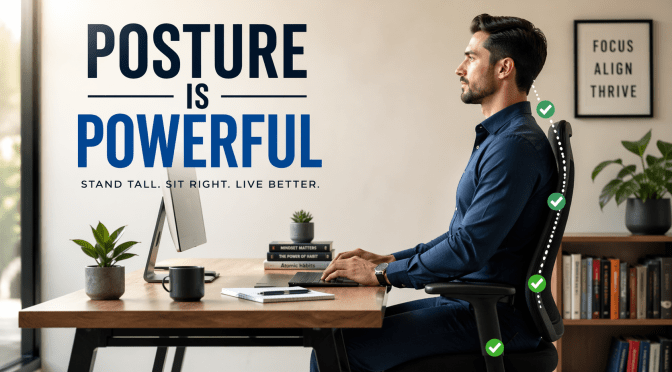
Posture Is More Powerful Than Most People Realize

When most people think about health and wellness, they think about the usual categories first. They think about nutrition, fitness, sleep, hydration, stress management, and maybe even supplementation. Those things matter, and they deserve attention. But I have come to believe there is another part of the conversation that is too often ignored, even though it affects nearly every part of daily life.

That part is posture.

Posture is not usually the headline topic in health discussions. It does not feel exciting. It is not often marketed as the secret to transformation. Most people do not wake up and say, “Today I’m going to focus on improving my posture,” even though posture influences how they sit, stand, walk, work, breathe, and move through the world.

That is exactly why I think it deserves more attention.

To me, posture is one of the most overlooked and underrated parts of overall wellness. It sits in the background of daily life so quietly that many people barely think about it at all. But the more I reflect on it, the more convinced I become that posture is not a small side issue. It is part of the foundation. It affects comfort, energy, confidence, presence, and the way the body handles the demands of everyday life.

In a culture that often chases quick fixes and dramatic solutions, posture reminds me of something simple but important: sometimes the most powerful health habits are the ones hiding in plain sight.

Why Posture Gets Overlooked

I think posture gets overlooked for a few reasons.

First, it is easy to ignore what becomes familiar. We live in a world where slouching has become normal. People spend hours bent over phones, hunched over laptops, sitting in cars, leaning into couches, and moving through the day in positions that slowly teach the body poor habits. When something becomes common, people start assuming it is harmless. They stop seeing it as a problem because it looks like everyday life.

But common does not always mean healthy.

Second, posture is often associated with appearance instead of function. Many people hear the word posture and immediately think about looking more polished, more confident, or more disciplined. They think about being told to “sit up straight” as a child. Because of that, posture can get reduced to something cosmetic, when in reality it has much deeper implications.

Third, most people focus on symptoms rather than patterns. If someone feels neck tension, tight shoulders, fatigue, back discomfort, or stiffness, they usually try to relieve the symptom. That is understandable. But what often gets missed is the fact that symptoms can grow out of daily patterns, and posture is one of the biggest patterns we repeat.

That is what makes this so important to me. Posture is not just one moment. It is a repeated position. It is a repeated habit. It is a repeated relationship between the body and gravity. And repeated habits always shape long-term outcomes.

Posture Is About More Than Standing Up Straight

One of the biggest mistakes people make is thinking posture is simply about forcing the body into a rigid shape. I do not see it that way at all.

Proper posture is not stiffness. It is not trying to hold yourself like a statue. It is not about putting on a performance. It is about alignment, support, and efficiency. It is about the way the body is organized so it can do what it was designed to do with less strain and more balance.

When posture is working well, the body tends to move with greater ease. The head is not constantly drifting too far forward. The shoulders are not living in a collapsed position. The spine is not under unnecessary tension all day long. The body is not fighting itself as much.

When posture is poor, the opposite often happens. Compensation becomes the norm. Some muscles work too hard. Others become weak from disuse. Certain joints take on more pressure than they were meant to handle. Energy gets wasted. The body adapts, but not always in healthy ways.

That is why I think posture matters so much. It is not only about how a person looks when they walk into a room. It is about how their body is carrying the load of life.

The Quiet Link Between Posture and Daily Discomfort

I do not believe every ache or pain can be traced back to posture alone. The body is more complex than that. But I do believe posture plays a bigger role in daily discomfort than many people realize.

What happens when the head lives too far forward for hours at a time? The neck and upper back have to work harder to support it. What happens when the shoulders stay rounded and the chest stays collapsed? Tightness and restriction often build. What happens when the body sits in poor alignment day after day, week after week, month after month? The strain has a way of accumulating.

This is one reason posture can be so deceptive. Its effects are often gradual. Poor posture does not always announce itself in one dramatic moment. It often builds quietly. The body starts adapting to poor positions, and because the process is slow, people barely notice it happening.

Then one day they wonder why they feel tight, tired, stiff, or uncomfortable so often.

To me, posture is one of those things that whispers before it shouts. That is why it deserves attention early, not only after the discomfort becomes impossible to ignore.

How Posture Affects Breathing and Energy

One of the most interesting parts of this conversation is how posture influences breathing.

When the body is collapsed, breathing often becomes more shallow. When the chest closes in and the body folds forward, it can become harder to breathe with ease and fullness. Even without realizing it, people can move through large parts of the day taking smaller, less effective breaths simply because their posture has become cramped and compressed.

That matters.

Breathing is not just about survival. It affects calm, focus, rhythm, and energy. It influences how we feel in our bodies. It affects whether we move through the day feeling open and steady or tense and restricted.

I think this is one of the reasons posture is more powerful than it first appears. It reaches into areas people do not always connect to it. It is not just about back and shoulders. It is also about the quality of our breathing, the ease of our movement, and the amount of tension we carry without realizing it.

Poor posture can be draining. It creates unnecessary friction. The body spends more effort compensating, bracing, and enduring positions that do not support it well. Over time, that constant low-level strain can affect how a person feels physically and mentally.

Better posture, on the other hand, can create a greater sense of ease. Not perfection. Not magic. But ease. And sometimes ease is one of the most meaningful things we can create in the body.

Posture and Presence

This part matters to me deeply because posture is not just physical. It is also expressive.

The way we carry ourselves says something, not only to others but also to ourselves. When someone is discouraged, anxious, exhausted, defeated, or overwhelmed, it often shows up in posture before a single word is spoken. Shoulders sink. Head lowers. Chest closes. The body reflects the inward weight a person is carrying.

But the reverse can also be true.

The way we position ourselves can influence how we feel. Again, I am not saying posture solves emotional struggles or removes all stress. But I do believe there is something powerful about choosing to stand tall, open the chest, relax the shoulders, and carry the body with intention.

There is dignity in that.

There is strength in that.

There is a quiet message in that.

To me, good posture is not about pride or image. It is about presence. It is about refusing to live collapsed inward when you were made to move through life with awareness and strength. It is about learning to inhabit your body more intentionally instead of simply reacting to whatever habits modern life has given you.

Modern Life Works Against Good Posture

If I am being honest, I think one reason posture matters so much today is because modern life constantly works against it.

Many daily routines encourage collapse. Screens pull our gaze downward. Desk work keeps people seated for long stretches. Long commutes reduce movement. Stress tightens the body. Fatigue makes people fold inward. Convenience often replaces mobility. Even rest is sometimes spent in positions that continue reinforcing poor habits.

The body learns from whatever we repeat. That means our daily environment is always training us, whether we realize it or not.

This is why I think posture should be part of a proactive wellness conversation. It is not enough to think about health only when we are exercising or trying to improve one specific symptom. We also have to think about what our ordinary routines are shaping.

The ordinary matters.

How we sit matters.
How we stand matters.
How we work matters.
How we recover matters.
How we carry ourselves when nobody is thinking about posture matters.

That is where real change begins.

Wellness Is Often Built in the Small Things

I believe one of the biggest mistakes people make in the wellness world is underestimating the basics. There is often a desire for advanced strategies, dramatic interventions, and fast transformation. But real health is usually built in the repeated things, not just the exciting things.

Posture is one of those repeated things.

It is there in every season of life. It matters for the person who works at a desk. It matters for the person who trains hard. It matters for the parent picking up children, the professional sitting in meetings, the student studying for hours, and the person simply trying to move through the day with less pain and more energy.

Because posture is always with us, it has a cumulative effect. That is what makes it powerful. Small moments of alignment repeated over time can change the way the body feels. Small moments of awareness repeated over time can shift a person’s relationship with movement, tension, and even self-care.

To me, this is one of the most hopeful parts of the conversation. Posture is not reserved for experts or athletes. It is not a luxury topic. It is a human topic. It is available to anyone willing to pay attention.

Improving Posture Starts With Awareness

The encouraging thing about posture is that improvement often begins with something simple: awareness.

Pay attention to how you sit when you are tired.
Pay attention to where your head goes when you look at your phone.
Pay attention to your shoulders when you are stressed.
Pay attention to how you stand when you have been on your feet for a long time.
Pay attention to whether you are breathing freely or holding tension in your body all day.

Awareness is powerful because you cannot change what you refuse to notice.

Once you begin noticing, the next step is not perfection. It is pattern change. It is taking small actions that support better alignment over time. It may mean moving more often. It may mean adjusting your workspace. It may mean strengthening the muscles that support healthy posture. It may mean stretching areas that have become tight and overworked. It may mean pausing throughout the day to reset instead of pushing through tension without thinking.

The goal is not to become rigid or overly self-conscious. The goal is to become more intentional. There is a difference.

Good posture should feel supported, natural, and alive. It should allow breathing, movement, and flexibility. It is not about locking the body down. It is about helping the body work with greater harmony.

Posture as a Form of Stewardship

The more I reflect on posture, the more I see it as a form of stewardship.

It is one of the everyday ways we care for what we have been given. It is one of the quiet choices that reflects whether we are paying attention to the foundations or neglecting them. It is not glamorous, but it is meaningful.

We often think care has to be dramatic to count. But some of the most meaningful forms of care are simple and repeated. Drinking water. Getting rest. Going for a walk. Taking a breath. Standing well. Sitting with intention. Releasing tension from the shoulders. Resetting before strain becomes pain.

These things may look small, but small things shape life.

That is why I find posture so thought provoking. It reminds me that the body is always responding to what I repeatedly do. It teaches me that health is not just built through major decisions. It is also built through quiet discipline. It is shaped by the things I practice when nobody is watching and when nothing feels urgent.

That truth goes far beyond posture. It touches almost every part of life.

Final Thoughts

Posture is easy to overlook because it lives in the background. It does not demand attention the way more obvious health topics do. But I believe it deserves a much bigger place in the wellness conversation.

Posture affects how we move, how we breathe, how we carry stress, how we conserve energy, and how we show up in the world. It can influence comfort, confidence, function, and presence. It may not seem dramatic in the moment, but over time its impact is real.

That is why I believe posture is more powerful than most people realize.

It is not just about standing up straight.
It is not just about appearance.
It is not just about avoiding discomfort.

It is about living with greater awareness.
It is about supporting the body instead of constantly working against it.
It is about honoring the small habits that quietly shape long-term health.

In a world that constantly invites us to slump, scroll, rush, and disconnect, there is something deeply grounding about learning to carry ourselves with intention again. There is something positive and powerful about standing taller, breathing deeper, and recognizing that even the simplest habits can shape the quality of our lives.

Sometimes the most important shifts are not the loudest ones.

Sometimes they begin in the quiet decision to stop overlooking what matters.

FAQ Section

Why is posture so important for wellness?

Posture matters because it influences how the body moves, breathes, balances tension, and handles the demands of daily life. It may seem small, but it affects comfort, energy, presence, and long-term function.

Can posture really affect energy levels?

I believe it can. When the body is constantly compensating for poor alignment, it creates unnecessary strain. Better posture can support easier breathing and more efficient movement, which can help reduce that low-level drain.

Is good posture the same as sitting rigidly straight all day?

No. Good posture is not about stiffness. It is about balanced, supported alignment that allows the body to move and breathe naturally.

Why do so many people struggle with posture today?

Modern life encourages habits that work against it. Long hours at desks, phone use, driving, stress, and sedentary routines all make it easier for poor posture to become normal.

What is the first step to improving posture?

The first step is awareness. Start noticing how you sit, stand, breathe, and carry tension throughout the day. Small corrections repeated consistently can make a meaningful difference.


Sweat, Serenity & Strength: Discovering the Mind–Body Benefits of the Dry Sauna

1. Introduction: Stepping into Warmth and Clarity

From Episode 116—“Benefits of the Sauna”—I shared how stepping into the dry sauna wasn’t merely a relaxation ritual—it became a meditative entry point to sustain better physical, emotional, and spiritual well-being.

Sweating, heat, stillness. Those elements, combined, introduced me to a profound mind–body harmony. Today, I want to walk you through how the dry sauna enhances circulation, supports detoxification processes, relieves stress, and deepens inner peace. My hope is that through this reflection, you’ll be inspired to integrate sauna into your wellness journey—safely, intentionally, and wholeheartedly.


2. Dry Sauna: A Tradition Rooted in Wellness

The dry sauna—a staple inherited from Finnish wellness traditions—uses high heat with low humidity, promoting intense sweating without steam.

In Finland, saunas are woven into daily life—not just for cleanliness, but for shared renewal, mental clarity, and rest. Across cultures, from Korean jjimjilbangs to Turkish hammams, the therapeutic embrace of heat has long been honored as a holistic practice.


3. Detoxification: Sweating Out the Unseen

At the heart of sauna benefits lies sweat—a physiological response to heat that raises curiosity about detoxification.

  • Research shows that induced sweating can excrete heavy metals and environmental toxins—including arsenic, cadmium, lead, mercury, BPA, phthalates, and flame retardants—from the body, sometimes at higher levels than blood or urine.
  • However, other credible sources caution that the liver and kidneys remain central to detoxification, and the contribution of sweating—though real—should be contextualized and not overstated.

My takeaway? Sweating may support the body’s natural elimination processes, especially when combined with hydration, healthy nutrition, and a supportive wellness rhythm. It’s not a standalone solution but a layered ally in my holistic health toolkit.


4. Elevating Mind–Body Connection Through Heat

The sauna’s heat does more than warm the body—it activates deep relaxation and cognitive calm.

  • Through vasodilation, blood vessels expand and circulation improves, supporting cardiovascular function and easing blood pressure—all akin to low-intensity exercise.
  • Cultures embracing heat therapy (e.g., Finnish and TCM practices) affirm sauna enhances mental well-being through sensory immersion—quiet, warmth, and presence.
  • Research supports these claims: regular sauna use mirrors some cardiovascular benefits of moderate workouts, supports brain health, eases muscle tension, and anchors stress relief.

In my own rhythm, 15–20 minutes in the dry sauna post-workout became a habit—my muscles loosened, anxiety faded, and clarity emerged. It’s as though I practiced spiritual exhale: letting go of stress and recalibrating toward peace.


5. Immune Support, Skin Renewal & Weight Aid

Additional benefits reinforce why saunas are more than self-care—they support wellness:

  • Cardiovascular and immune resilience: Studies link regular sauna use (4–7x per week) to improved arterial function, reduced hypertension, lower risk of cardiac events, and even dementia protection.
  • Skin clarity and tone: Sweating opens pores, boosts circulation, and may stimulate collagen through improved skin microcirculation.
  • Muscle recovery: Post-exercise sauna sessions reduce soreness and support flexibility through increased blood flow and muscle relaxation.
  • Metabolic support: Although not a weight-loss miracle, heat can contribute to metabolism via thermoregulatory processes and relaxation [some studies show modest support].

6. Designing a Mindful Sauna Practice

If you’d like to try a dry sauna with purpose, here’s how I approach it personally:

StepAction
1. Hydrate FirstDrink water before, and rehydrate afterward. Sweating is powerful—but comes with fluid loss.
2. Begin ConservativelyStart with 5–10 minutes if new; gradually build to 15–20 minutes per session.
3. Post-RoutineFollow heat with cooling—cold shower or fresh air. It helps restore homeostasis.
4. Reflect in StillnessI breathe deeply—letting clarity, peace, or creativity surface.
5. Repeat RegularlyI aim for 3–4 sessions weekly for the cumulative benefits. Consistency matters.
6. Know Your LimitsAvoid during pregnancy or with certain heart conditions unless cleared by a physician.

7. My Journey with Sauna: Clarity, Calm, Renewal

Reflecting on Episode 116, I see how incorporating sauna into my life became more than a habit—it became sacred space. It invited me to:

  • Recover physically after long writing sessions or workouts,
  • Reframe mentally when stress threatened to cloud my day,
  • Reconnect spiritually with quiet, undisturbed space to reflect.

It’s less about the heat and more about what happens inwardly when the world slows. The heat helps me burn away tension, yes—but it’s the stillness that restores connection inside.


8. Science and Serenity When Balanced

Medical investigations caution us: sauna isn’t for everyone. There are risks of dehydration, overheating, or cardiovascular stress if used improperly.

That’s why integration matters—sauna works best as part of educated, balanced self-care: hydrated, health-aware, rested.


9. An Invitation to Embrace Warmth and Renewal

If you’ve ever wondered whether a sauna is worthwhile—start small. Lean into the warmth. Let yourself linger in stillness and breathe in clarity.

It’s not about escaping, but about returning—with a body reset, a clearer mind, and a spirit more aligned with peace.


10. Conclusion: Sauna as Sanctuary

To sum up:

  • Sweat supports physical excretion of certain toxins and complements traditional detox pathways like liver and kidneys.
  • Heat fosters circulation, muscle relief, immune boost, skin rejuvenation, and stress reduction .
  • The mind–body connection deepens—quiet, warmth, and self-care become contemplative practice.
  • Safe, intentional sauna use enhances deposits of wellness, not risk—hydration and moderation are key.

So lean into warmth. Let your body release what no longer serves. Let your mind clear. Let your heart center. The dry sauna is more than heat. It’s sanctuary. It’s invitation.

Why I Embraced Coffee: A Personal Journey to Health, Focus & Joy

Introduction: More Than a Morning Ritual

When I recorded Episode 111—“Benefits of Coffee”—I realized coffee wasn’t just a beverage for me. It had become a daily ally—energizing early mornings, sharpening focus during writing sessions, and offering ritualistic solace. But more than comfort, I discovered it came with tangible benefits. As I explored scientific research, I learned how coffee could support health, longevity, mood, metabolic wellness—and all without sugary overload.

In this post, I’ll share how incorporating coffee into my routine—with simplicity and moderation—supported my well‑being, sharpened my mind, and deepened my daily rhythms. And I’ll explain why going light on additives is critical so you don’t lose coffee’s intrinsic benefits.


1. The Physical Benefits: Health Backed by Science

🎯 Longevity and Cardiovascular Health

Multiple large studies reveal that moderate coffee drinkers (about two to four cups daily) have significantly lower risk of premature death from heart disease and other causes—often in the range of 16–19% reduced mortality compared to non-drinkers Wikipedia+3rush.edu+3U.S. News+3. One UK Biobank analysis affirms that consuming coffee before noon is linked to lower overall and cardiovascular mortality—suggesting timing matters too NHLBI, NIH.

👩‍⚕️ Lower Risk of Type 2 Diabetes & Metabolic Support

Meta-analyses show each daily cup of coffee (caffeinated or decaf) is associated with a 6–9% reduced risk of developing type 2 diabetes NHLBI, NIH+15Healthline+15Wikipedia+15. Coffee’s polyphenols and other compounds improve insulin sensitivity and reduce inflammation—making it a metabolic ally Daily Telegraph+1New York Post+1.

🧠 Brain Health: Parkinson’s, Dementia, and Mood

Long-term coffee consumption correlates with lower rates of Parkinson’s disease and some neuroprotective effects. Preliminary data suggest reduced risk of depression and possible cognitive benefits later in life Wikipedia+1The Times+1.

🍃 Liver and Cancer Benefits

Research links moderate coffee intake with reduced odds of liver disease, gallstones, and certain forms of cancer such as liver and colorectal cancers Mayo Clinic Press.


2. Energy, Focus & Performance: My Personal Experience

From my own life: one to two cups in the morning often giving clarity, alertness, and sustained energy. The caffeine in coffee blocks adenosine, enhancing concentration and physical performance—especially during creative or writing sessions Reddit. It’s also used by athletes for improved performance, endurance, and reduced perceived effort Rock Creek Coffee Roasters+1The Times+1.

My writing flow and post-recording recovery improved noticeably once I began exercising with coffee beforehand—it lifted fatigue and sharpened focus. And genuinely: weight management became easier. Coffee’s metabolism-boosting effects and mild appetite suppression supported my efforts Rock Creek Coffee RoastersHopkins Medicine.


3. Why Moderation Matters—And Why Less Is More

🚫 Stick Within Safe Limits

Experts recommend no more than 400 mg of caffeine per day, roughly two to four cups of brewed coffee—sometimes up to five—depending on individual sensitivity Wikipedia+1Real Simple+1. Excess can lead to anxiety, sleep disruption, elevated heart rate, and gastrointestinal discomfort Real Simple.

🕝 Timing Is Key

Drinking coffee before noon seems to maximize its longevity and cardiovascular benefits while reducing negative impact on sleep or cortisol levels during evenings NHLBI, NIHThe Times.

🧁 Avoid Sugar & Excess Add‑Ins

Research shows that adding sugar, syrups, or high‑fat creams significantly weakens coffee’s health advantages. Black coffee—or coffee with minimal sugar (< ½ tsp) and low‑fat creamer—is associated with a ~14% lower risk of death compared to heavily sweetened drinks or no coffee Tufts Now+1The Times of India+1. Calories and sugar can negate coffee’s antioxidant and anti-inflammatory benefits.

😌 Sensitivity and Mindful Listening

Some individuals—like those with anxiety disorders, heart sensitivities, or sleep issues—may need less caffeine or even decaf. Coffee can spike blood sugar temporarily, especially when consumed on an empty stomach or with added sugar—but long-term associations still favor reduced diabetes risk when enjoyed mindfully Verywell HealthPMC.


4. How I Built Coffee into My Routine—With Purpose

🌅 Morning Ritual, Not Rush Hour Fuel

I intentionally sip coffee first thing in the morning, paired with a protein-rich breakfast or nuts—optimizing energy without cortisol crash or sugar spikes. I avoid drinking coffee past early afternoon to safeguard sleep quality NHLBI, NIHThe Times.

🚫 Keep It Simple

Most days, it’s just black coffee or black with light milk—and a dash of cinnamon when I’m craving flavor. Cinnamon introduces antioxidants and helps stabilize blood sugar without excessive sweetness New York Post.

🔁 Cup Limit

I aim for two to three cups daily—enough for benefits without bingeing. I noticed that beyond three cups, the health advantage plateaus—and risks like restlessness rise Verywell Health+9U.S. News+9New York Post+9.

🏃‍♂️ Pre-Workout Fuel

About 30–60 minutes before physical activity, I drink a cup. It helps me train harder, recover faster, and avoid post-exercise fatigue—especially helpful before writing marathons or long coaching days Rock Creek Coffee Roasters.


5. The Positive Impacts: Real Benefits Fused Into Daily Life

📈 More Clarity, Less Fog

Coffee’s mild stimulation often jumpstarts creativity and decision-making. On days I skip it, I’m missing not just caffeine—but a mental edge and ritual that primes my mind.

❤️ Emotional Balance

I’ve felt clearer during stress—not anxious, but alert and grounded. In my experience, the antioxidants and mood-lifting compounds contribute to emotional resilience HealthlineMayo Clinic Press.

🧘 Weight & Wellness Synergy

With smarter nutrition and consistent workouts, coffee became a tool—not a crutch—to support metabolism and focus. It didn’t replace meals but supplemented disciplined habits.

🔄 Rhythm and Intentionality

Coffee helped shape routines—morning reflection, planning, sessions of podcast recording, focused writing, or times of guided rest. It became a symbol, not a necessity: a simple anchor for purpose.


6. Caveats to Consider—and Practicing Awareness

⚠️ Anxiety & Sleep

If you suffer from anxiety, insomnia, or hypertension, consider reducing intake or switching to decaffeinated beans. Over 300 mg can worsen symptoms in sensitive individuals Wikipedia.

🍬 Not a License for Sugar Overload

Even if you love flavored lattes, treat them as occasional treats—not daily staples. The health benefits fade with sugar and high-fat additives The Times of India.

🚫 Avoid Too Late

A cup after 2 or 3 pm may interfere with sleep quality—undermining the long-term benefits of coffee. Timing matters as much as quantity NHLBI, NIHThe Times.


7. A Positive Conclusion: Designing Your Own Coffee-Driven Wellness

Here’s what I believe: Coffee, when embraced with mindfulness, becomes more than a beverage—it becomes a healthy ritual. It fuels discipline, clarity, and intentional living.

  • It supports longevity, reducing risks of diabetes, heart disease, neurodegenerative conditions, and certain cancers rush.eduMayo Clinic PressDaily Telegraph.
  • It enhances mood and cognition, offering creativity, mental sharpness, and sustained focus WikipediaHopkins Medicine.
  • It becomes part of a balanced lifestyle, not a shortcut—especially when kept simple and free from excess sugar or creamers.

My encouragement? Try two to three mindful cups a day. Make it black or lightly sweetened. Have it before noon. Pair it with food. Be attuned to your body’s response. And don’t use coffee as a mask for fatigue—it’s best paired with healthy sleep, movement, and nutrition.


Final Thoughts & Call to Action

Coffee—done well—is a friend. It’s the warm invitation at dawn, the mental boost in midday, the ritual that connects your body and mind to intention.

If you joined me for Episode 111, you heard my testimony. But science supports what I’ve experienced: coffee, in moderation and simplicity, can promote health, vitality, focus, and longevity.

So consider this a personal invitation: become a conscious coffee drinker. Drink with purpose and presence. Enjoy the richness—not just in flavor, but in life. Let it help you show up more focused, more joyful, more energized—without extra sugar or unnecessary extras diluting your well-being.

Here’s a thought question to ponder: What simple ritual could coffee anchor in your day—that promotes focus, wellness, and joy? I’d love to read your experiences, ideas, or recipes. Let’s brew with intention—together.

Never Skip Leg Day — Why Strong Legs Build a Strong Life

Introduction

Let me be honest with you—I used to dread leg day.

For years, I prioritized the “mirror muscles”: chest, arms, abs. The parts of my body I could see, flex, and feel good about. Legs? They were always an afterthought. Not because I didn’t think they mattered, but because training them was hard. Uncomfortable. Even humbling.

Then one day, I had a moment of clarity: if the legs are the literal foundation of the body, how could I build anything meaningful without strengthening them? That epiphany changed everything. I began to realize that leg training wasn’t just a physical necessity—it was a metaphor for life. It was about embracing pain, building discipline, and laying a foundation that could support not just my body, but my purpose.

This post is about more than fitness. It’s about building strength from the ground up—in body, mind, and spirit. Whether under the barbell and in prayer, I want to share with you why leg day matters more than you think—and how it can transform your entire life.

The Foundation Principle

Think about this: everything you do—every step, jump, lunge, climb—begins with your legs. They are your body’s foundation, the base that supports everything else. When your legs are strong, the rest of your body can move with confidence, coordination, and control. When they’re weak, instability seeps in and compromises everything above.

In Matthew 7:24–25, Jesus shares the parable of the wise and foolish builders. The wise man builds his house on rock, and when the storms come, the house stands firm. The foolish man builds on sand, and the house crumbles. That story isn’t just about faith—it applies to our physical lives, too. Your legs are the “rock” upon which you build your physical house.

Just like Christ is the unshakable foundation of our spiritual lives, our legs are the cornerstone of physical fitness. And just as we wouldn’t build our spiritual life on anything less than Christ, we shouldn’t build our physical strength on anything less than a powerful, stable lower body.

There’s something profoundly spiritual about that. We’re called to be strong—mentally, spiritually, and physically—not for vanity, but for service. For resilience. For impact. And it starts from the ground up.

Strength and Balance Start with the Lower Body

If you’ve ever done a heavy squat, you know it’s more than just a “leg exercise.” Your core engages. Your back tightens. Your focus narrows. It’s a full-body experience. And when done consistently, leg training doesn’t just grow your quads or hamstrings—it improves your entire kinetic chain.

Strong legs improve posture, increase balance, and protect your joints. They make it easier to lift, carry, and move with purpose. Whether you’re on a sports field, playing with your kids, or climbing a ladder at work, strong legs give you stability. They help you live more freely—and more confidently.

I’ve noticed this firsthand. When my legs are strong, I stand taller—literally and figuratively. I walk into rooms with more presence. I feel grounded. It’s as if the strength in my legs transfers to my mindset. I’m steadier, calmer, more focused.

Leg training teaches us to root ourselves—just like a tree with deep roots can withstand the storm, so can a person with strong legs withstand the pressures of life. It’s balance in every sense of the word.

Functional Fitness and Longevity

I’ll never forget the moment I watched an elderly man struggle to rise from a chair. It wasn’t just heartbreaking—it was eye-opening. He had a sharp mind, a joyful spirit, and a willing heart. But his body? It could no longer support him. That moment was a turning point for me. I realized that strength isn’t just for athletes—it’s for everyone who wants to live well for the long haul.

Functional fitness isn’t about looking good. It’s about living free. When your legs are strong, you can walk further, climb stairs with ease, lift groceries, play with grandkids, and stay mobile into your later years. It’s independence. It’s dignity. It’s a life of fewer limitations.

And here’s the kicker—leg strength is one of the strongest predictors of longevity. Studies show that people with greater lower body strength are far less likely to fall, suffer fractures, or become dependent as they age. In other words, leg day today becomes freedom tomorrow.

If I want to be vibrant and active into my seventies, eighties, or beyond, that work starts now. It’s not just an investment in muscle—it’s an investment in my future.

Leg Training as Discipline and Endurance

Training legs hurts. Not in an injury way, but in a “my soul just left my body” kind of way. Squats, lunges, deadlifts—they demand everything. Your lungs burn, your muscles shake, and your mental limits are tested. That’s what makes leg day special.

Leg day is a test of will. It separates the casual lifter from the committed one. And honestly, that’s why I’ve come to love it.

There’s a spiritual lesson here. Romans 5:3–4 says, “We also glory in our sufferings, because we know that suffering produces perseverance; perseverance, character; and character, hope.” Sound familiar?

Leg day is suffering—controlled, purposeful suffering. And from that suffering comes strength. Not just physically, but mentally and spiritually. It teaches me to keep going when I want to quit. It teaches me to breathe through the discomfort. It teaches me that growth only comes on the other side of struggle.

Every time I choose to train legs, I choose character over comfort. And that, to me, is a win beyond the gym.

Building Power and Athletic Performance

Athletes know something that average gym-goers often forget: the legs are the engine. If you want to jump higher, sprint faster, or move with agility, you need powerful legs. It’s the difference between average and elite. Between surviving and dominating.

Think of a football player breaking tackles, a sprinter exploding off the line, a martial artist delivering a knockout kick. The common denominator? Lower body power.

And even if you’re not a professional athlete, that kind of explosive strength translates into your everyday life. Chasing after your kids, hiking steep trails, playing recreational sports—it all becomes easier when your legs are trained to move with power.

The more I trained my legs, the more “athletic” I felt. Not because I gained speed or agility overnight, but because I began to move with purpose. My body felt like a tool, not a burden. That feeling is addictive—and it’s available to anyone willing to earn it.

Hormonal Benefits and Muscle Growth

Here’s something most people don’t realize—when you train your legs, your whole body benefits. Why? Because leg workouts recruit some of the largest muscles in the body, which triggers a powerful hormonal response. When you push yourself through heavy squats or lunges, your body releases more testosterone and growth hormone. These hormones don’t just help your legs grow—they help your whole body build muscle, recover faster, and perform better.

After I committed to serious leg training, I started noticing progress in areas I hadn’t even focused on. My chest felt stronger. My arms looked fuller. My energy levels climbed. It was like my entire system was responding to the intensity and demand of leg day.

This is why skipping leg day is a huge mistake if you’re trying to build muscle or transform your physique. It’s not just about isolated muscles—it’s about sending a signal to your body that says, “We’re working hard. Adapt.”

It’s a biological domino effect, and it all starts at the base.

Bone Health and Aging Gracefully

There’s another hidden benefit to leg training, and it’s one that matters more the older we get: bone density. As we age, our bones naturally lose density, making us more susceptible to fractures and injuries. But here’s the good news—resistance training can slow, and in some cases, reverse that decline.

When you load your body with weights, especially through leg exercises like squats and deadlifts, you stimulate your bones to become stronger and denser. Think of it like remodeling your house from the inside out—every rep reinforces your structural foundation.

I think about this often when I see aging relatives struggle with mobility or recover slowly from injuries. I don’t want that future for myself. And I don’t want it for anyone I care about. By strengthening our legs today, we’re protecting our freedom and quality of life tomorrow.

Aging gracefully doesn’t mean getting weaker—it means getting wiser about how we train and care for the body God gave us.

Better Metabolism and Fat Burning

Here’s something that really surprised me when I got serious about leg day—my metabolism shifted. Suddenly, I was burning more calories, not just during workouts, but all day long. I felt leaner, lighter, and more energetic.

That’s because leg training taps into EPOC (excess post-exercise oxygen consumption), or what some call the “afterburn effect.” After a heavy leg day, your body keeps burning calories for hours as it works to recover and rebuild.

And because your legs involve such large muscle groups, the energy demand is massive. You’re not just torching fat—you’re reprogramming your metabolism to operate at a higher gear.

This was a game-changer for me. Instead of obsessing over cardio or diets, I started focusing on what actually moved the needle: leg training. And sure enough, my body responded.

If you’re looking to shed fat, tone up, or just boost your metabolic engine, leg day is the secret weapon hiding in plain sight.

Aesthetic Balance and Physical Symmetry

Let’s talk about the elephant in the room: the dreaded “chicken legs.”

We’ve all seen it—and some of us have been it. Guys who spend years perfecting their upper bodies but neglect their legs entirely. The result? A physique that looks unbalanced, top-heavy, and, frankly, incomplete.

I used to fall into this trap. I’d hit bench and biceps multiple times a week, yet avoid squats like the plague. Why? Because leg day was uncomfortable. It didn’t give me that instant pump or Instagram-worthy mirror selfie.

But as I matured in my fitness journey, I realized something crucial: true strength is holistic. Aesthetics matter—not for vanity’s sake, but because they often reflect balance and function. When your legs are proportionate to your upper body, you look strong because you are strong. Your physique reflects the effort you’ve put in from head to toe.

And the confidence that comes from knowing you’ve earned your strength evenly across your body? That’s priceless. No part left behind. No shortcuts taken. Just raw, honest work.

Spiritual Fitness and the Temple of the Body

There’s a deeper reason I train my legs—and really, my whole body—that goes beyond health or appearance. It’s about stewardship. In 1 Corinthians 6:19, Paul writes, “Do you not know that your body is a temple of the Holy Spirit within you, whom you have from God?”

That verse hits different when I’m under a barbell.

Training my legs has become a way I worship God through discipline. It reminds me that I’m not here to coast—I’m here to grow. To be strong for my calling. To be a vessel that can carry the weight of responsibility, leadership, family, and ministry.

Leg day teaches me order. It teaches me to prepare, to stay humble, and to honor the process. That’s spiritual. That’s powerful.

And every time I show up—especially when I don’t feel like it—I’m reminded that excellence is built one rep at a time, both in the gym and in life.

Mindset Shift: “I Get to” Instead of “I Have to”

Here’s something I never expected: leg training changed the way I talk to myself.

It used to be, “I have to do squats today.” Now, it’s “I get to.”

That simple shift—from obligation to opportunity—has reframed everything. I get to move. I get to challenge myself. I get to strengthen what was once weak. I get to steward my health. That’s a blessing, not a burden.

Training legs regularly has made me grateful for the gift of movement. It’s made me appreciate what my body is capable of. And it’s taught me to embrace discomfort—not as punishment, but as the price of growth.

I’ve learned to smile during the burn, to breathe through the grind, and to walk away not just sore—but stronger in every way.

Raising the Standard for Future Generations

One of the most unexpected outcomes of training my legs—of taking my physical fitness seriously—has been the impact on those around me. Especially the next generation. Whether it’s my kids, younger guys at the gym, or people in my community, I’ve noticed something powerful: when you live with discipline, people watch. And when you do hard things consistently, they start to believe they can, too.

I want my children to see that strength isn’t just about muscle—it’s about mindset, character, and commitment. I want them to grow up understanding that we honor God by taking care of our bodies and pushing our limits in a healthy, purposeful way. I want them to know that showing up on leg day—even when you don’t feel like it—is a form of integrity.

We don’t just train for ourselves. We train for those who are watching. We raise the standard not by our words, but by our example.

Leg day, as grueling as it is, has become a platform for modeling virtue: perseverance, humility, courage, and grit. And that kind of modeling leaves a legacy that goes far beyond the gym.

Practical Tips for Leg Training Success

Now, you might be fired up—but still unsure how to start. So let me share a few practical tips that helped me shift from dreading leg day to dominating it:

Train legs at least once per week. Twice is even better if you want to grow. Start with compound movements. Focus on squats, deadlifts, lunges, and step-ups. These engage multiple muscle groups and build real-world strength. Progressive overload is key. Don’t chase exhaustion—chase progress. Increase your weight or reps over time. Master your form. Quality over quantity. Injury prevention starts with good mechanics. Recover well. Sleep, stretch, hydrate, and fuel properly. Leg day demands serious recovery.

Consistency, not perfection, is the goal. You won’t get it all right the first time—but the important thing is to start.

Conclusion: Strong Legs, Strong Life

If I’ve learned anything from years of training, it’s this: the strength you build on leg day doesn’t stay in the gym—it follows you into every area of your life.

Leg training is hard. It’s uncomfortable. It exposes weaknesses. But that’s why it’s so powerful. Because when you train your legs, you’re doing more than building muscle—you’re building resolve. You’re laying a foundation that supports your entire being—physically, mentally, spiritually.

“Never skip leg day” isn’t just a gym meme. It’s a life mantra. It’s a reminder to embrace the hard things. To build from the ground up. To develop a foundation strong enough to carry the weight of your dreams, your responsibilities, and your calling.

So yes—train your legs. Train them with purpose. Train them with prayer. And trust that as your legs grow stronger, so will everything else.

Call to Action

If you’re reading this and feeling challenged, good. Take that spark and turn it into movement.

This week, commit to training your legs twice. No excuses.

Start with a bodyweight circuit or barbell squats—whatever your level allows. Pray before your session. Invite God into your effort. Let Him shape not just your muscles, but your mindset.

Build strength that matters. Build from the ground up. And never, ever skip leg day.

The Power of Routine: Elevating Well-Being through Purposeful Time Allocation

In a fast-paced and often chaotic world, establishing a routine can be a transformative practice that brings order, structure, and balance to our lives. This article delves into the importance of routine, highlighting how it contributes to overall well-being. Specifically, we will explore how dedicating time each day to grow closer to the Lord, condition our bodies, and fuel our minds with meaningful content can lead to significant positive changes in our day-to-day operations.

Growing Closer in Your Walk with the Lord:
A routine provides an invaluable opportunity to prioritize and nurture our relationship with the Lord. By setting aside dedicated time each day for prayer, reflection, and studying scripture, we create a sacred space for spiritual growth and connection. This intentional focus on deepening our faith can bring about a range of positive outcomes, including:

a. Increased Clarity and Direction: Spending time with the Lord allows us to seek guidance, gain insight, and discover our purpose, leading to a more focused and intentional life.


b. Inner Peace and Contentment: Connecting with God on a daily basis nurtures a sense of peace, comfort, and assurance, enabling us to navigate challenges with resilience and grace.


c. Strengthened Faith and Trust: Regular communion with the Lord deepens our faith, strengthens our trust in His plan, and fosters a sense of surrender, knowing that we are not alone in our journey.

Conditioning Your Body to Endure More than Normal Stress:
Incorporating physical exercise into our routine is vital for building a resilient and healthy body. Regular physical activity offers numerous benefits beyond just the physical realm, including:

a. Increased Energy and Vitality: Engaging in regular exercise helps boost energy levels, allowing us to tackle daily tasks with vigor and enthusiasm.


b. Stress Reduction and Mental Well-being: Physical activity triggers the release of endorphins, which promote feelings of happiness, reduce stress, and enhance overall mental well-being.


c. Enhanced Resilience and Endurance: Regular exercise conditions our bodies to endure more stress and adapt to challenging situations, both physically and mentally.

Fueling Your Mind with Real Substance and Not Fluff:
A well-rounded routine should include intentional time for intellectual growth and nourishment. By prioritizing activities that stimulate our minds and expose us to substantive content, we can experience a positive impact on our mental well-being, including:

a. Expanded Knowledge and Understanding: Engaging in activities like reading, learning, or pursuing meaningful hobbies broadens our knowledge base, enhances critical thinking skills, and promotes personal growth.


b. Cultivation of Creativity: Allotting time for creative endeavors stimulates our imagination, encourages innovative thinking, and nurtures our innate ability to express ourselves.


c. Improved Focus and Productivity: By intentionally engaging with substantive content, we train our minds to filter out distractions and develop a sharper focus, resulting in increased productivity and efficiency.

Incorporating a well-designed routine into our lives is a powerful catalyst for positive change. By dedicating time each day to grow closer to the Lord, condition our bodies, and fuel our minds with meaningful substance, we create a solid foundation for overall well-being. As we commit to this intentional time allocation, we will experience increased clarity, resilience, inner peace, and a sense of purpose. Embracing routine not only enhances our day-to-day operations but also empowers us to live a more fulfilling and impactful life. Start today and witness the transformative power of routine in elevating your well-being.

Be sure to check out “The Importance of Routine” – Episode 4 of the 3 Pillars Podcast here: https://youtu.be/jbQTWvCVboc