Tag Archives: Love

Exhausted but Not Empty: How God Sustains the Faithful Servant

There is a kind of tired that sleep does not fix.

I have known physical exhaustion. I have known the heaviness that comes after long days, full schedules, constant responsibilities, and the normal demands of life. That kind of tiredness is real, and sometimes the most spiritual thing a person can do is get some rest. But there is another kind of exhaustion that reaches deeper than the body. It settles into the soul. It touches motivation, faith, perspective, and endurance. It can make a person wonder, “Lord, why do I feel so worn out when I am trying to do what You called me to do?”

That is the kind of exhaustion I want to talk about.

Isaiah 40:28 says, “Do you not know? Have you not heard? The Lord is the everlasting God, the Creator of the ends of the earth. He does not faint or grow weary; His understanding is unsearchable.”

That verse has been sitting with me in a deeper way. It does not simply tell me that God is strong. It reminds me that God is eternal, unlimited, steady, and never depleted. He does not have to recover. He does not run out. He does not reach the end of His wisdom, patience, mercy, or power.

And that truth matters most when I feel like I have reached the end of mine.

What It Really Means to Be Spiritually Exhausted

Spiritual exhaustion is not always the result of doing something wrong. Sometimes it comes from doing what is right for a long time.

That can be hard to accept because many of us assume that if we are in God’s will, we should always feel strong, energized, and encouraged. We imagine that obedience should make us feel constantly refreshed. But Scripture and experience both tell a more honest story. Faithfulness can be costly. Ministry can be draining. Prayer can involve wrestling. Loving people can require deep sacrifice. Carrying spiritual responsibility can weigh on the heart.

There are times when serving God means being poured out.

Oswald Chambers captures this idea powerfully in My Utmost for His Highest. He points us to the reality that spiritual exhaustion can come through service. That thought challenges me because it helps me stop pretending. It gives language to something many faithful people experience but rarely admit.

Sometimes I am not tired because I have been running from God. Sometimes I am tired because I have been walking with Him through difficult places.

Sometimes I am not weary because I lack faith. Sometimes I am weary because faith has required endurance.

Sometimes I am not empty because I do not care. Sometimes I feel empty because I have cared deeply, prayed earnestly, served sincerely, and carried burdens that were never meant to be carried apart from God.

That distinction matters.

Tired of God or Tired for God?

There is a difference between being tired of God and being tired for God.

Being tired of God is a dangerous place. That is when my heart begins to withdraw from Him. I lose desire for His presence. I resist His correction. I treat obedience like an interruption. I allow disappointment, pride, or distraction to pull me away from intimacy with Him.

But being tired for God is different. That kind of tiredness can come while still loving Him. It can come while still wanting to serve Him. It can come while still believing His Word, praying through the struggle, and trying to remain faithful.

The problem is that both conditions can feel similar at first. Both can involve heaviness. Both can involve discouragement. Both can make prayer feel harder and worship feel less natural. That is why honest self-examination is necessary.

I have to ask myself: Am I weary because I have drifted from God, or am I weary because I have been trying to serve God from a source He never asked me to rely on?

That question has a way of exposing the truth.

Because often, the issue is not that God has failed to sustain me. The issue is that I have been trying to sustain myself.

When I Draw Strength from the Wrong Source

One of the most convicting realities about spiritual exhaustion is that it often reveals where I have been getting my supply.

I can serve from love, or I can serve from pressure.

I can give from overflow, or I can give from insecurity.

I can obey God because I trust Him, or I can perform because I want others to approve of me.

I can do ministry from communion with God, or I can do it from adrenaline, routine, ambition, guilt, or fear.

The work may look the same on the outside, but the source is completely different.

This is where I have to slow down and pay attention. Am I energized only when people notice? Am I discouraged when no one thanks me? Am I measuring my faithfulness by visible results? Am I serving because God called me, or because I do not know how to say no? Am I mistaking busyness for spiritual fruit?

These are uncomfortable questions, but they are necessary ones.

Because spiritual exhaustion becomes dangerous when I confuse activity for abiding. I can be busy with spiritual things and still be disconnected from spiritual strength. I can talk about God while failing to sit with God. I can encourage others while neglecting my own soul. I can pour out truth while forgetting to drink deeply from the Source of truth.

That is when exhaustion becomes more than tiredness. It becomes a warning light.

God Does Not Grow Weary

Isaiah 40:28 does not begin with my weakness. It begins with God’s nature.

“The Lord is the everlasting God.”

That means before I analyze my exhaustion, I need to remember who God is.

He is not temporary. He is not fragile. He is not limited by time, emotion, circumstance, or opposition. He is the Creator of the ends of the earth. Everything that overwhelms me remains under His authority. Every burden that feels too complex for me is fully understood by Him. Every situation that leaves me confused is already clear to Him.

He does not faint.

He does not grow weary.

His understanding is unsearchable.

That phrase comforts me because there are many moments when I do not understand what God is doing. I do not always understand why the road is long, why answers seem delayed, why obedience feels costly, or why the burdens of life and faith can feel so heavy. But Isaiah reminds me that God’s wisdom is not limited by my ability to interpret the moment.

I may not understand, but He does.

I may grow tired, but He does not.

I may feel uncertain, but He is never confused.

I may feel stretched thin, but He is never depleted.

This is not just theology for a sermon. This is truth for survival. When I am spiritually exhausted, I do not need a smaller view of my problems. I need a greater view of my God.

The Eternal God Sustains Temporary People

One of the most humbling things about being human is that I have limits.

I need sleep. I need food. I need silence. I need correction. I need encouragement. I need grace. I need time to recover. I need God every moment, whether I admit it or not.

God has no such limits.

He is eternal, and I am not. He is self-sufficient, and I am dependent. He is unchanging, and I am often inconsistent. He is never overwhelmed, and I can become overwhelmed quickly.

At first, that contrast may seem discouraging. But it is actually freeing.

I was never created to be unlimited.

I was never called to be the source.

I was never asked to carry the weight of being God.

When I forget that, I start living as though everything depends on me. I carry burdens God invited me to surrender. I try to fix people God called me to love. I try to control outcomes God called me to trust Him with. I try to be strong in ways He never required.

But spiritual renewal begins when I stop pretending I am unlimited.

There is humility in saying, “Lord, I am tired.” There is wisdom in saying, “Father, I need You.” There is maturity in recognizing that dependence is not weakness. Dependence is the design.

The eternal God sustains temporary people not by making them self-sufficient, but by drawing them into deeper reliance on Him.

Being Poured Out Without Running Dry

There is something beautiful and sobering about being used by God.

To be used by God means my life can become a blessing to someone else. My words can encourage. My prayers can strengthen. My testimony can point someone toward hope. My obedience can serve a purpose beyond what I see. My sacrifice can become part of another person’s healing, growth, or endurance.

But being used by God also means there will be times when I feel poured out.

That is not always a sign that something is wrong. Sometimes it is evidence that God is working through my life.

The danger is not being poured out. The danger is being poured out while refusing to be refilled.

This is where I have to remember that I am not the bread of life. Jesus is. I am not the living water. Jesus is. I am not the source of anyone’s salvation, healing, peace, or strength. Jesus is.

When I forget that, I begin to serve as though I am necessary in a way only God is necessary. That kind of thinking will crush the soul. It will make every need feel like an assignment, every burden feel personal, and every outcome feel like a verdict on my faithfulness.

But when I remember that God is the source, I can serve with open hands. I can give without pretending to be enough. I can love people deeply without trying to become their savior. I can pour out what God gives me while returning to Him for more.

That is the rhythm of faithful service.

Receive. Pour out. Return. Be renewed.

Renewal Is Not Escaping the Assignment

Sometimes when I hear the word renewal, I imagine relief. I think of stepping away, catching my breath, and being restored in quiet places. And sometimes that is exactly what renewal requires.

But spiritual renewal is not always God removing the assignment. Sometimes it is God restoring me in the middle of it.

That is important because I may be tempted to believe that if I feel exhausted, the only answer is to quit. But weariness does not always mean I am in the wrong place. Sometimes it means I need to return to the right source.

There are seasons when God calls us to rest. There are also seasons when God calls us to keep going, but not in our own strength.

Renewal may look like prayer before action. It may look like Scripture before strategy. It may look like worship before work. It may look like silence before speaking. It may look like repentance for self-reliance. It may look like receiving rest without guilt. It may look like admitting that my soul has been running on fumes while my schedule kept moving.

Renewal is not passive. It is not laziness. It is not quitting on responsibility.

Renewal is returning to God so I can continue faithfully with the strength He supplies.

The Positive Side of Spiritual Exhaustion

I do not want to glorify burnout. Burnout can be destructive, and ignoring warning signs is not wisdom. God does not call me to destroy my health, neglect my family, or confuse overcommitment with obedience.

But I also do not want to miss the positive side of spiritual exhaustion.

Spiritual exhaustion can reveal that my life is being used for something beyond myself. It can remind me that love costs something. It can deepen my compassion for others who are weary. It can expose false sources of strength. It can teach me to pray with more honesty. It can strip away pride and bring me back to dependence.

Sometimes exhaustion becomes the place where God reorders my motives.

I may begin a work wanting to serve Him, but over time, other desires can attach themselves to the assignment. I may start wanting recognition. I may want control. I may want visible success. I may want people to understand my sacrifice. I may want the work to feel easier than it actually is.

Then weariness comes, and suddenly I have to ask: Would I still serve if no one noticed? Would I still obey if the outcome took longer than I hoped? Would I still trust God if I did not understand the process? Would I still believe He is good when I feel weak?

Those questions are not meant to condemn me. They are meant to refine me.

Spiritual exhaustion can become a holy invitation to return to pure dependence.

How I Learn to Be Sustained by God

I am learning that God’s sustaining power is not just something I admire from a distance. It is something I must actively depend on.

That means I have to stop performing strength.

I do not need to pretend with God. I do not need to polish my prayers. I do not need to act more confident than I am. I can come honestly and say, “Lord, I am tired. I want to be faithful, but I need You to renew me.”

I also have to return to Scripture not merely for content, but for communion. The Word of God does more than inform me. It re-centers me. It corrects the lies I have believed. It reminds me that I am not alone, not abandoned, and not responsible for being the source of my own strength.

I have to practice prayer as surrender, not just request. Prayer is where I hand back the burdens I accidentally picked up as my identity. It is where I confess that I have tried to carry what belongs to God. It is where I remember that my Father is not exhausted by my need.

I have to receive rest as obedience. That may be one of the hardest lessons for driven people. Rest can feel unproductive, but in the kingdom of God, rest is often an act of trust. It says, “God is still working even when I am not.”

And I have to remain connected to the body of Christ. Spiritual exhaustion grows heavier in isolation. Sometimes renewal comes through honest conversation, shared prayer, wise counsel, and the humility to let others help carry what I was never meant to carry alone.

A Question Worth Sitting With

The question I keep coming back to is this: Who is really sustaining me?

Not who do I say is sustaining me.

Not what would I answer in a Bible study.

But in the actual rhythm of my life, where am I drawing strength?

Am I drawing from God’s presence, or from people’s approval?

Am I drawing from prayer, or from productivity?

Am I drawing from Scripture, or from my own opinions?

Am I drawing from obedience, or from obligation?

Am I drawing from the eternal God, or from my temporary emotions?

That question is thought-provoking because it reaches beneath the surface. It moves past appearances and asks what is really happening in the soul.

And when I answer honestly, I often find that my exhaustion is not just about how much I have been doing. It is about how I have been doing it.

God never called me to serve Him apart from Him.

Exhausted but Not Empty

The hope of Isaiah 40:28 is not that I will never feel tired. The hope is that my tiredness does not have the final word.

I may grow weary, but God does not.

I may feel spent, but God is not depleted.

I may lack understanding, but God’s wisdom is unsearchable.

I may come to the end of myself, but I will never come to the end of Him.

That is what sustains the faithful servant. Not personal grit. Not public recognition. Not endless energy. Not emotional excitement. The faithful servant is sustained by the everlasting God.

So yes, there may be seasons when I am spiritually exhausted for God. There may be times when obedience stretches me, service drains me, and love costs me deeply. But I do not have to confuse exhaustion with emptiness.

If God is my source, I can be poured out without being abandoned. I can be tired without being hopeless. I can be weak without being useless. I can rest without guilt. I can continue without pretending. I can admit my limits while trusting His limitless nature.

The everlasting God does not faint. He does not grow weary. His understanding is beyond my ability to measure. And because He is eternal, steady, and faithful, I can bring my exhausted soul back to Him again and again.

I may be exhausted, but in Him, I am not empty.

I am sustained.

I am renewed.

And by His grace, I can keep walking.


Frequently Asked Questions

What does Isaiah 40:28 teach us about spiritual exhaustion?

Isaiah 40:28 teaches that human beings grow weary, but God does not. When I feel spiritually exhausted, this verse reminds me to stop depending on my own limited strength and return to the everlasting God who sustains His people.

What does it mean to be spiritually exhausted for God?

To be spiritually exhausted for God means to feel deeply worn from faithful service, prayer, love, leadership, sacrifice, or spiritual responsibility. It is not always a sign of failure. Sometimes it is a sign that I have been poured out and need to be refilled by God.

Is spiritual exhaustion the same as burnout?

Spiritual exhaustion and burnout can overlap, but they are not always the same. Burnout often involves emotional, physical, and mental depletion from prolonged stress. Spiritual exhaustion specifically touches the soul and often reveals whether I am serving from God’s strength or my own.

How does God’s eternal nature help sustain me?

God’s eternal nature reminds me that He is not limited like I am. He does not panic, weaken, age, or run out of wisdom. Because He never grows weary, I can depend on Him when my own strength fails.

How can I find renewal when I feel spiritually exhausted?

I can find renewal by returning to God through honest prayer, Scripture, worship, rest, surrender, and dependence. Renewal begins when I stop pretending I am unlimited and allow God to restore my soul from His unlimited supply.

Seek First the Kingdom: Choosing God’s Order Over My Own

Introduction: The Verse I Cannot Afford to Treat Casually

There are some Scriptures I can quote easily but live only with great difficulty. Matthew 6:33 is one of them.

Jesus says, “But seek first the kingdom of God and His righteousness, and all these things shall be added to you.”

That verse is beautiful. It is comforting. It is memorable. But it is also deeply confrontational. It does not simply ask me to include God in my life. It does not suggest that I make room for Him somewhere in my schedule, my plans, or my priorities. It calls me to put Him first.

And not just first in theory.

First in desire.
First in trust.
First in decision-making.
First in obedience.
First in my response to pressure.
First in how I handle worry.
First in how I define success.
First in how I live when life does not go according to my plan.

That is where this verse becomes more than a framed saying or a familiar memory verse. It becomes a mirror. It forces me to ask a question I cannot avoid: Am I truly seeking first the Kingdom of God, or am I seeking my own kingdom and asking God to bless it?

That question has stayed with me. It is the heart behind the message of “Seek the Kingdom.” It is also a question Oswald Chambers presses into with great clarity in My Utmost for His Highest. Chambers had a way of cutting through religious language and getting straight to the issue of surrender. He reminds me that Jesus does not call me to a life of spiritual decoration, where God is an accessory added to my ambitions. Jesus calls me to a life of spiritual reordering, where everything begins with God and everything returns to Him.

To seek first the Kingdom of God means I must choose God’s order over my own.

And that choice changes everything.

Matthew 6:33 Is a Call to Reorder My Life

Matthew 6:33 does not stand alone as an isolated promise. Jesus speaks these words in the middle of a larger teaching about worry, provision, and trust. He talks about food, drink, clothing, and the concerns of daily life. These are not imaginary concerns. They are real needs. Jesus is not dismissing the practical parts of life, and He is not telling us to pretend that bills, responsibilities, work, family, and the future do not matter.

He knows they matter.

But He also knows how easily the things that matter can become the things that rule us.

That is where I have to be honest. Much of my anxiety comes from disordered seeking. I seek certainty. I seek control. I seek comfort. I seek answers. I seek outcomes. I seek the assurance that everything will work out the way I think it should. And while none of those desires may appear wrong on the surface, they become dangerous when they take first place.

Jesus is not saying, “Do not work.”
He is not saying, “Do not plan.”
He is not saying, “Do not care.”
He is not saying, “Do not be responsible.”

He is saying, “Do not make these things your first pursuit.”

That distinction matters.

The Kingdom-first life is not careless. It is not passive. It is not lazy. It is not irresponsible. It is a life where every responsibility is submitted to the rule of God. It is a life where my needs are real, but they are not ultimate. It is a life where I do what I am called to do, but I refuse to let worry become my master.

Jesus knows that whatever I seek first will shape everything else.

If I seek security first, fear will govern me.
If I seek success first, achievement will define me.
If I seek approval first, people will control me.
If I seek comfort first, obedience will feel threatening.
If I seek control first, trust will always feel unsafe.

But if I seek the Kingdom first, then God becomes the center that holds everything together.

That is the reordering Jesus is calling me into.

What Oswald Chambers Helps Me See About “First”

One of the reasons Oswald Chambers continues to speak so powerfully is because he does not allow me to soften the words of Jesus. In My Utmost for His Highest, Chambers repeatedly points back to the absolute claim of Christ over the whole life. He challenges the tendency to make faith something sentimental rather than surrendered.

When I think about Matthew 6:33 through that lens, I realize that the most challenging word in the verse may be the word “first.”

Not second.
Not later.
Not after I figure everything out.
Not after I secure the future.
Not after I have enough.
Not after life feels manageable.

First.

My natural instinct is often to reverse the order. I want to seek first the things I believe will make me feel safe, and then seek God once I have enough margin. I want to solve my problems first and then pray with a calmer heart. I want to build my plans first and then ask God to bless them. I want to make sure my needs are covered first and then give God whatever attention, energy, or obedience I have left.

But Jesus does not bless that order. He overturns it.

Chambers understood this deeply. He saw that the Christian life is not about fitting God into human priorities. It is about letting God establish an entirely different priority system. The Kingdom of God is not one item on the list. It is the reality that redefines the whole list.

That is where I feel the weight of the verse.

Seeking the Kingdom first means I do not come to God merely for help building my own kingdom. I come to Him because His Kingdom is greater, wiser, purer, and eternal. I come to Him because His righteousness is better than my ambition. His will is better than my preference. His timing is better than my urgency. His provision is better than my striving. His rule is better than my control.

The word “first” confronts the illusion that I can serve God while still reserving the highest place for myself.

I cannot.

Something always sits on the throne of the heart.

Jesus is calling me to make sure it is Him.

What It Truly Means to Seek the Kingdom of God

To seek first the Kingdom of God is to actively desire and pursue God’s reign in every part of life. It means I want His will to be done in me, not just around me. It means I am not merely asking God to change my circumstances; I am asking Him to rule my heart.

That is important because I can easily reduce “seeking the Kingdom” to religious activity. I can think it only means attending church, reading Scripture, praying, or doing spiritual things. Those things matter deeply. They are necessary and life-giving. But seeking the Kingdom is larger than a devotional routine. It is a whole-life surrender.

It reaches into how I speak.
It reaches into how I forgive.
It reaches into how I spend money.
It reaches into how I handle disappointment.
It reaches into how I treat people when I am tired.
It reaches into how I respond when I do not get my way.
It reaches into how I make decisions when compromise would be easier.
It reaches into what I do when no one else is watching.

To seek the Kingdom means I begin asking different questions.

Not simply, “What do I want?”
But, “What does God want?”

Not simply, “What will benefit me?”
But, “What honors Christ?”

Not simply, “What is easiest?”
But, “What is righteous?”

Not simply, “How can I get ahead?”
But, “How can I be faithful?”

Not simply, “How do I protect my comfort?”
But, “How do I obey God with courage?”

That is where the Kingdom becomes practical. It is not vague. It is not abstract. It is not reserved for Sunday mornings or spiritual conversations. The Kingdom of God presses into ordinary life and asks whether God’s authority is welcome there too.

In my home.
In my work.
In my private thoughts.
In my relationships.
In my ambitions.
In my habits.
In my fears.
In my plans for the future.

Seeking first the Kingdom means I stop treating any area of my life as off-limits to God.

The Kingdom-First Life Is Built One Surrender at a Time

I wish seeking God first were something I could settle once and never revisit. I wish I could make one strong declaration and then live permanently aligned from that moment forward. But that is not how the heart works.

The heart drifts.

It drifts toward worry.
It drifts toward self-protection.
It drifts toward pride.
It drifts toward comfort.
It drifts toward control.
It drifts toward the visible and away from the eternal.

That means seeking first the Kingdom is not just a one-time decision. It is a daily return.

Every day, I have to bring my priorities back before God. Every day, I have to let Him search what I am chasing. Every day, I have to ask whether I am living for His Kingdom or quietly rebuilding my own.

Some days, that surrender looks dramatic. Other days, it looks very ordinary.

It looks like praying before reacting.
It looks like choosing patience when irritation rises.
It looks like telling the truth when dishonesty would be convenient.
It looks like forgiving when resentment feels justified.
It looks like giving when fear tells me to hold back.
It looks like serving when I would rather be served.
It looks like obeying when I do not fully understand.
It looks like trusting God with an outcome I cannot control.

That is the beauty and difficulty of Matthew 6:33. It is not merely a verse for crisis moments. It is a verse for Tuesday morning. It is a verse for the commute, the meeting, the family conversation, the financial decision, the disappointment, the delay, the temptation, the unanswered question.

It meets me in real life and asks, “What are you seeking first right now?”

Not what did I say I believe?
Not what do I want others to think I prioritize?
Not what sounds spiritual?

What am I actually seeking first?

That question is not meant to condemn me. It is meant to awaken me. It is an invitation to return to the only order that leads to peace.

The Battle Between Worry and Worship

It is no accident that Jesus speaks about seeking the Kingdom in the same passage where He speaks about worry. Worry is not just an emotional struggle. It is often a spiritual signal. It reveals where I am trying to carry what only God can carry.

That does not mean every concern is sinful. It does not mean faith requires emotional numbness. There are real burdens in life. There are real uncertainties. There are real responsibilities that weigh heavily on the heart. Jesus knows this. He is compassionate toward human weakness.

But worry becomes dangerous when it becomes the lens through which I see everything. Worry magnifies the problem and minimizes the Father. It rehearses fear more than truth. It keeps asking, “What if?” but rarely pauses to remember, “God is.”

When I worry, I often feel like I am doing something productive. I feel like I am preparing, calculating, protecting, or staying alert. But most of the time, worry does not strengthen me. It drains me. It does not solve tomorrow. It steals from today. It does not deepen faith. It distracts from the Father’s care.

Seeking first the Kingdom calls me out of anxious striving and into worshipful trust.

Worship reminds me who God is.
Worship restores proportion.
Worship places the burden back where it belongs.
Worship re-centers my heart on the King instead of the crisis.

That is not always easy. Sometimes I have to worship while I still feel uncertain. Sometimes I have to obey while I still have questions. Sometimes I have to trust while my emotions are still catching up.

But this is where faith becomes real. Faith is not proven only when I feel calm. Faith is often proven when I choose to seek God first while the pressure is still present.

That kind of seeking is powerful because it declares that worry will not be my lord.

God will be.

“All These Things” and the Trustworthiness of the Father

The promise attached to Matthew 6:33 is deeply reassuring: “and all these things shall be added to you.”

But I have to handle that promise carefully. Jesus is not giving me a blank check for selfish desire. He is not saying that if I put religious language around my ambitions, God will give me everything I want. He is not promoting a shallow version of faith where seeking God becomes a strategy for getting more earthly comfort.

The promise is better than that.

Jesus is pointing me to the faithful care of the Father.

“All these things” refers to the needs He has already been discussing. Food. Drink. Clothing. The necessities of life. The daily concerns that often occupy the mind and trouble the heart. Jesus is saying that when I seek the Father’s Kingdom first, I do not have to live as though I am abandoned to provide for myself by myself.

God knows what I need.

That sentence is simple, but it is life-changing when I believe it.

God knows what I need before I can explain it well.
God knows what I need when I am afraid I will not have enough.
God knows what I need when the future looks uncertain.
God knows what I need when I feel unseen.
God knows what I need when my plans change.
God knows what I need when obedience costs me something.

The Kingdom-first life rests on the character of the Father. It trusts that God is not careless with His children. It trusts that His provision may not always come in the form I expected, but it will always be consistent with His wisdom, His timing, and His will.

Sometimes He provides resources.
Sometimes He provides strength.
Sometimes He provides wisdom.
Sometimes He provides endurance.
Sometimes He provides correction.
Sometimes He provides peace.
Sometimes He provides a closed door that protects me from what I could not see.

Seeking first the Kingdom does not mean I always understand what God is doing. It means I trust who He is while He is doing it.

Seeking the Kingdom Changes My Definition of Success

One of the most thought-provoking parts of Matthew 6:33 is how it challenges the way I measure a successful life.

The world often measures success by visibility, wealth, influence, comfort, achievement, and personal freedom. It asks how far I have advanced, how much I have accumulated, how many people recognize me, and how much control I have over my life.

But the Kingdom asks different questions.

Was I faithful?
Did I obey God?
Did I seek righteousness?
Did I love well?
Did I serve with humility?
Did I forgive as I have been forgiven?
Did I tell the truth?
Did I honor Christ when no one applauded?
Did I trust God when I could not see the outcome?

That shift is both freeing and challenging.

It is challenging because it exposes how often I want God’s approval and the world’s applause at the same time. It is freeing because it releases me from chasing a version of success that can never fully satisfy.

If I seek success first, I will always need more.
If I seek approval first, I will always be vulnerable to people’s opinions.
If I seek comfort first, I will always avoid the very obedience that forms Christlike character.
If I seek control first, I will always be threatened by uncertainty.

But if I seek the Kingdom first, success becomes faithfulness to God.

That does not mean excellence does not matter. It does. It does not mean goals are wrong. They are not. It does not mean ambition is always sinful. Ambition submitted to God can become fruitful and meaningful. But ambition must be governed by righteousness. Goals must bow to obedience. Excellence must serve God’s glory, not my ego.

The Kingdom-first life does not make me aimless. It gives me the right aim.

The Hidden Idols Behind Misplaced Seeking

One of the hardest but most necessary questions I can ask is this: What am I seeking first without realizing it?

The answer is not always obvious. Sometimes what competes with God is not something openly sinful. Sometimes it is something good that has become ultimate.

Security is good, but it cannot be my god.
Family is good, but it cannot be my god.
Work is good, but it cannot be my god.
Financial wisdom is good, but it cannot be my god.
Being understood is good, but it cannot be my god.
Planning is good, but it cannot be my god.
Rest is good, but it cannot be my god.

A good thing becomes spiritually dangerous when it takes first place.

That is why Matthew 6:33 is so merciful. Jesus is not trying to take something good away from me. He is trying to restore everything to its proper place. When God is first, everything else can be rightly ordered. But when something else is first, even good things begin to carry a weight they were never meant to bear.

A career cannot save me.
Money cannot secure my soul.
Approval cannot give me identity.
Comfort cannot produce holiness.
Control cannot give me peace.
Success cannot make me whole.

Only God can occupy the first place without destroying me.

That is why seeking the Kingdom first is not a loss. It is liberation. It frees me from asking created things to do what only the Creator can do.

Practicing a Kingdom-First Life

So what does this look like in practice?

For me, it begins with surrender before strategy. Before I ask God to bless my plans, I need to ask whether my plans are submitted to Him. Before I ask Him to open doors, I need to ask whether I am willing to walk through the doors He chooses. Before I ask for provision, I need to ask whether I trust the Provider.

A Kingdom-first life can be practiced in simple but powerful ways.

I can begin the day by giving God the first word instead of handing my mind immediately to worry, noise, or distraction.

I can pray before making decisions instead of praying only after I have already decided.

I can let Scripture correct me instead of only looking for verses that comfort me.

I can choose righteousness when compromise promises an easier path.

I can serve quietly without needing recognition.

I can give generously because my security is not ultimately in what I keep.

I can repent quickly when God shows me that my priorities have drifted.

I can pause in moments of anxiety and ask, “Father, what would it mean to seek Your Kingdom first right here?”

That last question has become especially important to me because seeking the Kingdom must become specific. It is not enough to admire the concept. I have to apply it in the moment.

When I am frustrated, what does the Kingdom require?
When I am afraid, what does trust look like?
When I am tempted to compromise, what does righteousness demand?
When I feel overlooked, what does humility choose?
When I am uncertain, what does obedience look like today?

The Kingdom-first life is not about perfection. It is about direction. It is a continual turning of the heart toward God’s rule, God’s righteousness, and God’s will.

Why This Message Matters Right Now

We live in a world that constantly trains us to seek everything else first.

Seek money first.
Seek comfort first.
Seek influence first.
Seek pleasure first.
Seek self-expression first.
Seek certainty first.
Seek your own truth first.
Seek what makes you feel safe first.

But Jesus cuts through the noise with a better command: Seek first the Kingdom of God and His righteousness.

This message matters because distraction is normal now. Anxiety is normal. Hurry is normal. Outrage is normal. Self-promotion is normal. Building a personal kingdom is normal.

But Jesus does not call me to normal. He calls me to faithfulness.

The Kingdom of God gives me a different center. It reminds me that my life is not ultimately about self-preservation or self-promotion. It is about God’s reign being made visible in me. It is about becoming the kind of person whose life points beyond itself. It is about letting the righteousness of Christ shape how I live in a confused and anxious world.

When I seek the Kingdom first, I become less controlled by the spirit of the age. I become less reactive, less fearful, less desperate for approval, and less obsessed with outcomes. I become more rooted, more peaceful, more obedient, and more available to God.

That does not happen overnight. But it does happen as I keep choosing God’s order over my own.

Conclusion: The Peace of Putting God Back in First Place

Matthew 6:33 is not just a verse to quote when I am worried. It is a way of life. It is both a command and an invitation.

The command is clear: Seek first the Kingdom of God and His righteousness.

The invitation is beautiful: Trust your Father with everything else.

I do not want to merely admire that truth. I want to live it. I do not want to build my own kingdom and sprinkle spiritual language over it. I want God’s Kingdom to shape my priorities, my decisions, my relationships, my work, my desires, and my trust.

I want to seek Him first when life feels steady.
I want to seek Him first when life feels uncertain.
I want to seek Him first when obedience is costly.
I want to seek Him first when worry is loud.
I want to seek Him first when my plans are interrupted.
I want to seek Him first when I am tempted to take control.

Because the truth is, whatever I seek first will shape the direction of my life.

And I want my life shaped by the Kingdom of God.

So today, I come back to the question Matthew 6:33 keeps placing before me:

What would change if I truly sought the Kingdom first?

Not someday.
Not when life gets easier.
Not after every problem is solved.
Not after I feel fully ready.

Today.

Because the Kingdom-first life begins right here, in the present moment, with a surrendered heart that says:

Father, Your Kingdom first. Your righteousness first. Your will first. Your order over mine.

“Without Excuse”: The Chapter That Won’t Let Me Stay Comfortable

There are chapters in Scripture that feel like a warm blanket—comforting, steady, familiar. And then there are chapters that feel like a mirror held up under bright light. Romans 1 is that kind of chapter for me.

It doesn’t let me hide behind vague spirituality. It doesn’t let me settle for “I’m doing my best.” It doesn’t let me pretend that my choices are neutral or harmless. Romans 1 presses me with a question I can’t politely sidestep: What am I doing with what I already know about God?

When I sit with the first chapter of Romans, I hear Saint Paul laying a foundation that is both sobering and strangely hopeful. Sobering, because he dismantles the many excuses human beings use to turn away from the Lord. Hopeful, because the only reason God exposes what’s broken is because He intends to heal it. Paul isn’t writing to entertain us. He’s writing to wake us up.

Romans 1 does not read like a casual devotional thought. It reads like a spiritual diagnosis. And the uncomfortable truth is this: I can recognize myself in the patterns Paul describes if I’m willing to be honest.

The Gospel Isn’t Decoration—It’s Power

Paul opens Romans with clarity about who he is and what he’s been called to do. He is not presenting a self-help strategy or a philosophical theory. He is announcing good news—news that carries power.

That’s one of the first places my excuses get challenged.

Because I can treat faith like decoration. A nice addition. A background song. Something I nod at but don’t build my life on. I can hold Christian vocabulary and still live as though I’m the final authority over my own heart.

Paul doesn’t allow that kind of split life. He speaks about the gospel as the power of God for salvation. Not just information—power. Not just inspiration—transformation. If the gospel is true, then it has claims on me. It means God is not merely a concept; He is Lord.

And if He is Lord, then I don’t get to make excuses as if my choices are private and consequence-free.

The Excuse of Ignorance: “I Didn’t Know”

One of the most common excuses people make for turning their backs on God is the claim of ignorance: “I didn’t know any better.” “No one taught me.” “How could I be expected to understand?”

Paul speaks directly to that instinct. He says that what can be known about God is plain because God has shown it. He points to creation—God’s invisible attributes made visible through what has been made. In other words, the world itself bears witness. The design, the order, the beauty, the moral awareness that tugs at the human conscience—these are not accidents.

Paul’s point is not that every person has perfect theological knowledge. His point is that we’re not starting from zero.

And that’s where the excuse starts to crumble.

Because if I’m honest, my problem is rarely a lack of information. My problem is often a lack of surrender. I can know enough to seek God and still choose not to. I can sense God’s presence and still resist Him. I can recognize that life has meaning and still live as though it doesn’t.

Ignorance can be real. But it can also be a mask I wear when I don’t want responsibility. Paul’s words push me to ask a more direct question: Am I truly unaware—or am I unwilling?

The Excuse of Disappointment: “God Didn’t Show Up for Me”

Another excuse people make is rooted in pain. “If God were real, He wouldn’t have let that happen.” “I prayed and nothing changed.” “I tried faith and it didn’t work.”

I don’t say those words lightly. Disappointment is not imaginary. Grief is not theoretical. Trauma leaves marks. And I never want to speak about suffering as if it’s simple.

But Romans 1 confronts something else: the way suffering can become permission.

There is a difference between wrestling with God in pain and using pain as an alibi to reject Him entirely. I can be wounded and still turn toward the Lord—or I can be wounded and decide that my hurt gives me the right to live however I want.

This is one of the hardest spiritual crossroads: when pain tempts me to enthrone myself. When the logic becomes, “Because I suffered, I get to decide what’s right.” That kind of reasoning feels protective. It feels like control. But it can also become a door into deeper darkness.

Paul is not dismissing pain. He’s exposing the danger of turning pain into a permanent excuse for unbelief, bitterness, or rebellion.

The Excuse of Self-Approval: “I’m a Good Person”

This is a popular one, and it can sound so reasonable: “I’m a good person. I’m kind. I’m not hurting anyone. Surely that counts for something.”

There’s a subtle trap here. When I say “good,” I often mean “better than someone else.” I compare myself downward to find comfort upward.

Paul doesn’t let me do that. Romans is not primarily about grading on a curve. It’s about God’s holiness and humanity’s need.

Being “nice” is not the same as being righteous. Being socially acceptable is not the same as being spiritually aligned. And the heart can be full of pride while the hands look polite.

The excuse of self-approval keeps me from repentance because it convinces me I don’t need it. It tells me that the standard is my own best intentions rather than God’s truth.

But Romans 1 pushes me to realize: the issue is not whether I can point to a few respectable traits. The issue is whether I honor God as God.

The Excuse of Identity: “This Is Just Who I Am”

One of the most powerful excuses of our time is the claim that desire equals destiny. “This is just who I am.” “God made me this way.” “If I deny myself, I’m denying my true self.”

Paul’s logic cuts deeper than modern slogans. He shows how human beings exchange truth for lies, how desires can become disordered, and how the heart can worship the created instead of the Creator.

I have to be careful here, because this conversation can quickly become combative in the wrong hands. But Paul is not writing to pick fights. He is writing to show what happens when we detach identity from God.

Every one of us has desires. Every one of us has impulses. Every one of us has a will that wants control. The question isn’t whether I feel something. The question is whether my feelings are my final authority.

“This is just who I am” can be a confession of helplessness masquerading as empowerment. It can be a way of saying, “Don’t ask me to change. Don’t challenge my choices. Don’t call me higher.”

But the gospel calls every person—me included—into transformation. Grace does not flatter my bondage. Grace breaks it.

The Excuse of Culture: “Everyone’s Doing It”

Another excuse slips in quietly: normalcy. “It’s just the way things are now.” “You’re being outdated.” “Times have changed.”

Romans 1 reminds me that culture can train the conscience. What used to shock can become entertainment. What used to grieve can become a joke. What used to be resisted can become celebrated.

This is one of the most dangerous drifts because it rarely feels like rebellion. It feels like adaptation. It feels like being reasonable. But Paul describes a downward spiral that begins with a refusal to honor God and ends with confusion so deep that people not only practice what’s destructive but approve of it in others.

That last part is haunting: approval. Not just doing wrong, but clapping for it. Not just stumbling, but recruiting.

I’ve learned to watch for the moment my heart starts calling darkness “freedom” simply because it’s popular. That’s not progress. That’s a trade.

The Great Exchange: Worship Traded for Substitutes

One theme in Romans 1 hits me like a drumbeat: exchange.

Paul describes people exchanging the glory of God for images. Exchanging truth for a lie. Exchanging gratitude for entitlement. Exchanging worship for substitutes.

When I hear “idols,” I don’t only think of statues. I think of the modern things that promise me what only God can give:

Comfort that replaces obedience.
Approval that replaces integrity.
Control that replaces trust.
Pleasure that replaces peace.
Success that replaces sanctity.
Distraction that replaces prayer.

Idolatry isn’t always loud. Sometimes it’s incredibly practical. It’s whatever I run to first, whatever I fear losing most, whatever I use to define my worth, whatever I cling to when God asks me to let go.

Paul is not merely listing sins. He’s revealing a heart condition: worship disorder. When I stop worshiping God, I do not become neutral. I become a worshiper of something else.

The Phrase That Stops Me: “God Gave Them Over”

There is a line in Romans 1 that should sober any honest soul: “God gave them over.”

Paul repeats it in different forms, and it reveals something deeply unsettling: sometimes judgment looks like permission. Not God striking someone down in dramatic fashion, but God allowing a person to have what they insist on.

This is not God being petty. This is God honoring human choice. If I continually reject His truth, if I continually resist His conviction, if I continually harden myself, there can come a point where God lets me walk further into what I’ve chosen.

And what happens then?

Paul describes a life that starts to unravel from the inside out. Thinking becomes futile. The heart grows dark. Gratitude disappears. Pride increases. Desires escalate. Relationships distort. The conscience dulls.

I’ve seen versions of this in real life, and if I’m honest, I’ve seen seeds of it in myself when I refuse correction.

When I give in to my own human devices—my impulses, my pride, my appetite for control—things don’t stay stable. Sin is never satisfied with “a little.” It always demands more. It expands. It excuses itself. It rewires the mind.

Romans 1 isn’t just warning about consequences out there in society. It’s warning me about what happens in here, in the inner world of the heart.

How Excuses Multiply—and So Does the Damage

Excuses are rarely singular. They stack.

“I didn’t know” becomes “I don’t care.”
“I’m hurt” becomes “I’m entitled.”
“I’m fine” becomes “I’m superior.”
“This is who I am” becomes “Don’t you dare challenge me.”
“Everyone’s doing it” becomes “It must be right.”

And with each excuse, something precious erodes: humility. The ability to repent. The willingness to listen. The tenderness that once responded to God.

Paul describes people who not only do what is wrong but also approve it in others. That’s the social ripple. When I excuse my own sin, I often need others to validate it. Approval becomes a form of anesthesia. If enough people clap, maybe I won’t have to feel the conviction.

But conviction is mercy.

And that’s where Romans 1, surprisingly, becomes hopeful.

The Point Isn’t Shame—It’s Rescue

If Romans 1 only produced despair, it wouldn’t be from the heart of God. God does not expose for entertainment. God exposes to heal.

This chapter is not an invitation to self-righteousness. It’s an invitation to repentance.

Paul is building a case—not so we can look down on “those people,” but so every person can see the danger of drifting from God and the necessity of the gospel.

When I read Romans 1 in the right spirit, it doesn’t make me arrogant. It makes me alert. It reminds me that I am not above temptation. It reminds me that my heart needs guarding. It reminds me that faith is not passive.

Most importantly, it reminds me that the Lord is not indifferent. If He were indifferent, He would let me sleepwalk into destruction without warning. But Romans 1 is a warning label written in love.

What I Do When I Catch Myself Making Excuses

So what do I do with this chapter—practically, personally?

First, I name the excuse. Not vaguely. Specifically. I bring it into the light.

Second, I ask what I’m protecting. Excuses are usually shields. They protect my pride, my comfort, my habits, my reputation, my secret pleasures, my fear of change.

Third, I replace the excuse with a next step. Not an emotional promise, but an actual step:
I pray honestly, even if it’s simple.
I return to Scripture, not for ammunition, but for alignment.
I confess sin instead of defending it.
I seek accountability instead of isolation.
I worship even when I don’t feel like it, because worship reorders desire.
I choose obedience over impulse, even in small ways, because small obediences build spiritual strength.

I’ve learned that repentance is not humiliation. It’s relief. It’s the moment I stop carrying the exhausting burden of pretending I’m fine.

No Excuses Doesn’t Mean No Hope

Romans 1 doesn’t end with a cute slogan, and it doesn’t hand me an easy exit. It confronts me. It challenges me. It insists that God is God and I am not.

But that confrontation is not cruelty. It is clarity.

If I have been making excuses, I can stop. If I have been drifting, I can return. If I have been worshiping substitutes, I can lay them down. If I have been living by my own devices, I can submit my life again to the Lord who loves me enough to warn me.

The thought that keeps ringing in my mind when I close Romans 1 is this: excuses don’t protect me—they imprison me.

And the Lord is not calling me into a smaller life of restriction. He is calling me into a larger life of truth—where I’m not ruled by impulse, not carried by culture, not numbed by distraction, and not defended by endless justifications.

“Without excuse” is not a sentence of doom. It’s a doorway to honesty.

And honesty, before God, is where healing begins.

Am I My Brother’s Keeper? — Why Your Spiritual, Mental & Physical Health Matters More Than You Think

When I first encountered Oswald Chambers’s devotion “Am I My Brother’s Keeper?” in My Utmost for His Highest, it stopped me in my tracks. The words leapt off the page, not as gentle encouragement but as a stark reminder of how deeply our lives are interconnected in the Body of Christ. Chambers’s core message is clear: our private walk with God affects not only us, but everyone around us — spiritually, mentally, and physically.

In the podcast episode “Am I My Brother’s Keeper?” (3 Pillars Podcast, Season 5, Ep. 9), I reflected on this and wrestled together with listeners how easily we underestimate our influence — both for good and for harm. Here, I want to go deeper, personally and practically, into what it looks like to live with integrity in all areas of life, to care for others as Scripture calls us to, and to live with purpose knowing that the Christian life is not solitary but communal.


Understanding the Call: “None of Us Lives to Himself”

Chambers begins with the sobering statement drawn from Scripture: “None of us lives to himself…” (Romans 14:7). The implication here is massive: our lives are not private — they are public in their effect.

He goes on to point out that if we allow turning away from God, even in private, it ultimately impacts those connected to us — family, friends, coworkers, neighbors, and fellow believers. The analogy used in 1 Corinthians 12 puts it plainly: we are one body. When one part suffers, the whole body suffers.

This relational emphasis is not sentimental. It’s a theological truth rooted in the very nature of the Church as Christ’s Body. What happens in your heart echoes into the lives of others.


Spiritual Disarray: The First Domino to Fall

When we drift spiritually — whether through neglecting prayer, ignoring Scripture, or allowing unresolved sin — it’s not just our momentary peace that suffers; our ability to be present, compassionate, and spiritually discerning also deteriorates.

Chambers uses vivid language: if we give way to spiritual weakness, mental slovenliness, moral obtuseness, or physical selfishness, those around us will suffer. In everyday life, this might look like:

  • Losing patience with loved ones because we haven’t grounded ourselves in prayer.
  • Avoiding challenging conversations about faith because our own trust in God feels fragile.
  • Becoming irritable, distracted, or self‑absorbed, draining others rather than encouraging them.

This is not just an abstract teaching — it’s experiential truth. When my own devotional life wanes, I notice it first in how I relate to people. I find myself more irritable with my spouse, less generous in listening, and more prone to cynicism rather than hope.

Chambers doesn’t sugarcoat this. He reminds us that a Christian’s primary calling isn’t comfort or personal holiness alone — it’s active, engaged service to God and others.

We were not left on this earth merely to be saved and sanctified. We were left here to be at work for Him. That means being spiritually alert, mentally disciplined, and physically ready to serve — not just for our own benefit, but as a testimony to others.


Physical & Mental Disarray: The Hidden Ripples of Neglect

Often, when we think about spiritual life, we think purely of prayer and Scripture. But Chambers reminds us that spiritual health cannot be separated from mental and physical health.

Consider this:

  • Physical exhaustion weakens our resilience and patience. We become short‑tempered, withdrawn, or disengaged.
  • Mental clutter — whether stress, distraction, or unresolved anxiety — makes us less able to listen, empathize, and respond with wisdom.
  • Spiritual disconnection often shows up first in silence with God, then in silence with people.

These aren’t separate categories. They feed into each other. Physically depleted people are mentally overwhelmed; mentally overwhelmed people are spiritually distant; spiritually distant people become emotionally unavailable. The net effect is predictable: relationships strain, families suffer, communities weaken.

When I look back on seasons where I allowed neglect in one area — whether sleep, solitude with God, or honest reflection — the consequences are always relational first. I became harder to love, harder to reach, harder to walk alongside.


Others Don’t Just Notice — They Depend On You

Chambers’s point that everyone around us suffers when we suffer sounds dramatic until you pause and reflect on real relationships.

Your spouse may not say a word, but they notice when you’re spiritually distracted.

Your children may not articulate it, but they feel the shift when you are emotionally absent.

Your friends — especially those struggling — feel the impact when you withdraw or lose passion.

Church communities feel it when leaders falter.

Workplaces feel it when you’re disengaged.

The apostle Paul’s metaphor of the Body of Christ is not just theological poetry — it’s diagnostic. When one part fails, the entire body’s functioning changes. It’s like a domino effect: one weakened link changes how the entire chain holds tension.

And yet, Chambers doesn’t leave us in despair. He reminds us that our sufficiency is from God. We don’t muster the strength alone — we draw it from Him.


What Happens When We Rediscover Our Calling?

Jesus’s command “You shall be witnesses to Me” (Acts 1:8) defines discipleship not as a passive state, but as active engagement of every ounce of our mental, moral, and spiritual energy.

Chambers pushes us to ask: How much of ourselves are we willing to give? Are we willing to be spiritually present, emotionally available, mentally alert?

Too often, we think of discipleship as something we “do” after we get our lives in order. But Chambers flips the logic: it’s through doing discipleship — by pouring ourselves out for Christ and for others — that our lives get ordered.

This is risky. It means:

  • Vulnerability with others.
  • Honest self‑examination.
  • Confession and reconciliation.
  • Stepping into discomfort for the sake of someone else’s growth.

But this risk is the very heart of spiritual life. Prayer isn’t just a ritual — it’s a lifeline that keeps us tethered to God so we can serve others with strength and compassion.


Learning to Be One Another’s Keeper

To truly be our brother’s keeper requires more than good intentions. It requires intentional spiritual practices that align us with God and enable us to serve others without burning out or turning selfish.

Here are some ways I’ve learned to live this out:

1. Transparency in Community

We need spaces where we can be real — not perfect — with others. Vulnerability invites others to share honestly, creating environments where we don’t just duplicate weakness but strengthen each other.

2. Accountability That Isn’t Condemning

Accountability isn’t about control — it’s about mutual care. When I share struggles with a trusted friend, we both become stronger, not weaker. And we both learn what it means to bear each other’s burdens.

3. Intentional Spiritual Rhythm

Keeping daily walk with God — prayer, Scripture, reflection — isn’t about performance. It’s about formation. When we return daily to God, we build resilience and clarity to support others effectively.

4. Emotional Investment in Others

Sometimes being my brother’s keeper simply means listening deeply, withholding judgment, and offering presence. Not solutions first — presence first.


Conclusion: You Matter — Far Beyond What You See

Chambers’s challenge is both convicting and hopeful:

If one part suffers, every part suffers with it.

Your inner life — spiritually, mentally, physically — is not private. It is joined with others in a profound web of influence. What you do in solitude affects your effectiveness in community. What you nurture in prayer, you bring to others in compassion.

Christ didn’t call us to be lone saints. He called us to be witnesses — for Him and for each other.

So I ask again, and now ask of myself:

Am I my brother’s keeper?

Yes — not perfectly, not effortlessly, and not alone — but faithfully, with God’s strength, and with love that empowers others to thrive.

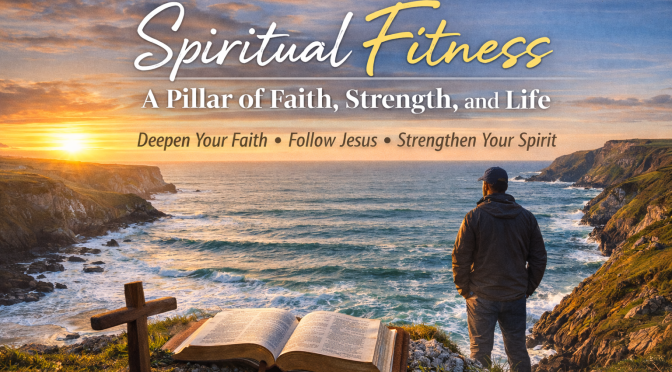
Spiritual Fitness: Strengthening My Walk With God — Why It Matters More Than Ever

If someone asked me, “What is the most important kind of fitness?” — I would answer without hesitation: spiritual fitness. It’s the foundation of all meaningful growth, the engine of peace in trials, and the compass that keeps me anchored in Jesus. In my journey of faith and life, I’ve come to recognize spiritual fitness not just as a concept, but as a daily, living exercise that informs every part of my existence.

We all know the importance of physical fitness — keeping our bodies strong, active, and healthy. And many of us now recognize how mental fitness shapes clarity and resilience. But spiritual fitness — that intentional cultivating of a deep, vibrant relationship with Jesus — is the bedrock upon which everything else stands. If my spirit isn’t strong, then even body and mind can falter under life’s pressures.

In this post, I want to explore what spiritual fitness really means, why it’s essential to life and our connection with God, and how exercising our spiritual muscles transforms us from the inside out.


What Do We Mean by Spiritual Fitness?

I like to think of spiritual fitness like muscle training, but for the soul. Just as we exercise our bodies to build strength and endurance, spiritual fitness is about developing our capacity to live in the presence of God, remain steadfast in faith, and reflect Christ in all we do. It’s a discipline that requires intention, consistency, and surrender. Spiritual fitness isn’t passive — it’s active, vibrant, and life‑changing.

The Bible gives us a framework for this kind of training. Paul encourages believers to “train yourself for godliness.” Paul contrasts spiritual training with bodily exercise, saying spiritual practice is beneficial in every way — holding promise not just for this life but for the next.

This tells me something powerful: spiritual fitness isn’t optional. It’s not something to dabble in when life feels slow or convenient. It’s a lifelong pursuit, a commitment to press toward the prize of the upward call of God in Christ Jesus. (Philippians 3:14)


Why Spiritual Fitness Matters to Life

There are countless reasons spiritual fitness matters, but I’ll start with this: life is spiritual at its core.

We can walk through the motions of daily living — earn a paycheck, maintain relationships, pursue hobbies — but if our spirit is weak or disconnected from God, everything else becomes hollow. Spiritual fitness shapes how I think, love, respond to challenges, and see the world. It doesn’t merely influence my actions — it transforms my heart.

Spiritual fitness means:

1. I See Life Through Eternal Eyes

When my spirit is connected to Jesus, I don’t define success the way the world does. I measure life through the lens of God’s Kingdom — by love, faith, hope, compassion, and obedience. I recognize that earthly achievements are fleeting, but spiritual growth is eternal.

And this perspective brings peace. In moments of disappointment, I don’t lose hope. When life feels heavy, I don’t collapse under pressure — I press into God. This ability to respond rather than react is one of the marks of spiritual fitness. Don’t just survive — you rise.

2. Spiritual Fitness Sharpens Discernment

When I spend time in the Word of God and in prayer, my capacity to discern truth increases. I can recognize the voice of God in the stillness of my heart. I can sift through confusion, temptation, and cultural noise and anchor myself in truth.

Without spiritual fitness, it’s easy to be tossed by every new idea, fearful of every challenge, or swayed by every emotion. With it, I stand firm, rooted in Jesus.

3. It Deepens Relationship With Jesus

Spiritual fitness isn’t religion — it’s relationship.

We don’t exercise our spiritual muscles to earn God’s love — that was already won for us at the cross. Rather, we exercise them to draw closer to the One who first loved us. Through prayer, worship, Scripture, and obedience, we deepen our intimacy with Jesus.

Much like physical fitness strengthens our body, spiritual fitness strengthens our resolve to love God and love others. The more we train spiritually, the more naturally love flows through us — not by striving, but by abiding in Christ.


How Spiritual Fitness Transforms the Heart

We often talk about spiritual fitness as something that equips us for life’s big challenges — and that’s true. But I’ve also learned that spiritual fitness transforms everyday living.

It Shapes My Thoughts

When I start the day in God’s presence, my thoughts are tuned to heaven rather than anxiety. I’m reminded that Jesus inhabits my praise, and that His peace surpasses understanding. The more I lean into this truth, the less my thoughts are ruled by fear.

It Guides My Decisions

Spiritual fitness brings clarity of purpose. Instead of being driven by impulse or fear, I make decisions rooted in prayer and discernment. I ask, “What honors God?” and “Where is Jesus leading me?” Rather than reacting, I respond.

It Fosters Resilience in Hard Times

I’m not exempt from pain, loss, or grief. Far from it. But spiritual fitness gives me strength in those moments — not because I pretend everything is fine, but because I know who holds me when life falls apart. When my spirit is wired to God’s strength, I can endure with an unshakeable hope.


Why Maintaining Your Relationship With Jesus Is Essential

At the heart of spiritual fitness is relationship with Jesus Himself.

Too often, we treat spiritual exercises like tasks: “Did I check my Bible reading off the list?” But the goal is not completion — it’s communion.

Jesus said, “Abide in me, and I in you.” (John 15:4). This isn’t a one‑time event — it’s a daily choice to stay connected to the Vine.

A strong relationship with Jesus offers:

1. Constant Presence

Jesus is not distant. He walks with you. In times of joy, celebration, sorrow, or struggle — He is with you. Spiritual fitness helps you sense His presence more clearly.

2. Power Over Sin

We all wrestle with temptation. But when we’re spiritually strong, those battles don’t define us — they refine us. Scripture and prayer equip us to resist, and the Holy Spirit strengthens us beyond our own capacity.

3. A Life That Reflects Christ

Spiritual fitness changes us from the inside out. We begin to bear fruit — love, joy, peace, patience, kindness, goodness, faithfulness, gentleness, and self‑control.

I’ve noticed something profound: the stronger my connection with Jesus, the more naturally I find joy — not dependent on circumstances, but on His presence. That’s spiritual fitness at work.


How to Exercise Your Spiritual Muscles

Now that we understand why spiritual fitness matters, let’s talk about how we grow in it.

Spiritual fitness is built through intentional practices — and these aren’t rigid tasks but rhythms of life that shape your heart toward God. Here are the ones that have been most transformative for me:

1. Daily Time in God’s Word

The Bible isn’t just literature — it is living and active, shaping our hearts and minds. Regular reading grounds me in God’s truth and renews my spirit. Even a few minutes a day can grow your spiritual endurance.

2. Prayer as Conversation

Prayer isn’t only about requests. It’s about relationship. I talk to Jesus, listen for His voice, and align my heart to His. Some days prayer is quiet listening — other days it’s honest expression. Both draw me closer.

3. Worship With Intention

Worship shifts my focus from life’s distractions to God’s greatness. Worship doesn’t have to be in a building — it can be in solitude, in praise through music, in gratitude, or in silence before Him.

4. Serving Others

One of the greatest ways to grow spiritually is to serve. Jesus said, “Whoever wants to be great must be a servant.” Serving others nurtures humility, love, and spiritual maturity.

5. Community and Fellowship

Spiritual growth seldom happens in isolation. Being in community encourages accountability, shared prayer, and encouragement in faith. It’s where we sharpen one another and strengthen our walk with Jesus.

6. Reflection and Response

End your day reflecting on God’s goodness — where you felt His presence, where you see growth, and where He invites deeper trust. This reflection trains your heart toward gratitude and awareness of God’s movement in your life.


Overcoming Obstacles in Spiritual Fitness

Just like physical training, there are obstacles that can make spiritual growth difficult — busyness, distraction, discouragement, or spiritual fatigue. But here’s what I’ve learned:

Discouragement Isn’t Defeat

Sometimes we feel weak spiritually — that’s normal. God isn’t surprised by your struggle. He meets you there. Spiritual fitness is not about never failing, but about rising again and leaning into God.

Consistency Over Intensity

You don’t need perfection. You need persistence. Even small, consistent steps — quiet prayer, a verse in the morning, a moment of worship — build strength over time.

God’s Strength Is Your Source

You’re not left alone in this journey. The Holy Spirit guides, comforts, and strengthens. Spiritual fitness isn’t about self‑effort — it’s Christ in you, the hope of glory. (Colossians 1:27)


Conclusion: Spiritual Fitness Isn’t a Goal — It’s a Journey

Spiritual fitness has become central to how I live, lead, love, and serve. It’s not a checklist — it’s a relationship. Not perfection — but progression. It’s not a season — but a lifelong pursuit of Jesus.

My challenge to you is this:

Focus on your relationship with Jesus today.
Choose to train your spirit, not just your body or mind.
Let your heart be transformed by His love, truth, and presence.

This is the kind of fitness that endures through trials, thrives in joy, and carries into eternity.

You were made for glory. Your spirit thrives when anchored in Jesus.

Keep pressing in. Keep seeking Him. And watch how your life — and your walk with God — becomes stronger, deeper, and more alive.

The Once and Future King: What King Arthur Can Teach Us About Jesus Christ

Introduction: Myth, Legend, and the Real King

I remember first being captivated by the legend of King Arthur—Camelot, Excalibur, the Round Table, the quest for the Holy Grail. Something about the story resonated deeply: the call to justice, the reign of a king who loved his people, the hope of renewal. In writing Episode 123—“The Allegory of Arthur”—I realised that while King Arthur may be mythic, his story echoes themes that point to something far greater: the life, work, and reign of Jesus Christ.

This isn’t to say Arthur is Jesus, or that his story is a direct one-to-one mapping. Legends stretch, evolve, diverge. But the parallels are striking: the king who comes, the land healed, the betrayal, the return. These motifs invite us to see not only the legend, but the Legendary King—Jesus Christ—the King of kings, whose reign is real, whose kingdom is eternal.

In this post I want to wander through major motifs of the Arthurian legend—kingship, sacrifice, betrayal, restoration—and show how they reflect Christ’s narrative. I’ll also explore how these reflections matter for our faith, our living, our hope. Because if the legend points us boldly toward the Gospel, then perhaps our own hearts are renewed by more than a story—they’re awakened by truth.


1. Kingship and Identity: The True Heir

King Arthur is portrayed as the rightful heir of Uther Pendragon, pulled from obscurity (the sword in the stone), raised with mystery, then revealed as king. The motif of hidden royalty echoes the concept of the Messiah—Jesus, heir to David’s throne, hidden in human form then revealed in glory.

In Arthur’s story, the king embodies virtue, leadership, protectiveness, and the hope of his people. Likewise, Jesus is described in Scripture as the Son of Man, the King of kings and Lord of lords, who came not to be served but to serve (Mark 10:45). His kingship is not just authority—but sacrificial, redemptive.

For me, reflecting on Arthur’s identity helps me see my identity in Christ: hidden, revealed, heir of the Kingdom. When I feel unworthy, I remind myself: He has claimed the throne for me. Arthur’s story whispers: every king has a kingdom; every believer has a King.


2. The Sword and the Cross: Authority, Power & Servanthood

One of Arthur’s iconic symbols is Excalibur—the sword given, or pulled, to signify his right and power. It is a symbol of authority, justice, the king’s charge to protect the realm. The sword is not merely for war, but for peace enforced.

In the Christian narrative, the cross and resurrection of Jesus symbolize the ultimate authority—not by terror, but by love. Colossians 2:15 speaks of Jesus disarming powers and authorities. His “sword” is not a literal blade, but the Word, the Spirit, the sacrifice. He wields power by surrender.

When I think of Arthur raising Excalibur, I think of Jesus lifting the cross—and raising us with Him. The king who wields the sword is the king who serves with it. For Arthur fans, the sword is a symbol of righteous leadership. For believers, the cross is symbol of sacred leadership. So when I hold my “spiritual Excalibur”—my gifts, my calling, my service—they are meaningful only because I serve under the King.


3. The Fall of the Realm: Betrayal, Weakness, and Hope

In Arthur’s legend, after years of peace, betrayal comes—Lancelot and Guinevere, Mordred’s rebellion, the realm fractures. Camelot falls not simply through external invasion, but internal compromise. The ideal fails, the king weeps, the land suffers.

In the Gospel, Jesus foretold that betrayal would come from within. Judas, Peter’s denial, and the collapse of the twelve echo the fragility of human virtue. The world Jesus came to heal is broken not only by sin but by our own betrayals and weaknesses. Yet Jesus meets the betrayal, the cross, the grave—and restores the realm.

I’ve walked through seasons of my own “Camelot” collapsing—relationships failing, my heart giving in, hope dimming. But the Christ narrative shows me that when the King comes to the cross, when the realm falls, redemption begins. Arthur’s tale reminds me: even when the kingdom falls, the King promises return.


4. The Quest for the Grail: Seeking the Divine, Finding the King

Another powerful motif: Arthur’s knights quest for the Holy Grail—a symbol of divine presence, transcendence, healing. The Grail quest is partly an external journey, partly an internal one—knights purified, tempted, transformed.

In Christian faith, the “quest” is not for mystery objects but for Christ Himself. We seek God, we yearn for communion, we respond to the call: “Follow me.” The Grail metaphor echoes our spiritual longing—yet the object of the quest is not the cup but the King who gives it.

I’ve felt that longing—searching for meaning, navigating faith, chasing signs. Arthur’s quest gives shape to the longing; Jesus gives fulfilment to it. He is the Grail I didn’t know I needed. Arthur’s story challenges me: not just to chase the symbol, but to surrender to the King.


5. The Wounded King and the Returning Hope

One of the most poignant elements of the Arthur legend is that the king is wounded (the Fisher or Wounded King myth). The land suffers with the king; when he is wounded the realm is barren. But there is also promise: the Once and Future King will return. The hope remains.

Jesus is wounded—on the cross, forsaken, yet triumphant. And He promises: I go to prepare a place… I will come again. His return brings full restoration. The realm (creation) will be made new (Revelation 21). Our waiting has purpose.

For me, the idea of the returning King changes how I live today. Arthur’s legend gives a mirror: though Camelot fell, hope remains. In Christ I hold a stronger hope: though the world groans, our King is coming. I live now in light of His return, not just nostalgia for a lost legend, but anticipation of a coming Kingdom.


6. Living the Allegory: What This Means for Us

A. Kingdom Mindset

When Arthur reigned, his kingdom was just, servant-hearted, unified. So we too are called to live under the King—seeking justice, mercy, faithfulness. It’s not just waiting—it’s living kingdom.

B. Servanthood & Sacrifice

Arthur’s best moments are not his coronation but his service. Jesus’ best moment is the cross. Christian discipleship is not seat of power but foot of service.

C. Community & Fellowship

Camelot is built around the Round Table—a symbol of equality, unity, shared mission. In Christ’s church we mirror that: every member, every gift, every servant. The King invites us into the table.

D. Hope Amid Brokenness

When kingdoms fall, streams dry, people weep, the returning promise sustains. For us: when our lives fracture, our faith wobbles, our world tugs—Christ is King, He reigns, He returns. The legend gives metaphor; the Gospel gives fulfilment.


7. Guarding the Parallel: A Caveat

While the comparisons are rich, two caveats matter:

  1. Arthur is mythic; Jesus is historical. Arthur’s story is legendary, built over centuries. Jesus’ life, death, and resurrection are claimed as historical facts by the Christian faith.
  2. Arthur is a reflection; Jesus is the Original. The legend points; the Gospel fulfils. Arthur helps our imagination; Christ changes our lives.

So we don’t worship the legend. We let the legend sharpen our vision of the Truth.


8. My Story: From Legend Lover to Kingdom Citizen

Reflecting on my own journey:

  • I once loved the myth of Arthur for escapism—knights, quests, epic battles.
  • I gradually saw how the legend mirrors longing.
  • I realised I am not merely a spectator of the myth—I am a citizen of the Kingdom of Christ.
  • The King I follow is more real, more good, more victorious.
  • My service, my quest, my waiting—all find a deeper shape under His reign.

The legend of Arthur stirred my imagination. The Gospel transformed my life. Today I live not in Camelot’s shadow, but in the light of the true King.


Conclusion: The King Lives, the Kingdom Grows

King Arthur’s tale still speaks because it points beyond itself. It points to a Kingdom that lasts, a King who loves, a hope that rises. Jesus is that King. His story is not a legend—it is living.

If you wander the legends of Arthur, may you see more than myth—may you glimpse the King who came, reigns, and will return. May you live today in his Kingdom—serving, loving, hoping. And may you rest in this truth: THE KING LIVES. The Kingdom advances. And your life matters in his story.

From Strider to King: Uncovering the Echoes of Christ in Aragorn

Introduction: Between Myth and Truth

I remember the first time I truly saw Aragorn—not just as a ranger in shadow, but as a king waiting to be revealed. In Episode 121—“The Allegory of Aragorn”—I walked through how J. R. R. Tolkien weaves into his myth a figure who wears hope, carries lineage, redeems the past—and offers restoration. Though Aragorn is fictional, his story bears astonishing parallels with the narrative of Jesus Christ, and those connections can deeply enrich our faith.

Aragorn is king, healer, guide, redeemer; Jesus is King of kings, the Great Physician, our Shepherd and Savior. The allegory isn’t forced—it resonates. And seeing that resonance helps me appreciate Christ more deeply, imagine our own journey more vividly, and live with greater hope that restoration belongs not just to fantasy, but to real history.

In this post I want to walk with you through the major parallels between Aragorn and Christ—kingship, exile and return, healing, sacrifice, renewal—how they help us understand ourselves and our Savior more profoundly.


1. The Hidden King: Exile, Waiting, and Hope

From the moment we meet Aragorn—“Strider,” a ranger living in the wilds—we sense that something or someone is hidden beneath the surface. He carries the heritage of kings, yet lives in the margins. His name is Estel (“hope”), and his path is marked by wandering and waiting.

Jesus likewise embraced humility. Though He was King of heaven and earth, He entered the world as a child, lived among us, identified with the marginalized. His kingdom began unseen, His reign revealed in service and sacrifice.

For me, this pattern matters: sometimes the King is hidden so that hope endures. We walk in “between times”—between promise and fulfilment. Just as Aragorn’s return signifies hope realized, Jesus’ first coming inaugurated a kingdom, and His second will complete it. In our waiting, we live in that tension of hope.


2. The King Who Heals: Hands of Restoration

One of the most compelling features of Aragorn is his healing gift. In Minas Tirith, the wise-woman Ioreth sees him and says: “The hands of the king are the hands of a healer, and so shall the rightful king be known.”

Jesus declared that He came “to heal the brokenhearted… to proclaim freedom for the captives.” (Luke 4:18) He touched lepers, opened eyes, forgave sins, and brought wholeness.

When I reflect on this parallel, I’m reminded of the daily kingdom work—not only triumph over evil, but compassion, restoration, renewal. The King cares for the weak. In my own story, I’ve seen Jesus heal wounds of failure, guilt, fear—everything from familial rifts to spiritual bankruptcy—not simply by power, but by presence. Aragorn reminds me: the king who leads armies is the same who knelt to heal.


3. The Sacrificial Path: Into Darkness and Back

Aragorn’s journey is marked by paths no other dared: the Paths of the Dead, the battle at the Black Gate, leading with no guarantee of victory. In many scholarly articles he is identified as a “Christ-figure” for the way he takes risk, accepts burden, and leads the weak into victory.

Jesus “descended into hell” and rose again. He faced your darkest depths, He carried the burden of sin, He entered the grave so that death would not have the last word. (See 1 Peter 3:18-20) The parallels shape our imagination of what it means to lead, to sacrifice, to restore.

Sometimes in my life I felt like Aragorn on the doorstep of the dead—that place of desolation, waiting for deliverance. But Christ goes ahead of me, into my darkness, bearing hope.


4. Kingship Revealed: Crown and Renewal

When Aragorn finally claims his throne as Elessar (“Elf-stone”), he does so not to dominate but to restore. He marries Arwen, ushers in the Age of Men and renews the realms. His reign is marked by harmony among races, healing of scars, flourishing of land.

Jesus will return and reign. Revelation paints a new heaven and a new earth, a time when God’s kingdom is fully realized. (Revelation 21) The King is revealed. But even now we live on the cusp of that unveiling—and the way we live matters.

When I reflect on this, I ask: is my “kingdom” reflected in my character, relationships, community? Am I helping restore what is broken, pointing toward renewal? Aragorn’s kingship challenges me to think of Christ’s reign today, not just tomorrow.


5. The Shepherd King and the True Heir

Aragorn is heir to Isildur, descendant of Elendil, part of the line of Númenor. But he doesn’t claim title by force. He leads as ranger, servant, protector. He shows humility, patience, and once he is crowned, he leads as shepherd king.

Jesus is the true heir—heir of all things (Hebrews 1:2), shepherd of our souls (1 Peter 2:25). He leads by example, refuses coercion, invites trust, cares for the weak.

Seeing Aragorn’s path—from ranger to king—helps me see Christ’s path—from self-emptying to exaltation (Philippians 2:6-11). It also invites me to serve in whatever place I am now—waiting, wandering, working—knowing that the King is making the paths straight.


6. Living the Allegory: What It Means for Us

A. Hope Amid Waiting

For someone who is waiting—on healing, on breakthrough, on resurrection—Aragorn is image of hope. Jesus is hope incarnate. Recognizing that helps me stay steadfast when the ring seems to weigh heavy, when the journey feels long.

B. Healing in Dark Places

Aragorn’s healing reminds me that no wound is outside Christ’s care. Whether relational scars or spiritual exhaustion, the King meets us where we are. My faith deepens when I believe that Jesus doesn’t only redeem the grand story—he binds the smallest wound.

C. Leadership as Service

Kingdom leadership is not rage, but care. Aragorn led by bearing burden for others. Christ led by bearing the cross. For me, this means in community, work, family—leadership is humble, not self-seeking.

D. Renewal of Creation

Aragorn’s restored kingdom echoes the renewal Christ promises for creation. (Romans 8:19-21) I reflect: our environment, our culture, our home—are being renewed. My life participates.

E. Identity in the Heir

If I am in Christ, I share inheritance. The allegory of Aragorn says: your identity isn’t in the fight, but in the throne you belong to. That changes how I see failure, waiting, service: I belong to the King of kings.


7. Guarding the Parallel: Not Flat Allegory

Tolkien resisted the label “allegory.” He insisted that The Lord of the Rings was not a strict one-to-one map of Christian doctrine—but a mythic “supposal.” He once wrote: “Let us suppose … that Christ became a Man such as we are in some other world.” (Paraphrase)

So we shouldn’t force every detail of Aragorn to match Christ. But when we see resonance, it illuminates truth. Tolkien’s Christian worldview (light, hope, grace) suffuses the myth. What’s important: the truth behind the myth.


8. Personal Reflections: My Journey Via Middle-earth

In my own walk:

  • I was a “Strider” for years: working, serving, wandering, waiting.
  • I felt the weight of the ring—the burden of sin, the call to sacrifice.
  • When I saw Jesus as King, it changed the way I served. I wasn’t just fulfilling tasks—I was living under a throne.
  • Community and renewal became more than words—they became lived reality.
    Tolkien’s myth helped me grasp the myth-made-real in Christ. Aragorn’s path echoes my own—from hope to leadership to restoration—even as Jesus anchors the journey.

9. Invitation: Enter the Story

Here’s how you might engage this allegory:

  • Read The Lord of the Rings with fresh eyes—you’ll notice how Aragorn’s journey echoes kingdom hope.
  • Write side by side: “How is Aragorn like Jesus here? Where do they differ?”
  • Let the story lead you into prayer: King of Kings, you reign—heal me, lead me, renew me.
  • Serve as the heir: consider your role in God’s story of restoration.

Conclusion: The King Revealed, the Kingdom Shared

Aragorn and Jesus draw together across worlds—one mythic, one historical—yet the echoes ring true. Kingship, sacrifice, healing, renewal—they all point to a kingdom not of this world, but arriving in this world through Christ.

Tolkien didn’t give us a direct map. He gave us a mirror. As I look at Aragorn, I see Christ. As I follow Jesus, I step into a real rest under a King who loves, heals, leads, and renews.

May you walk in the valley of waiting with hope. May you serve with the heart of the king-heir. May you rest in the throne of grace—and live in the renewal of the kingdom.

When Self-Righteousness Sneaks In: How It Affects Your Faith, Relationships & Freedom

Introduction: Recognizing the Mask of Self-Righteousness

There was a time I believed I had faith all figured out. I attended my church, had my devotional routine, was serving others, and in my own mind I felt right with God. Until one day someone gently asked, “Do you ever feel superior to others because of what you do for God?” I bristled at the question. But that sting prompted a deeper look at my heart.

In Episode 120—“Self-Righteous”—I unpacked that self-righteousness isn’t just an arrogant posture; sometimes it’s subtle, even well-meaning. It can be a barrier between us and God, and between us and others. It’s the belief that my performance, my devotion, my righteousness puts me in a favored position. And that belief corrodes in quiet ways: pride, judgement, isolation, spiritual stagnation.

Today I want to walk with you through what self-righteousness really is, how it affects our relationship with God and with others, how we can recognize it, and how we can move toward humility, authenticity, and freedom in Christ. My hope is … you’ll see not only the trap—but the pathway out.


1. What Is Self-Righteousness? A Clear Definition

According to dictionary definitions, self-righteousness is “confidence in one’s own righteousness, especially when smugly moralistic and intolerant of the opinions and behavior of others.” Christianity.com+1

Biblically speaking, the sin of self-righteousness happens when we rely on our own works or moral standing to make us acceptable to God, or when we look down on others because we sense ourselves better. As one guide explains:

“Self-righteousness … is the idea that we can somehow generate within ourselves a righteousness that will be acceptable to God.”

It’s sometimes tied to legalism (rule-keeping) but also to a posture of superiority (“I’m better”). The result? We avoid seeing our need for grace, we judge, we alienate others, and we distort our relationship with God.

Some key markers of self-righteousness:

  • A belief my spiritual disciplines or good deeds make me right rather than trusting Christ’s righteousness.
  • A tendency to look down on others: their mistakes, their lack of service, their difference in doctrine.
  • A denial (or neglect) of my own flaws, failures, need for growth. Self-righteousness thrives in concealment.
  • A heart that says: “I have arrived,” when in truth the Christian life is always dependently walking with Christ.

2. How Self-Righteousness Affects Our Relationship with God

A. It Obscures Grace

When I believe my righteousness is derived from me, I fail to fully rest in Christ’s work for me. Scripture repeatedly warns of trusting in self rather than in God’s mercy. Romans 3:10 says, “There is none righteous, no not one.”

The Apostle Paul writes against those who sought righteousness by works rather than faith. When our trust shifts from God’s grace to our performance, we miss the heart of the gospel: saved not by what we do, but by what He has done.

In my own walk, I realized: when I started measuring my relationship with God based on my “spiritual achievements”—the number of devotionals, the outreach hours—I started to feel spiritually superior. That superiority replaced intimacy. Instead of “Father, I need you,” I shifted to “Father, see what I’ve done for you.” The dynamic changed—from dependency to display.

B. It Hinders Authentic Repentance

True repentance lives in humility: “I am wrong. I need you.” Self-righteousness whispers: “I am right. They are wrong.”

In the Gospels, Jesus rebukes the self-righteous religious leaders—the Pharisee in Luke 18:9-14, who thanked God he was not like the tax-collector. His heart was proud and distant.

When repentance is compromised, transformation is compromised. We keep the façade, but the interior remains untouched. Grace doesn’t flow, because we believe we don’t need it. Our walk with God becomes duty instead of delight.

C. It Damages Our Intimacy with God

If I constantly compare myself to others or to my past self and say, “Look at how far I’ve come,” I risk forgetting that Jesus’ rest is not in what I’ve done—but in who He is. Self-righteousness re-directs our gaze from Christ to self, from grace to performance, from relationship to regulation.

In contrast, Scripture invites us to cast ourselves upon Christ—dirty, broken, needy—and receive love. That’s the difference between religion and relationship. Self-righteousness pushes toward the former; humility opens the latter.


3. How Self-Righteousness Affects Our Relationships with Others

A. It Builds Walls, Not Bridges

When we believe we are morally superior, we often treat others as inferior. The result: judgment replaces compassion, distance replaces connection. As one article puts it, self-righteousness often disguises itself in service or zeal—but underneath lies “misplaced trust that leads to misplaced judgment.”

In my community life, I’ve seen this: the volunteer who gives abundantly but resents those who give less; the believer who holds to a higher standard and judges those who don’t measure up. These patterns create alienation, not unity.

B. It Stunts Growth in Others—and in Us

When I claim moral authority rather than moral dependency, I stop growing. I presume I’m past certain struggles, dismiss others’ needs, and miss the opportunity to learn. Self-righteousness says: “I’ve arrived.” But discipleship says: “I’m still becoming.”

Additionally, others may be discouraged or shut out by my superiority. They see me not as fellow traveler but as unapproachable. Healthy fellowship thrives in humility, transparency, mutual growth. Self-righteousness thrives in isolation.

C. It Undermines Love and Grace

Christian community is built on grace—“forgive one another… bear one another’s burdens.” But self-righteousness says: “They should fix themselves first.” That stance empties love of its power. It removes the beauty of being loved when unlovely, forgiven when unworthy.

In Scripture, Jesus spends time with sinners, doesn’t ban them from the table. Self-righteousness would’ve shut the door. Grace opens it. Our relationships bear witness not only of what we are—but of what Christ is doing in us.


4. Signs That You Might Be Slipping into Self-Righteousness

Recognizing self-righteousness in your life isn’t easy—it often wears a mask of piety, service, devotion. Here are warning signs I’ve learned to watch for:

  • You feel justified because you give more, serve more, pray more.
  • You feel annoyed or superior toward those who serve less or struggle more.
  • You keep track of your spiritual accomplishments, and you secretly compare them with someone else’s.
  • When someone points out a flaw, you defend or deflect rather than repent.
  • You lose compassion for those who are weak or inconsistent.
  • You fear losing favor if your performance drops.
  • You begin to see your identity in your deeds rather than in Christ.

These signs don’t mean you’re beyond hope—they mean you’re aware. Awareness is the first step to transformation. As one reflection states: “Self-righteousness … keeps people from seeing their need for the gospel.”


5. How to Move from Self-Righteousness to Humility & Healthy Righteousness

A. Re-Root Your Identity in Christ’s Righteousness, Not Yours

Scripture teaches we are justified by faith, not works (Romans 3). We can do no work that earns God’s approval; instead we receive it through Christ’s work. Humility understands this truth and rests in it.

Daily I remind myself: I am not righteous because of me—I stand because of Him. That mindset shifts my motive from performance to gratitude.

B. Embrace Vulnerability and Confession

Humility begins with admitting we’re not right. In community, we confess our struggles, we own our mistakes, we receive forgiveness. This creates authenticity. A friend once said: “When I stopped pretending, people drew near.”

C. Cultivate Compassion and Grace Toward Others

Instead of judging flaws, I aim to see the divine image in others. I ask: What pressures do they carry? What hopes do they have? How can I serve rather than compare? Compassion dethrones superiority.

D. Let Your Service Be Outflow, Not Over-achievement

When serving becomes a commodity—“Look at how much I do for God”—it risks self-righteousness. When serving flows from gratitude to Christ, it becomes worship, not work. I try to check: Am I serving to be seen or serving to reflect Him?

E. Create Safe Community for Growth, Not Performance

I engage in relationships where I can show weakness, talk about failure, ask for help. Communities that only celebrate “success” breed self-righteousness. Communities that confess, support, and grow together reflect the gospel.

F. Rehearse the Gospel Continuously

Every morning, I rehearse: I was once lost. Christ found me. I am justified by His blood. I live now by His Spirit. That ongoing gospel reminder keeps the heart soft and eyes humble.


6. Reflecting Personally: My Journey Through This Struggle

In my own story, I see three phases:

Phase 1: Enthusiasm and performance. I was bold in ministry, active in service, and I felt spiritual. But a part of me believed I earned favor.

Phase 2: Confrontation and awakening. One friendship called me out gently and rightly: You’ve become more about your works than your walk. I realized my “good Christian” identity had become armor. My relationship with God had become duty rather than delight.

Phase 3: Transformation and dependence. I returned to the simplicity of the gospel, embraced my need for Christ daily, entered community with honesty, and began serving from overflow, not from obligation. I saw relationships heal, I saw freedom grow, I saw faith deepen.

Through that journey I discovered: humility doesn’t mean being weak—it means being honest, being dependent on Christ, being open to others, and living out love rather than status.


7. Why Healthy Righteousness Still Matters

Some might hear this and say: So works don’t matter? Service isn’t important? That’s not the message. Healthy righteousness matters; it flows out of gospel identity, not into it.

When I serve, when I obey, when I grow—it matters. But the difference is motive and root. Healthy righteousness says: Because I’m loved, I love. Because I’m transformed, I serve. Because Christ gives me conscience, I keep it. The focus remains Christ, not self.

The gospel gives power not only to believe once—but to live differently every day. Humility frees us to pursue obedience, service, love—not to prove, but to respond.


8. The Impact on Your Faith & Life When You Leave Self-Righteousness Behind

A. Freedom from Performance

When your righteousness is Christ-based, you stop living to be right and start living in right relationship. That brings freedom: from comparison, from shame, from the need to measure up.

B. Deeper Relationship with God

The gap between you and God narrows. You approach not as someone who must prove himself, but someone who rests in Christ. Intimacy grows. Worship becomes less about what you do and more about who He is.

C. More Authentic Relationships

Your relationships become real. You no longer have to perform for others. You can confess your struggles, receive grace, extend grace. Others draw near; community deepens.

D. Increased Compassion & Impact

When you’re no longer consumed with yourself, you’re free to serve others from a heart of empathy, not superiority. Your influence becomes relational, not regulatory. People follow the humble, not the haughty.

E. Eternal Perspective

Self-righteousness is temporal: how I look, what I do, how I compare. The gospel is eternal: the righteousness of Christ imputed, identity secured. That perspective shapes priorities, decisions, how we invest our lives.


Conclusion: From Self-Righteous to Rooted in Grace

If I were to say one thing from my journey and from Episode 120’s reflections: Ask yourself daily: “Am I living by my performance or by His grace?”

Self-righteousness may begin subtly—pride in service, in knowledge, in moral standing. It whispers that you can be good enough. But the gospel shouts: You are loved because of Him. Not because of you.

Let’s walk out together—not perfect, but humbled. Not superior, but connected. Not self-justified, but Christ-justified. Let our faith be anchored not in our efforts but in His work. Let our relationships reflect not our virtue but His mercy. Let our lives point not to our righteousness but to His—freely given, beautifully applied.

May you live emerging from self-righteousness into grace. May your faith deepen, your humility bloom, your relationships flourish. And above all, may you find your identity in Christ alone—righteous, beloved, free.

The Architect of Cosmic Harmony: Why Order in the Universe Matters to Our Lives

Introduction: Awe Meets Purpose

When I ponder the night sky—each star tracing its path, planets obeying gravitational dance, galaxies spiraling in majestic arcs—I’m inevitably drawn to wonder: Why is there order at all? Why does the universe function with such precision instead of disintegrating into chaos?

In Episode 119: “Order in the Universe”, I explored this question: the observable order—laws, constants, systems—doesn’t just hint at design; it demands it. That order has daily significance—not only in physics or astronomy, but in faith, in identity, in our moral framework. And at its foundation stands the Chief Architect—God Most High—who sustains, orders, and redeems creation.

I want to walk with you through how the universe’s order reveals God’s nature, how that order anchors meaning in our lives, and how we can align our hearts with the design so that our lives thrive under His blueprint.


I. Seeing Order: The Universe Is Not Random

A. The Intelligibility of Reality

One of the most striking premises of science is that the universe is intelligible—laws of physics, mathematical consistency, predictability. If things were purely chaotic, science would collapse. But the fact that we can formulate equations, predict orbits, model atomic behavior, means the universe obeys patterns and structure. Without that, architecture, medicine, engineering—all of human endeavor crumbles.

This aligns with theological tradition: the created world isn’t arbitrary—it reflects an ordering mind. As a blog meditation put it, “the universe’s obvious order is accidental” is a philosophical posture, but observing consistent law, interdependence, harmony across scales suggests intentional ordering.

B. Order in the Cosmos, Order in Nature

  • The regular cycles: day/night, seasons, lunar rhythms.
  • Laws of thermodynamics, motion, electromagnetism.
  • Biological systems: DNA codes, metabolic pathways, ecosystems.
  • Human experience: logic, language, mathematics.

These aren’t random coincidences. They point to a coherent cosmos with internal structure. The order of the universe (in theological terms) is the set of relationships—between parts and whole, contingent beings, and God—structured toward a coherent cosmos.

C. Contingent Order and Its Ground

Christian theology teaches that the order we observe is contingent, not self-subsisting. That means it depends on something outside itself. The order doesn’t explain itself; God is the ground of that ordering. Creation is sustained, not autonomous.

A theology reflection on “contingent order” argues that order is real, observed through science, but its controlling ground lies in the divine. God gives the “why” behind the “what.”

This is not just abstraction—if order is contingent, then every law, every pattern, depends on God’s sustaining will.


II. God as Chief Architect: The One Who Orders All Things

A. Biblical Foundations: God as Logos, Creator, Sustainer

In Scripture, God is called the Word (Logos) through whom all things were made. John 1:3 declares: “Through Him all things were made; without Him nothing was made that has been made.”

Creation is not chaos turned to order—it is order given. God is not a distant designer; He is the architect who designs and sustains.

In theological reflection: the “Word (Logos) is the ordering principle” — through Him all that exists is intelligible.

Likewise, as theologians historically have taught, God is like a master architect. Medieval Christian thinkers—even Thomas Aquinas—used analogies of “artifex” (artist/architect) to describe God’s creative ordering of the universe.

B. Order of Parts and Order to the Whole

In Thomistic synthesis, the order of the universe is twofold:

  1. Order among parts: how atoms, planets, systems, life forms relate to one another.
  2. Order of all to God: how the whole creation is ordered toward its ultimate end in God.

Thus, every creature has value not simply as an isolated object, but in relation to the whole cosmos, integrated by God’s purpose.

C. Sovereignty, Providence & Permitting Disorder

A challenge arises: we see disorder—evil, suffering, brokenness. How does that square with orderly design?

Christian perspective holds that God allows privations (failures of ordering) as consequences of free will or the fall. Evil is not a created thing, strictly speaking, but a corruption or disorder of what should be. Yet even in permitting, God orders the redemption of disorder toward His grand design. In classical theology, God brings good even out of evil, integrating it into His redemptive order.


III. Why Cosmic Order Matters to Our Daily Lives

Order isn’t simply a cosmic abstraction—it touches how we live, how we think, how we find meaning.

A. Moral & Ethical Framework

If the universe is created and ordered, then morality isn’t arbitrary. Goodness, purpose, rightness are anchored in the character of God—the One who orders. We live in a universe where justice matters, where wisdom is real, and where choices align or misalign with ultimate order.

Order provides an ethical grid. When we act selfishly, we flout design. When we love, serve, cultivate faith, we align with the ordering will of God.

B. Stability, Peace & Trust

In a world of chaos—storms, disease, social upheaval—knowing there is underlying order offers peace against anxiety. It’s trusting that beneath transient disturbances, God governs. My own journey has often leaned on this: when life diverged, I returned to the anchor—God’s ordering promises. Over and again, that trust steadied me.

C. Purpose, Meaning & Teleology

Order gives direction, not random wandering. If life were purely chaotic, our efforts would be meaningless. But in this ordered cosmos, human life fits, flows, and contributes toward beauty, redemption, love. Order grounds teleology—purpose.

I’ve often asked: Why am I here? The answer becomes richer when I see myself not as a cosmic accident, but as intentionally placed within God’s ordered story.

D. Harmony and Flourishing

Human flourishing happens when we live in alignment with cosmic order—spirit, mind, body, community, environment. When relationships function, when justice is pursued, when creativity flows, when weakness is redeemed—we reflect the Creator’s ordering.

When we rip away order (abuse, deceit, chaos), life suffers. But when we cultivate order (discipline, integrity, worship, community), life thrives.


IV. How to Align Our Lives with Cosmic Order

The big question: how do we live in tune with this universal ordering?

1. Seek God Through Prayer, Scripture & Wisdom

Regular communion with God aligns our internal world to His design. Scripture reveals ordering principles (love, justice, humility). As we absorb His Word, our desires, decisions, vision come into sync with cosmic order.

2. Embrace Structure, Discipline & Ritual

Order in little things cultivates order in life. Rhythms of work and rest, Sabbath, communal worship, accountability—these are not burdens, but scaffolding to order. I’ve learned that structure isn’t stifling—it’s freedom within boundaries.

3. Steward Creation Responsibly

Care for creation (environment, body, relationships) is participation in God’s ordering work. When we mismanage, exploit, or damage, we resist the architect’s design. But when we steward, cultivate, heal, we reflect it.

4. Live Ethically & Justly

Pursue justice, mercy, truth. Treat others with respect, fairness, love. Let your life be a microcosm of God’s ordering will. Even small acts of integrity matter—they echo cosmic harmony.

5. Trust God in Disorder

Inevitably, disorder intrudes—loss, injustice, brokenness. In those seasons, we don’t abandon faith. We trust that God can weave disorder into redemptive order. We pray, we struggle, we rest in His wisdom. Over time, even brokenness can yield new beauty.


V. Personal Reflections: What Order Has Meant in My Walk

As I reflect on seasons of my life:

  • In times of confusion, I discovered that God was reordering my heart, pruning chaotic desires, rearranging priorities.
  • When relational conflict threatened to unravel, leaning into God’s ordering and seeking reconciliation aligned me back to harmony.
  • During storms—doubts, losses—I returned to truths: God’s constancy, the promise of redemption, the awareness that He governs not only the stars but my smallest steps.

Each victory and test deepened my sense that life’s order is not rigid dullness—but a living, dynamic alignment with the grand Architect.


VI. A Thought-Provoking Invitation

I invite you:

  • Pause and ponder: where in your life do you sense disorder? Where do you long for clarity, structure, healing?
  • Ask: How might God be ordering that space?
  • Begin small: adopt a rhythm, commit to fewer distractions, ground your decisions in Scripture.
  • Trust: even when life seems disordered, God is weaving a bigger design.

Conclusion: The Universe Ordered, the Creator Revealed

I believe in the order of the universe not as an abstract theory—but as a living promise. Order given, sustained, redeemed by God Most High. That order shows us He is not capricious, not random, not distant—but the Chief Architect, the one who planned, loves, and orders for glory and our flourishing.

As we submit ourselves to that ordering—to live ethically, humbly, purposefully—we reflect His design. We anchor in peace, we find meaning, we participate in cosmic harmony.

May your life resonate with the architectural rhythm God set in motion from the dawn of creation—and may you walk in trust that the One who ordered galaxies also attends to your heart.

The Value of Each Other: Why Community & Fellowship Shape Our Faith and Life

1. Introduction: A Call Out of Isolation

I remember in a season of my life when faith felt like a solo journey. I read the Bible, prayed, but something was missing. I felt disconnected, spiritually dry, though I was doing many “right” things. It was during Episode 117—“The Value of Each Other”—that I recognized how God meant for us to walk together. We are not meant to do this alone.

Fellowship isn’t an optional add-on—it’s woven into the DNA of Christianity. From the early church devoting themselves to teaching, eating together, prayer, to believers “bearing one another’s burdens,” the Scriptures show that community isn’t just good for us—it’s essential.

My goal in this post is to encourage you—if you’re new, hesitant, worn out, or wanting more—to embrace Christian community. To see how fellowship strengthens faith, transforms daily life, and becomes a conduit for grace, love, and growth.


2. What the Bible Says: Scriptural Foundations for Fellowship

We see abundant teaching in Scripture that fellowship and community are vital. Here are some of the foundational passages that have helped me understand this more deeply:

  • Acts 2:42: “They devoted themselves to the apostles’ teaching and to fellowship, to the breaking of bread and to prayer.” This shows the early church’s rhythm—not just gathering to hear truth, but to share life, worship, break bread, and pray together.
  • Hebrews 10:24-25: “And let us consider how to stir up one another to love and good works, not neglecting to meet together… encouraging one another…” Community is an instrument for mutual encouragement and spiritual momentum.
  • Proverbs 27:17: “As iron sharpens iron, so one person sharpens another.” Fellowship refines us—through challenge, support, correction.
  • 1 John 1:6-7: If we walk in the light, we have fellowship with one another…and the blood of Jesus cleanses us from sin. Community and confession, transparency, walking in the light—these are interlinked.

The picture is unmistakable: life with Christ is life together with others. Fellowship is both vertical (our relationship with God) and horizontal (our relationship with other believers). When we neglect community, we weaken that rich, relational ecosystem God has designed.


3. How Community Deepens Faith

Here are ways community has deepened my faith, and how I’ve seen it work in the lives of others:

A. Mutual Encouragement

When I am discouraged, the faith of others gives me hope. Hearing testimonies, seeing people serve, seeing faith persevering in hardship—it rekindles my trust in God. I’ve had moments where a simple message or phone call from a believer has kept me from giving up.

B. Accountability

Walking with others means I can’t hide. When my choices drift away from what I want God to use in my life, church friends, small group members, or mentors can lovingly point me back. This keeps me honest, growing, and less likely to drift. Without accountability, it’s easy to rationalize sin or neglect.

C. Spiritual Gifts & Service

Community provides a platform to exercise spiritual gifts: encouragement, teaching, hospitality, giving, mercy. As I’ve served others, I’ve grown in humility, patience, and joy. Service isn’t just for others—it shapes my heart.

D. Shared Learning & Growth

I learn so much from others—different perspectives on Scripture, different life experiences, ways they’ve prayed, studied, overcome temptation. My understanding grows richer when I engage with others in Bible studies, group discussions, listening to sermons, sharing insights.

E. Suffering Shared

When trouble comes—loss, failure, sickness—community carries much of that burden. It becomes a place where sorrow is borne, where prayers cover the wounds, where presence more than words sometimes does the most. In those times, faith is both tested and strengthened.


4. Fellowship’s Impact on Life: Beyond the Spiritual

While spiritual benefits are essential, community and fellowship also improve life in concrete ways:

A. Emotional Support & Mental Health

Humans are relational by design. Feelings of loneliness, discouragement, or anxiety are often mitigated when we are with others who care. Having people who pray for you, encourage you, sometimes just sit with you in silence—in those moments, emotional resilience is built.

B. Purpose & Belonging

Being part of something bigger than myself gives life purpose. It’s not just “me and God”—it’s “me, God, and others.” I belong. I contribute. I am needed. Knowing there are people who believe in me keeps me moving forward even in seasons of doubt.

C. Wisdom & Perspective

When I’m too close to a problem, I can’t see clearly. Fellowship gives perspective. Friends bring wisdom, sometimes correction, sometimes encouragement. They see what I miss. They speak truth. They help me avoid blind spots.

D. Generosity & Service

Being involved in a Christian community inspires generosity—not just of resources but of time, compassion, effort. It teaches me not to hoard my gifts or time but to invest in others. That, in turn, produces joy and growth.

E. Accountability in Life Choices

Community influences decisions—how I spend time, who I spend time with, where I invest, what I watch or listen to. Being part of a group that cares about holiness and integrity creates a healthy environment for making wise choices.


5. Practical Ways to Cultivate Community & Fellowship

If you long for deeper community or want to strengthen existing fellowship, here are what I’ve found helpful—they’re not perfect, but they work.

1. Join or Start a Small Group

Whether at church, through work, online—small groups of 4-10 people reading Scripture, praying together, sharing life—these are life changing. In my seasons of growth, small groups have been where I learned most, where I obeyed most, where I rested most.

2. Be Intentional in Relationships

More than just attending church, I strive to invest in one or two relationships deeply—coffee, calls, shared meals. Ask someone, How is your soul? Listen. Pray together. Be present.

3. Serve Together

Service binds. When I volunteer in ministry, help with kids, assist someone in need—working together toward common goals builds trust, reveals character, strengthens the body of Christ. Shared purpose builds unity.

4. Pray with and for Others

Nothing builds fellowship faster than praying together. Group prayer, intercessory prayer, being vulnerable in prayer about needs and struggles—these moments knit hearts together with Christ’s compassion.

5. Worship Collectively

When we sing together, worship together, it reminds us we’re part of something greater. Even when personal faith feels weak, corporate worship lifts us, reminds us of God’s power, our identity in Him.

6. Be Welcoming

Hospitality is powerful. Opening your home or schedule to others, welcoming newcomers, making space for those who feel left out—it’s embodying God’s love. Some of my deepest fellowship has come through simple lunches, back porch talks, shared food.

7. Practice Forgiveness & Grace

Community isn’t perfect people. Conflict will happen. Differences will appear. Fellowship grows healthiest when grace is extended, offenses are addressed, love covers a multitude of sins. This takes humility, confession, a heart set on unity.


6. Challenges to Fellowship—and How to Overcome Them

Community is beautiful—but it’s not always easy. In my journey I’ve encountered hurdles. Here are common barriers, and how I’ve dealt with them:

A. Busyness & Priorities

Time is scarce. It’s tempting to say, I’ll do community when I’m less busy. But the truth is, community must be a priority. I schedule small-group meetings, Sunday gatherings, meaningful conversations like any important appointment—because they shape me.

B. Disappointment & Hurt

I’ve been hurt by church, by people who dropped the ball, offended me, or let me down. Trust got shaky. But God is real through imperfect people. I learned to keep choosing to open up, forgiving, setting healthy boundaries, and seeking community where genuine love and accountability are practiced.

C. Difference & Diversity

Sometimes personalities clash. Differences of background, opinion, style can bring friction. But those differences, when acknowledged and respected, can also bring richness. I’ve seen growth when people with different gifts, seasons, and viewpoints share together—they stretch me, teach me, deepen my faith.

D. Vulnerability & Fear

It’s scary to let people know my weaknesses, my doubts. But hiding only isolates. When I begin to share, authenticity invites healing and connection. I remind myself that vulnerability isn’t weakness—it’s trust, it’s faith.


7. What Community Looks Like in My Life

Here are snapshots from my own walk where community has brought tangible strength:

  • A season of grief where I couldn’t sleep. I had friends praying with me, bringing meals, just sitting in silence. Their presence held me steady when I couldn’t hold myself.
  • A small group didn’t just meet to talk. We shared accountability on scripture reading, honesty about sin struggles, encouragement on spiritual disciplines. Because of that, I grew more in consistency than I ever had alone.
  • When I considered changing jobs, community provided counsel and prayer—not just opinions, but spiritual perspective. They helped me discern—not just what looked good, but what aligned with God’s calling.

These examples remind me: fellowship isn’t extra—it’s essential.


8. The Eternal Value of Each Other

Community doesn’t just shape our now—it echoes into eternity.

  • Scripture speaks of believers standing before God together, worshipping eternally, city of saints gathered together. Fellowship in this life foreshadows fellowship at Christ’s return.
  • What we do now in relationships—how we love, forgive, serve—matters for Kingdom building. It impacts not only personal growth but legacy: who we helped, who we encouraged, who saw Christ through us.

Your life’s story will overlap with others’ stories—and when community is central, those overlaps are places of grace, healing, testimony, and beauty.


9. Conclusion: The Value of Each Other Starts Now

Here’s what I want you to take away:

  • Christian community and fellowship are more than nice—they are essential for growing faith, keeping hope alive, and living out Christ’s love.
  • Your faith doesn’t flourish in isolation. It deepens when shared. Your struggles lighten when carried together. Your joys multiply when celebrated together.
  • To embrace fellowship is to trust God with your vulnerability. It is to believe that He can use community—imperfect, messy, beautiful—to make you more like Jesus.

If you are feeling alone, discouraged, or spiritually dry: take one step today:

  • Reach out to someone and share your heart.
  • Ask to join a small group.
  • Serve someone near you.
  • Invite someone over.

Don’t wait for perfect people or perfect settings. Let fellowship be the soil where faith grows.

I believe in the power and value of each other. I’ve lived it. I’m being changed by it. And I pray you will too.