
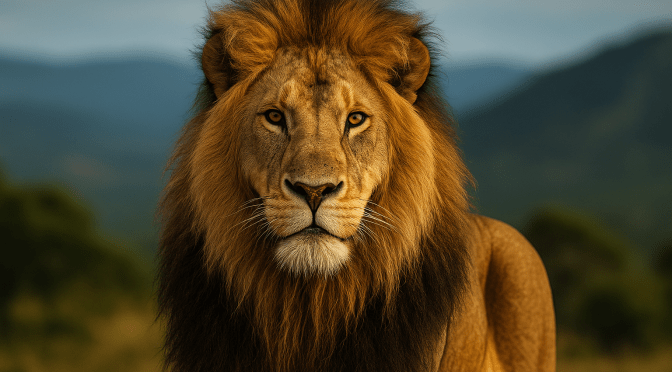
Introduction: Between Fiction and Reality
I remember first reading The Lion, the Witch and the Wardrobe. In that cold Narnian winter, the figure of Aslan struck me—not just as a majestic lion, but as something far greater, as though he bore echoes of a reality beyond the pages. Over time, those echoes have deepened. In Episode 118—“The Allegory of Aslan”—I reflected on how C.S. Lewis used Aslan to “suppose” Christ in a parallel world, intentionally inviting us to see Christ anew.
Aslan is a fictional character—but the way Lewis crafts him invites us to see Jesus in color, metaphor, and story. The resemblances are profound: sacrificial death, triumphant resurrection, loving leadership, humble mercy. But Lewis also resisted strict allegory and insisted his stories were more than symbolic dressings. In fact, he described Aslan as a supposal: “Suppose there were a Narnian world… and Christ became a lion there.” (Lewis scholar commentary)
In this post, I want to walk with you through the major resonances between Aslan and Jesus—how the parallels deepen our faith, how they awaken fresh wonder—and how encountering Aslan can draw us closer to Christ Himself.
1. Kingship, Majesty, and Royal Authority
From the outset, Aslan is king. He is the rightful ruler of Narnia. In The Lion, the Witch and the Wardrobe, Mr. Beaver says to the children: “Aslan is a lion — the Lion, the great Lion.” He is not a usurper—he is the true King come home. He commands authority, speaks with weight, and rules with love.
Jesus, too, is King. In Revelation 19:16, He is called King of kings and Lord of lords. His reign is both transcendent and personal. Jesus doesn’t seize power through force—He accepts it through humility and sacrifice.
The parallel here is more than surface. Aslan doesn’t rule by fear or coercion; he leads by presence, by sacrifice, by personal engagement. Jesus likewise calls us not merely to obey from fear, but to follow a King who shepherds, heals, and redeems.
2. Sacrifice and Substitution: The Stone Table and the Cross
This is perhaps the most striking parallel. In Narnia, Edmund betrays his siblings and is claimed by the White Witch under the “deep magic”—justice demands death for treachery. Aslan offers himself in Edmund’s place on the Stone Table, accepts humiliation and death, then—on the “deep magic from the dawn of time”—rises again, breaking the enchantment and defeating death.
This mirrors the biblical narrative. Jesus, who had no sin, took upon Himself the penalty we deserved. He died on the cross, was buried, and rose again—defeating sin and death for all who trust Him (1 Corinthians 15). The sacrificial act by Aslan helps readers understand substitution—someone stepping in for the one who deserves the penalty.
Yet Lewis was careful not to reduce Christ to allegory. As he stated, Aslan is not a “mere allegory.” Instead, Aslan is a portrayal of what Christ might be like in a different world. He is more than symbolic; he is incarnate in the mythic Narnia.
For me, this keeps the picture vibrant. Every time I reengage Aslan’s sacrifice, I see not only a Christian trope—but a living paradox: death that wins, surrender that reigns.
3. Resurrection, Triumph, and Authority Over Death
Another parallel: Aslan’s body disappears from the Stone Table after his death, revealed that “He is not a man to have a corpse,” and He walks away in regal procession. The power of death is broken; the enchantment shattered.
Jesus’ resurrection likewise is the central Christian hope. He conquered death and inaugurated new life (Romans 6). The women came to an empty tomb; the grave could not hold Him. That victory reverberates over all of creation.
When I consider Aslan’s resurrection, I feel hope even in my darkest times. The narrative reminds me that no shadow is final. Jesus rises anew—and that same triumph is meant to dwell in us.
4. Justice, Mercy, and the Dance Between Them
One of the beautiful tensions in both Aslan’s character and Christ’s work is justice infused with mercy. The deep magic demands that traitor pays. But Aslan steps in, paying the price, so mercy can flow without law being abolished entirely. His resurrection transforms the meaning of the law.
Jesus embodies that exact tension. He upholds God’s justice—sin has its consequence—but extends mercy to those who turn to Him. “Mercy triumphs over judgment,” Scripture says (James 2:13). In Christ’s atonement, justice and grace meet.
This truth reshapes how I view God’s character. He is not an arbitrary judge nor a permissive friend—but a King whose love is strong enough to demand justice and large enough to offer mercy.
5. Love, Humility, and Servanthood
Aslan’s rule is not distant; he engages with children, speaks with them, walks with them, heals them. He comes close. He lifts burdens and guides. He bears scars, yet remains present and tender.
Jesus, too, walked among us, served others, offered healing, wept with mourners, washed feet, wore humanity fully (Philippians 2). His power was never just celestial — it was compassionate, accessible.
I often think Aslan’s interactions with the Pevensie children mirror Christ’s tender care with the lost, the broken, the small. That is a picture that stirs my soul. This blend of majesty and nearness—of roaring authority and gentle whisper—is what I see in Christ.
6. The Return, the Restoration, the Hope
In the Narnia saga, Aslan is not just present in one moment—He is cosmic, eternal, returning to make all things new. The final book, The Last Battle, speaks of a new Narnia, free from betrayal, renewed eternally.
Christian eschatology—the “already and not yet”—holds the same hope. Jesus will return, death will be abolished, creation redeemed, believers ushered into eternal presence. Revelation paints a New Heaven, New Earth, where God dwells with His people.
When I read Narnia’s promise of restored creation, I find it echoes the biblical promise. These myths guide my heart to hope—not in what is yet, but in what is coming, and in what is already true in Christ.
7. Distinctions to Guard: Not Perfect Allegory
While these parallels are rich, a few caveats matter:
A. Not One-to-One
Lewis did not intend strict allegory. He resisted characters being direct “types” or one-to-one mappings. He called his method “supposal.” He once wrote:
“If Aslan represented the immaterial Deity in the same way in which Giant Despair … represented despair … he would be an allegorical figure. In reality, he is an invention giving an imaginary answer to the question, ‘What might Christ become like if … He chose to be incarnate … as a lion?’”
So we should not force every detail of Aslan to match Jesus—rather see how the narrative evokes Christ’s character in imagination.
B. The Context Is Mythic, Not Historic
Aslan’s world is fantasy. His actions happen in a mythic setting, with magic, talking animals, enchantments. Jesus happened in history, in a particular people, place, time. That difference doesn’t diminish the resonance—it simply frames how we interpret the analogies.
C. Avoid Over-Spiritualizing
We should not spiritualize every event in Narnia. The story’s power is in its imaginative truth—not every twist has direct theological meaning. But when a scene resonates, it invites reflection, not forced mapping.
8. What These Parallels Do for My Faith
Reflecting on Aslan vs. Jesus has impacted me in several ways:
- Fresh Imagination: I see Christ through a different lens, through literary imagery, and feel wonder renewed.
- Accessible Grace: Aslan’s willingness to die for Edmund helps me hold my own weakness tenderly—God’s grace is wide.
- Holistic Worship: I worship Jesus not just as doctrine, but as Majesty made personal—roaring king and gentle friend.
- Hope in Waiting: The promise of new Narnia gives me language for longing, endurance, and longing for Christ’s return.
- Invitation to Story: My own story, with its betrayals, resurrections, and transformations, fits into God’s overarching narrative more richly.
When I tell others about Aslan, I’m actually telling them about Jesus—sometimes more accessibly, sometimes more imaginatively.
9. Walking with Both Worlds
If you’re new to Narnia or hesitant about fantasy, here’s how you can explore this parallel:
- Read The Lion, the Witch and the Wardrobe slowly, pausing to reflect how scenes echo Gospel themes.
- Write side-by-side: “How is Aslan like Christ here?” “Where do they differ?”
- Let the story evoke prayer: talk to God about betrayal, resurrection, longing.
- Use Aslan as a springboard—not buffer—to Christ: always point back to Jesus.
I sometimes imagine Jesus in Narnia—if He were a lion in that world, what would He speak? What would His roar sound like? That imaginative exercise draws me closer to the real Lion.
Conclusion: A Lion’s Roar Echoing Through Eternity
Aslan and Jesus speak across worlds—one imagined, the other historical; one mythic, the other incarnate. Yet the echoes are real. The narrative threads—kingship, sacrifice, resurrection, mercy, commitment, hope—invite us to see Christ anew.
C.S. Lewis didn’t offer allegory. He offered a supposal: What if Christ became incarnate as a lion in another world? That question opens a door—one through which our imagination meets divine reality.
I invite you: revisit Narnia with fresh eyes. Let Aslan draw you into worship. Then follow the path back to Jesus, where the roar of that lion converges with the roar of the Lamb. There, in that convergence, your faith is enriched, your vision expanded, and your heart awakened to the timeless majesty of Christ.
 3 Pillars Podcast