
Introduction: Why Fitness Matters — Beyond the Mirror
I’ve always believed that faith, mind, and body are interconnected parts of who we are. We often talk about spiritual growth and mental discipline — but what about the body? Over time, I came to see that physical fitness, when rightly understood, is not a sideline to faith — it can be a key pillar, a tool, a calling for serving God more effectively.
In my podcast “Physical Fitness Devotion” (Ep. 1, Season 5), I began unpacking this vision: that staying fit isn’t vain — it’s stewardship. It’s not about pride or vanity — it’s about honoring the temple God entrusted to us, preparing ourselves to serve others, and cultivating discipline that strengthens more than just muscle: it strengthens character, resilience, and readiness.
In this post, I want to explore how physical fitness can be a spiritual practice, a form of worship, and a powerful way to serve our King — body, soul, and Spirit. I’ll share biblical foundations, practical strategies, mindset shifts, and reflections on making fitness part of one’s faith walk.
1. Biblical Foundations: Our Bodies as Temples of the Holy Spirit
One of the clearest biblical mandates for honoring our bodies comes from 1 Corinthians 6:19–20: “Do you not know that your bodies are temples of the Holy Spirit within you, whom you have received from God? You are not your own.”
To treat the body with care, to nurture strength, health, and vitality, is to honor God — because our body is not ours, but His. It’s entrusted to us, and how we steward it reflects our gratitude, reverence, and readiness to serve.
Another clear encouragement is found in 1 Timothy 4:8: “Bodily training is of some value, but godliness is valuable in every way.”
This verse doesn’t elevate exercise above godliness, but it affirms that training the body has value. It offers an opportunity — a God-given tool — not for vanity, but for discipline, stewardship, and health. And when approached with the right heart, it becomes an act of worship.
Over the years, faith leaders and theologians have echoed this idea: fitness isn’t simply worldly concern or fleshly pride. It can be “fitness for purpose” — being prepared to serve, carry burden, persevere, and glorify God with the vessel He created.
So for me, this truth reshaped the way I viewed working out, eating well, resting properly. It stopped being about looks — it became about stewardship.
2. The Mind-Body–Spirit Connection: Why Fitness Impacts More Than Muscles
Physical training doesn’t only improve appearance or cardiovascular health — it dramatically influences mental health, emotional well-being, and cognitive clarity.
Here’s what research consistently shows:
Regular exercise reduces stress, anxiety, and symptoms of depression. Exercise boosts mood, self-esteem, and resilience, and helps sharpen concentration, memory, and mental performance. Physical activity supports better sleep, lowers risk of chronic disease, improves longevity, and strengthens immunity.
When I think about spiritual life — prayer, worship, ministry, service — I see many demands. To serve others, lead well, stay emotionally stable, patiently love, and remain spiritually alert — these require energy, clarity, resilience. Physical fitness supports all of that.
In moments of stress or spiritual dryness, I’ve often found that a workout or a swim doesn’t just restore my body — it renews my mind and my spirit. It helps me engage Scripture with sharper eyes, pray with deeper sincerity, encourage others with steadier strength.
Fitness becomes more than a self-care routine — it becomes spiritual maintenance. It reaffirms that body and spirit are not separate in God’s design.
3. Aligning Fitness Goals with Kingdom Purpose
So how do we bridge the gap between gym routines and spiritual devotion? Here’s the mindset shift I adopted — and I encourage you to consider it too.
A. Fitness as Stewardship, Not Selfishness
When we treat our body as God’s temple, exercising and caring for it becomes stewardship, not vanity. It’s not about being admired by others — it’s about being faithful before God.
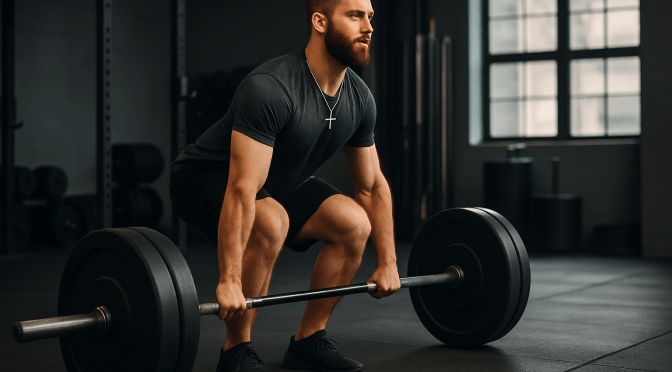
We don’t lift weights to be seen — we lift weights to be ready. Ready to carry, serve, endure. Ready to love others sacrificially, to stand firm in trials, to endure long ministry hours, to nurture others.
B. Fitness as Discipline — Training Body & Spirit Together
Physical discipline builds spiritual discipline. When I learn to deny comfort, push through fatigue, show up consistently for workouts — I train more than muscle: I train character, perseverance, self-control.
This echoes scriptural imagery of the Christian life as a race. Staying “fit” becomes a metaphor and a practice for running well the race of faith — disciplined, perseverant, focused on the prize that transcends this life.
C. Fitness as Worship — Every Rep, a Reminder of God’s Gift
Imagine pausing mid-workout and thanking God for the gift of strength, health, breath, mobility, coordination. Every breath, every heartbeat, every drop of sweat — a reminder: He made us, redeemed us, gave us life.
When we frame fitness this way, it shifts from self-help to worship. It becomes gratitude expressed in action.
D. Fitness as Preparation for Service
Ministry isn’t always neat or easy. It often demands energy, strength, long hours, emotional stability. By caring for our body, we prepare ourselves to serve more faithfully.
For me, fitness is a tool — not the goal itself, but a means. A means to remain steady in service, strong in trials, alive in spirit, clear in mind, compassionate in heart.
4. Practical Strategies: How I Turn Fitness into Worshipful Discipline
Here are the practical steps and habits I use to integrate physical fitness into spiritual discipline. You can adapt them to your life, schedule, and calling.
1. Set Clear, God-Centered Intentions
Before I begin any training program, I ask: Why am I doing this? If the motive is vanity, comparison, or fleeting approval — I pause and re-center. If the motive is stewardship, worship, readiness — I move forward.
Write down your intentions. Let them be prayers.
2. Build a Balanced Regimen — Body, Mind, Rest
Fitness isn’t just lifting or cardio — it’s balanced living. For me, that means:
Regular strength training or functional fitness Cardiovascular work: walking, swimming, running, or other active movement Recovery: proper sleep, stretching, rest days Nutrition and hydration — honoring the body with what it needs
Balance helps prevent burn-out. It honors your body as a temple — not a project.
3. Combine Physical Work with Spiritual Work
I often take walks early in the morning to pray, meditate, reflect on scripture. Sometimes I lift weights and listen to worship or scripture readings. Sometimes I sit in quiet afterward and journal what God is doing.
This isn’t multitasking — it’s integrated discipline: body and spirit aligning toward Him.
4. Practice Consistency Over Perfection
You don’t need to be perfect. You need to be faithful.
On days you’re tired, do a light workout or a walk. On days you’re strong, push a bit harder. The goal isn’t to punish the body — it’s to train it, steward it, prepare it.
Consistency builds habit; habits shape lifestyle.
5. Use Accountability and Community
I don’t go it alone. I train with friends, with men who share goals of faith and strength. We check in, encourage one another, hold each other accountable.
Spiritual community and fitness community overlap beautifully when identity is rooted in Christ.
6. Rest and Recovery — Acknowledging Limits and Grace
Our bodies — and spirits — need rest. Overtraining, neglecting rest, pushing past safety — these aren’t virtues. They’re misunderstandings of stewardship.
God created rhythms of work and rest. Honoring those rhythms honors His design.
5. The Danger of Turning Fitness into Idolatry — A Word of Caution
It’s important to acknowledge a real danger: that fitness can become an idol. A focus on appearance rather than stewardship, on self-glorification rather than serving others, on self-worth tied to body image.
Some Christians warn against vanity, self-obsession, or losing spiritual focus when fitness becomes all-consuming.
That’s why heart posture matters. When fitness serves God’s glory — not your ego — it becomes redemptive. When it becomes self-glorifying, it becomes dangerous.
In my own life I guard against that temptation by asking regular questions: Am I working out to serve Him or to serve myself? Am I using physical strength to love and serve, or to impress?
When fitness becomes worship, worship becomes the anchor — and the body becomes a vessel, not the destination.
6. Stories of Transformation: When Fitness Meets Faith
Over the years, I’ve seen how this integrated approach — faith and fitness — transforms lives.
A man I know began lifting seriously not for the mirror, but to be strong for ministry. Over months he grew stronger physically — but more importantly, emotionally and spiritually. He began to pray more, serve more, lead more. A veteran recovering from combat injuries used exercise and devotion as rehab — not only restoring his body, but renewing his trust in God’s sovereignty and strength. Families who exercise together — worshiping together, walking together — build not only muscle, but unity, discipline, and shared rhythm.
These aren’t perfect stories. But they prove this: fitness pursued with kingdom purpose doesn’t just build bodies — it builds faith, character, community, readiness.
7. How Physical Fitness Supports the Other Pillars — Mind & Spirit
If we think of fitness as one pillar of a holistic life — alongside mind and spirit — we see how they interconnect:
Mind: Physical activity boosts cognitive function, clarity, stress resilience, and emotional stability. Spirit: A healthy body enables consistent devotion, worship, service, and endurance when challenges come. Community & Service: Fitness can give energy and capacity to serve others — in ministry, work, family, outreach.
Neglecting our bodies weakens the entire structure. Strengthening them uplifts the whole house.
8. Steps to Begin — My Personal Action Plan
If you want to approach fitness as worship and stewardship — here’s my recommended starting plan:
Pray First: Ask God for vision & strength. “Lord, help me steward my body for Your glory.”
Set Simple, Sustainable Goals: e.g., walk 30 minutes 4x per week; strength train 2x per week; sleep 7–8 hours; drink enough water.
Plan Around Your Life: Choose exercise times that fit your schedule — early morning, lunch break, evening.
Make them non-negotiable appointments. Track Progress: Journal workouts, energy levels, rest, mood. Note spiritual reflections alongside.
Integrate Worship & Reflection: Use workouts for worship songs, prayer, scripture meditation, thanksgiving.
Use Accountability: Partner with a brother/sister in Christ — check in weekly, encourage one another, pray together.
Rest and Recover: Honor rest. Avoid burnout. Let restoration be part of stewardship.
Serve Through Fitness: Use strength and health to serve others — physically, emotionally, spiritually.
9. My Prayer: That Our Bodies Glorify the Creator
I pray that every rep, every step, every breath in effort or rest becomes a whisper of worship. That my muscles, heart, mind — aligned under Christ — serve Him not for vanity, but for purpose.
I pray that fitness becomes not an idol, but a tool. A tool to endure hardship, to love others well, to minister faithfully, to steward well the temple God gave me.
May our sweat remind us of the Cross — the price paid, the strength given, the grace extended.
And may our lives — healthy, strong, disciplined — point not to ourselves, but to the King we serve.
Conclusion: Fitness, Faith, and the Call to Serve
Physical fitness is more than aesthetics or strength. It can be a form of worship, a practice of stewardship, a preparation for service. It shapes body, mind, and spirit — equipping us to run the race of faith well, to serve with endurance, to live with purpose, and to honor God richly.
Training the body isn’t sideline work. For the Christian, it’s kingdom work — strengthening the vessel for His glory.
So whether you lift weights, swim, walk, run, stretch, or simply move more intentionally — do it as devotion. Do it as worship. Do it as service. And may your body, mind, and spirit draw nearer to Him, ready for every calling He lays before you.
 3 Pillars Podcast