
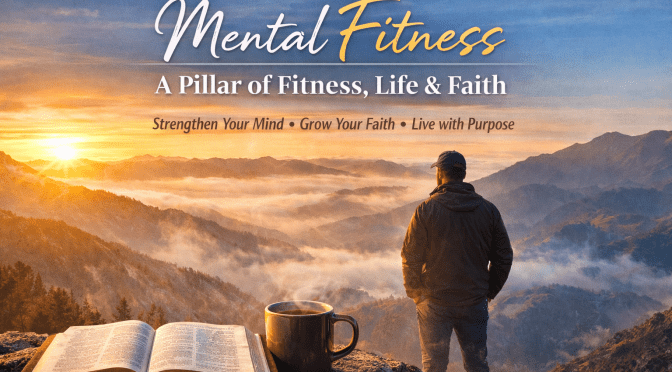
Whenever I talk about fitness, many people immediately think of physical strength, weight training, cardio, or that daily walk or run. But fitness — true fitness — extends far beyond the body. If I’ve learned anything through life, ministry, conversations, and my own personal journey with God, it’s this: mental fitness is as essential as physical fitness and spiritual fitness. It shapes how we experience life, how we connect with others, and how intimately we relate to God.
Today, I want to explore why mental fitness matters, why we must exercise our minds, and how strengthening our mental life opens our hearts deeper to God and others. I’ll share from my own perspective and experiences, offering encouragement and truth rooted not just in emotion but in purpose, scripture, and lived faith.
What Is Mental Fitness?
When we hear the term mental fitness, many of us think automatically about mental health — perhaps depression, anxiety, or emotional struggles. But mental fitness goes beyond that. Mental fitness is the intentional training of our minds, hearts, and emotional capacities so that we can live fully, resiliently, and purposefully — not merely reacting to life, but engaging it with strength and clarity. Smiling Mind Blog
Think of mental fitness like physical fitness: Just as physical training builds muscle, endurance, and flexibility, mental fitness strengthens our ability to manage emotions, think clearly, adapt to challenges, and lead others with wisdom. It’s not about being “mentally well” in the clinical sense alone — it’s about building mental resilience, emotional balance, and cognitive strength that prepare us to thrive.
This distinction matters: physical fitness doesn’t mean we’ll never get hurt. Likewise, mental fitness doesn’t mean we’ll never experience stress or hardship. It means we have the cognitive and emotional tools to meet those moments with strength, not surrender. LCMC Health
Why Mental Fitness Is One of the 3 Pillars of Fitness
For many of us who grew up in church, we understand the importance of spiritual fitness: spending time with God, prayer, scripture study, worship, and community. Some of us also embrace physical fitness as part of stewardship of our bodies. But mental fitness often gets overlooked, even though it’s deeply tied to both physical and spiritual well‑being.
In fact, mental, physical, and spiritual health are interconnected. What affects one often affects the others. For example:
- Physical exercise boosts blood flow to the brain, releases chemicals that improve mood and clarity, and supports emotional balance. LCMC Health
- Spiritual practice, such as prayer and meditation, calms the nervous system, guides our purpose, and centers our thoughts on God’s truth.
- Mental fitness gives us the resilience, awareness, and emotional stability to engage life — and God — more fully. Thrive Center
When these pillars are strong and aligned, we experience life more fully — not with denial of hardship, but with inner strength and hope.
Why Mental Fitness Matters for Life
Mental fitness gives us clarity in a chaotic world. We live in a time of unprecedented information, constant interruptions, and emotional overload. Our minds are bombarded with data, opinions, and noise every second. Without mental fitness, we drift — pulled by emotions, doubts, or fear.
But with mental fitness:
- We think more clearly, prioritizing what matters most rather than reacting impulsively.
- We regulate emotions, which helps us live peacefully and avoid destructive cycles of anxiety or discouragement.
- We adapt to change, knowing that life will always have ups and downs. getforte.com
Mental fitness doesn’t mean perfection — it means preparedness. Just as athletes train before competition, we train our minds before stress, decision fatigue, or conflict challenges us.
I know what it feels like to be overwhelmed, distracted, or mentally exhausted. But building mental fitness has helped me stay grounded not just in life’s routines, but in my relationship with God and others.
Mental Fitness and Mental Health: Why the Difference Matters
People sometimes use the terms mental fitness and mental health interchangeably — but they’re distinct. Mental health describes a state of emotional and psychological well‑being, including the presence or absence of mental health challenges. Mental fitness, on the other hand, is the intentional practice that strengthens mental functioning and emotional resilience so that we perform well day to day and navigate life with strength. Art of Living
Mental fitness doesn’t prevent hard circumstances, but it equips us to respond well. Your mental fitness can buffer stress, sharpen decision‑making, and increase your capacity to love others.
How Mental Fitness Helps Us Connect to God
This is where things get personal and profound: our mental fitness directly influences our spiritual lives.
When we think clearly, we can:
- Discern truth from confusion,
- Recognize God’s voice in the quiet moments of life,
- Engage scripture with understanding,
- Pray with focus rather than distraction.
Scripture repeatedly emphasizes the importance of the mind:
“Do not be conformed to this world, but be transformed by the renewing of your mind…”
— Romans 12:2
This renewal is not accidental: it’s intentional. Just as Paul encourages believers to renew their minds, mental fitness practices help us align our thinking with God’s truth, resisting confusion, anxiety, and distraction.
You see, when our mental muscles are weak:
- We jump to fear instead of faith.
- We default to doubt instead of hope.
- We become reactive instead of responsive to God’s leading.
But when we actively cultivate mental strength — through prayer, reflection, gratitude, focused thinking, and intentional focus — we position ourselves to experience God more fully and deeply.
How to Exercise Your Mental Fitness
Let me be clear: mental fitness isn’t a one‑time fix. It’s a lifestyle — intentional, continuous, and integrative.
Here are practices that have helped me, and many others:
1. Prayerful Reflection
Just as meditation can calm the brain and reduce stress, focused prayer invites God into our thoughts and emotions. It anchors us, reminding us that we’re not alone in our struggles.
2. Scripture Meditation
Reading scripture slowly, allowing it to penetrate your thoughts, transforms your mind over time — aligning your thinking with God’s wisdom rather than the world’s noise.
3. Gratitude Practice
Scientific research has shown that practicing gratitude increases positive emotions and resilience. When we intentionally give thanks, our brains build patterns of hope and joy. LCMC Health
4. Cognitive Training
Activities that challenge the brain — reading, journaling, problem‑solving, learning new skills, or even memory exercises — strengthen neural pathways and cultivate deeper thinking. Healthline
5. Rest and Sleep
Rest isn’t a luxury — it’s foundational. Sleep restores the brain and resets emotional balance. Quality sleep supports better thinking, quicker decision‑making, and improved emotional regulation. HPRC-online.org
6. Healthy Community
Connecting with others in supportive, authentic relationships builds relational and emotional intelligence. We weren’t meant to live in isolation; community sharpens us. getforte.com
7. Mind‑Body Practices
Physical exercise, breath work, and movement stimulate brain health and emotional balance. A healthy body supports a healthy mind, and vice versa. Wikipedia
These practices aren’t just “activities.” They are investments in resilience, clarity, and spiritual alignment.
Mental Fitness Helps Us Love Better
One of the greatest tests of mental fitness is love.
When I’m mentally fit:
- I listen more genuinely.
- I respond with empathy.
- I stay patient in conflict.
- I forgive more readily.
- I can love like Jesus commanded.
Paul wrote in 1 Corinthians 13 that love is patient, kind, and enduring. But patient, kind love has a strong mind behind it — one that chooses self‑control over impulse, grace over anger, and connection over isolation.
Mental fitness fuels love that lasts.
Mental Fitness and God’s Purpose for You
I believe God created each of us with intention — with purpose. But purpose requires clarity. And clarity requires a sound mind.
Without mental fitness:
- Purpose gets clouded by confusion.
- Calling gets muffled by fear.
- Faith gets replaced with anxiety.
But with mental fitness:
- We discern God’s direction more clearly.
- We respond to life’s challenges with strength.
- We persevere when the road feels long.
Mental fitness doesn’t guarantee ease — but it guarantees endurance.
A Life Transformed by Mental Fitness
I can honestly tell you this: practicing mental fitness has changed my walk with God, myself, and others.
I still have struggles — I’m human. But I’m no longer tossed by every emotional wind or thought that comes my way. I’ve learned to think well, pray well, and live well.
I believe this is the invitation God offers to all of us: not a life without struggle, but a mind increasingly aligned with truth, strength rooted in God, and a heart anchored in love.
And that, my friends, is a life worth pursuing.
Conclusion: Commit to Mental Fitness Today
If you only remember one thing from this post, remember this: mental fitness is not optional — it’s essential. It influences everything you choose, think, feel, and become.
Your mind matters. Your thoughts matter. Your connection with God — deeply informed by your mental state — matters.
So today, choose growth.
Choose intentional thought.
Choose reflection over reaction.
Choose God in your thinking.
Because a sound mind builds a united heart — one that loves deeply, lives resiliently, and walks faithfully with God.
 3 Pillars Podcast