Category Archives: Blog Posts

The following articles aim to strengthen the subjects that were covered on the 3 Pillars Podcast and will provide a more in-depth analysis of each topic.

Hit Your Mark – A Call to Purpose, Precision, and Power

Introduction
The first time I heard the phrase “Hit Your Mark,” I was struck by its clarity. It wasn’t just motivational fluff or another catchphrase lost in a sea of Instagram quotes. It was a direct call to intentional living — to know where you’re going, to step confidently into your role, and to act with purpose. It resonated deeply.

That phrase challenged me to pause and evaluate: Am I just moving, or am I moving with direction? Am I aiming at something, or simply drifting with the current of daily demands?

In this post, I want to unpack this powerful axiom — not just from a motivational lens, but from a spiritual and practical one too. We’ll explore what it truly means to hit your mark, how to identify your target, how to stay focused in a noisy world, and how to live a life that consistently aligns with your God-given purpose.

What Does “Hit Your Mark” Really Mean?
In the world of film and stage, “hit your mark” is an actor’s instruction. It means to stand in the precise spot on the stage or set where the camera or lighting is optimized — it’s about timing, alignment, and discipline. If the actor misses that spot, the scene falls apart. The performance loses impact.

Now zoom out. Life is a stage. We’re each given a role, a responsibility, and a unique path. “Hitting your mark” becomes about more than standing in the right place — it’s about showing up with purpose, timing, and excellence. It’s about fulfilling the exact assignment placed before you.

To hit your mark is to live with intentionality. It’s knowing that your actions matter, that you were created with precision, and that wasting your life wandering aimlessly isn’t an option.

It’s an invitation to step up — to stop playing small, to stop hiding behind excuses, and to commit to executing your calling with focus and faith.

The Spiritual Perspective – Designed with Purpose
I believe in divine design. None of us are here by accident. Every heartbeat, every breath, every opportunity, and even every setback is part of a greater blueprint authored by a Creator who never misses a detail.

When we talk about hitting our mark, we’re ultimately talking about alignment with that divine design.

In the podcast episode “Hit Your Mark,” this theme came through clearly. The message wasn’t about hustle for hustle’s sake. It was about seeking God, understanding the unique mission He’s assigned to you, and refusing to be distracted by a world that’s constantly trying to redefine success.

The Apostle Paul writes in Philippians 3:14, “I press toward the mark for the prize of the high calling of God in Christ Jesus.” That word — mark — isn’t ambiguous. It’s specific. It’s measurable. It’s a reminder that you were never called to wander aimlessly.

When you hit your mark spiritually, you’re not just succeeding in the world’s eyes — you’re walking in obedience, you’re making eternal impact, and you’re growing into the person God created you to be.

Know Your Target
Before you can hit your mark, you need to know what you’re aiming at. Sounds obvious, right? But you’d be surprised how many people wake up every day with no clear direction. They’re busy, exhausted, and constantly “on,” but they’re not really going anywhere specific. It’s like firing arrows in the dark — frantic movement without meaningful momentum.

Knowing your target means defining your purpose. It means asking tough questions:

  • What has God placed in my hands?
  • What gifts have I been given?
  • Who am I meant to serve?
  • Where can I make the most impact?

Your target isn’t necessarily what the world applauds. It might not be flashy or Instagram-worthy. Sometimes, your mark is raising a healthy family. Sometimes, it’s leading a quiet life of integrity. Sometimes, it’s building a business that honors your values. But make no mistake — your target must be clear. Clarity is the precursor to excellence.

Purpose gives your energy a destination. Without it, you’ll drift, and drift always leads to disappointment.

Aligning Your Intentions with Your Actions
Here’s the hard truth: it’s possible to want the right things and still never hit your mark. Why? Because intention without action is just wishful thinking.

You can dream all day about writing that book, starting that ministry, improving your marriage, or getting healthier. But if your actions aren’t aligned with that dream, it’s just noise. A lot of us fall into the trap of being emotionally invested in a goal we’re not practically pursuing.

To truly hit your mark, your habits have to reflect your hope.

This alignment requires honesty. Look at your calendar. Look at your bank account. Look at your daily schedule. They’re all mirrors reflecting what you actually value — not what you say you value. If you say faith is a priority but never open your Bible, something’s off. If you say family is your mark but spend every waking hour at work, you’re missing it.

Alignment is a daily decision. It’s a thousand small choices that either lead you closer to or further from the life you’re meant to live.

Eliminating Distractions to Stay on Course
One of the biggest threats to hitting your mark in today’s world? Distraction. We’re living in the noisiest era in human history. Notifications, advertisements, opinions, entertainment — it’s all designed to pull you away from what matters most.

And here’s the kicker: most distractions aren’t inherently bad. They’re just not essential. Social media, binge-watching, endless scrolling, checking emails every five minutes — these things might feel productive, but they’re often the enemy of progress.

Eliminating distraction is really about reclaiming your focus.

It’s about being ruthlessly selective with your time, your energy, and your attention. It’s saying “no” more often so you can say “yes” to what actually moves the needle.

When you clear the clutter — mentally, physically, and spiritually — your path becomes clearer. Your purpose becomes sharper. And your aim becomes more precise.

Consistency Over Perfection
One of the greatest myths we buy into is that we need to be perfect to be effective. That’s just not true. You don’t have to be flawless to hit your mark — you just need to be faithful.

Consistency, not perfection, is what builds impact over time.

The most successful people I know — in faith, business, family, and health — aren’t the ones who never fail. They’re the ones who keep showing up. They stick to the plan when they’re tired. They honor their commitments even when the emotions fade. They stay the course when the results are slow.

And spiritually? God doesn’t call us to perfection — He calls us to obedience. The wins will come. The breakthroughs will happen. But they’re usually the result of steady, often unseen faithfulness over time.

If you want to hit your mark, don’t aim for a grand slam every day. Just keep stepping up to the plate. Show up. Do the work. Trust the process. Over time, your consistency will build the accuracy you need.

Accountability and Brotherhood
You weren’t meant to hit your mark alone.

We live in a hyper-independent world that glorifies the lone wolf mentality. But the truth is, the most grounded and focused people have community. They have accountability. They have people who challenge them, support them, and call them higher.

In the 3 Pillars Podcast, this idea is woven through the fabric of the message: Brotherhood matters. We need each other. When you’re isolated, you’re more likely to drift, to rationalize poor choices, or to completely lose sight of your purpose.

But when you have someone asking, “Did you follow through on what you said you’d do?” — it changes everything.

Accountability isn’t control; it’s care. It’s a safeguard against self-deception. It’s a source of strength when your own willpower runs low.

If you’re serious about hitting your mark, invite a few trusted people into your life to keep you focused, honest, and encouraged.

The Role of Character in Precision Living
Character is the anchor that keeps your trajectory steady. Talent can open doors. Strategy can set the course. But character determines whether or not you stay the path.

You can be wildly gifted and still miss your mark if your character isn’t intact.

Why? Because hitting your mark isn’t just about achievement — it’s about alignment. It’s about doing the right things, for the right reasons, in the right way.

Character is built in the quiet moments. When no one’s watching. When shortcuts are tempting. When it would be easier to compromise. It’s in those moments that you either reinforce or erode your aim.

Honesty. Humility. Patience. Integrity. These aren’t just moral checkboxes — they’re the bedrock of meaningful success.

When your character is strong, you’ll walk straighter. You’ll resist the temptations that derail so many. And you’ll stand firm when the winds of adversity blow, knowing that your foundation wasn’t built on sand.

Real-World Examples of Hitting the Mark
Sometimes the best way to understand a concept is to see it in action. “Hitting your mark” may sound abstract, but it comes alive through real-life stories.

Think of the athlete who wakes up before dawn every day, practicing tirelessly not for fame, but to steward their talent well. When they finally stand on the podium, it’s not luck — it’s intentional living.

Or consider the business leader who builds a company not on profits alone, but on principles. They make tough decisions, invest in people, and stand for something. Their impact ripples far beyond a balance sheet.

There are parents who raise children with love and consistency, even when no one applauds. Teachers who show up year after year, shaping minds with quiet excellence. Pastors who shepherd small flocks with big faithfulness.

These are all examples of people who know their purpose and pursue it with precision.

Hitting your mark doesn’t mean being the best in the world — it means being your best for the world. Wherever you are, whatever you do, you can live with purpose. That’s your mark.

When You Miss the Mark – And What to Do About It
Let’s be honest — we don’t always hit the mark.

We get distracted. We get discouraged. We make mistakes. We aim wrong. And sometimes, we outright fail.

But missing the mark isn’t the end — it’s part of the journey.

The word “sin” in the original biblical language literally means “to miss the mark.” It implies falling short of God’s standard. But here’s the good news: there’s grace. There’s forgiveness. There’s another shot.

When you miss your mark, don’t let shame paralyze you. Let it teach you. Let it re-center you. Ask: What can I learn? Where did I drift? How can I recalibrate?

Great marksmen don’t hit bulls-eyes because they never miss — they hit them because they constantly correct. They pay attention. They make micro-adjustments. And they keep firing.

God doesn’t require perfection. He honors repentance. He blesses those who get up and keep going.

Missing the mark is human. Getting back on track is holy.

Repetition as a Tool for Mastery
Excellence doesn’t happen once — it happens over and over.

Repetition is the secret sauce of every skilled musician, athlete, craftsman, and disciple. It’s the quiet, often boring, never glamorous process of doing the right thing again and again.

If you want to hit your mark in life, you have to embrace repetition.

Praying daily. Practicing gratitude. Saying no to distractions. Showing up when no one sees. Reaching out to people in love. Studying the Word. Honoring your commitments. These may feel small, but over time, they compound into impact.

The world celebrates overnight success, but true mastery comes from what you do consistently, not occasionally.

Repetition sharpens your focus, strengthens your aim, and builds your capacity. If you want to be precise, practice must become part of your lifestyle.

Spiritual Warfare and Staying Vigilant
There’s a reason hitting your mark isn’t easy — because the moment you begin to walk in your purpose, resistance shows up.

The Bible is clear that we’re in a spiritual battle, not just a physical one. Distractions, discouragement, temptation, fear — these are more than emotional challenges. They are spiritual tactics designed to pull you off course.

If you’re serious about hitting your mark, you have to stay spiritually vigilant.

That means guarding your heart. Watching your thoughts. Being intentional about what you allow into your life. It means praying not just for blessings, but for clarity, strength, and endurance.

Ephesians 6 talks about putting on the full armor of God so you can stand firm. That armor isn’t for decoration — it’s for the battlefield. Because the enemy doesn’t attack people who are standing still. He goes after those moving with purpose.

Stay alert. Stay anchored in truth. Surround yourself with people who will help you stay sharp. Because a distracted warrior is a defeated warrior — but a focused one is unstoppable.

Measuring Impact – How Do You Know You’ve Hit the Mark?
How do you know when you’ve hit your mark? It’s not always about applause or obvious rewards. Sometimes, it’s a quiet sense of alignment — a peace that you’re exactly where you’re supposed to be, doing exactly what you’re supposed to do.

You know you’ve hit your mark when your work bears fruit. When your actions produce good outcomes. When your decisions bring clarity, not chaos. When those around you are better because of your presence and leadership.

It’s also reflected in internal fulfillment. You feel settled, even if the journey is tough. You’re not constantly looking for the next escape, because you’ve found joy in the mission itself.

Hitting your mark doesn’t always mean everything goes perfectly. But it does mean you’re living with integrity, intention, and faith — and the results, while sometimes slow, are deeply meaningful.

Conclusion – Press Toward the Mark
Life is full of distractions, demands, and detours. But you weren’t made to drift. You were made to aim. You were made to move forward with clarity and courage.

“Hitting your mark” is about knowing who you are, understanding what you were created for, and showing up every day with that purpose in mind. It’s about refusing to settle for average. It’s about living with vision.

You don’t need to be perfect. You don’t need to have it all figured out. But you do need to move. You do need to show up. And you do need to aim at something greater than yourself.

God placed you here, in this moment, with a unique mission. Don’t let fear or distraction keep you from it.

Press toward the mark. Keep your eyes on the goal. And trust that with faith, discipline, and persistence, you’ll arrive exactly where you’re meant to be.

Call to Action
Now that you’ve read this, take a deep breath and ask yourself a question that could shift everything:

What is your mark?

Not what others expect of you. Not what you’ve defaulted to. But the real target. The one God designed you to hit.

Write it down. Speak it out. Pray about it. Re-align your daily habits to serve that mission. You don’t have to hit it perfectly today — but you do need to aim. Life is too short and too sacred to live without direction.

So press on. Aim high. And hit your mark.


FAQs – Frequently Asked Questions

1. What does “Hit Your Mark” mean in a practical sense?
It means living intentionally, knowing your purpose, and aligning your actions with your highest priorities. Whether in faith, career, family, or personal development — it’s about being precise, focused, and disciplined.

2. How do I find my “mark” if I’m unsure of my purpose?
Start by reflecting on your God-given talents, passions, and the needs around you. Spend time in prayer, seek wise counsel, and evaluate where you feel most alive and effective. Your mark often lies at the intersection of what you love and what the world needs.

3. What should I do if I feel like I’ve missed my mark in life?
Grace always allows us to course-correct. Missing your mark doesn’t disqualify you. Learn from the past, realign your focus, and begin again with humility. The journey isn’t over — it’s just evolving.

4. Why is consistency more important than perfection in hitting your mark?
Because growth is a process. Showing up consistently builds habits, discipline, and resilience. Perfection is unrealistic; consistency is sustainable — and it leads to long-term success and impact.

5. How do I stay focused on my mark in a world full of distractions?
Prioritize silence, prayer, planning, and boundaries. Limit noise. Say no to what’s not essential. Surround yourself with people who support your vision and remind you why you started. Stay spiritually grounded, and focus will follow.

You Are What You Eat: How Nutrition Shapes Your Body, Mind, and Spirit

Introduction

If someone had told me years ago that my diet was affecting more than just my weight or energy levels, I probably would have brushed it off. Like many people, I used to think of food as just fuel—something I needed to get through the day, with little thought about the long-term impact it had on who I was becoming. But over time, as I faced moments of mental fog, physical fatigue, and spiritual disconnect, I began to realize a profound truth: You are what you eat.

Let’s discuss this popular saying and unpack it through a faith-based lens, revealing how the food we consume impacts our identity, our health, and our relationship with God. This isn’t just about eating clean or hitting the gym—it’s about understanding how what we put into our bodies influences every part of our being.

In this post, I want to share my personal journey of transformation and how embracing mindful, faith-aligned nutrition not only reshaped my body but renewed my mind and spirit. Whether you’re battling fatigue, anxiety, or spiritual stagnation, your diet may be playing a bigger role than you think. Let’s explore how making intentional changes can lead to holistic wellness—and a more vibrant, purpose-driven life.

Food Is Fuel—But Also Identity

We often hear the phrase “food is fuel”—and that’s true. But it’s also much more than that. What we eat becomes the building blocks of our blood, our brain chemistry, and even our emotions.

1. The Physical Connection

Our bodies are miraculous machines, designed with divine precision. But like any high-performance vehicle, they need the right kind of fuel. When we fill our systems with ultra-processed, sugar-laden, or chemical-heavy foods, we’re essentially sabotaging our own performance. Poor nutrition can lead to:

Chronic fatigue Inflammation Digestive issues Mood swings Hormonal imbalance

These physical symptoms don’t exist in a vacuum—they ripple into every area of our lives, from how we show up in relationships to how effective we are at work.

2. The Mental and Emotional Impact

What many people overlook is the gut-brain connection. Our digestive tract is closely tied to our mental health. A poor diet can lead to increased anxiety, depression, and even cognitive decline. On the flip side, eating whole, nutrient-dense foods supports mental clarity, emotional stability, and better decision-making.

3. The Spiritual Dynamic

Scripture reminds us that our bodies are temples of the Holy Spirit (1 Corinthians 6:19–20). When we dishonor our bodies through neglect or gluttony, we’re also dishonoring the One who created us. When we feed our bodies well, we become more attuned to God’s presence and more capable of living out our calling.

Poor nutrition not only weakens our bodies but dulls our spiritual sensitivity.

The Discipline of Eating Well Is a Spiritual Practice

When I started taking nutrition seriously, it wasn’t just a physical transformation—it became a spiritual one.

1. Self-Control as a Fruit of the Spirit

One of the most overlooked aspects of a faithful life is self-control. Every meal is an opportunity to practice it. Every snack, every choice at the grocery store is a chance to honor God with our discipline.

Eating well isn’t about vanity or perfectionism—it’s about stewardship.

2. Avoiding the Idolatry of Comfort Food

For years, I used food as a source of comfort when life got hard. Late nights at work? Ice cream. Stress? Fast food. Boredom? Mindless snacking. But the more I turned to food for emotional regulation, the more I found myself disconnected from God.

Food had become a false idol—a go-to comfort. Breaking that cycle wasn’t easy, but it began with the recognition that no burger, no cookie, no binge could offer the peace that Jesus provides.

3. Fasting as a Tool for Clarity and Renewal

Fasting is more than a religious ritual—it’s a way to reset our physical and spiritual systems. When I began to incorporate fasting into my life, I discovered how much clarity, peace, and strength could be found in stillness and surrender. It helped me become more aware of my dependence on food and deepened my reliance on God.

Remember that nutrition isn’t just about macronutrients—it’s about mindfulness, intention, and alignment with God’s design.

A Renewed Spirit: Finding Strength in God During Fatigue and Burnout

Introduction

I can still remember the moment I hit rock bottom. The exhaustion had set in so deeply that even the simplest tasks felt overwhelming. I was drained—physically, mentally, and emotionally. My prayers felt empty, my motivation was gone, and I couldn’t shake the feeling that I was running on fumes. I had been pouring into everything and everyone around me, but my own spirit felt depleted.

Have you ever been there?

The reality is, no matter how strong we think we are, life has a way of wearing us down. The constant demands of work, relationships, responsibilities, and even our own expectations can leave us feeling drained. But the good news is that we don’t have to stay there.

God offers us renewal. He invites us to come to Him. We can find rest in His presence. He allows us to breathe new life into our weary souls. In this post, I’ll explore how we can truly experience spiritual renewal. I will also discuss practical ways to realign with God. Trusting in His restoration is the key to lasting strength.


Understanding the Need for Renewal

Life is a marathon, not a sprint. But many of us run it as if we have to carry everything on our backs. We never stop to rest. We don’t refuel. We don’t get strength from God.

1. The Weight of Stress and Burnout

Burnout doesn’t happen overnight. It creeps in slowly, the result of constantly giving without replenishing. Stress, anxiety, and over-commitment leave us feeling exhausted, often causing us to disconnect from our faith. When we ignore the signs, we become spiritually dry, feeling distant from God and numb to His presence.

2. The Spiritual Battle Behind Fatigue

The enemy knows that a tired and weary soul is vulnerable. He wants us to believe that we are alone in our struggles. He wants us to think that we must push through in our own strength. But this is a lie. The truth is that God desires for us to depend on Him, not just in moments of crisis, but daily.

3. Recognizing When It’s Time to Be Renewed

Renewal isn’t just about resting physically—it’s about restoring our hearts, minds, and spirits. We need to turn back to God right away. This should happen the moment we recognize that we are trying to function on empty.

God is aware of our struggles. He is ready to lift us up. He will renew our strength when we come to Him.


How God Renews Our Spirit

When we feel spiritually dry, God doesn’t leave us to figure it out alone. He provides renewal in ways that bring lasting change.

1. Through His Presence

One of the most powerful ways God renews us is simply by being with us. In Isaiah 40:31, we are reminded:

“But those who wait on the Lord shall renew their strength; they shall mount up with wings like eagles, they shall run and not be weary, they shall walk and not faint.”

Waiting on the Lord doesn’t mean doing nothing. It means seeking Him. It means resting in Him. It also means allowing His presence to refill us.

2. Through His Word

The Bible is filled with promises of renewal. Reading Scripture shifts our focus from our problems to God’s power. Meditating on His word fills our hearts with truth and reminds us that He is in control.

3. Through Worship and Prayer

Worship changes everything. It takes our eyes off our struggles and places them on God’s greatness. When we pray and worship, we create space for God to move. We open the way for healing. We are strengthened from the inside out.

True renewal comes when we surrender—not when we try to fight our battles alone.


Practical Steps to Spiritual Renewal

If you’re feeling weary, there are steps you can take to renew your spirit and realign with God.

1. Prioritize Time with God

Just as our bodies need food, our spirits need daily nourishment. Set aside intentional time with God. This can be through reading Scripture, prayer, or worship. It allows Him to fill the empty places in our hearts.

2. Let Go of What’s Draining You

Not everything in life is meant to be carried alone. If you are overwhelmed, ask yourself: What am I holding onto that God is asking me to release? Surrendering stress, worry, and control to Him allows space for His renewal.

3. Rest Without Guilt

Jesus Himself took time to rest. In Mark 6:31, He tells His disciples, “Come away by yourselves to a desolate place and rest a while.” If Jesus needed rest, so do we. Taking time to slow down isn’t a sign of weakness—it’s an act of obedience.

4. Surround Yourself with Encouragement

We are not meant to walk this journey alone. Finding a faith-filled community, whether through church, small groups, or friendships, is important. It reminds us that we are supported. It shows we are not alone in our struggles.


Conclusion: The Power of Renewal Through Christ

We feel tired, worn out, and spiritually drained at times. We have a choice. We can continue in our exhaustion or turn to God for renewal. Jesus is always ready to restore us, but we must first come to Him.

True renewal isn’t just about feeling better for a moment. It’s about allowing God to reshape our hearts. It involves restoring our strength. It guides us toward lasting peace.

If you are feeling weary today, I encourage you: take a deep breath. Release your burdens to God. And trust that He is renewing you, even in this very moment.

Because with God, your spirit can be made new again.


FAQs

1. How do I know if I need spiritual renewal?
If you feel constantly drained, you need to refocus. Feeling distant from God indicates a need for restoration. Being overwhelmed by life is also a sign. Allow God to restore you.

2. What is the best way to reconnect with God?
Start with small, intentional steps—prayer, Scripture, and worship. Even five minutes a day of seeking Him can make a difference.

3. Can burnout affect my faith?
Yes. When we are physically and emotionally exhausted, it’s easy to feel distant from God. That’s why renewal is so important—it strengthens both our faith and our well-being.

4. What if I feel too far from God to be renewed?
No one is ever too far from God’s grace. He is always ready to restore, no matter how long you have been away.

5. How can I keep a renewed spirit?
Make seeking God a daily practice. Regular time in prayer, Scripture, and worship keeps our hearts connected to Him and prevents spiritual dryness.

Trust in Christ: Surrendering Your Burdens with Confidence

Introduction

There was a time in my life when I believed I had to carry everything on my own. The weight of responsibilities, fears, and uncertainties piled up, and I convinced myself that if I just tried hard enough, I could fix everything. But no matter how much I planned, strategized, or worried, life remained unpredictable, and problems still found their way into my path.

Then, I learned a truth that changed everything: I was never meant to carry it all alone.

What does it truly means to trust in Christ—not just in words, but in action? How do we fully surrender our struggles to Jesus? How can we confidently place our worries in His hands, knowing that He is in control?

If you have ever struggled with trust, if you have ever felt overwhelmed by life’s challenges, this post is for you. We will explore why trusting Christ is essential, how to let go of our burdens, and how faith can transform our lives in ways we never imagined.


Why Is It So Hard to Trust?

Many of us claim to trust God, yet we still find ourselves riddled with anxiety, fear, and doubt. Why is that?

1. Fear of Losing Control

We like to feel in control of our lives. Trusting in Christ requires us to surrender that control, and that can be scary. We fear the unknown, and handing over our struggles to God feels like stepping into uncertainty.

2. Past Disappointments

If we have experienced pain, loss, or unanswered prayers, it can be difficult to trust that God has our best interests at heart. We wonder, Why did God let this happen? and Can I really rely on Him?

3. The Illusion of Self-Reliance

Society teaches us that strength comes from independence, that we must “figure things out” on our own. But the Bible teaches something different: True strength comes from surrendering to Christ.

Trusting Jesus isn’t about avoiding difficulties—it’s about knowing that we don’t have to face them alone.


What It Means to Fully Trust in Christ

Trusting Christ is more than just believing in Him—it’s about actively placing our faith in His promises.

1. Surrendering Our Worries

Jesus tells us in Matthew 11:28-30:

“Come to me, all you who are weary and burdened, and I will give you rest.”

When we hold onto our worries, we are choosing stress over peace. But when we bring our struggles to Christ, He replaces our burdens with His peace.

2. Walking by Faith, Not by Sight

It’s easy to trust God when everything is going well, but true faith is tested in the waiting, in the uncertainty. Trusting Christ means believing in His goodness even when we can’t yet see the outcome.

3. Trusting His Timing

One of the hardest lessons in faith is patience. We want answers now. We want solutions immediately. But God operates on His timeline, not ours. What feels like a delay is often divine preparation.

Trusting Jesus is not passive—it is an active choice we must make daily.


Practical Ways to Strengthen Your Trust in Christ

If trusting Jesus is a struggle for you, you are not alone. Here are some practical ways to deepen your faith:

1. Develop a Habit of Prayer

The more time we spend in prayer, the more we cultivate intimacy with Christ. Prayer isn’t just about asking for things—it’s about building a relationship.

2. Meditate on Scripture

The Bible is filled with promises of God’s faithfulness. Memorizing and reflecting on His word helps replace doubt with confidence.

3. Release Control Through Worship

Worship shifts our focus from our problems to God’s greatness. In moments of worship, we declare that He is bigger than our struggles.

4. Surround Yourself with Faithful Community

We were never meant to walk this journey alone. Surrounding ourselves with other believers strengthens our faith and encourages us to trust more deeply.


Conclusion: Trusting Christ Brings True Freedom

At the heart of it all, trusting Christ isn’t about having a perfect life—it’s about having peace in the midst of life’s storms.

Jesus is always present, always working, always faithful. But it is up to us to take that step of faith, to let go of our burdens, and to place them in His capable hands.

So I leave you with this question: What are you still holding onto?

Whatever it is, surrender it. Trust Him. And watch how His peace transforms your life.


FAQs

1. How do I know if I am truly trusting Christ?
If you find yourself constantly worrying, it may be a sign that you haven’t fully surrendered your struggles to Him. Trust brings peace.

2. What if my prayers aren’t answered?
God’s answers don’t always come in the way we expect, but He is always working for our good. Sometimes, an unanswered prayer is a redirection toward something greater.

3. How can I strengthen my faith when I feel weak?
Surround yourself with Scripture, prayer, worship, and a strong faith community. Faith is like a muscle—the more we use it, the stronger it becomes.

4. What if I struggle with doubt?
Doubt is a normal part of faith. Bring your doubts to Jesus—He can handle them. The more we seek Him, the more our trust will grow.

5. Can trusting Christ really change my life?
Yes. When we trust Him, we release stress, find peace, and gain confidence in knowing that our lives are in His hands.

B.U.S.Y.: The Difference Between Being Busy and Being Productive

Introduction

For much of my life, I wore busyness like a badge of honor. If my schedule was packed, if I barely had time to breathe, I felt like I was accomplishing something. But deep down, I knew something wasn’t right. I was constantly exhausted, mentally drained, and despite my nonstop activity, I wasn’t truly fulfilled. I was doing a lot, but was I actually achieving anything meaningful?

Then I came across an acronym that changed my perspective: B.U.S.Y. – Buried Under Satan’s Yoke.

What is the difference between being busy and being productive? The truth is, not all busyness is good. Some of it is simply distraction—keeping us occupied but spiritually drained, leaving us feeling empty rather than accomplished.

So how do we break free? How do we make sure that our efforts are meaningful rather than just mindless activity? In this post, I’ll explore why busyness can be dangerous, how to shift from busyness to productivity, and why stillness is essential for spiritual and personal growth.


The Trap of Busyness: Why Are We Always in a Rush?

We live in a culture that glorifies being busy. We measure success by how packed our calendars are. The busier we are, the more important we must be—right?

Not necessarily.

Many of us mistake movement for progress. We believe that because we are always doing, we must be achieving. But that isn’t always the case. The reality is:

  • Busyness can be a distraction. The enemy doesn’t always attack through obvious evil—sometimes, he simply keeps us too distracted to focus on what truly matters.
  • Busyness can lead to burnout. Constant activity without purpose drains us physically, emotionally, and spiritually.
  • Busyness can steal our joy. When we are too busy to pause, reflect, or connect with God, we lose sight of what truly matters.

In Episode 90 of 3 Pillars Podcast I warn that being Buried Under Satan’s Yoke means we are trapped in a cycle of endless striving but never arriving. It’s time to break free.


Being Productive vs. Being Busy: Understanding the Difference

There is a significant difference between being busy and being productive.

1. Busyness is about quantity. Productivity is about quality.

Busy people do a lot. Productive people do what matters. It’s not about how much you do but about the impact of what you do.

2. Busyness is chaotic. Productivity is intentional.

Busy people feel overwhelmed because they are juggling everything. Productive people focus their energy on the tasks that truly make a difference.

3. Busyness leads to exhaustion. Productivity leads to fulfillment.

At the end of a busy day, we often feel drained and unsatisfied. But when we are productive, even a few completed tasks bring a sense of accomplishment and peace.

Shifting from busyness to productivity requires intentionality. It requires us to step back and ask: Am I just filling my time, or am I using my time wisely?


The Power of Stillness: Why We Need to Slow Down

One of the most countercultural truths we can embrace is this: stillness is not laziness—it is wisdom.

In a world that constantly tells us to hustle, grind, and do more, choosing to be still is an act of defiance. But it is in stillness that we find clarity. It is in stillness that we hear God’s voice.

The 3 Pillars Podcast reminds us of this powerful truth: Jesus Himself took time to be still. If the Son of God needed moments of solitude to pray, reflect, and recharge, how much more do we?

Stillness is not about doing nothing—it is about making space for what truly matters.


Breaking Free from the Trap of Busyness

If you feel trapped in a cycle of constant activity, it’s time to make a change. Here’s how:

1. Prioritize What Truly Matters

Not everything deserves your time and energy. Identify the things that align with your purpose and eliminate the rest.

2. Schedule Time for Stillness

Just as you schedule meetings and tasks, schedule moments of quiet. Time for prayer, reflection, or simply resting your mind is essential for true productivity.

3. Set Boundaries

Learn to say no. Busyness often comes from overcommitting. Protect your time and energy by setting clear boundaries.


Conclusion: Choose Purpose Over Busyness

At the end of the day, being busy does not mean we are being effective. True success is not measured by how much we do, but by whether we are doing what truly matters.

The 3 Pillars Podcast challenges us to ask: Am I truly living, or am I just moving?

If you feel like you’re always running but never arriving, take a step back. Slow down. Be still. In that stillness, you will find clarity, purpose, and true fulfillment.

The choice is yours: will you continue being Buried Under Satan’s Yoke, or will you break free and start living with intention?


FAQs

1. How do I know if I’m just busy or actually productive?
If your schedule is full but you don’t feel like you’re making real progress, you may be stuck in busyness. Productivity brings results; busyness just fills time.

2. Why is stillness important for spiritual growth?
Stillness allows us to connect with God, gain clarity, and reset our priorities. Without moments of reflection, we can easily lose sight of what truly matters.

3. How can I be productive without becoming overwhelmed?
Prioritize what is truly important, set boundaries, and schedule time for rest. Productivity isn’t about doing more—it’s about doing what matters.

4. Can busyness be a spiritual attack?
Yes. If busyness is keeping you too distracted to pray, reflect, or grow spiritually, it can be a tool used to pull you away from your true purpose.

5. What is one practical step I can take today to break free from busyness?
Start by identifying one unnecessary task or commitment and eliminate it. Use that time for prayer, reflection, or something that truly brings value to your life.

Why Do Bad Things Happen to Good People? A Journey to Understanding Pain and Purpose

Introduction

For as long as I can remember, one of the hardest questions to answer has been: Why do bad things happen to good people? It’s a question that has shaken the faith of many, led to deep philosophical debates, and often leaves people feeling helpless.

I used to believe that if I lived my life with kindness, honesty, and faith, I would be spared from suffering. But life doesn’t work that way. I’ve seen wonderful, selfless people endure heartbreak, loss, and unimaginable pain, while those who deceive and harm others seem to thrive. It’s a reality that can be disheartening, leaving many to wonder—where is justice? Where is God in all of this?

Episode 89 of the 3 Pillars Podcast tackles this very question, diving deep into the root cause of suffering and pointing toward the only One who can bring peace in the midst of pain. Inspired by this discussion, I want to explore the deeper meaning behind suffering, the lessons hidden within life’s darkest moments, and how we can find strength even when life feels unbearably unfair.


The Root of Suffering: Why Do We Experience Pain?

It’s easy to look at suffering as random, as though bad things happen for no reason at all. But if we take a deeper look, we begin to see patterns—an underlying force at play. Pain and suffering exist because of three major factors:

1. Free Will and Its Consequences

From the very beginning, humanity was given the gift of free will. We were created with the ability to make choices, but with choice comes consequence. Many of the world’s greatest sufferings—wars, betrayals, injustice—stem from human decisions. This doesn’t make the pain any easier to bear, but it does explain why the world is broken. Evil exists because people choose it, sometimes knowingly, sometimes unknowingly.

2. A Broken World

The world we live in is not perfect. Illness, natural disasters, and death are all consequences of a fallen world. The 3 Pillars Podcast reminds us that suffering is not a reflection of God’s absence but rather a symptom of a world that is in need of redemption.

3. Spiritual Growth Through Trials

Pain has a way of refining us like nothing else can. Some of the strongest, most faithful people I know have endured incredible suffering, and yet they have come out the other side more compassionate, more faithful, and more purpose-driven. While suffering is painful, it is often the furnace through which character, faith, and strength are built.

This doesn’t mean suffering is easy. It doesn’t mean we should accept pain without question. But it does mean that even in our darkest moments, there is purpose.


Finding Meaning in the Midst of Suffering

One of the hardest things to do when we are suffering is to find meaning in it. But time and time again, those who endure hardship and come out stronger share one common trait—they shift their perspective. Instead of asking, Why is this happening to me? they ask, What can I learn from this?

1. Understanding That We Are Not Alone

Pain isolates us. It makes us feel as though no one understands, no one cares. But one of the most powerful truths I have learned is that we are never alone in our suffering. Whether through faith, community, or shared human experience, we are all connected by our struggles.

2. Choosing to Grow Rather Than Become Bitter

When faced with suffering, we have two choices: we can let it destroy us, or we can let it shape us. The strongest individuals are those who choose growth, who refuse to let pain define them, and instead use it as a stepping stone toward wisdom.

3. Trusting That There Is a Greater Plan

Faith doesn’t mean we will never suffer—it means that when we do, we believe there is a greater purpose beyond what we can see. The 3 Pillars Podcast emphasizes that God’s plan is not always immediately clear, but that doesn’t mean He isn’t working behind the scenes.


Who Holds the Power to Alleviate Suffering?

If pain and suffering are part of life, where can we turn for peace? Who has the power to bring healing?

The answer is simple: God.

1. The Power of Faith

Faith provides comfort when nothing else can. It is the assurance that, even when the world seems chaotic, there is a greater power at work. It is the reminder that pain is temporary, but God’s love is eternal.

2. The Strength Found in Surrender

One of the hardest lessons I have learned is that control is an illusion. We spend so much time trying to avoid suffering, trying to control outcomes, but the truth is—we are not in control. The moment we surrender our pain to God, we find a peace that is beyond understanding.

3. The Role of Community and Compassion

God often works through people. In our hardest times, He sends others to support, encourage, and uplift us. This is why it’s so important to lean on community, to seek counsel, and to offer help to others when we can.


Conclusion: Suffering Is Not the End of the Story

Bad things happen to good people. That is an undeniable truth. But what if the story doesn’t end there? What if suffering is not meant to break us, but to refine us?

Through faith, perspective, and perseverance, we can find meaning even in the hardest moments. We may not always understand why suffering happens, but we can trust that no pain is wasted. Every struggle, every tear, every hardship is shaping us into who we are meant to be.

The 3 Pillars Podcast reminds us that while suffering exists, so does hope. And in the end, hope is stronger than pain.

So if you are going through a difficult season right now, hold on. Your story is still being written, and the best chapters are yet to come.


FAQs

1. Why does God allow suffering if He is good?
God allows free will, and with free will comes the potential for pain. However, He also provides comfort, healing, and the promise that suffering is temporary compared to eternity.

2. How can I find peace when life feels unfair?
Faith, community, and focusing on growth rather than resentment can help shift your perspective. Seeking support through prayer and mentorship can also be powerful.

3. How do I help someone who is suffering?
Listen, be present, and offer encouragement. Sometimes, the best thing we can do is simply remind someone that they are not alone.

4. Can suffering make me stronger?
Yes. Many of life’s greatest lessons come from hardships. Pain teaches us resilience, empathy, and the value of faith.

5. Is there a purpose to my suffering?
Even if it’s not immediately clear, suffering often leads to growth, deeper faith, and new opportunities. Trust that your pain is not without meaning.

Know Your Enemy: Equipping Yourself for Life’s Spiritual Battles

Introduction

A few years ago, I thought I had a clear understanding of the struggles we face in life. Like many, I believed that challenges came in the form of difficult people, unfortunate circumstances, or even personal failures. But as I matured—both in life experience and in faith—I realized that many of the battles we face are much deeper, much more insidious. They are not just physical or emotional struggles, but spiritual ones.

Episode 88 of the 3 Pillars Podcast, Know Your Enemy, delves into the importance of identifying the true adversaries in our lives. It’s not just about external enemies—the ones we can see, hear, or confront directly. It’s about recognizing the unseen forces that work against us, trying to derail our purpose, weaken our faith, and keep us from fulfilling our potential.

Knowing your enemy isn’t about living in fear; it’s about living in awareness. It’s about equipping ourselves for the battles that come our way and understanding how to fight from a place of wisdom, faith, and resilience. In this post, I’ll explore the importance of knowing your enemy, how to prepare for spiritual warfare, and the power of faith in overcoming life’s greatest battles.


Recognizing the Real Enemy

One of the greatest deceptions in life is misidentifying the enemy. We often think that the people who wrong us, the obstacles in our path, or even our own limitations are the greatest threats we face. But more often than not, the real enemy is something unseen—something working behind the scenes to influence our thoughts, emotions, and decisions.

The 3 Pillars Podcast emphasizes the biblical perspective that we are not fighting against flesh and blood but against spiritual forces that seek to sow division, fear, and destruction. This is evident in many aspects of life:

  • Doubt and Fear: These emotions keep us from stepping into our true purpose. They whisper lies that we are not good enough, not strong enough, not worthy enough.
  • Temptation: The enemy doesn’t always attack in obvious ways. Sometimes, it comes in the form of subtle compromises that slowly pull us away from what we know is right.
  • Division: Conflict and misunderstanding can break relationships, families, and communities. The true enemy thrives in discord, knowing that a house divided cannot stand.

Understanding this truth changes the way we approach conflict. It shifts our focus from fighting against people to standing firm against the real forces at play. Instead of being consumed by anger, frustration, or resentment, we can approach life’s challenges with wisdom and strategy.


Equipping Yourself for Spiritual Battles

Once we recognize the enemy, the next step is preparing for battle. Just as a soldier wouldn’t go to war without armor, we shouldn’t face life’s challenges unprepared.

1. Strengthen Your Mind

The battle often starts in our thoughts. Fear, doubt, and negativity can become strongholds if we don’t guard our minds. Training ourselves to recognize harmful thought patterns and replacing them with truth is a powerful defense. One practical way to do this is through daily affirmations and scripture meditation. By filling our minds with positive and faith-based truths, we leave little room for lies to take root.

2. Guard Your Heart

Our emotions can be easily manipulated, leading us into unnecessary conflicts, despair, or distraction. Being aware of what we allow into our hearts—whether through entertainment, relationships, or conversations—shields us from unnecessary pain. Practicing gratitude, forgiveness, and discernment helps keep our hearts strong and focused.

3. Stay Rooted in Faith

Faith is the ultimate weapon against the forces that seek to undermine us. It provides strength in times of weakness, clarity in times of confusion, and hope in times of despair. Surrounding yourself with like-minded individuals who encourage and uplift you can make all the difference.


Overcoming the Enemy’s Strategies

The enemy doesn’t fight fair. The tactics used against us are often deceptive and tailored to our personal weaknesses. However, understanding these strategies helps us prepare for them.

1. Isolation

One of the first tactics the enemy uses is making us feel alone. When we are isolated, we become more vulnerable to negative thoughts and influences. Staying connected to a community—whether through faith, family, or trusted friends—is essential.

2. Distraction

Sometimes, the greatest enemy to our purpose isn’t direct opposition—it’s distraction. The enemy doesn’t always need to destroy you; sometimes, keeping you busy with meaningless tasks is enough. Being intentional with our time and priorities helps us stay focused.

3. Discouragement

When things don’t go as planned, it’s easy to feel like giving up. But perseverance is key. Understanding that setbacks are often a part of the journey allows us to keep pushing forward, no matter what obstacles arise.


Conclusion: Victory Comes from Awareness and Preparation

Knowing your enemy is not about paranoia or fear—it’s about wisdom and preparation. It’s about recognizing the battles we face, equipping ourselves with the right tools, and standing firm in faith. Life will always have challenges, but with awareness, resilience, and spiritual strength, we can face them with confidence.

In the end, victory doesn’t come from avoiding battles but from knowing how to fight them. By keeping our minds sharp, our hearts guarded, and our faith strong, we can stand firm against whatever comes our way.

So, I ask you: Are you ready for battle? Do you know your enemy? More importantly, do you know your strength? Because when you do, nothing can stand in your way.


FAQs

1. How can I recognize when I’m facing a spiritual battle?
Spiritual battles often manifest as persistent doubts, fears, conflicts, or unexpected obstacles that seem to derail your progress. Recognizing patterns of attack can help you respond with wisdom.

2. What are some practical ways to strengthen my faith?
Reading scripture, prayer, surrounding yourself with faith-driven individuals, and practicing gratitude are all powerful ways to deepen your faith.

3. How can I help others who may be struggling with unseen battles?
Encouragement, active listening, and offering support through faith-based discussions can be incredibly helpful. Sometimes, just letting someone know they are not alone makes all the difference.

4. Can knowing my enemy help me become a better person?
Absolutely. Understanding the forces working against you allows you to be more intentional about your choices, leading to greater personal growth and resilience.

5. How do I stay strong when facing prolonged battles?
Patience, faith, and perseverance are key. Seeking counsel, staying in prayer, and remembering past victories can give you the strength to keep pushing forward.

The Power of Praise: A Journey to a More Fulfilling Life

Introduction

If you had asked me a few years ago about the role of praise in my life, I might have given you a shallow answer. Sure, I appreciated compliments and acknowledged others when it seemed appropriate, but I never thought of praise as anything more than a simple exchange of words. However, my perspective changed when I started intentionally incorporating more praise—both giving and receiving—into my daily life. What I discovered was nothing short of transformative.

Praise is more than just a nicety or a polite gesture. It is a force of positivity, a catalyst for change, and an affirmation of value that can uplift not only others but also ourselves. It strengthens relationships, boosts confidence, and opens doors to greater happiness and fulfillment.

In Episode 87 of the 3 Pillars Podcast, the host explores the immense power of praise and how it can shape our lives. Inspired by this discussion, I want to delve into the ways that adopting a mindset of praise can create profound shifts in our mental, emotional, and even spiritual well-being. In this blog post, we will explore why praise is so impactful, how to cultivate it as a daily habit, and the unexpected rewards that come from spreading encouragement in our personal and professional lives.

The Science and Spirituality Behind Praise

Praise isn’t just about making someone feel good for a moment—it has real, lasting effects. Studies in psychology reveal that positive reinforcement strengthens behaviors and builds self-esteem. When we recognize and vocalize someone’s strengths, we reinforce their positive actions and encourage more of the same. This principle is widely used in parenting, education, and even leadership training.

On a deeper level, praise has spiritual significance as well. Many religious and philosophical traditions emphasize the power of gratitude and acknowledgment. In Christian teachings, praise is an essential part of worship, a way of lifting one’s spirit and drawing closer to God. By focusing on the good, whether in people, circumstances, or divine presence, we cultivate an attitude of thankfulness and abundance.

But praise is not just about acknowledging others. It’s also about how we speak to and view ourselves. Self-praise—when done with humility and authenticity—can shift our mindset from self-doubt to self-empowerment. When we replace critical inner dialogue with words of encouragement, we change the way we see ourselves and, in turn, the way we present ourselves to the world.

Cultivating a Habit of Praise in Daily Life

Incorporating praise into our everyday routine requires conscious effort, but the rewards are well worth it. The first step is becoming more aware of the positive qualities in those around us. Whether it’s a coworker’s diligence, a friend’s kindness, or a family member’s resilience, taking the time to recognize and express appreciation for these traits strengthens relationships and builds mutual respect.

Another important aspect is learning to praise ourselves. Many of us struggle with self-doubt and inner criticism, but practicing self-praise can help counteract negative self-talk. A simple habit of acknowledging personal achievements—no matter how small—can boost self-esteem and encourage further growth.

Moreover, praise should be specific and sincere. Instead of generic compliments, offering detailed praise about someone’s actions or character makes the acknowledgment more meaningful. This practice not only uplifts the recipient but also fosters a deeper connection between individuals.

By making praise a daily practice, we cultivate an atmosphere of encouragement and motivation.

Practical Techniques for Integrating Praise into Daily Interactions

To seamlessly incorporate praise into our interactions, we must develop practical strategies that make it a natural part of our conversations and relationships. One effective method is setting a daily intention to praise at least one person. This simple practice not only fosters positivity but also trains our minds to focus on the good in others.

Active listening plays a crucial role in delivering meaningful praise. When we genuinely pay attention to someone’s efforts or achievements, we can offer praise that is thoughtful and personalized. Recognizing specific qualities or actions makes the praise more impactful and memorable.

Another technique is using written praise. Whether through handwritten notes, emails, or messages, expressing appreciation in writing allows the recipient to revisit the words of encouragement whenever they need a confidence boost.

Overcoming Challenges in Giving and Receiving Praise

Despite the many benefits of praise, some people struggle to give or receive it. One common challenge is feeling awkward or insincere when offering praise. To overcome this, practice delivering compliments with authenticity and specificity. Instead of saying, “Great job,” try, “I really admire how you handled that situation with patience and professionalism.”

Another challenge is accepting praise without deflecting or downplaying it. Many individuals feel uncomfortable being recognized, but learning to simply say “thank you” and embrace appreciation can lead to increased self-confidence and stronger relationships.

Additionally, cultural differences can influence how praise is perceived. In some cultures, public acknowledgment is highly valued, while in others, humility is emphasized. Being mindful of these nuances can help tailor praise in a way that is meaningful and appropriate for different individuals.

Conclusion

Praise is a powerful tool that can transform our relationships, boost our self-esteem, and enhance our overall well-being. By intentionally integrating praise into our daily lives—both in giving and receiving—we create an environment of encouragement and positivity. Whether in our personal or professional lives, the act of recognizing and affirming others strengthens connections and fosters a sense of fulfillment.

As you move forward, challenge yourself to practice intentional praise. Take a moment each day to uplift someone with your words, and don’t forget to acknowledge your own achievements. The more we embrace praise as a way of life, the more we unlock its transformative potential.

The Boundless Goodness of God

Introduction

There are moments in life when we pause and reflect on the sheer magnitude of God’s goodness. Whether we are standing in awe of a breathtaking sunset, witnessing a miracle in our lives, or simply feeling His presence in a moment of stillness, we cannot help but marvel at His unchanging love.

I have personally experienced God’s goodness in ways too numerous to count. From the simplest blessings to the grandest displays of grace, His love continues to overwhelm me. But how often do we take the time to truly dwell on just how remarkable our Lord and Savior is? Today, I want to explore the depth of His goodness, love, and faithfulness, and remind us all that no matter what we go through, God is always good.


The Unchanging Nature of God’s Goodness

The Bible is filled with affirmations of God’s goodness. Psalm 100:5 declares, “For the Lord is good; His steadfast love endures forever, and His faithfulness to all generations.”

God’s goodness is not situational. It does not depend on how we feel or what we experience. It remains the same—eternal and unwavering. Unlike the shifting circumstances of life, God’s goodness is a rock we can stand on.

When we look back on our lives, we see moments where His goodness carried us, even when we did not realize it at the time. Every answered prayer, every door He opened (or closed), and every time He made a way when there seemed to be none—these are all reflections of His perfect love for us.


God’s Love: A Love Beyond Measure

One of the most powerful demonstrations of God’s goodness is His love, and the greatest act of love ever shown was Jesus’ sacrifice on the cross. Romans 5:8 reminds us, “But God demonstrates His own love for us in this: While we were still sinners, Christ died for us.”

We are imperfect, yet God loves us completely. His love is not based on our performance, our righteousness, or our worthiness—it is based on who He is. He chooses to love us despite our shortcomings, and His grace covers us even when we fail.

Think about that for a moment. How many times have we turned away, doubted Him, or made choices that did not honor Him? Yet, He remains steadfast, always ready to embrace us when we return. His goodness is never dependent on our actions, and His love never wavers.


God’s Presence in Difficult Times

It is easy to praise God when things are going well, but what about when life is difficult? When we walk through seasons of suffering, it can be tempting to question His goodness.

But Scripture reminds us that God is with us in every storm. Psalm 34:18 tells us, “The Lord is close to the brokenhearted and saves those who are crushed in spirit.”

Trials and hardships do not mean that God has abandoned us. On the contrary, they often serve as moments where His goodness is revealed most powerfully. When I look back on my own struggles, I see how God used them to refine me, to strengthen my faith, and to draw me closer to Him.

Sometimes, our greatest testimonies come from our greatest trials. The difficulties we endure often become the stories that inspire and encourage others. Even when we do not understand His plan, we can trust in His goodness, knowing that He is working all things for our good (Romans 8:28).


Everyday Miracles: Seeing God’s Goodness in Small Things

God’s goodness is not only seen in grand miracles but also in the small, everyday moments of life.

  • The warmth of the sun on your face
  • The laughter of a child
  • The unexpected kindness of a stranger
  • A moment of peace in the middle of chaos

These are all reminders that He is constantly with us, blessing us in ways we sometimes overlook. When we begin to cultivate a heart of gratitude, we start to recognize His goodness in places we previously missed.

Keeping a journal of gratitude can be a powerful way to remind ourselves of God’s faithfulness. Writing down just a few things each day that we are thankful for shifts our focus from what is wrong to what is right. The more we look for His goodness, the more we will see it.


God’s Promises: Assurance for the Future

God’s goodness is not just for today—it is a promise for our future. The Bible is filled with assurances that He has a plan for our lives, one filled with hope and purpose.

Jeremiah 29:11 states, “For I know the plans I have for you, declares the Lord, plans to prosper you and not to harm you, plans to give you hope and a future.”

This does not mean life will be free of difficulties, but it does mean that His plan for us is good. When we put our trust in Him, we can walk forward in confidence, knowing that He is leading us every step of the way.


Living as a Reflection of God’s Goodness

As believers, we are called to be a reflection of God’s goodness to the world. When we experience His love, it should overflow into the way we treat others.

  • Loving others unconditionally: Just as God loves us despite our flaws, we should love those around us, even when it is difficult.
  • Being generous: God blesses us so that we can be a blessing to others. Whether through acts of service, financial generosity, or simply lending a helping hand, we can be instruments of His goodness.
  • Sharing our testimony: When we tell others of the ways God has worked in our lives, we encourage them to seek Him for themselves.

Living as a reflection of God’s goodness does not require grand gestures. It is found in the way we love, serve, and extend grace to those around us.


Conclusion

God is good—yesterday, today, and forever. His love is beyond measure, His faithfulness never fails, and His plans for us are full of hope.

No matter what you are facing today, take heart in knowing that His goodness is always present. When we trust in Him, even in the most difficult moments, we will see His hand at work.

May we always remember to seek Him, praise Him, and share His goodness with the world.

Prayer:

“Heavenly Father, thank You for Your unfailing love and boundless goodness. Help us to trust in You in all circumstances, knowing that You are always working for our good. Open our eyes to see Your blessings each day and give us hearts that reflect Your love to others. In Jesus’ name, Amen.”


FAQs

1. How can I experience God’s goodness more in my life?
By cultivating a heart of gratitude, spending time in prayer, and reading His Word, you will begin to recognize His goodness in every area of your life.

2. Does God’s goodness mean I will never experience hardship?
No. God’s goodness does not mean a life free of difficulties, but it does mean that He will walk with you through every challenge and use it for your good.

3. How can I trust in God’s goodness when life feels unfair?
Remind yourself of His past faithfulness. Reflect on times when He has come through for you before, and hold on to His promises in Scripture.

4. How can I be a reflection of God’s goodness?
Show love, extend grace, and serve others selflessly. When you embody Christ’s love, you reflect His goodness to the world.

5. Why is gratitude important in recognizing God’s goodness?
Gratitude shifts our focus from what we lack to what we have. It helps us see God’s blessings in both the big and small moments of life.

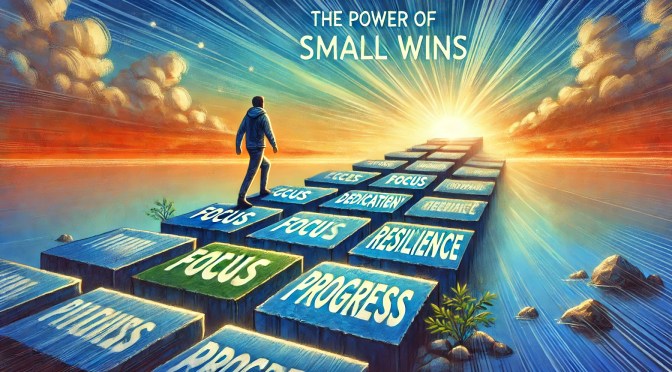
The Power of Small Wins: A Motivational Journey

Introduction

I’ve often found myself standing at the edge of overwhelming goals, wondering where to begin. It wasn’t until I discovered the transformative power of small wins that everything changed. These incremental victories, seemingly insignificant at first glance, became the building blocks of my success. In this blog post, I’ll dive deep into how small wins pave the way for remarkable achievements, requiring dedication, perseverance, and the right mindset. Let’s explore how you can equip yourself for this transformative journey.

Understanding Small Wins

Small wins are those minor achievements that, when accumulated over time, lead to significant results. They’re the moments when you choose to wake up early, complete a workout, or finish a task you’ve been postponing. Psychologically, small wins trigger dopamine releases, creating a sense of accomplishment that fuels further motivation. Consider stories of entrepreneurs who started with modest ventures or athletes who celebrated personal bests before hitting world records—each success story is stitched together by countless small wins.

The Science of Small Wins

Research on habit formation reveals that micro-goals are key to sustained progress. The cumulative effect of these small achievements forms a positive feedback loop, reinforcing behaviors that lead to larger goals. Studies in behavioral psychology show that each small win increases confidence and reduces resistance to future challenges, making success a self-perpetuating cycle.

The Importance of Small Wins in Achieving Big Goals

Breaking down colossal goals into manageable tasks makes them less daunting. Consistency and perseverance become easier when you focus on daily victories rather than distant outcomes. Consider tech giants like Apple or Amazon; their monumental success is rooted in incremental innovations, refined over time through continuous small wins.

The Emotional Impact of Small Wins

Small wins boost confidence, enhance self-efficacy, and reduce feelings of overwhelm. They provide emotional resilience, helping you bounce back from setbacks with renewed vigor. Each victory, no matter how minor, reinforces the belief that progress is possible, creating a robust foundation for long-term growth.

Strategies to Achieve Small Wins

  1. Set SMART Micro-Goals: Specific, Measurable, Achievable, Relevant, Time-bound goals keep you focused.
  2. Daily Habits and Routines: Integrate activities that promote consistent progress.
  3. Reflection and Celebration: Regularly acknowledge your achievements, no matter how small, to reinforce positive behaviors.

Overcoming Obstacles on the Path to Small Wins

Setbacks are inevitable, but they don’t define your journey. Maintain momentum by:

  • Reframing failures as learning opportunities
  • Avoiding perfectionism—progress trumps perfection
  • Staying motivated with reminders of past successes

Small Wins in Different Areas of Life

  • Personal Development: Achieve health and fitness goals through daily exercise and mindful habits.
  • Professional Growth: Enhance skills and career milestones with continuous learning and networking.
  • Relationships: Strengthen connections with consistent, thoughtful gestures.

How to Best Equip Yourself for the Journey

Developing a growth mindset is crucial. Equip yourself with:

  • Tools and Resources: Journals, habit trackers, and productivity apps
  • Support Systems: Accountability partners and mentors to encourage and guide you

The Ripple Effect of Small Wins

Your small wins inspire others, creating a culture of success within teams and communities. This ripple effect fosters environments where growth and achievement are celebrated, amplifying the impact of individual progress.

Reflection: My Personal Journey with Small Wins

Reflecting on my journey, I recall moments where small victories—like completing a challenging project or mastering a new skill—became transformative milestones. Each step, though modest, contributed to significant personal and professional growth.

The Power of Perspective

Shifting from an “all-or-nothing” mindset to one that values incremental progress is liberating. Challenges become opportunities for growth, and perfection is replaced by a focus on consistent improvement.

Celebrating Progress

Celebrating achievements, no matter how small, reinforces motivation. Simple acts like journaling successes, sharing milestones with friends, or treating yourself can make a big difference in maintaining momentum.

Common Misconceptions About Small Wins

Many believe that small wins are insignificant. However, these minor achievements are the hidden engines of substantial success. They build habits, foster resilience, and create a trajectory of continuous improvement.

Conclusion

Small wins are the unsung heroes of remarkable success stories. They require dedication, perseverance, and a shift in perspective. By embracing incremental progress, you’ll not only achieve your goals but also transform your life in ways you never imagined. Start today—celebrate your small wins and watch as they pave the path to your greatest achievements.

Call-to-Action

Reflect on your recent small wins. Share your stories in the comments—I’d love to hear how incremental progress has shaped your journey. Let’s inspire and support each other in this transformative pursuit of growth.

FAQs

  1. What are examples of small wins?
    • Completing a workout, learning a new word, or finishing a task ahead of schedule.
  2. How do small wins affect motivation?
    • They trigger dopamine releases, boosting motivation and reinforcing positive habits.
  3. Can small wins help with overcoming failure?
    • Yes, they build resilience and confidence, making it easier to recover from setbacks.
  4. How to track small wins effectively?
    • Use journals, habit trackers, or apps to log daily achievements.
  5. Why are small wins important in leadership?
    • They create a culture of progress, motivate teams, and drive sustained success.