
Introduction
I never imagined that something as simple as Vitamin C could make such a significant impact on my life. Like many, I used to think of it only as the vitamin you take when you’re feeling under the weather or battling a cold. But the more I studied, experimented, and tuned into what my body and spirit were telling me, the more I discovered the depth of its power.
This isn’t just a science post. This is personal. Vitamin C has helped me feel better, recover faster, think clearer, and look younger. It’s become a part of my daily rhythm—not just physically, but spiritually. In this blog post, I want to share what I’ve learned about Vitamin C and how it has the power to strengthen your body, sharpen your mind, and keep you rooted in health and purpose.
Immune System Support
One of the most well-known benefits of Vitamin C is its ability to support the immune system. This isn’t a gimmick. It’s foundational biology. Vitamin C fuels the production and function of white blood cells, your body’s natural defense army. I think of it like spiritual armor for your immune system—it prepares you for battle before you even know the enemy is near.
When I started regularly incorporating Vitamin C into my diet, I noticed something simple but powerful: I didn’t get sick as often. And when I did, my body bounced back faster. Whether from fresh oranges, leafy greens, or a quality supplement, the consistent intake of Vitamin C gave me the resilience I didn’t even know I was missing.
Antioxidant Protection
We live in a toxic world. From environmental pollutants to processed foods and daily stressors, our bodies are constantly under attack from free radicals—unstable molecules that damage our cells and accelerate aging.
Vitamin C acts like a shield. It’s a potent antioxidant that neutralizes those free radicals before they can do harm. When I made this part of my lifestyle, I noticed my energy levels stayed more consistent. I felt less weighed down. It’s as if I had cleared some of the static out of my system.
And the best part? It’s natural. God designed these nutrients for our good. The more I lean into nature’s gifts, the more connected I feel—not only to my health, but to the One who created me.
Collagen Production and Skin Health
Here’s where it gets interesting: Vitamin C plays a huge role in collagen synthesis. Collagen is the protein that gives structure to our skin, bones, tendons, and blood vessels. It’s the glue that holds us together.
As I aged, I noticed subtle changes in my skin, joints, and recovery time. By prioritizing Vitamin C, I saw improvements in all those areas. My skin looked more youthful, my joints felt more stable, and I healed faster after workouts or minor injuries. It’s like my body had more resources to rebuild.
This isn’t about vanity—it’s about vitality. When you feel better in your skin, you carry yourself differently. You speak with more confidence. You live more fully.
Enhanced Iron Absorption
Iron deficiency is more common than we think, especially for women and athletes. What I didn’t know until recently was how important Vitamin C is in helping the body absorb iron—especially from plant-based sources.
This became a game-changer for me. When I paired Vitamin C with iron-rich meals, I noticed better energy levels. Less fatigue. More clarity. It was as if my body was finally getting the oxygen and fuel it needed to run efficiently.
We were created to thrive—not just survive. And small changes like this can have huge ripple effects on our daily energy and focus.
Eye Health and Aging Prevention
One of the overlooked benefits of Vitamin C is its role in eye health. Studies have linked higher Vitamin C intake with a reduced risk of cataracts and age-related macular degeneration. In other words, Vitamin C can help you see clearly—not just metaphorically, but literally.
It’s another example of how deeply integrated our nutrition is with our quality of life. Every cell in your body depends on nutrients. Vitamin C ensures those cells stay strong, protected, and functioning well into your later years.
A Holistic Approach to Health
What I love most about Vitamin C is how it fits into the larger picture of holistic health. On the 3 Pillars Podcast, we always come back to the three key areas: mental, physical, and spiritual fitness. Vitamin C touches all three.
Physically, it strengthens your immune system and supports essential functions. Mentally, it helps clear brain fog and supports neurotransmitter production. Spiritually, it’s a way of honoring the temple God gave you.
Health isn’t compartmentalized. When one area improves, the others follow. And when I take care of my body, I’m more available to serve, to lead, and to love.
Daily Habits for Long-Term Impact
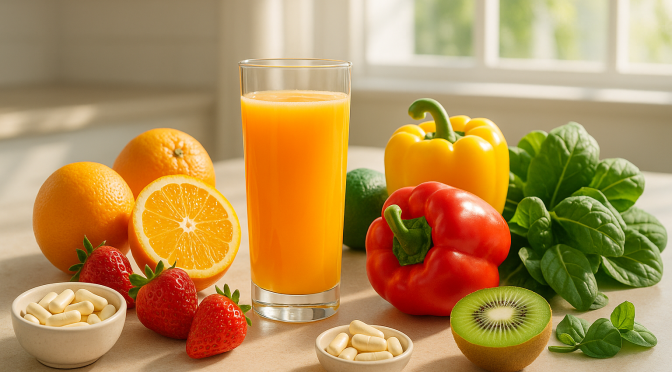
Adding Vitamin C to your routine doesn’t have to be complicated. It’s as simple as choosing a colorful variety of fruits and vegetables, staying consistent with a quality supplement, and being mindful of what your body is telling you.
Some of my favorite Vitamin C-rich foods:
- Oranges and citrus fruits
- Bell peppers
- Strawberries
- Kiwi
- Leafy greens
- Broccoli
I also keep a Vitamin C supplement on hand—especially during travel, high-stress weeks, or when I’m feeling run down. It’s a small act of self-care that pays off in big ways.
Conclusion
Vitamin C may be a simple nutrient, but its impact is anything but small. From immune support to skin health, energy to emotional balance, it’s one of the most powerful tools in your health arsenal.
This journey with Vitamin C has taught me to slow down, to pay attention, and to respect the incredible design of my body. God didn’t create us to live half-alive. He created us to flourish. To shine. To serve from a place of strength.
So I invite you: take your health seriously. Not with fear, but with faith. Incorporate Vitamin C into your daily rhythm, and see how it transforms not just your body—but your life.
Stay healthy. Stay strong. And as always, keep growing.
 3 Pillars Podcast