I’m a follower of Christ, a husband, a father, a USMC veteran, a Military Muscle Elite Athlete, and I’m here to motivate, encourage, and inspire YOU!
Host of the 3 PILLARS PODCAST! Tune in every Friday morning!
The wolves began their howling at the turn of autumn—long, mournful notes that drifted through the pines and curled like smoke around the cabin walls. Caleb Rowe had lived in those mountains for twenty-seven years, and he knew the cadence of every creature that roamed them. These wolves were different. They did not howl at the moon. They howled at him.
The world had been tightening around his land for years—surveys, roads, the hum of distant machines replacing the old silence. But this was new. The animals had grown restless. Trees leaned in strange directions, their trunks creaking as if under a weight unseen. Even the sky seemed dimmer, somehow thinner, as though something pressed from beyond it.
Caleb sat by his hearth, sharpening his old hunting knife. Outside, the chorus began again—deep, resonant, circling the cabin like a storm. He tried to steady his breathing, but fear had a way of breathing back.
The wolves were not closer. The world was.
He rose, stepped to the door, and opened it to the cold night. The forest greeted him with a gust of wind sharp enough to sting. His lantern flame flickered but held fast. Beyond its glow, the woods were a wall of black.
“Show yourselves,” he muttered. “If beasts you be, let me see your eyes.”
The howling stopped.
In the sudden silence, the forest seemed to kneel.
From between the trees, a faint radiance began to emerge—soft, pale, like moonlight given shape. Caleb took a step back. The light did not approach so much as unfold, as though the woods themselves parted to reveal a presence that had been there all along.
A figure stepped forth—tall, not ghostly but real, robed in a quiet luminescence. No menace emanated from it. Only calm. Only warmth. Only… truth.
Caleb’s instincts—shaped by decades of solitude, storms, and the stern lessons of the wild—told him to raise his rifle. His heart—shaped by faith—told him to kneel.
He did neither.
“Stay back,” he whispered, voice trembling despite himself.
The figure’s reply was not spoken; it arrived inside his mind like a memory long forgotten:
“Fear not. The wolves are not your enemy. The world presses upon you not to break you, but to bring you forth.”
Caleb blinked hard, breath frosting the air. He felt a tug deep behind his ribs—a recognition so profound it startled him.
“You’re not… one of them,” he said, gesturing vaguely toward the dark woods.
“I am what the wolves remember.”
The wolves, as if in response, began to form a circle around the clearing—silent now, not snarling, heads bowed. Their golden eyes reflected the radiance, not in fear, but in reverence.
Caleb swallowed. “And why come to me?”
The figure lifted a hand, and light rippled outward like a sunrise caught in slow motion. In that glow he saw himself—not the rugged hunter hardened by winter and solitude, but the boy who once prayed beside his mother’s bedside; the young man who believed the woods were sacred ground; the man who had lost himself when the world rushed forward without asking his permission.
“You seek to keep the world away,” the presence said gently, “but balance is not found by building walls. You must stand between what was and what shall be. You must become a keeper of peace, not a prisoner of change.”
Caleb sank onto the cabin’s stoop, legs weak beneath the weight of the revelation. The encroaching world—the roads, the noise, the endless push of progress—he had seen only as a threat, a thief stealing the quiet he cherished.
But the wolves… they were not a warning. They were a message.
“So what do I do?” he asked quietly.
The figure stepped closer, its light warming the cold mountain air.
“Hold your faith. Shape the change around you. Guard what is good, and guide what comes. Light does not resist the darkness—it transforms it.”
Caleb felt tears gather in the corners of his eyes. The words resonated deeper than the marrow. For the first time in years, he felt seen—not by men, not by beasts, but by something that understood the deep ache of solitude and the quiet strength of conviction.
The radiance began to fade, not diminishing, but dispersing into the forest like dew returning to the earth.
As it vanished, the wolves lifted their heads. One stepped forward—a massive silver male—and placed its paw gently on the boundary of lantern light. Then it bowed, turned, and led the others silently back into the woods.
The night grew still again.
Caleb rose slowly, breathing steady, no longer afraid. He looked at his land—not as a shrinking island besieged by the world, but as a bridge between old and new. The wolves had not come to drive him out. They had come to awaken him.
He lit a fresh lantern and hung it outside the cabin door, letting it shine into the darkness.
“Alright then,” he murmured toward the quiet forest, “I’ll keep the balance. With God’s help.”
The wind answered—not with a howl, but with a warm whisper through the pines.
And for the first time in years, Caleb Rowe slept in peace.
The sea sang softly beneath the cliffs, a hymn that rose and fell with the rhythm of eternity. For thirty years, Elias Ward had tended the lighthouse at Solace Point—a slender tower of white stone, its lantern room crowned with golden glass. To travelers lost upon the waters, it was a star made manifest. To Elias, it was a promise kept.
Each evening, as the sun kissed the horizon, he ascended the spiral stairs and opened the brass shutters. The light within was no ordinary flame—it shimmered with a warmth that seemed to come from beyond the world itself. When it shone, the sea grew calm, and the mist parted like a curtain before a king.
And sometimes, when the dawn was clear and the world was still, Elias thought he could hear a choir in the wind.
He had not always understood what he guarded. In the early years, he believed it merely a light for ships—a noble enough purpose, yet finite. But with time came whispers—not of madness, but of peace. They were voices gentle as the tide, speaking not in words but in remembrance, as though the sea itself carried the memory of its Creator.
He would wake in the night and feel Presence—a stillness that filled the air with meaning. It was not something that demanded to be understood, only felt: vast and kind and older than the stars. He came to realize that the light he tended did not just guide men to shore; it kept the darkness of despair at bay.
When the storms raged, and clouds devoured the sky, he would light the lamp and feel it hum with unseen power—its glow stretching out across the waves like the outstretched arm of mercy itself.
Years passed, and solitude became companionship. The gulls circled as though in prayer. The waves’ crash became applause. Even the fog, once feared, came to him like incense—soft, sweet, fragrant with mystery. He found comfort in knowing that he was never truly alone.
Once, when the storm of the century swept in, the lamp flickered and went dark. Elias rushed to relight it, but before he could, the darkness changed. It shimmered—not with menace, but with light beneath it, as though the night itself had a heartbeat.
And within the mist, he saw a figure—not monstrous, but radiant. It was shaped like a man and yet not; its form shimmered like sunlight on deep water. Eyes that contained galaxies met his, and Elias felt neither fear nor awe, but belonging.
“You have done well, keeper,” said the Presence, its voice as calm as eternity. “The light you guard is not mine—it is yours, and all who live. Keep it burning, and peace shall never leave this shore.”
And then the storm was gone.
After that night, Elias kept the lamp as before, but his heart was lighter. He knew now that he was not the last line of defense against doom, but a participant in something sacred: a covenant between light and life.
Each dawn, the first rays of sun kissed the lantern glass, and the sea turned to liquid gold. Ships that passed below would often slow, not from necessity, but reverence. Sailors spoke of the “Beacon of Solace,” saying that no vessel had ever been lost within its reach.
They said that when its light touched the waves, it was as though the heavens leaned close to watch.
When his final years approached, Elias sat by the lantern one morning and watched the horizon glow. The sky blazed with color: rose, amber, and gold entwined. He opened the old logbook and wrote:
The light must never fade, For it is not mine alone. It is the dawn made flesh, The whisper of peace everlasting.
Then he closed the book, folded his hands, and smiled as the sun rose in full glory. Those who came after found the lamp burning still—brighter than ever before. The keeper was gone, but his presence lingered like warmth after a prayer.
And sometimes, when the morning fog drifts gently over Solace Point, sailors say they can see a figure walking the balcony, tending the lamp with patient grace. They say the sea hums softly then, not in warning, but in welcome.
Epilogue
Generations later, the lighthouse still stands, its beam cutting through the dawn like the memory of heaven. The sea remains calm, and travelers speak of dreams they have when sailing near Solace Point—dreams of light, and song, and peace without end.
And when the mist rolls in, those who listen closely swear they hear a whisper on the breeze:
Introduction: Why Fitness Matters — Beyond the Mirror
I’ve always believed that faith, mind, and body are interconnected parts of who we are. We often talk about spiritual growth and mental discipline — but what about the body? Over time, I came to see that physical fitness, when rightly understood, is not a sideline to faith — it can be a key pillar, a tool, a calling for serving God more effectively.
In my podcast “Physical Fitness Devotion” (Ep. 1, Season 5), I began unpacking this vision: that staying fit isn’t vain — it’s stewardship. It’s not about pride or vanity — it’s about honoring the temple God entrusted to us, preparing ourselves to serve others, and cultivating discipline that strengthens more than just muscle: it strengthens character, resilience, and readiness.
In this post, I want to explore how physical fitness can be a spiritual practice, a form of worship, and a powerful way to serve our King — body, soul, and Spirit. I’ll share biblical foundations, practical strategies, mindset shifts, and reflections on making fitness part of one’s faith walk.
1. Biblical Foundations: Our Bodies as Temples of the Holy Spirit
One of the clearest biblical mandates for honoring our bodies comes from 1 Corinthians 6:19–20: “Do you not know that your bodies are temples of the Holy Spirit within you, whom you have received from God? You are not your own.”
To treat the body with care, to nurture strength, health, and vitality, is to honor God — because our body is not ours, but His. It’s entrusted to us, and how we steward it reflects our gratitude, reverence, and readiness to serve.
Another clear encouragement is found in 1 Timothy 4:8: “Bodily training is of some value, but godliness is valuable in every way.”
This verse doesn’t elevate exercise above godliness, but it affirms that training the body has value. It offers an opportunity — a God-given tool — not for vanity, but for discipline, stewardship, and health. And when approached with the right heart, it becomes an act of worship.
Over the years, faith leaders and theologians have echoed this idea: fitness isn’t simply worldly concern or fleshly pride. It can be “fitness for purpose” — being prepared to serve, carry burden, persevere, and glorify God with the vessel He created.
So for me, this truth reshaped the way I viewed working out, eating well, resting properly. It stopped being about looks — it became about stewardship.
2. The Mind-Body–Spirit Connection: Why Fitness Impacts More Than Muscles
Physical training doesn’t only improve appearance or cardiovascular health — it dramatically influences mental health, emotional well-being, and cognitive clarity.
Here’s what research consistently shows:
Regular exercise reduces stress, anxiety, and symptoms of depression. Exercise boosts mood, self-esteem, and resilience, and helps sharpen concentration, memory, and mental performance. Physical activity supports better sleep, lowers risk of chronic disease, improves longevity, and strengthens immunity.
When I think about spiritual life — prayer, worship, ministry, service — I see many demands. To serve others, lead well, stay emotionally stable, patiently love, and remain spiritually alert — these require energy, clarity, resilience. Physical fitness supports all of that.
In moments of stress or spiritual dryness, I’ve often found that a workout or a swim doesn’t just restore my body — it renews my mind and my spirit. It helps me engage Scripture with sharper eyes, pray with deeper sincerity, encourage others with steadier strength.
Fitness becomes more than a self-care routine — it becomes spiritual maintenance. It reaffirms that body and spirit are not separate in God’s design.
3. Aligning Fitness Goals with Kingdom Purpose
So how do we bridge the gap between gym routines and spiritual devotion? Here’s the mindset shift I adopted — and I encourage you to consider it too.
A. Fitness as Stewardship, Not Selfishness
When we treat our body as God’s temple, exercising and caring for it becomes stewardship, not vanity. It’s not about being admired by others — it’s about being faithful before God.
We don’t lift weights to be seen — we lift weights to be ready. Ready to carry, serve, endure. Ready to love others sacrificially, to stand firm in trials, to endure long ministry hours, to nurture others.
B. Fitness as Discipline — Training Body & Spirit Together
Physical discipline builds spiritual discipline. When I learn to deny comfort, push through fatigue, show up consistently for workouts — I train more than muscle: I train character, perseverance, self-control.
This echoes scriptural imagery of the Christian life as a race. Staying “fit” becomes a metaphor and a practice for running well the race of faith — disciplined, perseverant, focused on the prize that transcends this life.
C. Fitness as Worship — Every Rep, a Reminder of God’s Gift
Imagine pausing mid-workout and thanking God for the gift of strength, health, breath, mobility, coordination. Every breath, every heartbeat, every drop of sweat — a reminder: He made us, redeemed us, gave us life.
When we frame fitness this way, it shifts from self-help to worship. It becomes gratitude expressed in action.
D. Fitness as Preparation for Service
Ministry isn’t always neat or easy. It often demands energy, strength, long hours, emotional stability. By caring for our body, we prepare ourselves to serve more faithfully.
For me, fitness is a tool — not the goal itself, but a means. A means to remain steady in service, strong in trials, alive in spirit, clear in mind, compassionate in heart.
4. Practical Strategies: How I Turn Fitness into Worshipful Discipline
Here are the practical steps and habits I use to integrate physical fitness into spiritual discipline. You can adapt them to your life, schedule, and calling.
1. Set Clear, God-Centered Intentions
Before I begin any training program, I ask: Why am I doing this? If the motive is vanity, comparison, or fleeting approval — I pause and re-center. If the motive is stewardship, worship, readiness — I move forward.
Write down your intentions. Let them be prayers.
2. Build a Balanced Regimen — Body, Mind, Rest
Fitness isn’t just lifting or cardio — it’s balanced living. For me, that means:
Regular strength training or functional fitness Cardiovascular work: walking, swimming, running, or other active movement Recovery: proper sleep, stretching, rest days Nutrition and hydration — honoring the body with what it needs
Balance helps prevent burn-out. It honors your body as a temple — not a project.
3. Combine Physical Work with Spiritual Work
I often take walks early in the morning to pray, meditate, reflect on scripture. Sometimes I lift weights and listen to worship or scripture readings. Sometimes I sit in quiet afterward and journal what God is doing.
This isn’t multitasking — it’s integrated discipline: body and spirit aligning toward Him.
4. Practice Consistency Over Perfection
You don’t need to be perfect. You need to be faithful.
On days you’re tired, do a light workout or a walk. On days you’re strong, push a bit harder. The goal isn’t to punish the body — it’s to train it, steward it, prepare it.
Consistency builds habit; habits shape lifestyle.
5. Use Accountability and Community
I don’t go it alone. I train with friends, with men who share goals of faith and strength. We check in, encourage one another, hold each other accountable.
Spiritual community and fitness community overlap beautifully when identity is rooted in Christ.
6. Rest and Recovery — Acknowledging Limits and Grace
Our bodies — and spirits — need rest. Overtraining, neglecting rest, pushing past safety — these aren’t virtues. They’re misunderstandings of stewardship.
God created rhythms of work and rest. Honoring those rhythms honors His design.
5. The Danger of Turning Fitness into Idolatry — A Word of Caution
It’s important to acknowledge a real danger: that fitness can become an idol. A focus on appearance rather than stewardship, on self-glorification rather than serving others, on self-worth tied to body image.
Some Christians warn against vanity, self-obsession, or losing spiritual focus when fitness becomes all-consuming.
That’s why heart posture matters. When fitness serves God’s glory — not your ego — it becomes redemptive. When it becomes self-glorifying, it becomes dangerous.
In my own life I guard against that temptation by asking regular questions: Am I working out to serve Him or to serve myself? Am I using physical strength to love and serve, or to impress?
When fitness becomes worship, worship becomes the anchor — and the body becomes a vessel, not the destination.
6. Stories of Transformation: When Fitness Meets Faith
Over the years, I’ve seen how this integrated approach — faith and fitness — transforms lives.
A man I know began lifting seriously not for the mirror, but to be strong for ministry. Over months he grew stronger physically — but more importantly, emotionally and spiritually. He began to pray more, serve more, lead more. A veteran recovering from combat injuries used exercise and devotion as rehab — not only restoring his body, but renewing his trust in God’s sovereignty and strength. Families who exercise together — worshiping together, walking together — build not only muscle, but unity, discipline, and shared rhythm.
These aren’t perfect stories. But they prove this: fitness pursued with kingdom purpose doesn’t just build bodies — it builds faith, character, community, readiness.
7. How Physical Fitness Supports the Other Pillars — Mind & Spirit
If we think of fitness as one pillar of a holistic life — alongside mind and spirit — we see how they interconnect:
Mind: Physical activity boosts cognitive function, clarity, stress resilience, and emotional stability. Spirit: A healthy body enables consistent devotion, worship, service, and endurance when challenges come. Community & Service: Fitness can give energy and capacity to serve others — in ministry, work, family, outreach.
Neglecting our bodies weakens the entire structure. Strengthening them uplifts the whole house.
8. Steps to Begin — My Personal Action Plan
If you want to approach fitness as worship and stewardship — here’s my recommended starting plan:
Pray First: Ask God for vision & strength. “Lord, help me steward my body for Your glory.”
Set Simple, Sustainable Goals: e.g., walk 30 minutes 4x per week; strength train 2x per week; sleep 7–8 hours; drink enough water.
Plan Around Your Life: Choose exercise times that fit your schedule — early morning, lunch break, evening.
Make them non-negotiable appointments. Track Progress: Journal workouts, energy levels, rest, mood. Note spiritual reflections alongside.
Integrate Worship & Reflection: Use workouts for worship songs, prayer, scripture meditation, thanksgiving.
Use Accountability: Partner with a brother/sister in Christ — check in weekly, encourage one another, pray together.
Rest and Recover: Honor rest. Avoid burnout. Let restoration be part of stewardship.
Serve Through Fitness: Use strength and health to serve others — physically, emotionally, spiritually.
9. My Prayer: That Our Bodies Glorify the Creator
I pray that every rep, every step, every breath in effort or rest becomes a whisper of worship. That my muscles, heart, mind — aligned under Christ — serve Him not for vanity, but for purpose.
I pray that fitness becomes not an idol, but a tool. A tool to endure hardship, to love others well, to minister faithfully, to steward well the temple God gave me.
May our sweat remind us of the Cross — the price paid, the strength given, the grace extended.
And may our lives — healthy, strong, disciplined — point not to ourselves, but to the King we serve.
Conclusion: Fitness, Faith, and the Call to Serve
Physical fitness is more than aesthetics or strength. It can be a form of worship, a practice of stewardship, a preparation for service. It shapes body, mind, and spirit — equipping us to run the race of faith well, to serve with endurance, to live with purpose, and to honor God richly.
Training the body isn’t sideline work. For the Christian, it’s kingdom work — strengthening the vessel for His glory.
So whether you lift weights, swim, walk, run, stretch, or simply move more intentionally — do it as devotion. Do it as worship. Do it as service. And may your body, mind, and spirit draw nearer to Him, ready for every calling He lays before you.
Introduction: Why Goal Setting Matters—Especially Now
As I’ve reflected recently, one of the defining factors that separates those who live aimlessly from those who live with purpose is not luck—but intention. Goals give direction. Without them, life drifts. With them, we chart a path toward becoming who we were meant to be.
With the New Year approaching, many look ahead with hope, eager to reset, renew, or reinvent. That makes this season a powerful moment to not only dream—but to plan. Setting goals strategically can convert aspirations into reality, and when done right, those goals shape not just a year—but a lifetime.
In this post, I’ll walk you through the strategies and mindset shifts I use when I set goals. I’ll share why writing down goals matters, how to design them for success, and how to sustain progress even when motivation fades. I believe any reader—whether seasoned or just starting out—can benefit from these principles and walk into 2026 with clarity, purpose, and hope.
I. What Science and Experience Say About Goal Setting
Before diving into my personal approach, it helps to understand why goal-setting works, according to research.
A. Goals Give Direction, Focus, and Motivation
Goal setting isn’t just about ambition—it’s about orientation. As one overview on goal-setting notes, good goals “enhance the likelihood of success” because they give clear, specific objectives aligned with our aspirations and values. PositivePsychology.com+1 Without a target, energy dissipates; with a target, effort becomes purposeful.
B. Written Goals Are More Likely to Be Achieved
Studies and practical guides consistently show: writing goals down significantly increases follow-through. NSLS+1 The act of writing gives clarity, anchors the goal in reality, and triggers a psychological commitment that mere thoughts don’t provide.
C. Specific, Measurable & Manageable Goals Work Better
Tools like the SMART framework (Specific, Measurable, Achievable, Relevant, Time-bound) were originally developed for organizational planning—but they apply wonderfully to personal goals too. Wikipedia+1 When a goal is defined narrowly—e.g. “Walk 30 minutes three times per week” rather than “Get healthier”—it becomes trackable, actionable, and less overwhelming.
D. Goals Backed by Concrete Action Plans Succeed More Often
Goal-setting that includes a plan—when, how, what steps to take, what obstacles to expect—translates desire into action. Harvard Extension School+1 Research on behavior change indicates that success depends not solely on aspiration, but on implementation intention—anticipating trigger moments and defining responses. Wikipedia
Altogether, these findings tell me: goal setting isn’t guesswork. It’s a science. And when combined with faith, discipline, and purpose, it becomes power.
II. My Principles for Goal-Setting That Actually Works
Over the years I’ve learned that the most meaningful goals follow a pattern. Here’s the framework I use—and invite you to adopt if it resonates.
1. Begin with Vision — Know Where You’re Headed
Before writing goals, I pause and ask: What kind of life am I aiming for in 5–10 years? What kind of man, husband, leader, servant do I want to become?
This big-picture clarity becomes my “North Star.” From there I let smaller, actionable goals flow down. Long-term vision anchors short-term hustle and keeps me from chasing every random idea.
2. Write Down Your Goals — Anchor Them in Reality
As mentioned earlier, writing goals dramatically increases commitment. I use paper journals or digital trackers. I don’t rely on memory. I record specific goals, realistic deadlines, and measureable markers.
By seeing my goals in writing, I make them real. The page is the first proof.
3. Structure Them — Use the SMART + “Why” Test
Every goal I write passes a simple checklist:
Specific: What exactly will I do?
Measurable: How will I know when I’ve done it?
Achievable: Is it realistic, yet suggests growth?
Relevant: Does it serve my broader vision and values?
Time-bound: When will I complete it?
And I add an extra test: Why does this matter? If I can’t articulate the deeper reason, the goal rarely survives obstacles.
4. Break Big Goals Into Bite-Size Steps
Big goals often stall because they feel overwhelming. To avoid paralysis by scale, I break them into small, manageable steps.
For example, rather than “Write a book,” I’ll aim for “Write 300 words, 5 days a week.” Rather than “Get healthy,” I aim for “Walk 30 minutes, 3 times per week.”
Small steps build confidence, create momentum, and make the goal approachable.
5. Build Structure and Habit Around Goals
I schedule my goal-tasks. If I hope to read more scripture, I set aside 15 minutes daily—no exceptions. If I want to lift weights or swim or practice podcasting, I treat it like a meeting on my calendar, not a wish.
Habit and routine remove decision fatigue. When goal pursuits become integrated into rhythm, success becomes more likely.
6. Anchor Goals to Identity, Not Just Desire
One of the biggest shifts for me was recognizing that goals are most effective when they flow from who I want to be—not from what I want to have.
If I see myself as “a man of discipline,” “a servant-leader,” “a lifelong learner,” then my goals represent expressions of that identity—not random ambitions. This reorientation deepens commitment because the goal becomes part of who I am, not just something I chase.
7. Use Accountability and Community to Strengthen Follow-Through
Accountability dramatically increases success. I share certain goals with trusted friends or mentors. I ask them to check in, pray with me, or hold me to commitment. Research on support-backed resolutions consistently shows better outcomes. PMC+1
When I know someone else is watching—not to shame me, but to encourage me—my resolve stays strong.
8. Expect Setbacks and Build Resilience
No plan survives perfect conditions—and life often brings obstacles. What matters is not avoiding setbacks, but how we respond.
If I miss a target, I don’t treat it as failure—I treat it as feedback. I adjust, recalibrate, recommit. I’ve learned that small, consistent returns after failure count far more than bursts of effort followed by burn-out.
III. Why the New Year Is a Strategic Time to Set Goals
As the calendar turns toward a new year, many feel the urge for a fresh start. That desire isn’t just sentimental—it’s psychological. Research shows that people are more likely to commit to change around temporal landmarks such as the start of a new year. This “fresh start effect” helps mark a break from past patterns and imagine a new identity. Stronger by Science+1
Here’s why I believe the New Year is strategic:
It’s a natural reset — The world turns a page; we feel likewise invited to reset ambitions, habits, and hopes.
Momentum of collective energy — There’s a shared cultural push toward improvement (fitness, finances, personal growth), which can amplify motivation.
Space for reflection — Going into a new year, many look back and ask: What worked? What didn’t? This reflection primes the heart for clearer goal setting.
Updated priorities — Life changes annually. New seasons, challenges, opportunities call for updated goals, not recycled lists.
Therefore, using this season wisely—combining the fresh start effect with intentional planning—can set the stage for meaningful progress and avoid the common pattern of failed resolutions.
IV. How I Turn Goals Into Results: A Step-by-Step Process
Here’s a practical breakdown of how I set, track, and accomplish my goals—especially during this time of year. Feel free to adapt or adopt parts of this process for your own plan.
Step 1: Reflect & Evaluate (First Week of the Year)
List previous year’s wins and failures. What worked? What didn’t? Why?
Ask hard questions: Are previous habits aligning with my vision and values? Where did I drift?
Step 2: Dream & Define (Second Week)
Write down 5–10 “big-picture” ambitions for next year (spiritual growth, health, relationships, career, service, personal development).
From those ambitions, identify 2–4 “key projects” that will define your year.
Step 3: Translate Into SMART Goals
For each key project, create SMART goals, anchored by a “why.”
Example: Instead of “Read more,” write “Read one book per month in area of leadership or theology” — specific, measurable, relevant, time-bound, and meaningful.
Step 4: Break into Milestones & Weekly Actions
Divide each year-long goal into quarterly or monthly milestones.
Create weekly “micro-goals” or tasks that feed into milestones.
Use implementation intentions: “If ___, then I will ___.” (e.g. “If I wake up at 5:30 a.m., then I will spend 20 minutes in Scripture before breakfast.”)
Step 5: Schedule & Commit
Put important tasks on your calendar—treat them as appointments.
Build habits with consistency. Small, daily steps matter more than sporadic leaps.
Step 6: Share and Invite Accountability
Tell a trusted friend about your goals. Share your plan.
Ask for periodic check-ins—quarterly or monthly—to evaluate progress, receive encouragement, and adjust if needed.
Step 7: Monitor, Reflect, Adjust
At month’s end, review what worked and what didn’t.
Celebrate wins—even small.
Rework goals that aren’t serving the vision.
Step 8: Press On, with Purpose & Grace
Recognize that discipline without grace leads to burnout.
Extend compassion to yourself when life shifts.
Keep the larger vision in view.
V. Common Mistakes and How to Avoid Them
Setting goals is easy. Achieving them is hard. Here are common pitfalls—and how I work to avoid them:
Mistake 1: Too Many Goals; No Focus
When we try to change everything at once, nothing sticks. Instead, I limit my “key projects” to 2–4 per year. That keeps focus sharp.
Mistake 2: Vague, Wishy-Washy Goals
“I want to get healthy” rarely produces results. On the other hand, “I will walk 30 minutes, 4 days per week” is clear, actionable, and trackable.
Mistake 3: No Written Plan or Tracking
Goals tucked away in brain memory rarely survive. I write everything down and revisit often—failure to do so invites drift.
Mistake 4: Relying on Motivation Alone
Motivation is volatile. Habits and structure are stable. I build systems that push me forward even when I don’t “feel like it.”
Mistake 5: No Accountability or Community
Goals set in isolation falter. Having someone to encourage, hold you accountable, to walk the journey with you—this adds resilience and purpose.
Mistake 6: Forgetting Purpose and Identity
Goals tied to identity and values last longer than fleeting ambitions. Goals born out of who you want to be—not just what you want to do—have staying power.
VI. Why Goal Setting Matters—For More Than You Think
Goal setting doesn’t just produce external achievements. It shapes your character, hones discipline, clarifies vision, and deepens purpose.
It helps transform you into who you wish to become—not only by chance, but by choice.
It turns dreams into decisions, decisions into action, action into habit, and habit into legacy.
It draws out strengths and exposes areas of growth—both spiritually, mentally, and physically.
When I set goals based on my values, grounded in faith, and directed toward purpose, I don’t just chase success—I build a life that counts.
VII. A First-Person Challenge: Begin Your Goal-Setting with Purpose
If you’re reading this and thinking, Maybe this year will be different…, then this section is for you.
Take a quiet moment right now. Ask yourself:
What is the one or two changes I want to see in my life in 2026?
If this year ends and I could wave a magic wand, what do I want to look back and say I accomplished?
Why do those things matter? Who do I want to become?
Write it down. Be honest. Be specific. Then take the next 24 hours to map out a plan: small steps, weekly rhythm, personal accountability.
Promise yourself: You will not drift. You will not leave ambition to chance. You will chart a course—and follow it.
Conclusion: Vision, Plan, Perseverance, Purpose
Goal setting isn’t magic. It isn’t luck. It isn’t a hollow annual ritual.
It’s vision aligned with action. It’s dreams anchored in reality. It’s faith married to discipline.
This coming year doesn’t have to be a replay of the last. It can be different. It can be powerful. It can be meaningful.
If you take nothing else from this post—take this: with clarity, structure, and commitment, you can turn intentions into lasting impact.
Set your vision high—but start small. Write it down. Break it into steps. Build habits. Surround yourself with accountability. And above all, align your goals with your values, calling, and purpose.
With God’s guidance and your resolve, you won’t just float through 2026—you’ll move forward.
Here’s to the path ahead. May it lead to growth, impact, and fulfillment.
Introduction: The Most Important “Yes” of Your Life
There are moments in life that reshape us permanently—marriage, the birth of a child, a career shift, a new chapter. But nothing compares to the moment a person finally acknowledges Jesus Christ as Lord and Savior. In Episode 125: “Acknowledging Jesus,” I talked about how recognizing who Jesus is, and accepting the gift He freely offers, is the single most important decision we will ever make. Not one decision—not even the greatest moments of joy or the sharpest moments of pain—can carry the eternal weight this one does.
When you choose Jesus, you are not simply choosing a worldview. You are choosing a new identity, a new purpose, a new destiny, and yes—an eternal home. And while any day is a good day to surrender your life to Christ, this time of year seems to hold a special power. Hearts are softer, reflection runs deeper, and hope feels more accessible. There is something about the closing of a year or the celebration of Christ’s birth that awakens our awareness of what truly matters.
Today, I want to take you through why accepting Jesus is the greatest “yes” you will ever speak in this life—and how this season may be the perfect time to do so.
The Eternal Weight of Acknowledging Jesus
Accepting Christ is not intellectual agreement; it is a spiritual rebirth. It is not merely saying His name with your lips; it is surrendering your heart, acknowledging His Lordship, and stepping into a restored relationship with God.
When I finally came to understand this, something changed in me. I realized that eternity wasn’t just a vague concept—it was real, personal, and unavoidable. And the direction of my eternity hinged entirely upon what I decided about Jesus.
Eternity Isn’t Optional—But Its Destination Is
Every single person will spend eternity somewhere. That truth became unshakably clear the more I studied Scripture and dove deeper into my own walk with Christ. Eternity is not an abstract idea or a symbolic metaphor; it is the continuation of our existence in the presence of God or separated from Him.
To acknowledge Jesus is to accept the only bridge that spans the gap between humanity and a holy God. In acknowledging Him—believing He is Lord, believing He is the Son of God, believing His death and resurrection purchased our redemption—we accept life rather than death.
This Isn’t Just Fire Insurance—It’s a New Identity
What surprised me most about accepting Christ wasn’t the eternal implications—though those are enormous—it was how drastically my life here and now changed. My identity shifted. My desires shifted. My understanding of purpose deepened.
When you say yes to Jesus, you experience transformation:
Your guilt meets grace.
Your past meets forgiveness.
Your confusion meets truth.
Your spiritual death meets life.
Eternal life begins the moment you acknowledge Him—not the moment you die. It is life that starts now and extends into forever.
A New King, A New Kingdom, A New Way of Living
When I accepted Jesus as my Savior, something profound happened: I realized I had been my own king for far too long. My decisions, my ambitions, my desires—everything revolved around me. But the kingdom of self is small, fragile, and ultimately destructive.
Accepting Christ is acknowledging a new King. A perfect King. A King whose reign brings freedom, peace, identity, and purpose.
I discovered that the Christian walk is not the story of God rescuing “bad people”—it’s the story of God resurrecting dead people. We aren’t just improved or upgraded; we are reborn. And when you understand that, you begin to grasp just how monumental this decision is.
Why This Time of Year Is a Powerful Moment to Acknowledge Jesus
I’ve always felt that certain seasons stir the human heart in unique ways. The time around the new year, or around Christmas, tends to soften the soil of our souls. People reflect, repent, resolve, and return to things that matter.
Here’s why this season is especially powerful:
1. Reflection Heightens Awareness
As the year closes or as the Christmas season approaches, we naturally take inventory:
What did I accomplish?
What did I lose?
What do I regret?
What do I hope for?
In these reflective moments, we see our need more clearly—our need for grace, for forgiveness, for a Savior.
2. Hope Feels Tangible
When the world slows down and we gather with family, read the birth story of Jesus, or simply pause from our routines, hope seems closer. The celebration of Christ’s arrival reminds us: God came close. God came near. God took on flesh to rescue us.
What better time to respond than when we are reminded of the very moment He entered human history?
3. A New Year Invites a New Life
A new beginning is symbolic—but also powerful. What better way to begin a new year than with a new heart?
4. People Are More Open, More Honest, More Broken
This season also heightens loneliness, loss, reflection, and longing. The very things that hurt become the very things that open us up to God.
No one accepts Jesus from a place of pride. We accept Him from places of humility, hunger, and need—places this season often exposes.
My Own Journey Toward Acknowledging Jesus
When I look back at my own moment of surrender, it wasn’t an explosion or a dramatic scene. It was quiet, almost whisper-like. The Lord had been working in me, softening me, calling me. And one day—after wrestling, reasoning, resisting—I finally said yes.
That moment changed me.
I didn’t become perfect. I didn’t suddenly understand everything. But I became alive. I became anchored. I became found. And I knew from that moment forward—no matter what storms came, no matter what seasons shifted—my eternity was secure, and my life had purpose.
Are You Going Through the Motions… or Choosing the Messiah?
One of the greatest challenges in the Christian walk is that many people grow up around church but never grow up in Christ. They know about Him. They sing about Him. They attend services for Him. But they have never fully acknowledged Him as Lord.
Maybe you’ve been around faith your whole life, but you’ve never made that personal decision. Maybe you’re a good person, generous, kind, responsible—but you’ve never surrendered your life to Jesus.
He stands at the door. He knocks. And this season might be the moment He is calling you louder than ever.
What Happens When You Finally Say Yes?
1. Your Sins Are Forgiven
Every one of them. Past, present, future. The slate wiped clean.
Not metaphorically—literally adopted into His family.
4. Your Eternity Is Secured
Heaven becomes not a wish, but a promise.
5. Your Purpose Becomes Clearer
You were made to know God and make Him known.
How to Acknowledge Jesus Today
Acknowledging Christ is not complicated. It is not about formulas or rituals. It is about belief, confession, and surrender.
Here is how someone can make that decision, even right now:
1. Admit Your Need
Acknowledge that you cannot save yourself. Recognize your sin, your brokenness, your need for a Savior.
2. Believe in Who Jesus Is
Believe He is the Son of God. Believe He died for your sins. Believe He rose from the grave.
3. Confess Him as Lord and Savior
Tell Him with your mouth what your heart believes.
4. Surrender
Give Him your life—your decisions, your relationships, your future, your past.
5. Walk Forward in Faith
Faith is a journey. A relationship. A transformation.
A Prayer for Anyone Deciding Today
This is not magic. These words alone do not save you—Jesus saves you. But if your heart is ready, you can pray something like this:
“Lord Jesus, I acknowledge You as the Son of God. I believe You died for my sins and rose again. I confess that I need You as my Savior. I surrender my life to You today. Forgive me, renew me, and lead me. My life belongs to You from this day forward. Amen.”
Conclusion: Say Yes—Your Life Depends on It
At the end of the day, this decision is not about religion, tradition, or cultural pressure. It is about life. Eternal life. It is about the God who created you, who loves you, and who wants you to spend eternity with Him.
And while any time is a good time to say yes, this time of year has a way of reminding us what truly matters—hope, renewal, forgiveness, purpose, and salvation.
If you’ve been wrestling, lingering, or holding back, let me say this gently but firmly: Choose Jesus. Choose life. Choose eternity.
Because to acknowledge Christ is to step into the greatest story ever written—and to secure your place in the chapters that never end.
I remember a stretch of time where my Christian life felt… comfortable. Daily prayers, Scripture reading, serving here and there—I believed I was doing all the right things. Yet something faintly hollow stirred in my soul: I was performing the routines rather than pressing into the presence. The heart was present—but the fire was dim.
In Episode 124, I introduced the term “Lackadaisical Hypocrisy” to describe that condition: believers who look good, serve faithfully, attend church—but whose hearts drift toward spiritual complacency without noticing. It’s hypocrisy—not in the blatant sense of insincerity—but in the subtler sense of going through the motions while bypassing the transformative power of Christ.
My question became: Is there more to my calling, my mission, my walk with God than simply showing up? And the answer, thank God, is yes. There is more—vibrant, alive, purpose-filled faith. And it begins when we abandon complacency, invite conviction, and rekindle devotion.
1. What I Mean by “Lackadaisical Hypocrisy”
The word “lackadaisical” evokes lethargy, indifference, half-heartedness. Hypocrisy, classically, means pretending to be what one is not—or at least doing what one is not. Put together, the phrase describes a state where we’re outwardly Christian—but inwardly passive or complacent.
A. The Outward Mask
Many of us maintain church routines: small-group attendance, worship, service. On the surface, it looks faithful—commendable even. We may avoid scandal, do good works, look committed. Yet beneath the surface, there’s an inward drift: emotional disengagement, unwillingness to suffer, a desire for comfort rather than risk. Spurgeon warned that “where self begins sorrow begins.” When our motive is not God’s glory but self-preservation, complacency creeps in.
B. The Hidden Slumber
The heart no longer trembles at sin; it tolerates it quietly. Prayer becomes habit rather than longing; Scripture reading becomes a checkbox rather than a conduit. Community involvement happens—but without depth, vulnerability, transformation. Spurgeon’s devotional wisdom reminds us that “we are not acting as we ought when we are moved by any other motive than a single eye to our Lord’s glory.” When the motive is anything else—pleasure, approval, comfort—we drift.
C. The Spiritual Cost
A faith that lacks fire is vulnerable to compromise. When Christ’s mission becomes routine, we may lose our sense of mission. Relationships suffer; the world sees a form of Godliness but no transformative power. Spurgeon wrote: even a quiet seam of sin may kill the woodman. The hidden rot of complacency produces slow decay.
2. The Biblical Call to Authentic, Whole-Hearted Devotion
A. The Danger of Mere Appearance
In the Gospels, Jesus confronted religious professionals who performed ritual but lacked heart (Matthew 23). He called them hypocrites because their obedience was external while their inner life was distant. Jesus says in Isaiah 29:13: “These people come near to me…I honor them with their lips, but their hearts are far from me.”
This is the pattern of lackadaisical hypocrisy: activity without internal devotion.
B. The Invitation to Real, Living Faith
In contrast Jesus says: “But seek first the kingdom of God and his righteousness…” (Matthew 6:33). Paul urges: “Examine yourselves to see whether you are in the faith” (2 Corinthians 13:5).
Authentic faith involves the heart, not just the hands. The spiritual discipline is more than doing—it’s being. Spurgeon’s devotionals repeatedly point to this: “Depend upon it, where self begins sorrow begins.” Faith begins when self ends.
C. A Call to Higher Purpose
Passage after passage reminds us that we were created for more than comfort. Ephesians 2:10: we are God’s workmanship, created for good works. Colossians 3:23: whatever we do, work heartily as unto the Lord.
God invites us into mission, identity, transformation—not just attendance.
3. My Story: When I Realized I Was Going Through Motions
For years I held the appearance of spiritual health. I preached the message, led teams, participated. But inside I felt flat. I gave a sermon I felt proud of. Later I couldn’t remember significant prayer. I helped a ministry momentarily—but when the spotlight faded I faded too.
One evening I read the devotion of Spurgeon which said: “Let nothing ever set your heart beating so mightily as love to him.” Something stirred. I asked: Am I living in love for Him—or just living by what I do for Him?
That question changed my path.
I confessed: yes, I was active—but no, I was not alive. I was fulfilling duty, not walking with intimacy. I realized I was a Christian in the pew on Sunday—but a stranger to the King for the rest of the week.
4. Moving From “Routine” to “Relationship”: How to Break Free
A. Return to the Gospel
When I refused to rest in the gospel of Jesus, I leaned on my capacity. But the gospel says: You are accepted by grace through faith, not by works… (Ephesians 2:8-9).
Spurgeon’s wisdom: “The telescope of meditation enables us to see Jesus after a better sort than we could have seen him in his earthly days.”
Return to the gospel and let your motivation shift from self-achievement to worship.
B. Reignite Prayer as Longing Not Checklist
Prayer moved from “Lord bless my schedule” to “Lord fill my heart.” I set aside time—not to tick boxes—but to sense His voice. I asked: Where have I grown comfortable? Where have I drifted from desire?
Spurgeon often wrote: “You are not acting as you ought to do when you are moved by any other motive than a single eye to your Lord’s glory.” Make prayer less about requests and more about gaze.
C. Revitalize Your Devotional Patterns
When Scripture reading becomes routine, the Word loses power. I asked myself: When did I last read with awe, with expectancy? Then I adopted the practice of asking four questions post-reading: What surprised me? What convicted me? What comforted me? What will I obey this week?
Spurgeon’s recommendations: reflect, examine, respond—not just read.
Devotion becomes dialogue, not drift.
D. Engage Community with Depth, Not Just Depth in Self
I had church routines—but conversation remained shallow. I invited one friend monthly for raw conversation: Where are you moving toward? What fears do you have?
Spurgeon’s emphasis on daily reflection applies: “Your occupation may be as humble as log-splitting… yet you may be greatly screened from temptations” (Evening reading)
Community resists complacency.
E. Link Service to Mission, Not Merit
Service shouldn’t become the means to prove ourselves. I shifted from “Look what I did” to “Look who I serve.” I connected ministry tasks to the larger mission of Christ, not simply to my resume.
Spurgeon’s consistent message: do all for the glory of God.
When service springs from worship, hypocrisy fades.
5. Recognizing the Fruits of Authentic Faith
When we break free from lackadaisical hypocrisy, several changes become visible:
A. Zeal That Doesn’t Burn Out
My faith became more consistent—not because of discipline alone, but because of devotion. The fire didn’t depend on emotion; it depended on the King and the gospel.
B. Conviction Without Condemnation
When I no longer relied on my own righteousness, I gained freedom to repent quickly, humbly, and move on. When Spurgeon wrote about “danger in the commonest work,” I realized vigilance is not legalism but alert love.
Freedom came.
C. Service That Reflects Christ, Not Self
I served because I loved the Servant. My contributions grew less about recognition and more about presence, love, and obedience.
Spurgeon’s exhortation: serve with an eye only to the Lord’s glory.
D. Community That Sustains Rather Than Performs
In depth-filled relationships, I learned the rhythms of authenticity—confession, encouragement, shared mission. Complacency cannot survive when truth is spoken in love.
6. Addressing Objections and Common Roadblocks
Objection 1: “I’m too tired for zeal.”
Yes, weariness hits. Complacency tempts. But remember: the gospel is strong when we are weak. Paul says in 2 Corinthians 12:9-10: “My power is made perfect in weakness.”
A devotion from Spurgeon shows: even ordinary tasks carry danger—and even greater purpose when done in dependence.
Objection 2: “I’m not sure I know what my calling is anymore.”
Instead of waiting for dramatic revelation, ask: Where has God placed me today? How do my gifts, passions, circumstances connect to serving others towards His glory?
Spurgeon invites us to use every part of life for Christ—not just “ministry moments.”
Objection 3: “I’m worried this becomes legalism.”
That’s why the root matters: obedience must flow from love, not obligation. Lackadaisical hypocrisy stems from obligation without love. Authentic devotion flows from love, grace, and gratitude.
Spurgeon emphasizes motive above discipline.
7. A Call to Renewed Mission: There Is More to Your Walk
Let me share three invitations for you—and for me:
Refresh your gaze on Christ. Ask Him: Am I serving you, or serving myself? Let the gospel be the origin of love, not tasks. Re-commit to whole-hearted devotion. Not just Sunday service, but Monday-to-Saturday living. Let your faith permeate your job, family, rest, friendships—not fragmented, but integrated. Relinquish performance and embrace presence. Your mission is not to prove worth—but to reflect the One who already proved it. You are sent. You are loved. Your calling is rooted in that identity. Spurgeon wrote: “Where self begins sorrow begins.” Let’s begin the other way around—love first, service second, self last.
Conclusion: Choose Life, Choose Authenticity
Lackadaisical hypocrisy is subtle—but real. It’s faith with Sunday punch and weekday lull; it’s doing for God while drifting from God. Yet the gospel whispers: There is more.
More than routine. More than duty. More than appearances.
In the words of Spurgeon’s devotional: “Let your desire for God’s glory be a growing desire.” That growing desire reshapes our walking, our serving, our being.
So today I invite you—and myself—to step out of the comfortable rut. Re-wake, re-seek, re-devote. Let your calling matter, your mission expand, your heart live.
The routines are good—but the relationship is better. The tasks are necessary—but the transformation is central. Let’s not settle for going through the motions. Let’s live in motion with purpose.
Let your faith be full, not faint. Let your service be empowered, not exhausted. Let your calling be clear, not buried. And as you go forward, remember: the King who first pursued you now sends you—not minimally, but magnificently.
I remember first being captivated by the legend of King Arthur—Camelot, Excalibur, the Round Table, the quest for the Holy Grail. Something about the story resonated deeply: the call to justice, the reign of a king who loved his people, the hope of renewal. In writing Episode 123—“The Allegory of Arthur”—I realised that while King Arthur may be mythic, his story echoes themes that point to something far greater: the life, work, and reign of Jesus Christ.
This isn’t to say Arthur is Jesus, or that his story is a direct one-to-one mapping. Legends stretch, evolve, diverge. But the parallels are striking: the king who comes, the land healed, the betrayal, the return. These motifs invite us to see not only the legend, but the Legendary King—Jesus Christ—the King of kings, whose reign is real, whose kingdom is eternal.
In this post I want to wander through major motifs of the Arthurian legend—kingship, sacrifice, betrayal, restoration—and show how they reflect Christ’s narrative. I’ll also explore how these reflections matter for our faith, our living, our hope. Because if the legend points us boldly toward the Gospel, then perhaps our own hearts are renewed by more than a story—they’re awakened by truth.
1. Kingship and Identity: The True Heir
King Arthur is portrayed as the rightful heir of Uther Pendragon, pulled from obscurity (the sword in the stone), raised with mystery, then revealed as king. The motif of hidden royalty echoes the concept of the Messiah—Jesus, heir to David’s throne, hidden in human form then revealed in glory.
In Arthur’s story, the king embodies virtue, leadership, protectiveness, and the hope of his people. Likewise, Jesus is described in Scripture as the Son of Man, the King of kings and Lord of lords, who came not to be served but to serve (Mark 10:45). His kingship is not just authority—but sacrificial, redemptive.
For me, reflecting on Arthur’s identity helps me see my identity in Christ: hidden, revealed, heir of the Kingdom. When I feel unworthy, I remind myself: He has claimed the throne for me. Arthur’s story whispers: every king has a kingdom; every believer has a King.
2. The Sword and the Cross: Authority, Power & Servanthood
One of Arthur’s iconic symbols is Excalibur—the sword given, or pulled, to signify his right and power. It is a symbol of authority, justice, the king’s charge to protect the realm. The sword is not merely for war, but for peace enforced.
In the Christian narrative, the cross and resurrection of Jesus symbolize the ultimate authority—not by terror, but by love. Colossians 2:15 speaks of Jesus disarming powers and authorities. His “sword” is not a literal blade, but the Word, the Spirit, the sacrifice. He wields power by surrender.
When I think of Arthur raising Excalibur, I think of Jesus lifting the cross—and raising us with Him. The king who wields the sword is the king who serves with it. For Arthur fans, the sword is a symbol of righteous leadership. For believers, the cross is symbol of sacred leadership. So when I hold my “spiritual Excalibur”—my gifts, my calling, my service—they are meaningful only because I serve under the King.
3. The Fall of the Realm: Betrayal, Weakness, and Hope
In Arthur’s legend, after years of peace, betrayal comes—Lancelot and Guinevere, Mordred’s rebellion, the realm fractures. Camelot falls not simply through external invasion, but internal compromise. The ideal fails, the king weeps, the land suffers.
In the Gospel, Jesus foretold that betrayal would come from within. Judas, Peter’s denial, and the collapse of the twelve echo the fragility of human virtue. The world Jesus came to heal is broken not only by sin but by our own betrayals and weaknesses. Yet Jesus meets the betrayal, the cross, the grave—and restores the realm.
I’ve walked through seasons of my own “Camelot” collapsing—relationships failing, my heart giving in, hope dimming. But the Christ narrative shows me that when the King comes to the cross, when the realm falls, redemption begins. Arthur’s tale reminds me: even when the kingdom falls, the King promises return.
4. The Quest for the Grail: Seeking the Divine, Finding the King
Another powerful motif: Arthur’s knights quest for the Holy Grail—a symbol of divine presence, transcendence, healing. The Grail quest is partly an external journey, partly an internal one—knights purified, tempted, transformed.
In Christian faith, the “quest” is not for mystery objects but for Christ Himself. We seek God, we yearn for communion, we respond to the call: “Follow me.” The Grail metaphor echoes our spiritual longing—yet the object of the quest is not the cup but the King who gives it.
I’ve felt that longing—searching for meaning, navigating faith, chasing signs. Arthur’s quest gives shape to the longing; Jesus gives fulfilment to it. He is the Grail I didn’t know I needed. Arthur’s story challenges me: not just to chase the symbol, but to surrender to the King.
5. The Wounded King and the Returning Hope
One of the most poignant elements of the Arthur legend is that the king is wounded (the Fisher or Wounded King myth). The land suffers with the king; when he is wounded the realm is barren. But there is also promise: the Once and Future King will return. The hope remains.
Jesus is wounded—on the cross, forsaken, yet triumphant. And He promises: I go to prepare a place… I will come again. His return brings full restoration. The realm (creation) will be made new (Revelation 21). Our waiting has purpose.
For me, the idea of the returning King changes how I live today. Arthur’s legend gives a mirror: though Camelot fell, hope remains. In Christ I hold a stronger hope: though the world groans, our King is coming. I live now in light of His return, not just nostalgia for a lost legend, but anticipation of a coming Kingdom.
6. Living the Allegory: What This Means for Us
A. Kingdom Mindset
When Arthur reigned, his kingdom was just, servant-hearted, unified. So we too are called to live under the King—seeking justice, mercy, faithfulness. It’s not just waiting—it’s living kingdom.
B. Servanthood & Sacrifice
Arthur’s best moments are not his coronation but his service. Jesus’ best moment is the cross. Christian discipleship is not seat of power but foot of service.
C. Community & Fellowship
Camelot is built around the Round Table—a symbol of equality, unity, shared mission. In Christ’s church we mirror that: every member, every gift, every servant. The King invites us into the table.
D. Hope Amid Brokenness
When kingdoms fall, streams dry, people weep, the returning promise sustains. For us: when our lives fracture, our faith wobbles, our world tugs—Christ is King, He reigns, He returns. The legend gives metaphor; the Gospel gives fulfilment.
7. Guarding the Parallel: A Caveat
While the comparisons are rich, two caveats matter:
Arthur is mythic; Jesus is historical. Arthur’s story is legendary, built over centuries. Jesus’ life, death, and resurrection are claimed as historical facts by the Christian faith.
Arthur is a reflection; Jesus is the Original. The legend points; the Gospel fulfils. Arthur helps our imagination; Christ changes our lives.
So we don’t worship the legend. We let the legend sharpen our vision of the Truth.
8. My Story: From Legend Lover to Kingdom Citizen
Reflecting on my own journey:
I once loved the myth of Arthur for escapism—knights, quests, epic battles.
I gradually saw how the legend mirrors longing.
I realised I am not merely a spectator of the myth—I am a citizen of the Kingdom of Christ.
The King I follow is more real, more good, more victorious.
My service, my quest, my waiting—all find a deeper shape under His reign.
The legend of Arthur stirred my imagination. The Gospel transformed my life. Today I live not in Camelot’s shadow, but in the light of the true King.
Conclusion: The King Lives, the Kingdom Grows
King Arthur’s tale still speaks because it points beyond itself. It points to a Kingdom that lasts, a King who loves, a hope that rises. Jesus is that King. His story is not a legend—it is living.
If you wander the legends of Arthur, may you see more than myth—may you glimpse the King who came, reigns, and will return. May you live today in his Kingdom—serving, loving, hoping. And may you rest in this truth: THE KING LIVES. The Kingdom advances. And your life matters in his story.
I remember the first time I truly saw Aragorn—not just as a ranger in shadow, but as a king waiting to be revealed. In Episode 121—“The Allegory of Aragorn”—I walked through how J. R. R. Tolkien weaves into his myth a figure who wears hope, carries lineage, redeems the past—and offers restoration. Though Aragorn is fictional, his story bears astonishing parallels with the narrative of Jesus Christ, and those connections can deeply enrich our faith.
Aragorn is king, healer, guide, redeemer; Jesus is King of kings, the Great Physician, our Shepherd and Savior. The allegory isn’t forced—it resonates. And seeing that resonance helps me appreciate Christ more deeply, imagine our own journey more vividly, and live with greater hope that restoration belongs not just to fantasy, but to real history.
In this post I want to walk with you through the major parallels between Aragorn and Christ—kingship, exile and return, healing, sacrifice, renewal—how they help us understand ourselves and our Savior more profoundly.
1. The Hidden King: Exile, Waiting, and Hope
From the moment we meet Aragorn—“Strider,” a ranger living in the wilds—we sense that something or someone is hidden beneath the surface. He carries the heritage of kings, yet lives in the margins. His name is Estel (“hope”), and his path is marked by wandering and waiting.
Jesus likewise embraced humility. Though He was King of heaven and earth, He entered the world as a child, lived among us, identified with the marginalized. His kingdom began unseen, His reign revealed in service and sacrifice.
For me, this pattern matters: sometimes the King is hidden so that hope endures. We walk in “between times”—between promise and fulfilment. Just as Aragorn’s return signifies hope realized, Jesus’ first coming inaugurated a kingdom, and His second will complete it. In our waiting, we live in that tension of hope.
2. The King Who Heals: Hands of Restoration
One of the most compelling features of Aragorn is his healing gift. In Minas Tirith, the wise-woman Ioreth sees him and says: “The hands of the king are the hands of a healer, and so shall the rightful king be known.”
Jesus declared that He came “to heal the brokenhearted… to proclaim freedom for the captives.” (Luke 4:18) He touched lepers, opened eyes, forgave sins, and brought wholeness.
When I reflect on this parallel, I’m reminded of the daily kingdom work—not only triumph over evil, but compassion, restoration, renewal. The King cares for the weak. In my own story, I’ve seen Jesus heal wounds of failure, guilt, fear—everything from familial rifts to spiritual bankruptcy—not simply by power, but by presence. Aragorn reminds me: the king who leads armies is the same who knelt to heal.
3. The Sacrificial Path: Into Darkness and Back
Aragorn’s journey is marked by paths no other dared: the Paths of the Dead, the battle at the Black Gate, leading with no guarantee of victory. In many scholarly articles he is identified as a “Christ-figure” for the way he takes risk, accepts burden, and leads the weak into victory.
Jesus “descended into hell” and rose again. He faced your darkest depths, He carried the burden of sin, He entered the grave so that death would not have the last word. (See 1 Peter 3:18-20) The parallels shape our imagination of what it means to lead, to sacrifice, to restore.
Sometimes in my life I felt like Aragorn on the doorstep of the dead—that place of desolation, waiting for deliverance. But Christ goes ahead of me, into my darkness, bearing hope.
4. Kingship Revealed: Crown and Renewal
When Aragorn finally claims his throne as Elessar (“Elf-stone”), he does so not to dominate but to restore. He marries Arwen, ushers in the Age of Men and renews the realms. His reign is marked by harmony among races, healing of scars, flourishing of land.
Jesus will return and reign. Revelation paints a new heaven and a new earth, a time when God’s kingdom is fully realized. (Revelation 21) The King is revealed. But even now we live on the cusp of that unveiling—and the way we live matters.
When I reflect on this, I ask: is my “kingdom” reflected in my character, relationships, community? Am I helping restore what is broken, pointing toward renewal? Aragorn’s kingship challenges me to think of Christ’s reign today, not just tomorrow.
5. The Shepherd King and the True Heir
Aragorn is heir to Isildur, descendant of Elendil, part of the line of Númenor. But he doesn’t claim title by force. He leads as ranger, servant, protector. He shows humility, patience, and once he is crowned, he leads as shepherd king.
Jesus is the true heir—heir of all things (Hebrews 1:2), shepherd of our souls (1 Peter 2:25). He leads by example, refuses coercion, invites trust, cares for the weak.
Seeing Aragorn’s path—from ranger to king—helps me see Christ’s path—from self-emptying to exaltation (Philippians 2:6-11). It also invites me to serve in whatever place I am now—waiting, wandering, working—knowing that the King is making the paths straight.
6. Living the Allegory: What It Means for Us
A. Hope Amid Waiting
For someone who is waiting—on healing, on breakthrough, on resurrection—Aragorn is image of hope. Jesus is hope incarnate. Recognizing that helps me stay steadfast when the ring seems to weigh heavy, when the journey feels long.
B. Healing in Dark Places
Aragorn’s healing reminds me that no wound is outside Christ’s care. Whether relational scars or spiritual exhaustion, the King meets us where we are. My faith deepens when I believe that Jesus doesn’t only redeem the grand story—he binds the smallest wound.
C. Leadership as Service
Kingdom leadership is not rage, but care. Aragorn led by bearing burden for others. Christ led by bearing the cross. For me, this means in community, work, family—leadership is humble, not self-seeking.
D. Renewal of Creation
Aragorn’s restored kingdom echoes the renewal Christ promises for creation. (Romans 8:19-21) I reflect: our environment, our culture, our home—are being renewed. My life participates.
E. Identity in the Heir
If I am in Christ, I share inheritance. The allegory of Aragorn says: your identity isn’t in the fight, but in the throne you belong to. That changes how I see failure, waiting, service: I belong to the King of kings.
7. Guarding the Parallel: Not Flat Allegory
Tolkien resisted the label “allegory.” He insisted that The Lord of the Rings was not a strict one-to-one map of Christian doctrine—but a mythic “supposal.” He once wrote: “Let us suppose … that Christ became a Man such as we are in some other world.” (Paraphrase)
So we shouldn’t force every detail of Aragorn to match Christ. But when we see resonance, it illuminates truth. Tolkien’s Christian worldview (light, hope, grace) suffuses the myth. What’s important: the truth behind the myth.
8. Personal Reflections: My Journey Via Middle-earth
In my own walk:
I was a “Strider” for years: working, serving, wandering, waiting.
I felt the weight of the ring—the burden of sin, the call to sacrifice.
When I saw Jesus as King, it changed the way I served. I wasn’t just fulfilling tasks—I was living under a throne.
Community and renewal became more than words—they became lived reality. Tolkien’s myth helped me grasp the myth-made-real in Christ. Aragorn’s path echoes my own—from hope to leadership to restoration—even as Jesus anchors the journey.
9. Invitation: Enter the Story
Here’s how you might engage this allegory:
Read The Lord of the Rings with fresh eyes—you’ll notice how Aragorn’s journey echoes kingdom hope.
Write side by side: “How is Aragorn like Jesus here? Where do they differ?”
Let the story lead you into prayer: King of Kings, you reign—heal me, lead me, renew me.
Serve as the heir: consider your role in God’s story of restoration.
Conclusion: The King Revealed, the Kingdom Shared
Aragorn and Jesus draw together across worlds—one mythic, one historical—yet the echoes ring true. Kingship, sacrifice, healing, renewal—they all point to a kingdom not of this world, but arriving in this world through Christ.
Tolkien didn’t give us a direct map. He gave us a mirror. As I look at Aragorn, I see Christ. As I follow Jesus, I step into a real rest under a King who loves, heals, leads, and renews.
May you walk in the valley of waiting with hope. May you serve with the heart of the king-heir. May you rest in the throne of grace—and live in the renewal of the kingdom.
Introduction: Recognizing the Mask of Self-Righteousness
There was a time I believed I had faith all figured out. I attended my church, had my devotional routine, was serving others, and in my own mind I felt right with God. Until one day someone gently asked, “Do you ever feel superior to others because of what you do for God?” I bristled at the question. But that sting prompted a deeper look at my heart.
In Episode 120—“Self-Righteous”—I unpacked that self-righteousness isn’t just an arrogant posture; sometimes it’s subtle, even well-meaning. It can be a barrier between us and God, and between us and others. It’s the belief that my performance, my devotion, my righteousness puts me in a favored position. And that belief corrodes in quiet ways: pride, judgement, isolation, spiritual stagnation.
Today I want to walk with you through what self-righteousness really is, how it affects our relationship with God and with others, how we can recognize it, and how we can move toward humility, authenticity, and freedom in Christ. My hope is … you’ll see not only the trap—but the pathway out.
1. What Is Self-Righteousness? A Clear Definition
According to dictionary definitions, self-righteousness is “confidence in one’s own righteousness, especially when smugly moralistic and intolerant of the opinions and behavior of others.” Christianity.com+1
Biblically speaking, the sin of self-righteousness happens when we rely on our own works or moral standing to make us acceptable to God, or when we look down on others because we sense ourselves better. As one guide explains:
“Self-righteousness … is the idea that we can somehow generate within ourselves a righteousness that will be acceptable to God.”
It’s sometimes tied to legalism (rule-keeping) but also to a posture of superiority (“I’m better”). The result? We avoid seeing our need for grace, we judge, we alienate others, and we distort our relationship with God.
Some key markers of self-righteousness:
A belief my spiritual disciplines or good deeds make me right rather than trusting Christ’s righteousness.
A tendency to look down on others: their mistakes, their lack of service, their difference in doctrine.
A denial (or neglect) of my own flaws, failures, need for growth. Self-righteousness thrives in concealment.
A heart that says: “I have arrived,” when in truth the Christian life is always dependently walking with Christ.
2. How Self-Righteousness Affects Our Relationship with God
A. It Obscures Grace
When I believe my righteousness is derived from me, I fail to fully rest in Christ’s work for me. Scripture repeatedly warns of trusting in self rather than in God’s mercy. Romans 3:10 says, “There is none righteous, no not one.”
The Apostle Paul writes against those who sought righteousness by works rather than faith. When our trust shifts from God’s grace to our performance, we miss the heart of the gospel: saved not by what we do, but by what He has done.
In my own walk, I realized: when I started measuring my relationship with God based on my “spiritual achievements”—the number of devotionals, the outreach hours—I started to feel spiritually superior. That superiority replaced intimacy. Instead of “Father, I need you,” I shifted to “Father, see what I’ve done for you.” The dynamic changed—from dependency to display.
B. It Hinders Authentic Repentance
True repentance lives in humility: “I am wrong. I need you.” Self-righteousness whispers: “I am right. They are wrong.”
In the Gospels, Jesus rebukes the self-righteous religious leaders—the Pharisee in Luke 18:9-14, who thanked God he was not like the tax-collector. His heart was proud and distant.
When repentance is compromised, transformation is compromised. We keep the façade, but the interior remains untouched. Grace doesn’t flow, because we believe we don’t need it. Our walk with God becomes duty instead of delight.
C. It Damages Our Intimacy with God
If I constantly compare myself to others or to my past self and say, “Look at how far I’ve come,” I risk forgetting that Jesus’ rest is not in what I’ve done—but in who He is. Self-righteousness re-directs our gaze from Christ to self, from grace to performance, from relationship to regulation.
In contrast, Scripture invites us to cast ourselves upon Christ—dirty, broken, needy—and receive love. That’s the difference between religion and relationship. Self-righteousness pushes toward the former; humility opens the latter.
3. How Self-Righteousness Affects Our Relationships with Others
A. It Builds Walls, Not Bridges
When we believe we are morally superior, we often treat others as inferior. The result: judgment replaces compassion, distance replaces connection. As one article puts it, self-righteousness often disguises itself in service or zeal—but underneath lies “misplaced trust that leads to misplaced judgment.”
In my community life, I’ve seen this: the volunteer who gives abundantly but resents those who give less; the believer who holds to a higher standard and judges those who don’t measure up. These patterns create alienation, not unity.
B. It Stunts Growth in Others—and in Us
When I claim moral authority rather than moral dependency, I stop growing. I presume I’m past certain struggles, dismiss others’ needs, and miss the opportunity to learn. Self-righteousness says: “I’ve arrived.” But discipleship says: “I’m still becoming.”
Additionally, others may be discouraged or shut out by my superiority. They see me not as fellow traveler but as unapproachable. Healthy fellowship thrives in humility, transparency, mutual growth. Self-righteousness thrives in isolation.
C. It Undermines Love and Grace
Christian community is built on grace—“forgive one another… bear one another’s burdens.” But self-righteousness says: “They should fix themselves first.” That stance empties love of its power. It removes the beauty of being loved when unlovely, forgiven when unworthy.
In Scripture, Jesus spends time with sinners, doesn’t ban them from the table. Self-righteousness would’ve shut the door. Grace opens it. Our relationships bear witness not only of what we are—but of what Christ is doing in us.
4. Signs That You Might Be Slipping into Self-Righteousness
Recognizing self-righteousness in your life isn’t easy—it often wears a mask of piety, service, devotion. Here are warning signs I’ve learned to watch for:
You feel justified because you give more, serve more, pray more.
You feel annoyed or superior toward those who serve less or struggle more.
You keep track of your spiritual accomplishments, and you secretly compare them with someone else’s.
When someone points out a flaw, you defend or deflect rather than repent.
You lose compassion for those who are weak or inconsistent.
You fear losing favor if your performance drops.
You begin to see your identity in your deeds rather than in Christ.
These signs don’t mean you’re beyond hope—they mean you’re aware. Awareness is the first step to transformation. As one reflection states: “Self-righteousness … keeps people from seeing their need for the gospel.”
5. How to Move from Self-Righteousness to Humility & Healthy Righteousness
A. Re-Root Your Identity in Christ’s Righteousness, Not Yours
Scripture teaches we are justified by faith, not works (Romans 3). We can do no work that earns God’s approval; instead we receive it through Christ’s work. Humility understands this truth and rests in it.
Daily I remind myself: I am not righteous because of me—I stand because of Him. That mindset shifts my motive from performance to gratitude.
B. Embrace Vulnerability and Confession
Humility begins with admitting we’re not right. In community, we confess our struggles, we own our mistakes, we receive forgiveness. This creates authenticity. A friend once said: “When I stopped pretending, people drew near.”
C. Cultivate Compassion and Grace Toward Others
Instead of judging flaws, I aim to see the divine image in others. I ask: What pressures do they carry? What hopes do they have? How can I serve rather than compare? Compassion dethrones superiority.
D. Let Your Service Be Outflow, Not Over-achievement
When serving becomes a commodity—“Look at how much I do for God”—it risks self-righteousness. When serving flows from gratitude to Christ, it becomes worship, not work. I try to check: Am I serving to be seen or serving to reflect Him?
E. Create Safe Community for Growth, Not Performance
I engage in relationships where I can show weakness, talk about failure, ask for help. Communities that only celebrate “success” breed self-righteousness. Communities that confess, support, and grow together reflect the gospel.
F. Rehearse the Gospel Continuously
Every morning, I rehearse: I was once lost. Christ found me. I am justified by His blood. I live now by His Spirit. That ongoing gospel reminder keeps the heart soft and eyes humble.
6. Reflecting Personally: My Journey Through This Struggle
In my own story, I see three phases:
Phase 1: Enthusiasm and performance. I was bold in ministry, active in service, and I felt spiritual. But a part of me believed I earned favor.
Phase 2: Confrontation and awakening. One friendship called me out gently and rightly: You’ve become more about your works than your walk. I realized my “good Christian” identity had become armor. My relationship with God had become duty rather than delight.
Phase 3: Transformation and dependence. I returned to the simplicity of the gospel, embraced my need for Christ daily, entered community with honesty, and began serving from overflow, not from obligation. I saw relationships heal, I saw freedom grow, I saw faith deepen.
Through that journey I discovered: humility doesn’t mean being weak—it means being honest, being dependent on Christ, being open to others, and living out love rather than status.
7. Why Healthy Righteousness Still Matters
Some might hear this and say: So works don’t matter? Service isn’t important? That’s not the message. Healthy righteousness matters; it flows out of gospel identity, not into it.
When I serve, when I obey, when I grow—it matters. But the difference is motive and root. Healthy righteousness says: Because I’m loved, I love. Because I’m transformed, I serve. Because Christ gives me conscience, I keep it. The focus remains Christ, not self.
The gospel gives power not only to believe once—but to live differently every day. Humility frees us to pursue obedience, service, love—not to prove, but to respond.
8. The Impact on Your Faith & Life When You Leave Self-Righteousness Behind
A. Freedom from Performance
When your righteousness is Christ-based, you stop living to be right and start living in right relationship. That brings freedom: from comparison, from shame, from the need to measure up.
B. Deeper Relationship with God
The gap between you and God narrows. You approach not as someone who must prove himself, but someone who rests in Christ. Intimacy grows. Worship becomes less about what you do and more about who He is.
C. More Authentic Relationships
Your relationships become real. You no longer have to perform for others. You can confess your struggles, receive grace, extend grace. Others draw near; community deepens.
D. Increased Compassion & Impact
When you’re no longer consumed with yourself, you’re free to serve others from a heart of empathy, not superiority. Your influence becomes relational, not regulatory. People follow the humble, not the haughty.
E. Eternal Perspective
Self-righteousness is temporal: how I look, what I do, how I compare. The gospel is eternal: the righteousness of Christ imputed, identity secured. That perspective shapes priorities, decisions, how we invest our lives.
Conclusion: From Self-Righteous to Rooted in Grace
If I were to say one thing from my journey and from Episode 120’s reflections: Ask yourself daily: “Am I living by my performance or by His grace?”
Self-righteousness may begin subtly—pride in service, in knowledge, in moral standing. It whispers that you can be good enough. But the gospel shouts: You are loved because of Him. Not because of you.
Let’s walk out together—not perfect, but humbled. Not superior, but connected. Not self-justified, but Christ-justified. Let our faith be anchored not in our efforts but in His work. Let our relationships reflect not our virtue but His mercy. Let our lives point not to our righteousness but to His—freely given, beautifully applied.
May you live emerging from self-righteousness into grace. May your faith deepen, your humility bloom, your relationships flourish. And above all, may you find your identity in Christ alone—righteous, beloved, free.
When I ponder the night sky—each star tracing its path, planets obeying gravitational dance, galaxies spiraling in majestic arcs—I’m inevitably drawn to wonder: Why is there order at all? Why does the universe function with such precision instead of disintegrating into chaos?
In Episode 119: “Order in the Universe”, I explored this question: the observable order—laws, constants, systems—doesn’t just hint at design; it demands it. That order has daily significance—not only in physics or astronomy, but in faith, in identity, in our moral framework. And at its foundation stands the Chief Architect—God Most High—who sustains, orders, and redeems creation.
I want to walk with you through how the universe’s order reveals God’s nature, how that order anchors meaning in our lives, and how we can align our hearts with the design so that our lives thrive under His blueprint.
I. Seeing Order: The Universe Is Not Random
A. The Intelligibility of Reality
One of the most striking premises of science is that the universe is intelligible—laws of physics, mathematical consistency, predictability. If things were purely chaotic, science would collapse. But the fact that we can formulate equations, predict orbits, model atomic behavior, means the universe obeys patterns and structure. Without that, architecture, medicine, engineering—all of human endeavor crumbles.
This aligns with theological tradition: the created world isn’t arbitrary—it reflects an ordering mind. As a blog meditation put it, “the universe’s obvious order is accidental” is a philosophical posture, but observing consistent law, interdependence, harmony across scales suggests intentional ordering.
B. Order in the Cosmos, Order in Nature
The regular cycles: day/night, seasons, lunar rhythms.
Laws of thermodynamics, motion, electromagnetism.
Biological systems: DNA codes, metabolic pathways, ecosystems.
Human experience: logic, language, mathematics.
These aren’t random coincidences. They point to a coherent cosmos with internal structure. The order of the universe (in theological terms) is the set of relationships—between parts and whole, contingent beings, and God—structured toward a coherent cosmos.
C. Contingent Order and Its Ground
Christian theology teaches that the order we observe is contingent, not self-subsisting. That means it depends on something outside itself. The order doesn’t explain itself; God is the ground of that ordering. Creation is sustained, not autonomous.
A theology reflection on “contingent order” argues that order is real, observed through science, but its controlling ground lies in the divine. God gives the “why” behind the “what.”
This is not just abstraction—if order is contingent, then every law, every pattern, depends on God’s sustaining will.
II. God as Chief Architect: The One Who Orders All Things
A. Biblical Foundations: God as Logos, Creator, Sustainer
In Scripture, God is called the Word (Logos) through whom all things were made. John 1:3 declares: “Through Him all things were made; without Him nothing was made that has been made.”
Creation is not chaos turned to order—it is order given. God is not a distant designer; He is the architect who designs and sustains.
In theological reflection: the “Word (Logos) is the ordering principle” — through Him all that exists is intelligible.
Likewise, as theologians historically have taught, God is like a master architect. Medieval Christian thinkers—even Thomas Aquinas—used analogies of “artifex” (artist/architect) to describe God’s creative ordering of the universe.
B. Order of Parts and Order to the Whole
In Thomistic synthesis, the order of the universe is twofold:
Order among parts: how atoms, planets, systems, life forms relate to one another.
Order of all to God: how the whole creation is ordered toward its ultimate end in God.
Thus, every creature has value not simply as an isolated object, but in relation to the whole cosmos, integrated by God’s purpose.
C. Sovereignty, Providence & Permitting Disorder
A challenge arises: we see disorder—evil, suffering, brokenness. How does that square with orderly design?
Christian perspective holds that God allows privations (failures of ordering) as consequences of free will or the fall. Evil is not a created thing, strictly speaking, but a corruption or disorder of what should be. Yet even in permitting, God orders the redemption of disorder toward His grand design. In classical theology, God brings good even out of evil, integrating it into His redemptive order.
III. Why Cosmic Order Matters to Our Daily Lives
Order isn’t simply a cosmic abstraction—it touches how we live, how we think, how we find meaning.
A. Moral & Ethical Framework
If the universe is created and ordered, then morality isn’t arbitrary. Goodness, purpose, rightness are anchored in the character of God—the One who orders. We live in a universe where justice matters, where wisdom is real, and where choices align or misalign with ultimate order.
Order provides an ethical grid. When we act selfishly, we flout design. When we love, serve, cultivate faith, we align with the ordering will of God.
B. Stability, Peace & Trust
In a world of chaos—storms, disease, social upheaval—knowing there is underlying order offers peace against anxiety. It’s trusting that beneath transient disturbances, God governs. My own journey has often leaned on this: when life diverged, I returned to the anchor—God’s ordering promises. Over and again, that trust steadied me.
C. Purpose, Meaning & Teleology
Order gives direction, not random wandering. If life were purely chaotic, our efforts would be meaningless. But in this ordered cosmos, human life fits, flows, and contributes toward beauty, redemption, love. Order grounds teleology—purpose.
I’ve often asked: Why am I here? The answer becomes richer when I see myself not as a cosmic accident, but as intentionally placed within God’s ordered story.
D. Harmony and Flourishing
Human flourishing happens when we live in alignment with cosmic order—spirit, mind, body, community, environment. When relationships function, when justice is pursued, when creativity flows, when weakness is redeemed—we reflect the Creator’s ordering.
When we rip away order (abuse, deceit, chaos), life suffers. But when we cultivate order (discipline, integrity, worship, community), life thrives.
IV. How to Align Our Lives with Cosmic Order
The big question: how do we live in tune with this universal ordering?
1. Seek God Through Prayer, Scripture & Wisdom
Regular communion with God aligns our internal world to His design. Scripture reveals ordering principles (love, justice, humility). As we absorb His Word, our desires, decisions, vision come into sync with cosmic order.
2. Embrace Structure, Discipline & Ritual
Order in little things cultivates order in life. Rhythms of work and rest, Sabbath, communal worship, accountability—these are not burdens, but scaffolding to order. I’ve learned that structure isn’t stifling—it’s freedom within boundaries.
3. Steward Creation Responsibly
Care for creation (environment, body, relationships) is participation in God’s ordering work. When we mismanage, exploit, or damage, we resist the architect’s design. But when we steward, cultivate, heal, we reflect it.
4. Live Ethically & Justly
Pursue justice, mercy, truth. Treat others with respect, fairness, love. Let your life be a microcosm of God’s ordering will. Even small acts of integrity matter—they echo cosmic harmony.
5. Trust God in Disorder
Inevitably, disorder intrudes—loss, injustice, brokenness. In those seasons, we don’t abandon faith. We trust that God can weave disorder into redemptive order. We pray, we struggle, we rest in His wisdom. Over time, even brokenness can yield new beauty.
V. Personal Reflections: What Order Has Meant in My Walk
As I reflect on seasons of my life:
In times of confusion, I discovered that God was reordering my heart, pruning chaotic desires, rearranging priorities.
When relational conflict threatened to unravel, leaning into God’s ordering and seeking reconciliation aligned me back to harmony.
During storms—doubts, losses—I returned to truths: God’s constancy, the promise of redemption, the awareness that He governs not only the stars but my smallest steps.
Each victory and test deepened my sense that life’s order is not rigid dullness—but a living, dynamic alignment with the grand Architect.
VI. A Thought-Provoking Invitation
I invite you:
Pause and ponder: where in your life do you sense disorder? Where do you long for clarity, structure, healing?
Ask: How might God be ordering that space?
Begin small: adopt a rhythm, commit to fewer distractions, ground your decisions in Scripture.
Trust: even when life seems disordered, God is weaving a bigger design.
Conclusion: The Universe Ordered, the Creator Revealed
I believe in the order of the universe not as an abstract theory—but as a living promise. Order given, sustained, redeemed by God Most High. That order shows us He is not capricious, not random, not distant—but the Chief Architect, the one who planned, loves, and orders for glory and our flourishing.
As we submit ourselves to that ordering—to live ethically, humbly, purposefully—we reflect His design. We anchor in peace, we find meaning, we participate in cosmic harmony.
May your life resonate with the architectural rhythm God set in motion from the dawn of creation—and may you walk in trust that the One who ordered galaxies also attends to your heart.





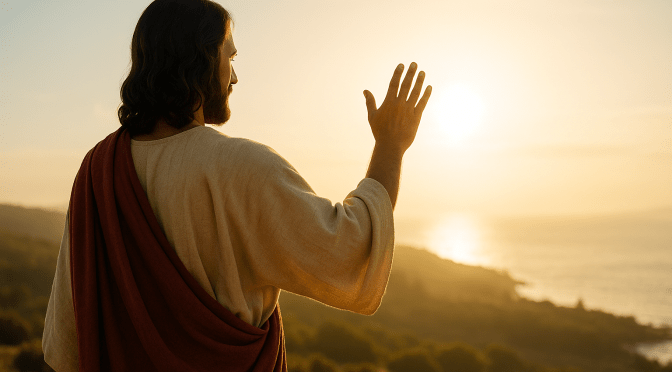





 3 Pillars Podcast