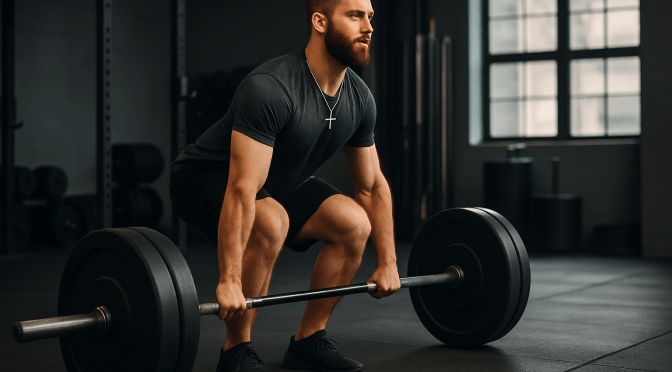
Tag Archives: physical fitness

Training the Body, Serving the King: A Christian Approach to Fitness

Introduction: Why Fitness Matters — Beyond the Mirror

I’ve always believed that faith, mind, and body are interconnected parts of who we are. We often talk about spiritual growth and mental discipline — but what about the body? Over time, I came to see that physical fitness, when rightly understood, is not a sideline to faith — it can be a key pillar, a tool, a calling for serving God more effectively.

In my podcast “Physical Fitness Devotion” (Ep. 1, Season 5), I began unpacking this vision: that staying fit isn’t vain — it’s stewardship. It’s not about pride or vanity — it’s about honoring the temple God entrusted to us, preparing ourselves to serve others, and cultivating discipline that strengthens more than just muscle: it strengthens character, resilience, and readiness.

In this post, I want to explore how physical fitness can be a spiritual practice, a form of worship, and a powerful way to serve our King — body, soul, and Spirit. I’ll share biblical foundations, practical strategies, mindset shifts, and reflections on making fitness part of one’s faith walk.

1. Biblical Foundations: Our Bodies as Temples of the Holy Spirit

One of the clearest biblical mandates for honoring our bodies comes from 1 Corinthians 6:19–20: “Do you not know that your bodies are temples of the Holy Spirit within you, whom you have received from God? You are not your own.” 

To treat the body with care, to nurture strength, health, and vitality, is to honor God — because our body is not ours, but His. It’s entrusted to us, and how we steward it reflects our gratitude, reverence, and readiness to serve.

Another clear encouragement is found in 1 Timothy 4:8: “Bodily training is of some value, but godliness is valuable in every way.” 

This verse doesn’t elevate exercise above godliness, but it affirms that training the body has value. It offers an opportunity — a God-given tool — not for vanity, but for discipline, stewardship, and health. And when approached with the right heart, it becomes an act of worship.

Over the years, faith leaders and theologians have echoed this idea: fitness isn’t simply worldly conc​ern or fleshly pride. It can be “fitness for purpose” — being prepared to serve, carry burden, persevere, and glorify God with the vessel He created. 

So for me, this truth reshaped the way I viewed working out, eating well, resting properly. It stopped being about looks — it became about stewardship.

2. The Mind-Body–Spirit Connection: Why Fitness Impacts More Than Muscles

Physical training doesn’t only improve appearance or cardiovascular health — it dramatically influences mental health, emotional well-being, and cognitive clarity.

Here’s what research consistently shows:

Regular exercise reduces stress, anxiety, and symptoms of depression.  Exercise boosts mood, self-esteem, and resilience, and helps sharpen concentration, memory, and mental performance.  Physical activity supports better sleep, lowers risk of chronic disease, improves longevity, and strengthens immunity. 

When I think about spiritual life — prayer, worship, ministry, service — I see many demands. To serve others, lead well, stay emotionally stable, patiently love, and remain spiritually alert — these require energy, clarity, resilience. Physical fitness supports all of that.

In moments of stress or spiritual dryness, I’ve often found that a workout or a swim doesn’t just restore my body — it renews my mind and my spirit. It helps me engage Scripture with sharper eyes, pray with deeper sincerity, encourage others with steadier strength.

Fitness becomes more than a self-care routine — it becomes spiritual maintenance. It reaffirms that body and spirit are not separate in God’s design.

3. Aligning Fitness Goals with Kingdom Purpose

So how do we bridge the gap between gym routines and spiritual devotion? Here’s the mindset shift I adopted — and I encourage you to consider it too.

A. Fitness as Stewardship, Not Selfishness

When we treat our body as God’s temple, exercising and caring for it becomes stewardship, not vanity. It’s not about being admired by others — it’s about being faithful before God.

We don’t lift weights to be seen — we lift weights to be ready. Ready to carry, serve, endure. Ready to love others sacrificially, to stand firm in trials, to endure long ministry hours, to nurture others.

B. Fitness as Discipline — Training Body & Spirit Together

Physical discipline builds spiritual discipline. When I learn to deny comfort, push through fatigue, show up consistently for workouts — I train more than muscle: I train character, perseverance, self-control.

This echoes scriptural imagery of the Christian life as a race.  Staying “fit” becomes a metaphor and a practice for running well the race of faith — disciplined, perseverant, focused on the prize that transcends this life.

C. Fitness as Worship — Every Rep, a Reminder of God’s Gift

Imagine pausing mid-workout and thanking God for the gift of strength, health, breath, mobility, coordination. Every breath, every heartbeat, every drop of sweat — a reminder: He made us, redeemed us, gave us life.

When we frame fitness this way, it shifts from self-help to worship. It becomes gratitude expressed in action.

D. Fitness as Preparation for Service

Ministry isn’t always neat or easy. It often demands energy, strength, long hours, emotional stability. By caring for our body, we prepare ourselves to serve more faithfully.

For me, fitness is a tool — not the goal itself, but a means. A means to remain steady in service, strong in trials, alive in spirit, clear in mind, compassionate in heart.

4. Practical Strategies: How I Turn Fitness into Worshipful Discipline

Here are the practical steps and habits I use to integrate physical fitness into spiritual discipline. You can adapt them to your life, schedule, and calling.

1. Set Clear, God-Centered Intentions

Before I begin any training program, I ask: Why am I doing this? If the motive is vanity, comparison, or fleeting approval — I pause and re-center. If the motive is stewardship, worship, readiness — I move forward.

Write down your intentions. Let them be prayers.

2. Build a Balanced Regimen — Body, Mind, Rest

Fitness isn’t just lifting or cardio — it’s balanced living. For me, that means:

Regular strength training or functional fitness Cardiovascular work: walking, swimming, running, or other active movement Recovery: proper sleep, stretching, rest days Nutrition and hydration — honoring the body with what it needs

Balance helps prevent burn-out. It honors your body as a temple — not a project.

3. Combine Physical Work with Spiritual Work

I often take walks early in the morning to pray, meditate, reflect on scripture. Sometimes I lift weights and listen to worship or scripture readings. Sometimes I sit in quiet afterward and journal what God is doing.

This isn’t multitasking — it’s integrated discipline: body and spirit aligning toward Him.

4. Practice Consistency Over Perfection

You don’t need to be perfect. You need to be faithful.

On days you’re tired, do a light workout or a walk. On days you’re strong, push a bit harder. The goal isn’t to punish the body — it’s to train it, steward it, prepare it.

Consistency builds habit; habits shape lifestyle.

5. Use Accountability and Community

I don’t go it alone. I train with friends, with men who share goals of faith and strength. We check in, encourage one another, hold each other accountable.

Spiritual community and fitness community overlap beautifully when identity is rooted in Christ.

6. Rest and Recovery — Acknowledging Limits and Grace

Our bodies — and spirits — need rest. Overtraining, neglecting rest, pushing past safety — these aren’t virtues. They’re misunderstandings of stewardship.

God created rhythms of work and rest. Honoring those rhythms honors His design.

5. The Danger of Turning Fitness into Idolatry — A Word of Caution

It’s important to acknowledge a real danger: that fitness can become an idol. A focus on appearance rather than stewardship, on self-glorification rather than serving others, on self-worth tied to body image.

Some Christians warn against vanity, self-obsession, or losing spiritual focus when fitness becomes all-consuming. 

That’s why heart posture matters. When fitness serves God’s glory — not your ego — it becomes redemptive. When it becomes self-glorifying, it becomes dangerous.

In my own life I guard against that temptation by asking regular questions: Am I working out to serve Him or to serve myself? Am I using physical strength to love and serve, or to impress?

When fitness becomes worship, worship becomes the anchor — and the body becomes a vessel, not the destination.

6. Stories of Transformation: When Fitness Meets Faith

Over the years, I’ve seen how this integrated approach — faith and fitness — transforms lives.

A man I know began lifting seriously not for the mirror, but to be strong for ministry. Over months he grew stronger physically — but more importantly, emotionally and spiritually. He began to pray more, serve more, lead more. A veteran recovering from combat injuries used exercise and devotion as rehab — not only restoring his body, but renewing his trust in God’s sovereignty and strength. Families who exercise together — worshiping together, walking together — build not only muscle, but unity, discipline, and shared rhythm.

These aren’t perfect stories. But they prove this: fitness pursued with kingdom purpose doesn’t just build bodies — it builds faith, character, community, readiness.

7. How Physical Fitness Supports the Other Pillars — Mind & Spirit

If we think of fitness as one pillar of a holistic life — alongside mind and spirit — we see how they interconnect:

Mind: Physical activity boosts cognitive function, clarity, stress resilience, and emotional stability.  Spirit: A healthy body enables consistent devotion, worship, service, and endurance when challenges come. Community & Service: Fitness can give energy and capacity to serve others — in ministry, work, family, outreach.

Neglecting our bodies weakens the entire structure. Strengthening them uplifts the whole house.

8. Steps to Begin — My Personal Action Plan

If you want to approach fitness as worship and stewardship — here’s my recommended starting plan:

Pray First: Ask God for vision & strength. “Lord, help me steward my body for Your glory.”

Set Simple, Sustainable Goals: e.g., walk 30 minutes 4x per week; strength train 2x per week; sleep 7–8 hours; drink enough water.

Plan Around Your Life: Choose exercise times that fit your schedule — early morning, lunch break, evening.

Make them non-negotiable appointments. Track Progress: Journal workouts, energy levels, rest, mood. Note spiritual reflections alongside.

Integrate Worship & Reflection: Use workouts for worship songs, prayer, scripture meditation, thanksgiving.

Use Accountability: Partner with a brother/sister in Christ — check in weekly, encourage one another, pray together.

Rest and Recover: Honor rest. Avoid burnout. Let restoration be part of stewardship.

Serve Through Fitness: Use strength and health to serve others — physically, emotionally, spiritually.

9. My Prayer: That Our Bodies Glorify the Creator

I pray that every rep, every step, every breath in effort or rest becomes a whisper of worship. That my muscles, heart, mind — aligned under Christ — serve Him not for vanity, but for purpose.

I pray that fitness becomes not an idol, but a tool. A tool to endure hardship, to love others well, to minister faithfully, to steward well the temple God gave me.

May our sweat remind us of the Cross — the price paid, the strength given, the grace extended.

And may our lives — healthy, strong, disciplined — point not to ourselves, but to the King we serve.

Conclusion: Fitness, Faith, and the Call to Serve

Physical fitness is more than aesthetics or strength. It can be a form of worship, a practice of stewardship, a preparation for service. It shapes body, mind, and spirit — equipping us to run the race of faith well, to serve with endurance, to live with purpose, and to honor God richly.

Training the body isn’t sideline work. For the Christian, it’s kingdom work — strengthening the vessel for His glory.

So whether you lift weights, swim, walk, run, stretch, or simply move more intentionally — do it as devotion. Do it as worship. Do it as service. And may your body, mind, and spirit draw nearer to Him, ready for every calling He lays before you.


Never Skip Leg Day — Why Strong Legs Build a Strong Life

Introduction

Let me be honest with you—I used to dread leg day.

For years, I prioritized the “mirror muscles”: chest, arms, abs. The parts of my body I could see, flex, and feel good about. Legs? They were always an afterthought. Not because I didn’t think they mattered, but because training them was hard. Uncomfortable. Even humbling.

Then one day, I had a moment of clarity: if the legs are the literal foundation of the body, how could I build anything meaningful without strengthening them? That epiphany changed everything. I began to realize that leg training wasn’t just a physical necessity—it was a metaphor for life. It was about embracing pain, building discipline, and laying a foundation that could support not just my body, but my purpose.

This post is about more than fitness. It’s about building strength from the ground up—in body, mind, and spirit. Whether under the barbell and in prayer, I want to share with you why leg day matters more than you think—and how it can transform your entire life.

The Foundation Principle

Think about this: everything you do—every step, jump, lunge, climb—begins with your legs. They are your body’s foundation, the base that supports everything else. When your legs are strong, the rest of your body can move with confidence, coordination, and control. When they’re weak, instability seeps in and compromises everything above.

In Matthew 7:24–25, Jesus shares the parable of the wise and foolish builders. The wise man builds his house on rock, and when the storms come, the house stands firm. The foolish man builds on sand, and the house crumbles. That story isn’t just about faith—it applies to our physical lives, too. Your legs are the “rock” upon which you build your physical house.

Just like Christ is the unshakable foundation of our spiritual lives, our legs are the cornerstone of physical fitness. And just as we wouldn’t build our spiritual life on anything less than Christ, we shouldn’t build our physical strength on anything less than a powerful, stable lower body.

There’s something profoundly spiritual about that. We’re called to be strong—mentally, spiritually, and physically—not for vanity, but for service. For resilience. For impact. And it starts from the ground up.

Strength and Balance Start with the Lower Body

If you’ve ever done a heavy squat, you know it’s more than just a “leg exercise.” Your core engages. Your back tightens. Your focus narrows. It’s a full-body experience. And when done consistently, leg training doesn’t just grow your quads or hamstrings—it improves your entire kinetic chain.

Strong legs improve posture, increase balance, and protect your joints. They make it easier to lift, carry, and move with purpose. Whether you’re on a sports field, playing with your kids, or climbing a ladder at work, strong legs give you stability. They help you live more freely—and more confidently.

I’ve noticed this firsthand. When my legs are strong, I stand taller—literally and figuratively. I walk into rooms with more presence. I feel grounded. It’s as if the strength in my legs transfers to my mindset. I’m steadier, calmer, more focused.

Leg training teaches us to root ourselves—just like a tree with deep roots can withstand the storm, so can a person with strong legs withstand the pressures of life. It’s balance in every sense of the word.

Functional Fitness and Longevity

I’ll never forget the moment I watched an elderly man struggle to rise from a chair. It wasn’t just heartbreaking—it was eye-opening. He had a sharp mind, a joyful spirit, and a willing heart. But his body? It could no longer support him. That moment was a turning point for me. I realized that strength isn’t just for athletes—it’s for everyone who wants to live well for the long haul.

Functional fitness isn’t about looking good. It’s about living free. When your legs are strong, you can walk further, climb stairs with ease, lift groceries, play with grandkids, and stay mobile into your later years. It’s independence. It’s dignity. It’s a life of fewer limitations.

And here’s the kicker—leg strength is one of the strongest predictors of longevity. Studies show that people with greater lower body strength are far less likely to fall, suffer fractures, or become dependent as they age. In other words, leg day today becomes freedom tomorrow.

If I want to be vibrant and active into my seventies, eighties, or beyond, that work starts now. It’s not just an investment in muscle—it’s an investment in my future.

Leg Training as Discipline and Endurance

Training legs hurts. Not in an injury way, but in a “my soul just left my body” kind of way. Squats, lunges, deadlifts—they demand everything. Your lungs burn, your muscles shake, and your mental limits are tested. That’s what makes leg day special.

Leg day is a test of will. It separates the casual lifter from the committed one. And honestly, that’s why I’ve come to love it.

There’s a spiritual lesson here. Romans 5:3–4 says, “We also glory in our sufferings, because we know that suffering produces perseverance; perseverance, character; and character, hope.” Sound familiar?

Leg day is suffering—controlled, purposeful suffering. And from that suffering comes strength. Not just physically, but mentally and spiritually. It teaches me to keep going when I want to quit. It teaches me to breathe through the discomfort. It teaches me that growth only comes on the other side of struggle.

Every time I choose to train legs, I choose character over comfort. And that, to me, is a win beyond the gym.

Building Power and Athletic Performance

Athletes know something that average gym-goers often forget: the legs are the engine. If you want to jump higher, sprint faster, or move with agility, you need powerful legs. It’s the difference between average and elite. Between surviving and dominating.

Think of a football player breaking tackles, a sprinter exploding off the line, a martial artist delivering a knockout kick. The common denominator? Lower body power.

And even if you’re not a professional athlete, that kind of explosive strength translates into your everyday life. Chasing after your kids, hiking steep trails, playing recreational sports—it all becomes easier when your legs are trained to move with power.

The more I trained my legs, the more “athletic” I felt. Not because I gained speed or agility overnight, but because I began to move with purpose. My body felt like a tool, not a burden. That feeling is addictive—and it’s available to anyone willing to earn it.

Hormonal Benefits and Muscle Growth

Here’s something most people don’t realize—when you train your legs, your whole body benefits. Why? Because leg workouts recruit some of the largest muscles in the body, which triggers a powerful hormonal response. When you push yourself through heavy squats or lunges, your body releases more testosterone and growth hormone. These hormones don’t just help your legs grow—they help your whole body build muscle, recover faster, and perform better.

After I committed to serious leg training, I started noticing progress in areas I hadn’t even focused on. My chest felt stronger. My arms looked fuller. My energy levels climbed. It was like my entire system was responding to the intensity and demand of leg day.

This is why skipping leg day is a huge mistake if you’re trying to build muscle or transform your physique. It’s not just about isolated muscles—it’s about sending a signal to your body that says, “We’re working hard. Adapt.”

It’s a biological domino effect, and it all starts at the base.

Bone Health and Aging Gracefully

There’s another hidden benefit to leg training, and it’s one that matters more the older we get: bone density. As we age, our bones naturally lose density, making us more susceptible to fractures and injuries. But here’s the good news—resistance training can slow, and in some cases, reverse that decline.

When you load your body with weights, especially through leg exercises like squats and deadlifts, you stimulate your bones to become stronger and denser. Think of it like remodeling your house from the inside out—every rep reinforces your structural foundation.

I think about this often when I see aging relatives struggle with mobility or recover slowly from injuries. I don’t want that future for myself. And I don’t want it for anyone I care about. By strengthening our legs today, we’re protecting our freedom and quality of life tomorrow.

Aging gracefully doesn’t mean getting weaker—it means getting wiser about how we train and care for the body God gave us.

Better Metabolism and Fat Burning

Here’s something that really surprised me when I got serious about leg day—my metabolism shifted. Suddenly, I was burning more calories, not just during workouts, but all day long. I felt leaner, lighter, and more energetic.

That’s because leg training taps into EPOC (excess post-exercise oxygen consumption), or what some call the “afterburn effect.” After a heavy leg day, your body keeps burning calories for hours as it works to recover and rebuild.

And because your legs involve such large muscle groups, the energy demand is massive. You’re not just torching fat—you’re reprogramming your metabolism to operate at a higher gear.

This was a game-changer for me. Instead of obsessing over cardio or diets, I started focusing on what actually moved the needle: leg training. And sure enough, my body responded.

If you’re looking to shed fat, tone up, or just boost your metabolic engine, leg day is the secret weapon hiding in plain sight.

Aesthetic Balance and Physical Symmetry

Let’s talk about the elephant in the room: the dreaded “chicken legs.”

We’ve all seen it—and some of us have been it. Guys who spend years perfecting their upper bodies but neglect their legs entirely. The result? A physique that looks unbalanced, top-heavy, and, frankly, incomplete.

I used to fall into this trap. I’d hit bench and biceps multiple times a week, yet avoid squats like the plague. Why? Because leg day was uncomfortable. It didn’t give me that instant pump or Instagram-worthy mirror selfie.

But as I matured in my fitness journey, I realized something crucial: true strength is holistic. Aesthetics matter—not for vanity’s sake, but because they often reflect balance and function. When your legs are proportionate to your upper body, you look strong because you are strong. Your physique reflects the effort you’ve put in from head to toe.

And the confidence that comes from knowing you’ve earned your strength evenly across your body? That’s priceless. No part left behind. No shortcuts taken. Just raw, honest work.

Spiritual Fitness and the Temple of the Body

There’s a deeper reason I train my legs—and really, my whole body—that goes beyond health or appearance. It’s about stewardship. In 1 Corinthians 6:19, Paul writes, “Do you not know that your body is a temple of the Holy Spirit within you, whom you have from God?”

That verse hits different when I’m under a barbell.

Training my legs has become a way I worship God through discipline. It reminds me that I’m not here to coast—I’m here to grow. To be strong for my calling. To be a vessel that can carry the weight of responsibility, leadership, family, and ministry.

Leg day teaches me order. It teaches me to prepare, to stay humble, and to honor the process. That’s spiritual. That’s powerful.

And every time I show up—especially when I don’t feel like it—I’m reminded that excellence is built one rep at a time, both in the gym and in life.

Mindset Shift: “I Get to” Instead of “I Have to”

Here’s something I never expected: leg training changed the way I talk to myself.

It used to be, “I have to do squats today.” Now, it’s “I get to.”

That simple shift—from obligation to opportunity—has reframed everything. I get to move. I get to challenge myself. I get to strengthen what was once weak. I get to steward my health. That’s a blessing, not a burden.

Training legs regularly has made me grateful for the gift of movement. It’s made me appreciate what my body is capable of. And it’s taught me to embrace discomfort—not as punishment, but as the price of growth.

I’ve learned to smile during the burn, to breathe through the grind, and to walk away not just sore—but stronger in every way.

Raising the Standard for Future Generations

One of the most unexpected outcomes of training my legs—of taking my physical fitness seriously—has been the impact on those around me. Especially the next generation. Whether it’s my kids, younger guys at the gym, or people in my community, I’ve noticed something powerful: when you live with discipline, people watch. And when you do hard things consistently, they start to believe they can, too.

I want my children to see that strength isn’t just about muscle—it’s about mindset, character, and commitment. I want them to grow up understanding that we honor God by taking care of our bodies and pushing our limits in a healthy, purposeful way. I want them to know that showing up on leg day—even when you don’t feel like it—is a form of integrity.

We don’t just train for ourselves. We train for those who are watching. We raise the standard not by our words, but by our example.

Leg day, as grueling as it is, has become a platform for modeling virtue: perseverance, humility, courage, and grit. And that kind of modeling leaves a legacy that goes far beyond the gym.

Practical Tips for Leg Training Success

Now, you might be fired up—but still unsure how to start. So let me share a few practical tips that helped me shift from dreading leg day to dominating it:

Train legs at least once per week. Twice is even better if you want to grow. Start with compound movements. Focus on squats, deadlifts, lunges, and step-ups. These engage multiple muscle groups and build real-world strength. Progressive overload is key. Don’t chase exhaustion—chase progress. Increase your weight or reps over time. Master your form. Quality over quantity. Injury prevention starts with good mechanics. Recover well. Sleep, stretch, hydrate, and fuel properly. Leg day demands serious recovery.

Consistency, not perfection, is the goal. You won’t get it all right the first time—but the important thing is to start.

Conclusion: Strong Legs, Strong Life

If I’ve learned anything from years of training, it’s this: the strength you build on leg day doesn’t stay in the gym—it follows you into every area of your life.

Leg training is hard. It’s uncomfortable. It exposes weaknesses. But that’s why it’s so powerful. Because when you train your legs, you’re doing more than building muscle—you’re building resolve. You’re laying a foundation that supports your entire being—physically, mentally, spiritually.

“Never skip leg day” isn’t just a gym meme. It’s a life mantra. It’s a reminder to embrace the hard things. To build from the ground up. To develop a foundation strong enough to carry the weight of your dreams, your responsibilities, and your calling.

So yes—train your legs. Train them with purpose. Train them with prayer. And trust that as your legs grow stronger, so will everything else.

Call to Action

If you’re reading this and feeling challenged, good. Take that spark and turn it into movement.

This week, commit to training your legs twice. No excuses.

Start with a bodyweight circuit or barbell squats—whatever your level allows. Pray before your session. Invite God into your effort. Let Him shape not just your muscles, but your mindset.

Build strength that matters. Build from the ground up. And never, ever skip leg day.

Cultivating Patience: The Threefold Path


Patience stands as the cornerstone of achievement, a virtue that profoundly shapes our journey toward physical, mental, and spiritual well-being. It’s the steel backbone that fortifies our endeavors, echoing the divine patience exemplified by Jesus Christ. In this post, we will delve into the intricate tapestry of patience across the three pillars of fitness, exploring strategies to nurture this virtue in our lives.

The Threefold Path of Patience

1. Physical Fitness: Endurance Beyond Limits

Physical fitness embodies the sweat-soaked discipline of perseverance. It’s not merely about sculpting the body; it’s a testament to the resilience of the human spirit. To cultivate patience in this realm, embrace consistency. View fitness not as a quick fix but as a lifelong journey. Set realistic goals, celebrate small victories, and understand that true transformation takes time.

  1. Mindful Training: Engage in exercises that foster mindfulness, like yoga or tai chi. These disciplines cultivate patience by syncing movement with breath, teaching us to embrace each moment.
  2. Progress Tracking: Keep a fitness journal to track progress. Witnessing incremental improvements fuels patience by highlighting the steady evolution toward your fitness goals.
  3. Embrace Plateaus: Plateaus are not roadblocks but stepping stones. Embrace these periods as opportunities for growth and refinement, understanding that progress isn’t always linear.

2. Mental Fitness: Nurturing Resilience

In the landscape of the mind, patience becomes a guardian against haste and anxiety. Mental fitness thrives on resilience, requiring us to build emotional endurance and fortitude.

  1. Mindfulness Meditation: Practice mindfulness meditation to cultivate patience. It teaches us to observe thoughts without judgment, fostering a calm and patient mindset.
  2. Purposeful Learning: Engage in activities that challenge your intellect, such as learning a new language or picking up an instrument. These endeavors instill patience through the gradual mastery of skills.
  3. Adaptability: Embrace setbacks as learning opportunities. Train your mind to view challenges as temporary and surmountable, fostering a patient approach to adversities.

3. Spiritual Fitness: Nourishing the Soul

At the core of spiritual fitness lies the transcendence of self, echoing the divine patience embodied by Jesus Christ. It’s about nurturing the soul, aligning with higher virtues, and deepening our connection with the divine.

  1. Devotional Practice: Regularly engage in prayer, meditation, or scripture reading. These practices instill patience by fostering a deeper connection with the divine and cultivating inner peace.
  2. Service and Compassion: Engage in acts of service and kindness. Practicing empathy and compassion toward others nurtures patience by teaching us the art of selflessness.
  3. Gratitude Cultivation: Foster a mindset of gratitude. Reflecting on blessings and acknowledging the beauty in life cultivates patience by fostering contentment and tranquility.

Emulating Divine Patience

The essence of patience finds its pinnacle in the divine patience exhibited by Jesus Christ. His unwavering resolve, compassion, and enduring love serve as a guiding light.

Emulate this divine patience by:

  • Practicing Compassion: Extend grace and compassion to yourself and others.
  • Staying Anchored in Faith: Trust in divine timing and have faith in the journey.
  • Surrendering Control: Embrace uncertainty and relinquish the need for immediate results.

In conclusion, patience is not passive resignation but an active practice that transforms our lives across the physical, mental, and spiritual realms. By embracing patience in our pursuits, we forge a path of enduring growth, resilience, and inner peace—a journey echoing the divine patience of our Lord, Jesus Christ.

Physically Ready: Conquering Life’s Challenges with a Strong Body

In our daily lives, we encounter unexpected events and challenges that demand physical strength and resilience. Being physically ready is not just about fitness; it’s about optimizing our physical well-being to enhance overall performance and face life’s hurdles with confidence. This motivational blog post delves into the importance of physical readiness and provides practical tips to prepare your body for the challenges that come your way. By implementing effective strategies and insights, you can conquer life’s obstacles and thrive.

1. Understand the Importance of Physical Readiness:

Physical readiness is the foundation for navigating life’s challenges. It encompasses strength, flexibility, endurance, and agility. Here’s why it matters:

a. Enhanced Resilience: A physically fit body is better equipped to handle physical and mental stress, enabling you to bounce back from setbacks more easily.

b. Increased Energy Levels: Regular exercise and a healthy lifestyle contribute to higher energy levels, improving productivity and overall well-being.

c. Improved Mental Health: Physical activity releases endorphins, reducing stress, anxiety, and depression. A healthy body positively impacts your mental state.

2. Establish a Balanced Fitness Routine:

A well-rounded fitness routine ensures that your body is prepared for various challenges. Consider the following components:

a. Cardiovascular Exercise: Engage in activities such as running, cycling, or swimming to improve heart health, stamina, and endurance.

b. Strength Training: Incorporate resistance exercises like weightlifting or bodyweight workouts to build muscle, enhance bone density, and improve overall strength.

c. Flexibility and Mobility: Practice stretching, yoga, or Pilates to increase flexibility, mobility, and prevent injuries.

3. Prioritize Rest and Recovery:

Physical readiness is not solely about pushing your limits; it also involves prioritizing rest and recovery. Consider these strategies:

a. Quality Sleep: Aim for 7-9 hours of quality sleep each night to optimize muscle recovery, cognitive function, and overall well-being.

b. Active Recovery: Incorporate active recovery days into your routine, engaging in low-intensity activities such as walking, swimming, or gentle yoga to promote healing and prevent overtraining.

c. Listen to Your Body: Pay attention to signs of fatigue, muscle soreness, or injury. Modify your workout routine accordingly to avoid burnout and promote long-term sustainability.

4. Fuel Your Body with Nutritious Food:

Proper nutrition is essential for physical readiness. Focus on a well-balanced diet to fuel your body effectively:

a. Whole Foods: Incorporate a variety of fruits, vegetables, lean proteins, whole grains, and healthy fats into your meals.

b. Hydration: Drink an adequate amount of water throughout the day to maintain hydration levels and support overall bodily functions.

c. Mindful Eating: Pay attention to portion sizes and listen to your body’s hunger and satiety cues. Practice mindful eating to foster a healthy relationship with food.

5. Incorporate Functional Training:

Functional training mimics real-life movements, enhancing your ability to perform daily tasks and face unexpected challenges:

a. Core Strength: Develop a strong core through exercises like planks, squats, and deadlifts. A strong core improves stability, balance, and posture.

b. Balance and Coordination: Engage in activities that challenge your balance and coordination, such as yoga, tai chi, or balance-focused exercises.

c. Agility and Quickness: Incorporate agility drills, speed training, or sports-specific movements to improve your reaction time and agility.

Conclusion:

Being physically ready is a vital component of conquering life’s challenges and thriving in your daily endeavors. By understanding the importance of physical readiness and implementing practical strategies, you can optimize your physical well-being, improve resilience, and enhance overall performance. Prioritize a balanced fitness routine, rest and recovery, nutritious food choices, and functional training. Embrace the power of a strong body, and let physical readiness empower you to tackle life’s obstacles with vigor and confidence.