Category Archives: Blog Posts

The following articles aim to strengthen the subjects that were covered on the 3 Pillars Podcast and will provide a more in-depth analysis of each topic.

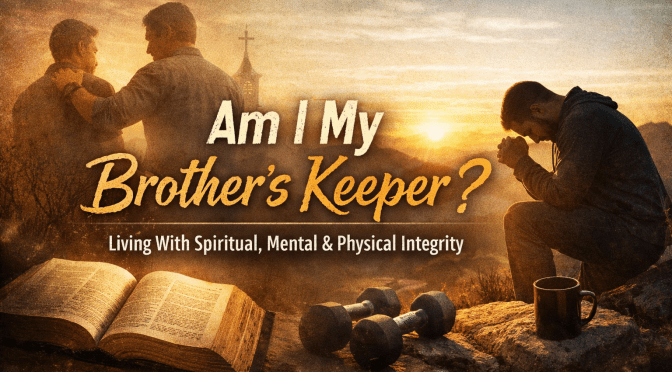
Am I My Brother’s Keeper? — Why Your Spiritual, Mental & Physical Health Matters More Than You Think

When I first encountered Oswald Chambers’s devotion “Am I My Brother’s Keeper?” in My Utmost for His Highest, it stopped me in my tracks. The words leapt off the page, not as gentle encouragement but as a stark reminder of how deeply our lives are interconnected in the Body of Christ. Chambers’s core message is clear: our private walk with God affects not only us, but everyone around us — spiritually, mentally, and physically.

In the podcast episode “Am I My Brother’s Keeper?” (3 Pillars Podcast, Season 5, Ep. 9), I reflected on this and wrestled together with listeners how easily we underestimate our influence — both for good and for harm. Here, I want to go deeper, personally and practically, into what it looks like to live with integrity in all areas of life, to care for others as Scripture calls us to, and to live with purpose knowing that the Christian life is not solitary but communal.


Understanding the Call: “None of Us Lives to Himself”

Chambers begins with the sobering statement drawn from Scripture: “None of us lives to himself…” (Romans 14:7). The implication here is massive: our lives are not private — they are public in their effect.

He goes on to point out that if we allow turning away from God, even in private, it ultimately impacts those connected to us — family, friends, coworkers, neighbors, and fellow believers. The analogy used in 1 Corinthians 12 puts it plainly: we are one body. When one part suffers, the whole body suffers.

This relational emphasis is not sentimental. It’s a theological truth rooted in the very nature of the Church as Christ’s Body. What happens in your heart echoes into the lives of others.


Spiritual Disarray: The First Domino to Fall

When we drift spiritually — whether through neglecting prayer, ignoring Scripture, or allowing unresolved sin — it’s not just our momentary peace that suffers; our ability to be present, compassionate, and spiritually discerning also deteriorates.

Chambers uses vivid language: if we give way to spiritual weakness, mental slovenliness, moral obtuseness, or physical selfishness, those around us will suffer. In everyday life, this might look like:

  • Losing patience with loved ones because we haven’t grounded ourselves in prayer.
  • Avoiding challenging conversations about faith because our own trust in God feels fragile.
  • Becoming irritable, distracted, or self‑absorbed, draining others rather than encouraging them.

This is not just an abstract teaching — it’s experiential truth. When my own devotional life wanes, I notice it first in how I relate to people. I find myself more irritable with my spouse, less generous in listening, and more prone to cynicism rather than hope.

Chambers doesn’t sugarcoat this. He reminds us that a Christian’s primary calling isn’t comfort or personal holiness alone — it’s active, engaged service to God and others.

We were not left on this earth merely to be saved and sanctified. We were left here to be at work for Him. That means being spiritually alert, mentally disciplined, and physically ready to serve — not just for our own benefit, but as a testimony to others.


Physical & Mental Disarray: The Hidden Ripples of Neglect

Often, when we think about spiritual life, we think purely of prayer and Scripture. But Chambers reminds us that spiritual health cannot be separated from mental and physical health.

Consider this:

  • Physical exhaustion weakens our resilience and patience. We become short‑tempered, withdrawn, or disengaged.
  • Mental clutter — whether stress, distraction, or unresolved anxiety — makes us less able to listen, empathize, and respond with wisdom.
  • Spiritual disconnection often shows up first in silence with God, then in silence with people.

These aren’t separate categories. They feed into each other. Physically depleted people are mentally overwhelmed; mentally overwhelmed people are spiritually distant; spiritually distant people become emotionally unavailable. The net effect is predictable: relationships strain, families suffer, communities weaken.

When I look back on seasons where I allowed neglect in one area — whether sleep, solitude with God, or honest reflection — the consequences are always relational first. I became harder to love, harder to reach, harder to walk alongside.


Others Don’t Just Notice — They Depend On You

Chambers’s point that everyone around us suffers when we suffer sounds dramatic until you pause and reflect on real relationships.

Your spouse may not say a word, but they notice when you’re spiritually distracted.

Your children may not articulate it, but they feel the shift when you are emotionally absent.

Your friends — especially those struggling — feel the impact when you withdraw or lose passion.

Church communities feel it when leaders falter.

Workplaces feel it when you’re disengaged.

The apostle Paul’s metaphor of the Body of Christ is not just theological poetry — it’s diagnostic. When one part fails, the entire body’s functioning changes. It’s like a domino effect: one weakened link changes how the entire chain holds tension.

And yet, Chambers doesn’t leave us in despair. He reminds us that our sufficiency is from God. We don’t muster the strength alone — we draw it from Him.


What Happens When We Rediscover Our Calling?

Jesus’s command “You shall be witnesses to Me” (Acts 1:8) defines discipleship not as a passive state, but as active engagement of every ounce of our mental, moral, and spiritual energy.

Chambers pushes us to ask: How much of ourselves are we willing to give? Are we willing to be spiritually present, emotionally available, mentally alert?

Too often, we think of discipleship as something we “do” after we get our lives in order. But Chambers flips the logic: it’s through doing discipleship — by pouring ourselves out for Christ and for others — that our lives get ordered.

This is risky. It means:

  • Vulnerability with others.
  • Honest self‑examination.
  • Confession and reconciliation.
  • Stepping into discomfort for the sake of someone else’s growth.

But this risk is the very heart of spiritual life. Prayer isn’t just a ritual — it’s a lifeline that keeps us tethered to God so we can serve others with strength and compassion.


Learning to Be One Another’s Keeper

To truly be our brother’s keeper requires more than good intentions. It requires intentional spiritual practices that align us with God and enable us to serve others without burning out or turning selfish.

Here are some ways I’ve learned to live this out:

1. Transparency in Community

We need spaces where we can be real — not perfect — with others. Vulnerability invites others to share honestly, creating environments where we don’t just duplicate weakness but strengthen each other.

2. Accountability That Isn’t Condemning

Accountability isn’t about control — it’s about mutual care. When I share struggles with a trusted friend, we both become stronger, not weaker. And we both learn what it means to bear each other’s burdens.

3. Intentional Spiritual Rhythm

Keeping daily walk with God — prayer, Scripture, reflection — isn’t about performance. It’s about formation. When we return daily to God, we build resilience and clarity to support others effectively.

4. Emotional Investment in Others

Sometimes being my brother’s keeper simply means listening deeply, withholding judgment, and offering presence. Not solutions first — presence first.


Conclusion: You Matter — Far Beyond What You See

Chambers’s challenge is both convicting and hopeful:

If one part suffers, every part suffers with it.

Your inner life — spiritually, mentally, physically — is not private. It is joined with others in a profound web of influence. What you do in solitude affects your effectiveness in community. What you nurture in prayer, you bring to others in compassion.

Christ didn’t call us to be lone saints. He called us to be witnesses — for Him and for each other.

So I ask again, and now ask of myself:

Am I my brother’s keeper?

Yes — not perfectly, not effortlessly, and not alone — but faithfully, with God’s strength, and with love that empowers others to thrive.

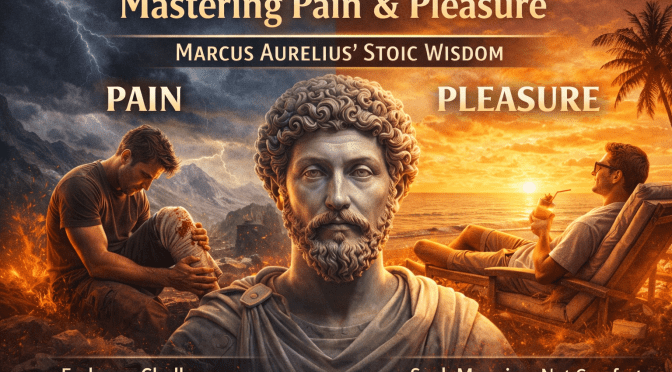
Pain vs. Pleasure: Stoic Wisdom for Emotional Mastery and a Better Life

Pain and pleasure — two of the most powerful forces that shape human behavior, motivation, and experience. From the moment we wake up to the moment we fall asleep, these twin sensations play out in subtle and unmistakable ways: we instinctively move toward pleasure and recoil from pain. Yet what if the very things we chase or avoid most are exactly the elements that can either strengthen us or mislead us?

That’s what I’ve been wrestling with — not just intellectually, but in the trenches of daily life. Pain and pleasure aren’t abstract concepts for me. They show up in how I react to criticism, how I pursue goals, and even in how I try to find meaning. In Meditations, Marcus Aurelius doesn’t just recognize these feelings — he challenges us to look beneath them and rethink our instinctive responses. And that challenge, I’ve discovered, is where real personal growth begins.

In Season 5, Episode 8 of my podcast “Meditations: Pain v Pleasure,” we explored not just the philosophical distinctions, but how these emotional poles can be harnessed — or sabotaged — by the way we think and choose to respond. This blog is built on that conversation: a reflection on what pain and pleasure truly are, how they influence our lives, and most importantly, how we can master them for deeper resilience, clarity, and purpose.


What Marcus Taught Me About Pain and Pleasure

One of the most striking lines from Meditations captures the Stoic perspective on this duality:

“The soul does violence to itself when it is overpowered by pleasure or by pain.”

That phrase — overpowered by pleasure or pain — became a turning point for me. What Marcus is warning against isn’t experiencing these sensations; rather, it’s allowing them to take control of our choices, our judgments, and our peace of mind.

To be “overpowered” suggests a loss of agency — as though something external is steering us. But according to Stoic thought, that control is an illusion. Marcus and the Stoics believed that pain and pleasure themselves aren’t inherently destructive — it’s our attachment to them, and the way we let them govern us, that undermines our freedom and wisdom.

This insight was revolutionary for me because, like most people, I’ve spent much of my life reacting impulsively: wanting pleasure when it feels good, avoiding discomfort at all cost, and defining success or happiness through that lens. Yet as I began to explore Stoic philosophy more deeply — and to sit with pain instead of pushing it away — I realized something critical: pain and pleasure are not the ends; they are mirrors — reflections of how we assign meaning to experience and emotion.


The Illusion of Pleasure and the Fear of Pain

Human nature has a funny way of convincing us:

  • Pleasure is desirable and should be maximized.
  • Pain is evil and must be avoided at all costs.

This instinct isn’t unique to any era — ancient philosophers noted it just as acutely as psychologists today. Pleasure feels good; pain feels bad. Our biology drives us in these directions. But Marcus dissented from the simplistic idea that pleasure is good and pain is bad. In fact, he described the pursuit of pleasure as something that can entangle us in patterns of impulsivity, distraction, and even self‑degradation when taken to extremes.

From Marcus’ viewpoint — and from Stoicism in general — pleasure is not the ultimate good, and pain is not the ultimate evil. They are simply experiences — neutral sensations that are given meaning by our values, judgments, and interpretation.

This reframing shifted something in how I perceive my own desires: I realized that pursuing pleasure for pleasure’s sake often leads to dissatisfaction or attachment — whether that’s comfort, achievement, or validation. And ironically, it’s the fear of pain that most often prevents us from growing into deeper purpose. In essence: pleasure without meaning often disappoints, and pain without reflection often constrains us.


Pain Isn’t the Enemy — Misinterpretation Is

One of the most illuminating reflections from Marcus — and the one I return to again and again — is this idea:

“If you are distressed by anything external, the pain is not due to the thing itself, but to your estimate of it; and this you have the power to revoke at any moment.”

This truth has been transformative for me. It doesn’t mean that physical pain isn’t real — it’s clear when something hurts — but what Marcus emphasizes is the suffering that occurs when we assign extra stories, meanings, or threats to the pain. In many cases, it’s our interpretation of the pain that prolongs and magnifies it.

For example, rejection — whether personal or professional — often feels like a deep wound, not because the event itself is inherently catastrophic, but because we interpret it as a blow to our worth or identity. We add layers of self‑judgment and fear that can make the pain last far longer than the event itself. And often, we do this without even realizing we’re doing it.

What Marcus invites us to do — and what I try to practice daily — is this: acknowledge the sensation, notice the story you’re telling yourself about it, and then detach your interpretation from the raw experience. The pain becomes something to be observed, not something that controls you. That’s Stoic empowerment — not numbness, but proportion.


Pleasure in the Stoic Framework: A Balanced Joy

In contrast to how modern culture often presents pleasure — as an end in itself — Stoicism sees it differently. Pleasure is not rejected, but it is understood to be secondary to virtue and rational choice. Pleasure in moderation and in the context of a life aligned with values can be wholesome. Unchecked or impulsive pleasure, however, can lead us away from purpose and into overindulgence.

Growing up, I pursued pleasures that felt good — recognition, comfort, affection, success. And while these experiences brought temporary satisfaction, I found that they always left a restlessness beneath the surface. What Marcus shows is that true contentment is found in alignment — where our desires harmonize with reason and purpose, not where they dominate our choices. In Stoic thought, when pleasure arises, it should be acknowledged without grasping or obsession; and when pain arises, it should be acknowledged without fear or avoidance.

In this way, the Stoic ideal isn’t to eradicate pleasure, nor to embrace pain gratuitously, but to be unmoved by extremes — to be centered in rational values, not in emotional impulses. That doesn’t lessen joy — it refines it.


The Power of Choice: Redefining Our Relationship with Sensation

At the heart of Stoic practice is the notion that we have control over our judgments and reactions, even if we don’t have control over external events themselves. Marcus said it eloquently: “You have power over your mind — not outside events. Realize this, and you will find strength.”

This realization gave me a sense of ownership over my experience of pain and pleasure. It taught me that the difference between suffering and resilience isn’t the absence of pain; rather, it’s whether or not I allow the pain to dominate my narrative. Pain becomes a teacher, not a tyrant.

And pleasure? Pleasure becomes a companion, not a craving. It becomes a joyful moment to enjoy, without entanglement or fear of loss. In practice, this looks like grounding myself in gratitude rather than indulgence — savoring life’s sweetness without clinging to it as a requirement for happiness.

In essence:

  • Pain becomes something to face, not fear.
  • Pleasure becomes something to appreciate, not chase.
  • Meaning becomes something to choose, not assume.

That’s life lived with emotional mastery — not emotional suppression.


Lessons I’ve Applied (and You Can Too)

Through years of practice — and stumbling — I’ve come to appreciate a few Stoic strategies that help me navigate pain and pleasure more intentionally:

1. Observe Without Reacting Immediately

When a painful sensation arises — whether emotional or physical — I now pause and observe, without immediately interpreting it as “bad.” I notice the sensations, acknowledge them, and then watch whether my mind begins to add judgments like “This shouldn’t be happening” or “This is terrible.” Often, these additional thoughts are the true source of suffering.


2. Detach Pleasure from Identity

Pleasure becomes problematic when it becomes something we need to define our worth. Instead, I practice gratitude for pleasure without attaching it to who I am or what I deserve. This reduces fear of loss and enhances present enjoyment without fixation.


3. Reframe Pain as a Teacher

Pain becomes a prompt for reflection. What is this experience teaching me about my values, resilience, or assumptions? Pain becomes information, not punishment. That shift reframes every hardship not as an obstacle, but as a curriculum for growth.


Final Thoughts: A Balanced Life Built on Wisdom

Pain and pleasure aren’t opposites — they are partners in the human experience. One pulls us, the other repels us. Our natural instinct is to cling to pleasure and flee from pain. Stoicism offers a radically different lens: that neither should be masters of our lives. What matters more is how we interpret them, how we respond, and whether our choices reflect reason and purpose rather than impulse and fear.

Through Marcus Aurelius’s Meditations and the Stoic framework, I learned that a well‑lived life isn’t one devoid of sensation — it’s one in which pain and pleasure deepen our wisdom instead of hijacking our judgment. That realization doesn’t make life easier — pain still hurts, pleasure still delights — but it does make life richer, more authentic, and grounded in what truly matters.

So if you’re struggling with pain that feels overwhelming or chasing pleasures that feel hollow, consider this: neither experience is your enemy. What matters is your response — your interpretation — and your ability to choose what aligns with your deeper values. That’s where peace resides.

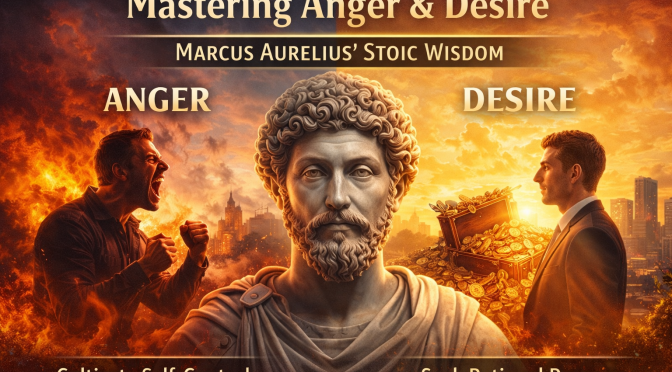
Anger vs. Desire: Mastering the Passions Through Marcus Aurelius’s Meditations

In life, few forces shape our choices more than the raw energy of emotion. When I first grappled with how much anger and desire govern my own reactions — in relationships, in ambition, even in the quiet spaces of self‑reflection — I was struck by the enduring wisdom of Marcus Aurelius’s Meditations. This work isn’t merely ancient philosophy; it’s a mirror held up to the psyche, revealing motivations that too often run unchecked.

In Season 5, Episode 7 of my podcast, “Meditations: Anger v Desire,” we dove deep into how these two powerful forces — anger and desire — influence our daily lives and long‑term fulfillment. From that conversation grew this reflection: how do I, and how can we all, harness the timeless insights of Marcus Aurelius to manage these emotions more wisely for the betterment of our lives?


Understanding Anger and Desire in Stoic Terms

At its core, Stoic philosophy teaches that emotions are not random intrusions, but judgments — interpretations we make about events, people, and ourselves. When we misunderstand our judgments, anger and desire arise not as facts, but as reactions to our perceived reality.

Marcus Aurelius writes of anger as a passion that clouds reason. He observes that anger doesn’t merely respond to an offense; it distorts perception and interrupts clear judgment. As one observer of his work put it succinctly: “For he who is excited by anger seems to turn away from reason with a certain pain and unconscious contraction…” — whereas disturbances caused by desire carry their own disordered pull.

Desire, in Stoic terms, is the yearning for something perceived as good — but one that often pulls us away from what truly matters. Marcus sets out a practice in his own book that can feel radical in a world that thrives on wanting more: “Wipe out imagination; check desire; extinguish appetite; keep the ruling faculty in its own power.”

This Stoic goal isn’t about suppressing emotion entirely (Stoics don’t advocate becoming robots), but about regaining rational control — so that you aren’t driven by impulse, but guided by purpose.


Why Anger and Desire Are So Dangerous

Anger — A Reaction That Often Hurts More Than the Cause

When I reflect on my own life, anger has shown up repeatedly during moments when I felt wronged or stalled. Results weren’t better, decisions weren’t wiser, and relationships often suffered. Marcus was keenly aware of this dynamic long before modern psychology analyzed emotional regulation:

“How much more harmful are the consequences of anger … than the circumstances that aroused them in us.”

That quote — one of many reflections on anger in Meditations — reveals a central Stoic insight: anger often creates more pain than the original trigger. When I let anger take the wheel, I amplify harm rather than resolve it. I’ve seen situations escalate not because of the original issue, but because I responded through the lens of offense and reaction rather than understanding.

The Stoics remind us that nothing external has control over us — only our perception does. Phrased another way, anger is not a necessary response — it is an unhelpful one rooted in our judgments about events. Once I started separating events from my judgment of them, I began to notice how often anger was a reflex rather than a reasoned choice.


Desire — The Pull Toward What We Think Will Fulfill Us

Desire seems, at first glance, less destructive than anger. Desire isn’t loud and eruptive; it’s seductive and persistent. It whispers: “If only you had that… then you’d be content.” Yet the Stoics knew that unexamined desire leads to disturbance just as deeply as unfettered anger.

Marcus Aurelius and the Stoic tradition didn’t reject desire wholesale. Instead, they emphasized discernment — recognizing desires that align with virtue versus those that arise from illusion or impulse.

I’ve wrestled with desire in my own ambitions, whether in career achievements, personal validation, or simply wanting comfort and ease. Desire can be the fuel behind great work — but left unchecked it becomes a chain reaction that reinforces dissatisfaction. I’ve chased goals thinking they would fill a void, only to find that the void simply shifted into wanting something else.

Marcus urges us to check these impulses — not in denial, but in reflection. When I take a moment to interrogate a powerful desire — why it matters, what I hope it will bring, whether it aligns with my values — I often find that the pull was more about fear than true fulfillment.


Stoic Practices for Managing Anger and Desire

Practice 1: Notice the Judgments Behind the Emotion

Stoicism teaches that emotions originate in judgment — the interpretation we place upon events. So the first step toward mastery is awareness: noticing when anger or desire arises, and recognizing what story is attached to it.

When I feel anger flaring, I’ve learned to pause and ask: What am I saying is true right now? Is it actually true? Often, I discover my judgment is an assumption about motives or intentions — not a grounded fact.

This aligns with Marcus’s core Stoic creed: “You have power over your mind — not outside events.” When I internalize that distinction, I begin to see emotions as responses rather than commands.


Practice 2: Replace Reactive Emotion with Intentional Action

Marcus’s reflections teach that anger and desire are not spontaneous forces outside our control — they are impulses that can be redirected toward a more deliberate response.

For anger, this looks like pausing before reacting; it’s easier said than done, but even a breath, a moment of perspective, can interrupt the explosive pattern. Stoics often talk about the virtue of tranquility — a calm center from which reactions are measured rather than reflexive.

With desire, the practice is distinguishing between what is within our control and what isn’t. Desire often emerges from wanting outcomes that are external — praise from others, material success, emotional security — none of which are truly controllable. When I focus instead on what I can control — my effort, my attitude, my ethical conduct — the pull of unhealthy desire begins to weaken.


Practice 3: Use Reflection to Reframe Your Narrative

One of the most practical Stoic tools is daily reflection — a habit Marcus himself practiced. Through journaling or internal dialogue, I reflect on moments when anger or desire swayed me, and I consider what a more measured response might look like next time.

This habit shapes character over time. Anger becomes less of a default reaction, and desire becomes more refined — connected to purpose rather than impulse.

Reflecting on anger might reveal its roots in fear — fear of loss, threat, or disappointment. When I see that, I can consciously choose courage over reactivity.

Reflecting on desire might reveal its roots in insecurity — a belief that something external will complete me. Recognizing that allows me to nurture fulfillment from values and relationships, not acquisitions.


Personal Transformation Through Stoic Discipline

When I first encountered these ideas in Meditations and later explored them on my podcast episode, I realized just how much my own life had been shaped — often painfully — by unmanaged emotion.

There was a period where a colleague’s criticism triggered an explosive response in me — a blend of shame, defensiveness, and judgment. Reflecting through a Stoic lens, I recognized that my anger wasn’t about the critique itself, but about my attachment to being seen as competent. That recognition didn’t eliminate all discomfort — but it defused the emotional reaction and allowed me to respond with curiosity rather than aggression.

Likewise, desire has led me down paths where I thought I’d find peace or validation — only to feel emptier afterward. Through Stoic practice, I learned to sift desires aligned with virtue (such as the desire to grow, to serve, to contribute) from those rooted in ego, comparison, or pleasure alone.


Anger vs. Desire — A Balanced Life Through Awareness

In Stoic thought, neither anger nor desire is inherently the enemy — but both are passions that can overwhelm reason when left unchecked. Marcus Aurelius didn’t advocate being emotionless; he advocated being emotionally intelligent — responding with clarity, not compulsion; choosing actions aligned with virtue, not impulse.

Through awareness, reflection, and practice, anger becomes a teacher instead of a tyrant. Instead of letting a moment of frustration dictate my day, I now use it as a cue: What judgment is forming in me right now? What can I choose instead?

Desire becomes a compass only when aligned with purpose. I still desire — but I seek purpose before pleasure, meaning before momentary satisfaction.


Final Thoughts: The Journey of Mastery

If there’s one thing I’ve learned through years of personal reflection, studying Stoicism, and unpacking these ideas on “Meditations: Anger v Desire,” it’s this:

Our emotional life is not something that happens to us. It is something we can shape with intention.

Anger and desire are powerful. They pull at us. They demand our attention. But when we understand them as judgments arising from our own interpretation of events, they lose their tyranny.

Marcus Aurelius wrote his Meditations as a private journal — not a public manifesto — yet his insights continue to speak to the modern human condition. They remind us that emotional mastery isn’t about suppressing feeling — it’s about refining how we respond to it.

Through thoughtful awareness, disciplined reflection, and purposeful action, we can transform anger into clarity and desire into direction. That’s not stoic denial — it’s stoic empowerment.

And perhaps that is the greatest lesson of all: we are not prisoners of emotion. We are participants in shaping our emotional experience — and in doing so, we shape our character and our lives.

Dangerous D’s: How I Learned to Recover from Setbacks and Keep Pressing On

We all hit walls.

Not metaphorical ones — actual emotional, mental, or spiritual walls. Those moments when life seems to push back harder than we push forward. Every one of us knows what it’s like to feel stuck, derailed, or defeated. In Season 5, Episode 6 of my podcast, “Back on the Path,” I opened up about hitting one of those walls and what it took to get back up. What I didn’t expect was just how many of us are battling the same struggles — not just in the external world, but internally, with the fears and doubts that arise when we fall short of our goals.

In my own journey, one framework has helped me interpret setbacks in a fresh, grounded, and ultimately empowering way: the Dangerous D’s. These are the internal barriers — the self‑sabotaging mindsets that threaten to impede our progress and derail our momentum. Though I first encountered them in motivational teaching literature, they have since become a lens through which I understand my own reactions to adversity.


What Are the Dangerous D’s?

In life’s journey toward growth, success, or fulfillment, certain pitfalls lure us away from forward motion. Often, the danger isn’t the external setback itself — it’s the inner response we default to in the wake of that challenge. These internal struggles are what I call the Dangerous D’s:

  • Discouragement
  • Deception
  • Defeat
  • Disbelief
  • Diversion
  • Delay
  • Depression

These aren’t just abstract concepts — they show up in our thoughts, our conversations, and our habits. Understanding them is the first step in learning how to recover from setbacks and continue pressing on.


1. Discouragement — The First Sting After a Setback

Discouragement hits us first. It’s that voice that says, “This setback means you’re not meant for this.” I’ve felt it — like the rug being pulled out from under my confidence. After one episode of defeat, I caught myself thinking that maybe I wasn’t cut out for the path I had chosen. The dream deferred became a threat to my identity.

But here’s what I’ve learned:

Discouragement is a feeling, not a verdict.

Feelings are honest — but they aren’t always true. Just because something feels hopeless doesn’t mean it is. When discouragement tries to take the wheel, I now pause, breathe, and re‑frame it as information, not instruction. It’s simply your heart reacting to pain. It doesn’t define your capacity for growth.

How to overcome discouragement:

  • Name the feeling — identify it. (“This is discouragement, not failure.”)
  • Separate emotion from identity.
  • Remind yourself of past recoveries and lessons learned.

Discouragement loses its power when you see it for what it is — a temporary emotional response.


2. Deception — The Trap of Misreading Reality

Deception shows up when discouragement turns deceptive. It whispers things like:

  • “You’re not as capable as you thought.”
  • “This barrier means you’re finished.”
  • “Everyone else is doing better than you.”

This is where your inner critic becomes your worst enemy. Deception isn’t truth; it’s your doubt wearing a mask.

I battled this the hard way. After a major goal collapsed, I started telling myself stories that weren’t true — stories that were built on fear and insecurity, not facts. That’s when I realized: my mind was lying to me. It was filling the gaps of uncertainty with fear‑generated fiction.

How to overcome deception:

  • Do a reality check — What’s actual fact?
  • Ask, “Is this thought true, useful, kind, or empowering?”
  • Replace distorted thoughts with grounded truths.

Truth liberates you from fear’s imagination.


3. Defeat — The Wall That Feels Final

Of all the Dangerous D’s, defeat feels the most permanent. It arrives after we’ve tried, stumbled, and struggled. It sounds like, “You’ve failed. There’s no coming back from this.”

I once went weeks believing that one professional setback meant my career was over — not because it was, but because defeat had whispered that lie so convincingly.

But here’s the reality:

A set‑back is not a stop sign — it’s a learning moment.

Defeat only wins when you stop trying. It loses when you pivot, adjust, and take another step — no matter how small.

How to overcome defeat:

  • Acknowledge the setback without surrendering to it.
  • Break your path into smaller, manageable steps.
  • Celebrate every tiny forward movement.

Momentum doesn’t come from perfection — it comes from persistence.


4. Disbelief — When You Stop Believing in Yourself

Disbelief creeps in when discouragement and defeat stick around too long. It’s when you begin to question:

  • “Am I capable?”
  • “Do I have what it takes?”
  • “Is this worth it anymore?”

I remember sitting in my office, staring at a blank page for what felt like hours, whispering to myself, “Maybe I’m not a writer.” That disbelief was a shadow — not reality.

Disbelief doesn’t mean you lack ability — it means your confidence is wounded. But here’s the thing:

Belief is not built in a moment — it’s rebuilt through action.

One completed task — even a small one — rebuilds a piece of belief. It’s incremental. It’s patient. And it’s powerful.

How to overcome disbelief:

  • Start with one action — even a small one.
  • Track progress publicly or with accountability.
  • Recognize momentum as belief’s fuel.

Belief thrives when it is witnessed — by you and others.


5. Diversion — The Sneaky Distraction of Disappointment

Diversion is subtle. It doesn’t look like defeat or disbelief. It looks like anything else that draws your focus away from your goal:

  • Social media scrolling instead of action.
  • Busywork instead of productive work.
  • Emotional numbing instead of processing.

When hope feels fragile, diversion feels comforting. It’s easier to binge videos than rebuild a dream.

I’ve fallen into this trap more times than I’d care to admit. But what I learned is this:

Diversion only feels like relief — but it delays growth.

Setbacks demand attention, not avoidance.

How to overcome diversion:

  • Schedule intentional time for rest and reflection — not distraction.
  • Define your highest‑priority actions for the day.
  • Protect your focus like a sacred resource.

Distraction dims your potential. Focus awakens it.


6. Delay — The False Promise of “Later”

Delay sounds responsible. It says things like:

  • “I’ll start again tomorrow.”
  • “I need more time.”
  • “Once I feel ready…”

But in reality, it’s just another form of self‑procrastination. Delay is different from rest. Rest is intentional; delay is avoidance dressed in productivity clothes.

There were seasons of my life where I planned more than I acted — and that loop of planning became a prison of delay.

Here’s what I finally grasped:

The best time to restart is now — imperfectly, without permission.

Delay is the enemy of momentum.

How to overcome delay:

  • Set a start date — and stick to it.
  • Commit publicly — so accountability replaces avoidance.
  • Act before you feel ready.

Action cures fear — not preparation.


7. Depression — The Deepest D and the Realest Struggle

Depression isn’t just a mindset — it’s an emotional experience that can be clinical, overwhelming, and heavy. It’s not something you simply “snap out of.” I don’t gloss over this because for many, it’s the most real and painful of all.

The dangerous part is when depression tells you:

  • “Nothing matters.”
  • “You can’t do this.”
  • “You should give up.”

If you’re reading this and depression feels like a daily burden, please know this:

Recovery is not linear — and you don’t walk it alone.

Professional help, supportive communities, and daily care routines are not weaknesses — they are strength tools. Recovery from depression requires compassion, patience, and support.

How to navigate depression in setbacks:

  • Seek professional support when needed.
  • Create structure in your day.
  • Celebrate small wins — progress is not always big steps.

Healing isn’t a race — it’s a series of small, intentional steps forward.


Recovering from Setbacks: A Path Forward

The Dangerous D’s don’t have to be traps — they can be teachers. Each one reveals something about your heart, your habits, and your capacity to grow.

When I think about my own setbacks — the moments I felt lost, discouraged, or disbelieving — I now see them not as evidence of failure, but as calls to deepen resilience.

Here are the core lessons I’ve taken from walking through these D’s:

1. Setbacks Are Not Stop Signs

Even when life throws you to your knees, the journey doesn’t end — it redirects. Every setback carries within it a seed of insight.

2. Your Response Matters More Than the Setback

You can’t always control what happens to you — but you can control how you respond. That response shapes your trajectory more than the event itself.

3. Growth Is Incremental, Not Immediate

Rebuilding belief, momentum, and clarity happens one step at a time. Celebrate progress — no matter how small.

4. You Don’t Have to Do It Alone

Community, mentorship, prayer, therapy, and accountability are not optional luxuries — they are essential supports along the path.


Final Thoughts: Press On — With Courage and Clarity

If you’ve ever been tempted to walk away from a dream, if discouragement has whispered in your ear, if defeat has felt permanent — you’re not alone. These Dangerous D’s are universal, not personal.

But here’s the hope:

You can rise from every setback more sure of yourself than before.

You can learn from each dangerous D, not be stopped by it. You can recover, rebuild, and renew your purpose.

Pressing on doesn’t mean ignoring pain. It means acknowledging it, learning from it, and using it to fuel forward motion. Every stumble becomes an ingredient in your strength. Every delay, a lesson in timing. Every doubt, an opportunity to reaffirm faith in yourself.

So today, if you’re facing discouragement, deception, or disbelief … remember:

You can keep walking forward. One step. One choice. One day at a time.

You don’t need perfection — you just need persistence. And that is where true recovery begins.

Traditional Masculinity: Rediscovering Strength, Purpose, and a Better Future

When we hear the phrase “traditional masculinity” today, it often comes with charged reactions — some positive, others negative, and many rooted more in cultural opinion than clear understanding. But I want to bring this conversation back to something rooted in truth, dignity, and clarity: traditional masculinity is not obsolete — it’s essential. Not as a rigid stereotype, not as an excuse for aggression or dominance, but as a foundation for strength, responsibility, courage, resilience, and purposeful living.

In a world where roles, expectations, and identities are constantly being re‑examined, it’s understandable that the conversation around masculinity can become confusing. Yet if we strip away the noise, one thing remains clear: society benefits when men embrace their strengths in healthy ways, grow through challenges, and live with purpose and integrity.

In today’s blog post — drawing from my reflections in the “Traditional Masculinity” episode of my podcast — I want to explore what traditional masculinity really is, why it still matters, and how men today can break cycles of hardship to build a better future for themselves, their families, and society as a whole. This is not a nostalgic return to some idealized past, but a practical and positive look at how core masculine strengths can be harnessed for good in the modern world.


What Is Traditional Masculinity?

First, we have to define what we’re talking about.

Traditional masculinity — at its core — refers to qualities that have historically been associated with manhood: courage, leadership, responsibility, provider‑mindset, protection, emotional strength, resilience, and a willingness to act rather than merely talk.

But here’s the thing: traditional masculinity is not toxic by definition. Toxicity comes whenever any human quality — male or female — is taken to an extreme, used to dominate others, or expressed without empathy and self‑awareness. What we want to reclaim is the positive, constructive side of masculinity — strength that protects rather than oppresses, leadership that serves rather than dictates, and resilience that builds rather than breaks.

At its best, traditional masculinity is about stepping up, being dependable, standing firm in the face of challenge, and leading with honor and purpose. These traits have played a role in building families, communities, nations, and movements for good.

Today, we’re not talking about outdated gender roles or limiting identities — we’re talking about values that benefit all people, but which men particularly embody in healthy expression.


Why Traditional Masculinity Still Matters

You don’t have to look very far to see why this conversation is crucial.

We live in an age where:

  • Family structures are strained, and fatherlessness is a crisis in many communities.
  • Young men feel lost, unsure of purpose, identity, or direction.
  • There’s confusion about what it means to be a man, resulting in extremes of apathy on one hand and aggression on the other.
  • Society feels adrift, longing for leadership, stability, and strength that doesn’t harm but heals.

In such a landscape, traditional masculinity — properly understood and expressed — can be a stabilizing force.

Why?

Because strength without compassion becomes brutality, and compassion without strength becomes weakness. True masculinity brings both — strength anchored by purpose and guided by character.

Let me unpack why this matters.


1. Men Are Built to Lead and Protect — But Not Dominate

For centuries, men have played central roles in protecting families, communities, and nations. Not because men crave power, but because many men naturally respond to responsibility with strength.

Leadership and protection are not toxic when exercised with wisdom and love. In fact, these qualities are foundational for healthy families and communities.

The modern challenge is this: many men today find themselves disengaged — lacking purpose, direction, and healthy outlets for their strength. When strength is untethered from purpose, it either withers or seeks expression in destructive ways.

But when strength is aligned with service, something beautiful happens:

  • Fathers protect and provide not out of dominance, but out of love.
  • Leaders influence not through force, but through integrity.
  • Communities flourish when men serve with courage and compassion.

This is the heart of traditional masculinity: strength that serves, not harms.


2. Responsibility Isn’t a Burden — It’s a Calling

When I talk about responsibility in the context of masculinity, I’m talking about the willingness to take ownership of one’s life, actions, and purpose.

There’s something deeply human about this. Every time a man steps up to face challenges — whether in his career, in relationships, or in community — he contributes to stability and progress. He doesn’t wait for someone else to fix problems; he engages them.

Yet in recent years, we’ve seen a cultural push that suggests responsibility — especially responsibility rooted in strength — is somehow oppressive or outdated. This is a misunderstanding.

Responsibility isn’t a burden — it’s a calling. And when men answer that calling:

  • They become dependable partners in marriage.
  • They become role models for children.
  • They become steady contributors to society.

Responsibility doesn’t diminish freedom; it magnifies purpose.


3. Resilience Is Masculine — But So Is Vulnerability

Here’s a truth we need to embrace: resilience and vulnerability are not opposites — they are companions.

Traditional masculinity has sometimes been caricatured as emotional suppression — the idea that men shouldn’t show weakness, ever. This is not strength. True strength allows men to feel deeply, express honestly, and grow through difficulty — not bury it.

Resilience means standing firm in challenge. But vulnerability means acknowledging our humanity. A man who refuses to confront pain, emotion, or failure isn’t strong — he’s stuck.

The balance, then, is this:

  • Stand firm when life gets hard.
  • But let your heart be honest with God and those you trust.

This is a masculinity that doesn’t fear emotion — it processes it. A masculinity that doesn’t hide pain — it transforms it.

A man who can be strong and honest is a man who can lead with grace.


4. Traditional Masculinity Offers Purpose — Not Just Identity

One of the reasons so many young men feel lost today is that they lack purpose. Identity without purpose is like a ship without a rudder.

Traditional masculine values — such as duty, service, courage, and leadership — provide direction. They give men something bigger than themselves to stand for.

Purpose isn’t a byproduct of popularity. It isn’t earned by meeting cultural trends. Purpose is forged in service, responsibility, and contribution.

When men wake up each day knowing they are meant to protect, to lead, to build, and to serve — not out of ego, but out of conviction — it transforms not just their own lives, but their families and communities.


How Men Can Stop the Cycle of Hard Times and Build a Better Future

Now that we’ve talked about why traditional masculinity matters, let’s get practical.

How can men today break cycles of struggle and contribute to a better future?

Here are six principles — rooted in strength, purpose, and integrity — that can guide this transformation.


1. Embrace Responsibility — Don’t Reject It

Too many men avoid responsibility because it feels heavy or inconvenient. But responsibility is where character is formed.

Responsibility isn’t something to escape — it’s something to own.

Take responsibility for:

  • Your actions
  • Your relationships
  • Your finances
  • Your spiritual growth
  • Your personal development

A man who owns his life doesn’t blame others, circumstances, or culture. He acts — and his actions shape outcomes, not excuses.


2. Cultivate Purpose Before Comfort

Comfort is a great enemy of growth.

A man committed to purpose — higher than leisure, entertainment, or avoidance — is a man who moves forward even when it costs something.

Ask yourself:

  • What is my higher calling?
  • What legacy do I want to leave?
  • What impact do I want to make?

Purpose creates momentum. Comfort simply creates stagnation.


3. Lead With Integrity — Even When It’s Hard

Integrity means doing the right thing even when no one is watching.

Traditional masculinity without integrity is hollow. But integrity rooted in conviction and courage is transformative.

It means:

  • Keeping promises
  • Speaking truth with love
  • Treating others with dignity
  • Standing firm for what’s right

A man of integrity doesn’t waver with the wind of popular opinion — he stands unwavering because he answers to a higher standard.


4. Build Emotional Strength — Not Emotional Suppression

Strong men feel deeply. They don’t hide their emotions — they process them.

This means:

  • Talking about struggles with trusted friends or mentors
  • Being honest about fear, hurt, or confusion
  • Learning how to communicate needs without aggression

Emotional strength isn’t about being unfeeling — it’s about being skillful with your feelings. This makes men better husbands, fathers, friends, and leaders.


5. Serve Others — Don’t Just Seek Success

Traditional masculinity is not about dominating others — it’s about serving them.

A man’s strength is best seen when it’s used for:

  • Protecting the vulnerable
  • Providing encouragement
  • Supporting family
  • Serving community
  • Making sacrifices when necessary

Success without service is hollow. But a life of service creates a legacy that outlasts fame or wealth.


6. Grow Spiritually — Strength Begins Within

Lastly, and perhaps most importantly, true manhood is spiritual at its core.

Integrity, purpose, courage — all grow out of the spirit. A man who neglects his spiritual life will find himself adrift, regardless of worldly accomplishments.

Spiritual growth:

  • Grounds a man in meaning
  • Teaches humility
  • Builds resilience
  • Connects him to values beyond self

A strong spiritual foundation transforms how a man leads, loves, and lives.


What a Better Future Looks Like

When men embrace traditional masculine values in healthy ways, the effects ripple outward:

  • Families become more stable, nurtured by men who lead with love and responsibility.
  • Communities thrive with leaders who build rather than divide.
  • Children see examples of strength coupled with integrity and compassion.
  • Society benefits from men who stand for truth and serve with humility.

We don’t need less masculinity. We need better masculinity — strength rooted in purpose, tempered with love, and expressed through responsibility.

We don’t need men who dominate. We need men who serve courageously.
We don’t need emotionless strength. We need strong emotional maturity.
We don’t need outdated stereotypes. We need true character.


Conclusion: Real Men — Strong, Purposeful, and Kind

Traditional masculinity — when rightly understood — is not a relic of the past. It’s a living heritage of values that can guide men into a future of strength, meaning, and service.

Men aren’t the problem. When they are disconnected from purpose, unsupported in growth, or discouraged from expressing healthy strength, society suffers. But when men embrace responsibility, sharpen their character, cultivate emotional intelligence, live with integrity, and serve with love — they become builders of a better future.

This is not about rejecting progress — it’s about reclaiming what is good in tradition and applying it with wisdom in a modern world.

We need men who are:

  • Courageous, not reckless
  • Responsible, not disengaged
  • Purpose‑driven, not directionless
  • Emotionally aware, not numb
  • Spiritually grounded, not adrift

This is the strength the world needs — not loud or abusive — but firm, thoughtful, and kind.

Traditional masculinity has a place — not as a rigid stereotype, but as a framework for character, courage, and contribution.

If we want a better future, let’s build it with men who are strong in spirit, clear in purpose, and generous in heart.

Shamgar: A Minor Mention, a Mighty Deed — What His Story Teaches Us

In a world captivated by big personalities, sweeping narratives, and detailed biographies, it’s easy to overlook those who appear only briefly in the pages of Scripture. Yet sometimes, within those fleeting mentions, there lies a powerful testimony about God’s ways, His strength, and how He chooses to work in the lives of ordinary people. One of the most intriguing of these lesser‑known biblical figures is Shamgar, Israel’s third judge.

Shamgar isn’t a household name like David, Gideon, or Samson. If you blink while reading the Book of Judges, you can easily miss his story. His name appears in just one terse sentence in Judges, yet THAT sentence contains one of the most surprising stories of courage, deliverance, and divine empowerment in the entire Old Testament. And the impact of that story—though brief—is anything but small.

In today’s blog, I want to explore who Shamgar was, why his story matters, and how the life of this unexpected hero speaks directly into our lives today. We will dive into the heart of his narrative, and uncover how God uses hidden warriors in ordinary places to accomplish extraordinary things.


Who Was Shamgar?

The Bible gives very little information about Shamgar. He is introduced simply in Judges 3:31 as “Shamgar son of Anath,” who *struck down six hundred Philistines with an oxgoad and saved Israel.” That’s it. One verse, no backstory, no recorded speeches or profound speeches — just a single sentence depicting a dramatic victory.

As scholars note, Shamgar’s story doesn’t follow the typical pattern of other judges in Israel — there’s no mention of his tribe, his period of leadership, or even how long he served. Unlike Gideon or Samson, we don’t know where he came from, how he was raised, or how he trained for battle. His appearance is sudden and his disappearance almost as swift as his mention in Scripture.

Yet that brief note tells us something significant: Shamgar was a deliverer, and God used him in a powerful way.

Interestingly, he is also mentioned in the poetic Song of Deborah in Judges 5:6, which recalls a time of danger in Israel when travelers avoided the main roads because of the threat from enemies. This second mention suggests that his story was known in Israel’s oral tradition — even if the details were lost, the memory of his mighty deed endured.


A Tool Turned Weapon: The Oxgoad

One of the most remarkable aspects of Shamgar’s story isn’t just the victory — it’s the weapon he used.

An oxgoad was not a sword, spear, or battle‑ready weapon. It was a long, sharpened stick used to prod and guide oxen in the fields — essentially a farming tool.

Think about that for a moment:

Here was a man, likely a farmer or laborer by trade, wielding a tool that had nothing to do with battle — and yet, in God’s hands, it became an instrument of deliverance.

This detail is not incidental. It serves as one of the great themes woven throughout Scripture: God often uses ordinary things and ordinary people, equipping them to accomplish extraordinary acts when they trust Him. Moses had a shepherd’s staff. David had a sling. Mary was a young girl from Nazareth. And Shamgar used an oxgoad. God’s greatness is often revealed through human weakness and unexpected means.


A Mighty Deed in a Forgotten Moment

It’s worth reflecting that Shamgar is not the main focus of the Judges narrative — and yet his deed is mighty. Killing six hundred Philistines with a farming implement is no small feat. Whether it happened in a single battle or over the course of multiple skirmishes, the text makes clear that his victory was significant enough to count as deliverance for Israel.

Imagine being in the place of the people in that time — facing a fierce enemy with limited resources, untrained for war, and yet encountering a deliverer who stood in the gap and acted boldly. They might not have known his name as we do now, but surely they felt the relief that came with safety restored.

Shamgar’s story reminds us that:

  • God often works behind the scenes — in moments too brief or too subtle for us to notice at first glance.
  • A single act can have a profound impact on those around us.
  • Courage and obedience, even when unseen, are powerful in the hands of God.

How Does Shamgar’s Story Relate to Our Lives Today?

You may be wondering: What relevance does a one‑verse judge from ancient Israel have for me today?

The answer is more profound than you might expect.

1. God Uses the Ordinary

Shamgar was likely not a warrior. He wasn’t described with titles of nobility, extensive training, or renowned lineage. Yet God used him to deliver His people.

Likewise, God doesn’t only use scholars, pastors, or telegenic personalities for His work. He uses ordinary people with willing hearts — people like you.

Have you ever thought:

  • I don’t have the right background?
  • I’m not talented enough?
  • I’m too ordinary to make a difference?

Shamgar’s story reminds us that God’s strength is perfected in our weakness (2 Corinthians 12:9). It isn’t our training but our obedience that qualifies us.


2. God Can Turn Your Tools Into Weapons of Deliverance

Shamgar’s oxgoad is deeply symbolic. God didn’t give him a sword — He used what was already in his hand and multiplied its effect.

This mirrors the way God works in our lives:

  • Your influence at work can be a platform for kindness and integrity.
  • Your home may be a place of spiritual leadership in your family.
  • Your prayers can be powerful intercessions in unseen battles.

God doesn’t always give us shiny new tools — sometimes He redeploys what we already have, refining and empowering it for His purposes.


3. You Don’t Need To Be Seen to Be Used

The Bible doesn’t give details about Shamgar’s life. We don’t know his family. We don’t hear long speeches or sermons attributed to him. Yet his one sentence of Scripture continues to speak centuries later.

That tells us something profound about visibility.

In today’s world of social media, public platforms, and personal branding, it’s easy to feel like you need visibility to be valuable. But God often uses people in quiet places, unseen by the masses, yet mighty in His kingdom.

Whether you serve in your community, labor faithfully in your vocation, or love people without fanfare — what matters is obedience, not applause.

Shamgar was hardly known. Yet his deed was mighty. You can be the same.


4. What God Uses Can Also Be Unexpected

It’s worth noting that Shamgar was “the son of Anath.” Scholars aren’t entirely sure what this designation means — whether it signifies lineage, a title, or a cultural background — and some suggest it might imply he wasn’t even an Israelite.

This raises an incredible point: God’s call is not limited by human categories or expectations.

God used Jethro, a Midianite priest, to support Moses. He used Rahab, a Canaanite woman, to protect His people. And He used Shamgar — a seemingly unlikely figure — to defend Israel.

God calls us where we are, with who we are, and He equips us for the purpose He has for us.


Lessons From Shamgar We Can Apply Today

As I reflect on Shamgar’s life, a few key truths come to the forefront — truths that have shaped my own walk of faith and that I believe can encourage you as well:

1. You Don’t Have to Wait For Permission to Act

Shamgar didn’t wait for recognition or royal commission. When he saw a need — a threat — he acted. In our lives, there are moments where God calls us to step out, even without clear instructions. God often equips us as we walk in obedience.

2. Faith Works Through What You Already Have

You might not have the latest training or the most impressive resources — but God can use what you already possess. Just like Shamgar’s oxgoad, your gifts, your experiences, and your presence can be instruments of God’s deliverance in someone else’s life.

3. Your Story Doesn’t Have to Be Long to Be Impactful

Shamgar’s story fills less than a paragraph — yet it resonates across centuries. Your story, too, doesn’t have to be lavish or extensive. What matters most is the impact of your obedience to God.

4. God’s Victories Often Come Through Human Weakness

Shamgar’s achievement reminds us that human strength on its own is insufficient. God’s power is revealed when we surrender our limitations to Him.


Conclusion: Be Mighty Where You Are

When I reflect on Shamgar, I see a man who didn’t fit the mold of a typical biblical hero. He wasn’t called out at birth, he didn’t have an epic narrative arc, and Scripture doesn’t tell us how he felt or what drove him. All we know is this: God used him mightily in a moment of deliverance.

That truth transforms the way I see my own life — and I pray it transforms the way you see yours.

You don’t need:

  • The loudest voice.
  • The greatest title.
  • The biggest stage.

What you do need is a willing heart, a yielded spirit, and faith that believes that when God calls, He hands you what you need — even if it’s as humble as an oxgoad.

God uses ordinary people for extraordinary purposes.
God empowers you in the moment of obedience.
God sees even the stories that seem small — and He magnifies them for His glory.

May we be people who, like Shamgar, stand when others flee — who act when courage is required — and whose lives testify that God can take the humble and achieve the mighty through them.

Thank you for reading — and may your story, like Shamgar’s, be an unexpected tribute to the greatness of our God.

Spiritual Fitness: Strengthening My Walk With God — Why It Matters More Than Ever

If someone asked me, “What is the most important kind of fitness?” — I would answer without hesitation: spiritual fitness. It’s the foundation of all meaningful growth, the engine of peace in trials, and the compass that keeps me anchored in Jesus. In my journey of faith and life, I’ve come to recognize spiritual fitness not just as a concept, but as a daily, living exercise that informs every part of my existence.

We all know the importance of physical fitness — keeping our bodies strong, active, and healthy. And many of us now recognize how mental fitness shapes clarity and resilience. But spiritual fitness — that intentional cultivating of a deep, vibrant relationship with Jesus — is the bedrock upon which everything else stands. If my spirit isn’t strong, then even body and mind can falter under life’s pressures.

In this post, I want to explore what spiritual fitness really means, why it’s essential to life and our connection with God, and how exercising our spiritual muscles transforms us from the inside out.


What Do We Mean by Spiritual Fitness?

I like to think of spiritual fitness like muscle training, but for the soul. Just as we exercise our bodies to build strength and endurance, spiritual fitness is about developing our capacity to live in the presence of God, remain steadfast in faith, and reflect Christ in all we do. It’s a discipline that requires intention, consistency, and surrender. Spiritual fitness isn’t passive — it’s active, vibrant, and life‑changing.

The Bible gives us a framework for this kind of training. Paul encourages believers to “train yourself for godliness.” Paul contrasts spiritual training with bodily exercise, saying spiritual practice is beneficial in every way — holding promise not just for this life but for the next.

This tells me something powerful: spiritual fitness isn’t optional. It’s not something to dabble in when life feels slow or convenient. It’s a lifelong pursuit, a commitment to press toward the prize of the upward call of God in Christ Jesus. (Philippians 3:14)


Why Spiritual Fitness Matters to Life

There are countless reasons spiritual fitness matters, but I’ll start with this: life is spiritual at its core.

We can walk through the motions of daily living — earn a paycheck, maintain relationships, pursue hobbies — but if our spirit is weak or disconnected from God, everything else becomes hollow. Spiritual fitness shapes how I think, love, respond to challenges, and see the world. It doesn’t merely influence my actions — it transforms my heart.

Spiritual fitness means:

1. I See Life Through Eternal Eyes

When my spirit is connected to Jesus, I don’t define success the way the world does. I measure life through the lens of God’s Kingdom — by love, faith, hope, compassion, and obedience. I recognize that earthly achievements are fleeting, but spiritual growth is eternal.

And this perspective brings peace. In moments of disappointment, I don’t lose hope. When life feels heavy, I don’t collapse under pressure — I press into God. This ability to respond rather than react is one of the marks of spiritual fitness. Don’t just survive — you rise.

2. Spiritual Fitness Sharpens Discernment

When I spend time in the Word of God and in prayer, my capacity to discern truth increases. I can recognize the voice of God in the stillness of my heart. I can sift through confusion, temptation, and cultural noise and anchor myself in truth.

Without spiritual fitness, it’s easy to be tossed by every new idea, fearful of every challenge, or swayed by every emotion. With it, I stand firm, rooted in Jesus.

3. It Deepens Relationship With Jesus

Spiritual fitness isn’t religion — it’s relationship.

We don’t exercise our spiritual muscles to earn God’s love — that was already won for us at the cross. Rather, we exercise them to draw closer to the One who first loved us. Through prayer, worship, Scripture, and obedience, we deepen our intimacy with Jesus.

Much like physical fitness strengthens our body, spiritual fitness strengthens our resolve to love God and love others. The more we train spiritually, the more naturally love flows through us — not by striving, but by abiding in Christ.


How Spiritual Fitness Transforms the Heart

We often talk about spiritual fitness as something that equips us for life’s big challenges — and that’s true. But I’ve also learned that spiritual fitness transforms everyday living.

It Shapes My Thoughts

When I start the day in God’s presence, my thoughts are tuned to heaven rather than anxiety. I’m reminded that Jesus inhabits my praise, and that His peace surpasses understanding. The more I lean into this truth, the less my thoughts are ruled by fear.

It Guides My Decisions

Spiritual fitness brings clarity of purpose. Instead of being driven by impulse or fear, I make decisions rooted in prayer and discernment. I ask, “What honors God?” and “Where is Jesus leading me?” Rather than reacting, I respond.

It Fosters Resilience in Hard Times

I’m not exempt from pain, loss, or grief. Far from it. But spiritual fitness gives me strength in those moments — not because I pretend everything is fine, but because I know who holds me when life falls apart. When my spirit is wired to God’s strength, I can endure with an unshakeable hope.


Why Maintaining Your Relationship With Jesus Is Essential

At the heart of spiritual fitness is relationship with Jesus Himself.

Too often, we treat spiritual exercises like tasks: “Did I check my Bible reading off the list?” But the goal is not completion — it’s communion.

Jesus said, “Abide in me, and I in you.” (John 15:4). This isn’t a one‑time event — it’s a daily choice to stay connected to the Vine.

A strong relationship with Jesus offers:

1. Constant Presence

Jesus is not distant. He walks with you. In times of joy, celebration, sorrow, or struggle — He is with you. Spiritual fitness helps you sense His presence more clearly.

2. Power Over Sin

We all wrestle with temptation. But when we’re spiritually strong, those battles don’t define us — they refine us. Scripture and prayer equip us to resist, and the Holy Spirit strengthens us beyond our own capacity.

3. A Life That Reflects Christ

Spiritual fitness changes us from the inside out. We begin to bear fruit — love, joy, peace, patience, kindness, goodness, faithfulness, gentleness, and self‑control.

I’ve noticed something profound: the stronger my connection with Jesus, the more naturally I find joy — not dependent on circumstances, but on His presence. That’s spiritual fitness at work.


How to Exercise Your Spiritual Muscles

Now that we understand why spiritual fitness matters, let’s talk about how we grow in it.

Spiritual fitness is built through intentional practices — and these aren’t rigid tasks but rhythms of life that shape your heart toward God. Here are the ones that have been most transformative for me:

1. Daily Time in God’s Word

The Bible isn’t just literature — it is living and active, shaping our hearts and minds. Regular reading grounds me in God’s truth and renews my spirit. Even a few minutes a day can grow your spiritual endurance.

2. Prayer as Conversation

Prayer isn’t only about requests. It’s about relationship. I talk to Jesus, listen for His voice, and align my heart to His. Some days prayer is quiet listening — other days it’s honest expression. Both draw me closer.

3. Worship With Intention

Worship shifts my focus from life’s distractions to God’s greatness. Worship doesn’t have to be in a building — it can be in solitude, in praise through music, in gratitude, or in silence before Him.

4. Serving Others

One of the greatest ways to grow spiritually is to serve. Jesus said, “Whoever wants to be great must be a servant.” Serving others nurtures humility, love, and spiritual maturity.

5. Community and Fellowship

Spiritual growth seldom happens in isolation. Being in community encourages accountability, shared prayer, and encouragement in faith. It’s where we sharpen one another and strengthen our walk with Jesus.

6. Reflection and Response

End your day reflecting on God’s goodness — where you felt His presence, where you see growth, and where He invites deeper trust. This reflection trains your heart toward gratitude and awareness of God’s movement in your life.


Overcoming Obstacles in Spiritual Fitness

Just like physical training, there are obstacles that can make spiritual growth difficult — busyness, distraction, discouragement, or spiritual fatigue. But here’s what I’ve learned:

Discouragement Isn’t Defeat

Sometimes we feel weak spiritually — that’s normal. God isn’t surprised by your struggle. He meets you there. Spiritual fitness is not about never failing, but about rising again and leaning into God.

Consistency Over Intensity

You don’t need perfection. You need persistence. Even small, consistent steps — quiet prayer, a verse in the morning, a moment of worship — build strength over time.

God’s Strength Is Your Source

You’re not left alone in this journey. The Holy Spirit guides, comforts, and strengthens. Spiritual fitness isn’t about self‑effort — it’s Christ in you, the hope of glory. (Colossians 1:27)


Conclusion: Spiritual Fitness Isn’t a Goal — It’s a Journey

Spiritual fitness has become central to how I live, lead, love, and serve. It’s not a checklist — it’s a relationship. Not perfection — but progression. It’s not a season — but a lifelong pursuit of Jesus.

My challenge to you is this:

Focus on your relationship with Jesus today.
Choose to train your spirit, not just your body or mind.
Let your heart be transformed by His love, truth, and presence.

This is the kind of fitness that endures through trials, thrives in joy, and carries into eternity.

You were made for glory. Your spirit thrives when anchored in Jesus.

Keep pressing in. Keep seeking Him. And watch how your life — and your walk with God — becomes stronger, deeper, and more alive.

Mental Fitness: A Pillar of Fitness, Life, and My Walk with God

Whenever I talk about fitness, many people immediately think of physical strength, weight training, cardio, or that daily walk or run. But fitness — true fitness — extends far beyond the body. If I’ve learned anything through life, ministry, conversations, and my own personal journey with God, it’s this: mental fitness is as essential as physical fitness and spiritual fitness. It shapes how we experience life, how we connect with others, and how intimately we relate to God.

Today, I want to explore why mental fitness matters, why we must exercise our minds, and how strengthening our mental life opens our hearts deeper to God and others. I’ll share from my own perspective and experiences, offering encouragement and truth rooted not just in emotion but in purpose, scripture, and lived faith.


What Is Mental Fitness?

When we hear the term mental fitness, many of us think automatically about mental health — perhaps depression, anxiety, or emotional struggles. But mental fitness goes beyond that. Mental fitness is the intentional training of our minds, hearts, and emotional capacities so that we can live fully, resiliently, and purposefully — not merely reacting to life, but engaging it with strength and clarity. Smiling Mind Blog

Think of mental fitness like physical fitness: Just as physical training builds muscle, endurance, and flexibility, mental fitness strengthens our ability to manage emotions, think clearly, adapt to challenges, and lead others with wisdom. It’s not about being “mentally well” in the clinical sense alone — it’s about building mental resilience, emotional balance, and cognitive strength that prepare us to thrive.

This distinction matters: physical fitness doesn’t mean we’ll never get hurt. Likewise, mental fitness doesn’t mean we’ll never experience stress or hardship. It means we have the cognitive and emotional tools to meet those moments with strength, not surrender. LCMC Health


Why Mental Fitness Is One of the 3 Pillars of Fitness

For many of us who grew up in church, we understand the importance of spiritual fitness: spending time with God, prayer, scripture study, worship, and community. Some of us also embrace physical fitness as part of stewardship of our bodies. But mental fitness often gets overlooked, even though it’s deeply tied to both physical and spiritual well‑being.

In fact, mental, physical, and spiritual health are interconnected. What affects one often affects the others. For example:

  • Physical exercise boosts blood flow to the brain, releases chemicals that improve mood and clarity, and supports emotional balance. LCMC Health
  • Spiritual practice, such as prayer and meditation, calms the nervous system, guides our purpose, and centers our thoughts on God’s truth.
  • Mental fitness gives us the resilience, awareness, and emotional stability to engage life — and God — more fully. Thrive Center

When these pillars are strong and aligned, we experience life more fully — not with denial of hardship, but with inner strength and hope.


Why Mental Fitness Matters for Life

Mental fitness gives us clarity in a chaotic world. We live in a time of unprecedented information, constant interruptions, and emotional overload. Our minds are bombarded with data, opinions, and noise every second. Without mental fitness, we drift — pulled by emotions, doubts, or fear.

But with mental fitness:

  • We think more clearly, prioritizing what matters most rather than reacting impulsively.
  • We regulate emotions, which helps us live peacefully and avoid destructive cycles of anxiety or discouragement.
  • We adapt to change, knowing that life will always have ups and downs. getforte.com

Mental fitness doesn’t mean perfection — it means preparedness. Just as athletes train before competition, we train our minds before stress, decision fatigue, or conflict challenges us.

I know what it feels like to be overwhelmed, distracted, or mentally exhausted. But building mental fitness has helped me stay grounded not just in life’s routines, but in my relationship with God and others.


Mental Fitness and Mental Health: Why the Difference Matters

People sometimes use the terms mental fitness and mental health interchangeably — but they’re distinct. Mental health describes a state of emotional and psychological well‑being, including the presence or absence of mental health challenges. Mental fitness, on the other hand, is the intentional practice that strengthens mental functioning and emotional resilience so that we perform well day to day and navigate life with strength. Art of Living

Mental fitness doesn’t prevent hard circumstances, but it equips us to respond well. Your mental fitness can buffer stress, sharpen decision‑making, and increase your capacity to love others.


How Mental Fitness Helps Us Connect to God

This is where things get personal and profound: our mental fitness directly influences our spiritual lives.

When we think clearly, we can:

  • Discern truth from confusion,
  • Recognize God’s voice in the quiet moments of life,
  • Engage scripture with understanding,
  • Pray with focus rather than distraction.

Scripture repeatedly emphasizes the importance of the mind:

“Do not be conformed to this world, but be transformed by the renewing of your mind…”
— Romans 12:2

This renewal is not accidental: it’s intentional. Just as Paul encourages believers to renew their minds, mental fitness practices help us align our thinking with God’s truth, resisting confusion, anxiety, and distraction.

You see, when our mental muscles are weak:

  • We jump to fear instead of faith.
  • We default to doubt instead of hope.
  • We become reactive instead of responsive to God’s leading.

But when we actively cultivate mental strength — through prayer, reflection, gratitude, focused thinking, and intentional focus — we position ourselves to experience God more fully and deeply.


How to Exercise Your Mental Fitness

Let me be clear: mental fitness isn’t a one‑time fix. It’s a lifestyle — intentional, continuous, and integrative.

Here are practices that have helped me, and many others:

1. Prayerful Reflection

Just as meditation can calm the brain and reduce stress, focused prayer invites God into our thoughts and emotions. It anchors us, reminding us that we’re not alone in our struggles.

2. Scripture Meditation

Reading scripture slowly, allowing it to penetrate your thoughts, transforms your mind over time — aligning your thinking with God’s wisdom rather than the world’s noise.

3. Gratitude Practice

Scientific research has shown that practicing gratitude increases positive emotions and resilience. When we intentionally give thanks, our brains build patterns of hope and joy. LCMC Health

4. Cognitive Training

Activities that challenge the brain — reading, journaling, problem‑solving, learning new skills, or even memory exercises — strengthen neural pathways and cultivate deeper thinking. Healthline

5. Rest and Sleep

Rest isn’t a luxury — it’s foundational. Sleep restores the brain and resets emotional balance. Quality sleep supports better thinking, quicker decision‑making, and improved emotional regulation. HPRC-online.org

6. Healthy Community

Connecting with others in supportive, authentic relationships builds relational and emotional intelligence. We weren’t meant to live in isolation; community sharpens us. getforte.com

7. Mind‑Body Practices

Physical exercise, breath work, and movement stimulate brain health and emotional balance. A healthy body supports a healthy mind, and vice versa. Wikipedia

These practices aren’t just “activities.” They are investments in resilience, clarity, and spiritual alignment.


Mental Fitness Helps Us Love Better

One of the greatest tests of mental fitness is love.

When I’m mentally fit:

  • I listen more genuinely.
  • I respond with empathy.
  • I stay patient in conflict.
  • I forgive more readily.
  • I can love like Jesus commanded.

Paul wrote in 1 Corinthians 13 that love is patient, kind, and enduring. But patient, kind love has a strong mind behind it — one that chooses self‑control over impulse, grace over anger, and connection over isolation.

Mental fitness fuels love that lasts.


Mental Fitness and God’s Purpose for You

I believe God created each of us with intention — with purpose. But purpose requires clarity. And clarity requires a sound mind.

Without mental fitness:

  • Purpose gets clouded by confusion.
  • Calling gets muffled by fear.
  • Faith gets replaced with anxiety.

But with mental fitness:

  • We discern God’s direction more clearly.
  • We respond to life’s challenges with strength.
  • We persevere when the road feels long.

Mental fitness doesn’t guarantee ease — but it guarantees endurance.


A Life Transformed by Mental Fitness

I can honestly tell you this: practicing mental fitness has changed my walk with God, myself, and others.

I still have struggles — I’m human. But I’m no longer tossed by every emotional wind or thought that comes my way. I’ve learned to think well, pray well, and live well.

I believe this is the invitation God offers to all of us: not a life without struggle, but a mind increasingly aligned with truth, strength rooted in God, and a heart anchored in love.

And that, my friends, is a life worth pursuing.


Conclusion: Commit to Mental Fitness Today

If you only remember one thing from this post, remember this: mental fitness is not optional — it’s essential. It influences everything you choose, think, feel, and become.

Your mind matters. Your thoughts matter. Your connection with God — deeply informed by your mental state — matters.

So today, choose growth.
Choose intentional thought.
Choose reflection over reaction.
Choose God in your thinking.

Because a sound mind builds a united heart — one that loves deeply, lives resiliently, and walks faithfully with God.

Training the Body, Serving the King: A Christian Approach to Fitness

Introduction: Why Fitness Matters — Beyond the Mirror

I’ve always believed that faith, mind, and body are interconnected parts of who we are. We often talk about spiritual growth and mental discipline — but what about the body? Over time, I came to see that physical fitness, when rightly understood, is not a sideline to faith — it can be a key pillar, a tool, a calling for serving God more effectively.

In my podcast “Physical Fitness Devotion” (Ep. 1, Season 5), I began unpacking this vision: that staying fit isn’t vain — it’s stewardship. It’s not about pride or vanity — it’s about honoring the temple God entrusted to us, preparing ourselves to serve others, and cultivating discipline that strengthens more than just muscle: it strengthens character, resilience, and readiness.

In this post, I want to explore how physical fitness can be a spiritual practice, a form of worship, and a powerful way to serve our King — body, soul, and Spirit. I’ll share biblical foundations, practical strategies, mindset shifts, and reflections on making fitness part of one’s faith walk.

1. Biblical Foundations: Our Bodies as Temples of the Holy Spirit

One of the clearest biblical mandates for honoring our bodies comes from 1 Corinthians 6:19–20: “Do you not know that your bodies are temples of the Holy Spirit within you, whom you have received from God? You are not your own.” 

To treat the body with care, to nurture strength, health, and vitality, is to honor God — because our body is not ours, but His. It’s entrusted to us, and how we steward it reflects our gratitude, reverence, and readiness to serve.

Another clear encouragement is found in 1 Timothy 4:8: “Bodily training is of some value, but godliness is valuable in every way.” 

This verse doesn’t elevate exercise above godliness, but it affirms that training the body has value. It offers an opportunity — a God-given tool — not for vanity, but for discipline, stewardship, and health. And when approached with the right heart, it becomes an act of worship.

Over the years, faith leaders and theologians have echoed this idea: fitness isn’t simply worldly conc​ern or fleshly pride. It can be “fitness for purpose” — being prepared to serve, carry burden, persevere, and glorify God with the vessel He created. 

So for me, this truth reshaped the way I viewed working out, eating well, resting properly. It stopped being about looks — it became about stewardship.

2. The Mind-Body–Spirit Connection: Why Fitness Impacts More Than Muscles

Physical training doesn’t only improve appearance or cardiovascular health — it dramatically influences mental health, emotional well-being, and cognitive clarity.

Here’s what research consistently shows:

Regular exercise reduces stress, anxiety, and symptoms of depression.  Exercise boosts mood, self-esteem, and resilience, and helps sharpen concentration, memory, and mental performance.  Physical activity supports better sleep, lowers risk of chronic disease, improves longevity, and strengthens immunity. 

When I think about spiritual life — prayer, worship, ministry, service — I see many demands. To serve others, lead well, stay emotionally stable, patiently love, and remain spiritually alert — these require energy, clarity, resilience. Physical fitness supports all of that.

In moments of stress or spiritual dryness, I’ve often found that a workout or a swim doesn’t just restore my body — it renews my mind and my spirit. It helps me engage Scripture with sharper eyes, pray with deeper sincerity, encourage others with steadier strength.

Fitness becomes more than a self-care routine — it becomes spiritual maintenance. It reaffirms that body and spirit are not separate in God’s design.

3. Aligning Fitness Goals with Kingdom Purpose

So how do we bridge the gap between gym routines and spiritual devotion? Here’s the mindset shift I adopted — and I encourage you to consider it too.

A. Fitness as Stewardship, Not Selfishness

When we treat our body as God’s temple, exercising and caring for it becomes stewardship, not vanity. It’s not about being admired by others — it’s about being faithful before God.

We don’t lift weights to be seen — we lift weights to be ready. Ready to carry, serve, endure. Ready to love others sacrificially, to stand firm in trials, to endure long ministry hours, to nurture others.

B. Fitness as Discipline — Training Body & Spirit Together

Physical discipline builds spiritual discipline. When I learn to deny comfort, push through fatigue, show up consistently for workouts — I train more than muscle: I train character, perseverance, self-control.

This echoes scriptural imagery of the Christian life as a race.  Staying “fit” becomes a metaphor and a practice for running well the race of faith — disciplined, perseverant, focused on the prize that transcends this life.

C. Fitness as Worship — Every Rep, a Reminder of God’s Gift

Imagine pausing mid-workout and thanking God for the gift of strength, health, breath, mobility, coordination. Every breath, every heartbeat, every drop of sweat — a reminder: He made us, redeemed us, gave us life.

When we frame fitness this way, it shifts from self-help to worship. It becomes gratitude expressed in action.

D. Fitness as Preparation for Service

Ministry isn’t always neat or easy. It often demands energy, strength, long hours, emotional stability. By caring for our body, we prepare ourselves to serve more faithfully.

For me, fitness is a tool — not the goal itself, but a means. A means to remain steady in service, strong in trials, alive in spirit, clear in mind, compassionate in heart.

4. Practical Strategies: How I Turn Fitness into Worshipful Discipline

Here are the practical steps and habits I use to integrate physical fitness into spiritual discipline. You can adapt them to your life, schedule, and calling.

1. Set Clear, God-Centered Intentions

Before I begin any training program, I ask: Why am I doing this? If the motive is vanity, comparison, or fleeting approval — I pause and re-center. If the motive is stewardship, worship, readiness — I move forward.

Write down your intentions. Let them be prayers.

2. Build a Balanced Regimen — Body, Mind, Rest

Fitness isn’t just lifting or cardio — it’s balanced living. For me, that means:

Regular strength training or functional fitness Cardiovascular work: walking, swimming, running, or other active movement Recovery: proper sleep, stretching, rest days Nutrition and hydration — honoring the body with what it needs

Balance helps prevent burn-out. It honors your body as a temple — not a project.

3. Combine Physical Work with Spiritual Work

I often take walks early in the morning to pray, meditate, reflect on scripture. Sometimes I lift weights and listen to worship or scripture readings. Sometimes I sit in quiet afterward and journal what God is doing.

This isn’t multitasking — it’s integrated discipline: body and spirit aligning toward Him.

4. Practice Consistency Over Perfection

You don’t need to be perfect. You need to be faithful.

On days you’re tired, do a light workout or a walk. On days you’re strong, push a bit harder. The goal isn’t to punish the body — it’s to train it, steward it, prepare it.

Consistency builds habit; habits shape lifestyle.

5. Use Accountability and Community

I don’t go it alone. I train with friends, with men who share goals of faith and strength. We check in, encourage one another, hold each other accountable.

Spiritual community and fitness community overlap beautifully when identity is rooted in Christ.

6. Rest and Recovery — Acknowledging Limits and Grace

Our bodies — and spirits — need rest. Overtraining, neglecting rest, pushing past safety — these aren’t virtues. They’re misunderstandings of stewardship.

God created rhythms of work and rest. Honoring those rhythms honors His design.

5. The Danger of Turning Fitness into Idolatry — A Word of Caution

It’s important to acknowledge a real danger: that fitness can become an idol. A focus on appearance rather than stewardship, on self-glorification rather than serving others, on self-worth tied to body image.

Some Christians warn against vanity, self-obsession, or losing spiritual focus when fitness becomes all-consuming. 

That’s why heart posture matters. When fitness serves God’s glory — not your ego — it becomes redemptive. When it becomes self-glorifying, it becomes dangerous.

In my own life I guard against that temptation by asking regular questions: Am I working out to serve Him or to serve myself? Am I using physical strength to love and serve, or to impress?

When fitness becomes worship, worship becomes the anchor — and the body becomes a vessel, not the destination.

6. Stories of Transformation: When Fitness Meets Faith

Over the years, I’ve seen how this integrated approach — faith and fitness — transforms lives.

A man I know began lifting seriously not for the mirror, but to be strong for ministry. Over months he grew stronger physically — but more importantly, emotionally and spiritually. He began to pray more, serve more, lead more. A veteran recovering from combat injuries used exercise and devotion as rehab — not only restoring his body, but renewing his trust in God’s sovereignty and strength. Families who exercise together — worshiping together, walking together — build not only muscle, but unity, discipline, and shared rhythm.

These aren’t perfect stories. But they prove this: fitness pursued with kingdom purpose doesn’t just build bodies — it builds faith, character, community, readiness.

7. How Physical Fitness Supports the Other Pillars — Mind & Spirit

If we think of fitness as one pillar of a holistic life — alongside mind and spirit — we see how they interconnect:

Mind: Physical activity boosts cognitive function, clarity, stress resilience, and emotional stability.  Spirit: A healthy body enables consistent devotion, worship, service, and endurance when challenges come. Community & Service: Fitness can give energy and capacity to serve others — in ministry, work, family, outreach.

Neglecting our bodies weakens the entire structure. Strengthening them uplifts the whole house.

8. Steps to Begin — My Personal Action Plan

If you want to approach fitness as worship and stewardship — here’s my recommended starting plan:

Pray First: Ask God for vision & strength. “Lord, help me steward my body for Your glory.”

Set Simple, Sustainable Goals: e.g., walk 30 minutes 4x per week; strength train 2x per week; sleep 7–8 hours; drink enough water.

Plan Around Your Life: Choose exercise times that fit your schedule — early morning, lunch break, evening.

Make them non-negotiable appointments. Track Progress: Journal workouts, energy levels, rest, mood. Note spiritual reflections alongside.

Integrate Worship & Reflection: Use workouts for worship songs, prayer, scripture meditation, thanksgiving.

Use Accountability: Partner with a brother/sister in Christ — check in weekly, encourage one another, pray together.

Rest and Recover: Honor rest. Avoid burnout. Let restoration be part of stewardship.

Serve Through Fitness: Use strength and health to serve others — physically, emotionally, spiritually.

9. My Prayer: That Our Bodies Glorify the Creator

I pray that every rep, every step, every breath in effort or rest becomes a whisper of worship. That my muscles, heart, mind — aligned under Christ — serve Him not for vanity, but for purpose.

I pray that fitness becomes not an idol, but a tool. A tool to endure hardship, to love others well, to minister faithfully, to steward well the temple God gave me.

May our sweat remind us of the Cross — the price paid, the strength given, the grace extended.

And may our lives — healthy, strong, disciplined — point not to ourselves, but to the King we serve.

Conclusion: Fitness, Faith, and the Call to Serve

Physical fitness is more than aesthetics or strength. It can be a form of worship, a practice of stewardship, a preparation for service. It shapes body, mind, and spirit — equipping us to run the race of faith well, to serve with endurance, to live with purpose, and to honor God richly.

Training the body isn’t sideline work. For the Christian, it’s kingdom work — strengthening the vessel for His glory.

So whether you lift weights, swim, walk, run, stretch, or simply move more intentionally — do it as devotion. Do it as worship. Do it as service. And may your body, mind, and spirit draw nearer to Him, ready for every calling He lays before you.

The Path to Achievement: Practical Goal-Setting Lessons for a Purpose-Driven Life

Introduction: Why Goal Setting Matters—Especially Now

As I’ve reflected recently, one of the defining factors that separates those who live aimlessly from those who live with purpose is not luck—but intention. Goals give direction. Without them, life drifts. With them, we chart a path toward becoming who we were meant to be.

With the New Year approaching, many look ahead with hope, eager to reset, renew, or reinvent. That makes this season a powerful moment to not only dream—but to plan. Setting goals strategically can convert aspirations into reality, and when done right, those goals shape not just a year—but a lifetime.

In this post, I’ll walk you through the strategies and mindset shifts I use when I set goals. I’ll share why writing down goals matters, how to design them for success, and how to sustain progress even when motivation fades. I believe any reader—whether seasoned or just starting out—can benefit from these principles and walk into 2026 with clarity, purpose, and hope.


I. What Science and Experience Say About Goal Setting

Before diving into my personal approach, it helps to understand why goal-setting works, according to research.

A. Goals Give Direction, Focus, and Motivation

Goal setting isn’t just about ambition—it’s about orientation. As one overview on goal-setting notes, good goals “enhance the likelihood of success” because they give clear, specific objectives aligned with our aspirations and values. PositivePsychology.com+1 Without a target, energy dissipates; with a target, effort becomes purposeful.

B. Written Goals Are More Likely to Be Achieved

Studies and practical guides consistently show: writing goals down significantly increases follow-through. NSLS+1 The act of writing gives clarity, anchors the goal in reality, and triggers a psychological commitment that mere thoughts don’t provide.

C. Specific, Measurable & Manageable Goals Work Better

Tools like the SMART framework (Specific, Measurable, Achievable, Relevant, Time-bound) were originally developed for organizational planning—but they apply wonderfully to personal goals too. Wikipedia+1 When a goal is defined narrowly—e.g. “Walk 30 minutes three times per week” rather than “Get healthier”—it becomes trackable, actionable, and less overwhelming.

D. Goals Backed by Concrete Action Plans Succeed More Often

Goal-setting that includes a plan—when, how, what steps to take, what obstacles to expect—translates desire into action. Harvard Extension School+1 Research on behavior change indicates that success depends not solely on aspiration, but on implementation intention—anticipating trigger moments and defining responses. Wikipedia

Altogether, these findings tell me: goal setting isn’t guesswork. It’s a science. And when combined with faith, discipline, and purpose, it becomes power.


II. My Principles for Goal-Setting That Actually Works

Over the years I’ve learned that the most meaningful goals follow a pattern. Here’s the framework I use—and invite you to adopt if it resonates.

1. Begin with Vision — Know Where You’re Headed

Before writing goals, I pause and ask: What kind of life am I aiming for in 5–10 years? What kind of man, husband, leader, servant do I want to become?

This big-picture clarity becomes my “North Star.” From there I let smaller, actionable goals flow down. Long-term vision anchors short-term hustle and keeps me from chasing every random idea.

2. Write Down Your Goals — Anchor Them in Reality

As mentioned earlier, writing goals dramatically increases commitment. I use paper journals or digital trackers. I don’t rely on memory. I record specific goals, realistic deadlines, and measureable markers.

By seeing my goals in writing, I make them real. The page is the first proof.

3. Structure Them — Use the SMART + “Why” Test

Every goal I write passes a simple checklist:

  • Specific: What exactly will I do?
  • Measurable: How will I know when I’ve done it?
  • Achievable: Is it realistic, yet suggests growth?
  • Relevant: Does it serve my broader vision and values?
  • Time-bound: When will I complete it?

And I add an extra test: Why does this matter? If I can’t articulate the deeper reason, the goal rarely survives obstacles.

4. Break Big Goals Into Bite-Size Steps

Big goals often stall because they feel overwhelming. To avoid paralysis by scale, I break them into small, manageable steps.

For example, rather than “Write a book,” I’ll aim for “Write 300 words, 5 days a week.” Rather than “Get healthy,” I aim for “Walk 30 minutes, 3 times per week.”

Small steps build confidence, create momentum, and make the goal approachable.

5. Build Structure and Habit Around Goals

I schedule my goal-tasks. If I hope to read more scripture, I set aside 15 minutes daily—no exceptions. If I want to lift weights or swim or practice podcasting, I treat it like a meeting on my calendar, not a wish.

Habit and routine remove decision fatigue. When goal pursuits become integrated into rhythm, success becomes more likely.

6. Anchor Goals to Identity, Not Just Desire

One of the biggest shifts for me was recognizing that goals are most effective when they flow from who I want to be—not from what I want to have.

If I see myself as “a man of discipline,” “a servant-leader,” “a lifelong learner,” then my goals represent expressions of that identity—not random ambitions. This reorientation deepens commitment because the goal becomes part of who I am, not just something I chase.

7. Use Accountability and Community to Strengthen Follow-Through

Accountability dramatically increases success. I share certain goals with trusted friends or mentors. I ask them to check in, pray with me, or hold me to commitment. Research on support-backed resolutions consistently shows better outcomes. PMC+1

When I know someone else is watching—not to shame me, but to encourage me—my resolve stays strong.

8. Expect Setbacks and Build Resilience

No plan survives perfect conditions—and life often brings obstacles. What matters is not avoiding setbacks, but how we respond.

If I miss a target, I don’t treat it as failure—I treat it as feedback. I adjust, recalibrate, recommit. I’ve learned that small, consistent returns after failure count far more than bursts of effort followed by burn-out.


III. Why the New Year Is a Strategic Time to Set Goals

As the calendar turns toward a new year, many feel the urge for a fresh start. That desire isn’t just sentimental—it’s psychological. Research shows that people are more likely to commit to change around temporal landmarks such as the start of a new year. This “fresh start effect” helps mark a break from past patterns and imagine a new identity. Stronger by Science+1

Here’s why I believe the New Year is strategic:

  • It’s a natural reset — The world turns a page; we feel likewise invited to reset ambitions, habits, and hopes.
  • Momentum of collective energy — There’s a shared cultural push toward improvement (fitness, finances, personal growth), which can amplify motivation.
  • Space for reflection — Going into a new year, many look back and ask: What worked? What didn’t? This reflection primes the heart for clearer goal setting.
  • Updated priorities — Life changes annually. New seasons, challenges, opportunities call for updated goals, not recycled lists.

Therefore, using this season wisely—combining the fresh start effect with intentional planning—can set the stage for meaningful progress and avoid the common pattern of failed resolutions.


IV. How I Turn Goals Into Results: A Step-by-Step Process

Here’s a practical breakdown of how I set, track, and accomplish my goals—especially during this time of year. Feel free to adapt or adopt parts of this process for your own plan.

Step 1: Reflect & Evaluate (First Week of the Year)

  • List previous year’s wins and failures. What worked? What didn’t? Why?
  • Ask hard questions: Are previous habits aligning with my vision and values? Where did I drift?

Step 2: Dream & Define (Second Week)

  • Write down 5–10 “big-picture” ambitions for next year (spiritual growth, health, relationships, career, service, personal development).
  • From those ambitions, identify 2–4 “key projects” that will define your year.

Step 3: Translate Into SMART Goals

  • For each key project, create SMART goals, anchored by a “why.”
  • Example: Instead of “Read more,” write “Read one book per month in area of leadership or theology” — specific, measurable, relevant, time-bound, and meaningful.

Step 4: Break into Milestones & Weekly Actions

  • Divide each year-long goal into quarterly or monthly milestones.
  • Create weekly “micro-goals” or tasks that feed into milestones.
  • Use implementation intentions: “If ___, then I will ___.” (e.g. “If I wake up at 5:30 a.m., then I will spend 20 minutes in Scripture before breakfast.”)

Step 5: Schedule & Commit

  • Put important tasks on your calendar—treat them as appointments.
  • Build habits with consistency. Small, daily steps matter more than sporadic leaps.

Step 6: Share and Invite Accountability

  • Tell a trusted friend about your goals. Share your plan.
  • Ask for periodic check-ins—quarterly or monthly—to evaluate progress, receive encouragement, and adjust if needed.

Step 7: Monitor, Reflect, Adjust

  • At month’s end, review what worked and what didn’t.
  • Celebrate wins—even small.
  • Rework goals that aren’t serving the vision.

Step 8: Press On, with Purpose & Grace

  • Recognize that discipline without grace leads to burnout.
  • Extend compassion to yourself when life shifts.
  • Keep the larger vision in view.

V. Common Mistakes and How to Avoid Them

Setting goals is easy. Achieving them is hard. Here are common pitfalls—and how I work to avoid them:

Mistake 1: Too Many Goals; No Focus

When we try to change everything at once, nothing sticks. Instead, I limit my “key projects” to 2–4 per year. That keeps focus sharp.

Mistake 2: Vague, Wishy-Washy Goals

“I want to get healthy” rarely produces results. On the other hand, “I will walk 30 minutes, 4 days per week” is clear, actionable, and trackable.

Mistake 3: No Written Plan or Tracking

Goals tucked away in brain memory rarely survive. I write everything down and revisit often—failure to do so invites drift.

Mistake 4: Relying on Motivation Alone

Motivation is volatile. Habits and structure are stable. I build systems that push me forward even when I don’t “feel like it.”

Mistake 5: No Accountability or Community

Goals set in isolation falter. Having someone to encourage, hold you accountable, to walk the journey with you—this adds resilience and purpose.

Mistake 6: Forgetting Purpose and Identity

Goals tied to identity and values last longer than fleeting ambitions. Goals born out of who you want to be—not just what you want to do—have staying power.


VI. Why Goal Setting Matters—For More Than You Think

Goal setting doesn’t just produce external achievements. It shapes your character, hones discipline, clarifies vision, and deepens purpose.

  • It helps transform you into who you wish to become—not only by chance, but by choice.
  • It turns dreams into decisions, decisions into action, action into habit, and habit into legacy.
  • It draws out strengths and exposes areas of growth—both spiritually, mentally, and physically.

When I set goals based on my values, grounded in faith, and directed toward purpose, I don’t just chase success—I build a life that counts.


VII. A First-Person Challenge: Begin Your Goal-Setting with Purpose

If you’re reading this and thinking, Maybe this year will be different…, then this section is for you.

Take a quiet moment right now. Ask yourself:

  • What is the one or two changes I want to see in my life in 2026?
  • If this year ends and I could wave a magic wand, what do I want to look back and say I accomplished?
  • Why do those things matter? Who do I want to become?

Write it down. Be honest. Be specific. Then take the next 24 hours to map out a plan: small steps, weekly rhythm, personal accountability.

Promise yourself: You will not drift. You will not leave ambition to chance. You will chart a course—and follow it.


Conclusion: Vision, Plan, Perseverance, Purpose

Goal setting isn’t magic. It isn’t luck. It isn’t a hollow annual ritual.

It’s vision aligned with action. It’s dreams anchored in reality. It’s faith married to discipline.

This coming year doesn’t have to be a replay of the last. It can be different. It can be powerful. It can be meaningful.

If you take nothing else from this post—take this: with clarity, structure, and commitment, you can turn intentions into lasting impact.

Set your vision high—but start small. Write it down. Break it into steps. Build habits. Surround yourself with accountability. And above all, align your goals with your values, calling, and purpose.

With God’s guidance and your resolve, you won’t just float through 2026—you’ll move forward.

Here’s to the path ahead. May it lead to growth, impact, and fulfillment.