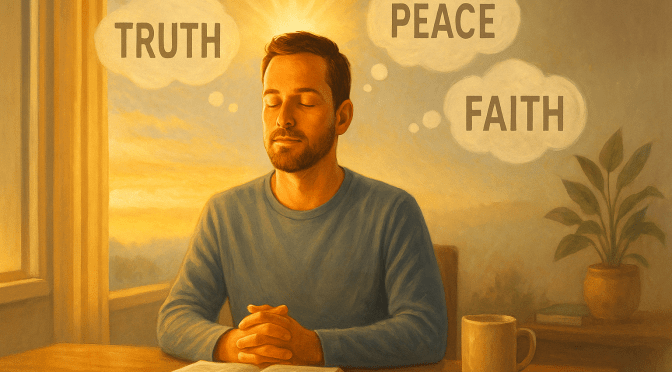
Thoughts Have Power — A Biblical Call to Renew Your Mind

Introduction

If there’s one battle I fight daily—and I know I’m not alone—it’s the battle of the mind. The world we live in today is saturated with messages, images, voices, and influences all competing for space in our heads. And the truth is, the thoughts we entertain don’t just stay in our heads—they shape our attitudes, our emotions, our decisions, and ultimately our lives.

I’ve come to learn through experience, reflection, and Scripture that our thoughts have real power. They are not abstract. They are formative. The way we think has the potential to either align us with God’s truth or drift us further away from it. And that’s why Episode 108 of the podcast felt so important to me. It was personal. It was necessary. And it was deeply inspired by the words of Paul to the Christians in Philippi.

The question I want to explore here is simple but profound: What does God want us to do with our thoughts? Because how we answer that determines the kind of life we live.


The Battlefield of the Mind

The mind is where the real war is fought. Before a mistake is made, a thought has usually been entertained. Before a habit forms, a mental pathway has been repeated. And before peace can take root, the soil of the mind has to be cultivated for it.

Proverbs 23:7 says, “As a man thinketh in his heart, so is he.” That verse hit me hard the first time I really understood it. It’s not just about our actions—it’s about our identity. Who we are is shaped by what we consistently think about. The mind isn’t just a place of thinking—it’s a battlefield of becoming.

Every day, we’re either sowing seeds of faith or seeds of fear. Seeds of purpose or seeds of insecurity. And those seeds take root based on whether we allow God to transform our thinking—or whether we allow the world to shape it.


Paul’s Message to the Philippians

Paul knew this. When he wrote to the church in Philippi, he wasn’t writing from a place of comfort. He was writing from prison. And yet, his message wasn’t one of defeat or despair—it was one of joy, peace, and power.

In Philippians 4:8, Paul gives us one of the clearest and most practical instructions in all of Scripture regarding our thought life:

“Finally, brothers and sisters, whatever is true, whatever is noble, whatever is right, whatever is pure, whatever is lovely, whatever is admirable—if anything is excellent or praiseworthy—think about such things.”

Think about such things. Not once. Not occasionally. But as a regular, disciplined practice.

Paul understood that the battle for peace was won not in our circumstances, but in our focus. That’s why earlier in verse 7, he speaks of a “peace of God, which surpasses all understanding,” guarding our hearts and minds.

It’s not that we ignore hardship. It’s that we learn to dwell on truth.

Philippians 4:8 — A Breakdown

Let’s take a closer look at what Paul tells us to dwell on. These aren’t random words—they’re intentional filters. They form a mental checklist for spiritual clarity:

  • Whatever is true — In a world full of half-truths, exaggerations, and flat-out lies, Paul tells us to focus on what is true. That starts with God’s Word. His promises are true. His identity for you is true. Not every thought that enters your mind is worth believing.
  • Whatever is noble — Noble thoughts elevate your perspective. They pull you out of pettiness and negativity and point you toward integrity and honor. When I fix my thoughts on the noble, I begin to think like someone called to lead, not just survive.
  • Whatever is right — Righteousness isn’t just about behavior—it’s about thinking rightly. Are my thoughts aligned with God’s justice, holiness, and truth? Am I seeing things the way He sees them?
  • Whatever is pure — Purity isn’t popular, but it’s powerful. Pure thoughts protect your heart. They cleanse your motives. They free you from shame and renew your desire to please God—not people.
  • Whatever is lovely and admirable — This is about looking for beauty in the broken. Gratitude in the grind. It’s about seeing God’s goodness even in ordinary things. The more I meditate on what is admirable, the more peace I carry through the day.
  • Whatever is excellent or praiseworthy — Your mind becomes magnetic to what you feed it. Excellence in thinking trains you to expect God to show up. To look for His glory. To refuse to settle for lazy, negative, or destructive thought loops.

Paul is telling us: these are the things to rehearse. Not just acknowledge—but dwell on. Meditate on. Speak over yourself. Let them shape how you process everything.

The Link Between Thoughts and Peace

Have you ever had those days where everything around you was still chaos—but inside, you felt calm? That’s not random. That’s the fruit of disciplined thinking.

Paul connects this list in Philippians 4:8 with a promise of peace in verse 7. And it’s not just any peace—it’s peace that surpasses understanding.

That’s what happens when you start aligning your thoughts with God’s truth. Your situation might not change right away, but your state of mind does. Anxiety loses its grip. Doubt fades. Fear gets drowned out by faith.

This kind of peace isn’t passive—it’s protective. Paul says it will guard your heart and mind. That word “guard” is a military term. It implies a defense, a shield, a force that stands between you and mental chaos.

I’ve learned the hard way that peace doesn’t come by accident. It comes by focus. And focus is always a result of discipline.

My Personal Battle with Thought Life

Let me be real with you—this hasn’t always been easy for me.

There was a season where my thoughts were dominated by fear. Fear of failure. Fear of not being enough. Fear of being misunderstood. I would wake up with anxiety and go to sleep mentally exhausted—not because my life was chaotic, but because my thoughts were.

What changed? Not my circumstances—but my thinking.

I started writing down lies I believed and holding them up to the truth of God’s Word. I started memorizing verses, journaling what God said about me, and speaking life out loud—even when I didn’t feel it yet.

And slowly, the strongholds started to break.

That’s the power of renewing your mind. It’s not instant. But it’s transformative.

The Danger of Negative Thinking

Negative thinking doesn’t just ruin your mood—it reshapes your entire reality. One anxious thought becomes a narrative. One hurtful word loops over and over until you start to believe it. One lie, if left unchecked, can become a belief system.

That’s why Romans 12:2 has become a foundational verse for my life:

“Do not conform to the pattern of this world, but be transformed by the renewing of your mind.”

It doesn’t say you’ll be transformed by trying harder or by changing your circumstances. It says transformation comes from the renewing of your mind.

The problem is that the world is constantly trying to conform us—through media, culture, comparison, and fear. The enemy doesn’t need to destroy your life if he can distort your thinking. A distorted mindset will sabotage you before you even get started.

That’s why unchecked thoughts are dangerous. They don’t stay idle—they grow. They reinforce habits, attitudes, and behaviors. And they have the power to either align you with God’s truth or push you further from it.

Taking Every Thought Captive

So how do we fight back?

Paul gives us the answer in 2 Corinthians 10:5:

“We demolish arguments and every pretension that sets itself up against the knowledge of God, and we take captive every thought to make it obedient to Christ.”

I love the imagery here. We don’t entertain every thought—we take it captive. We interrogate it. We ask, “Does this align with the truth of Christ?” If not, it doesn’t get to stay.

It’s like being the gatekeeper of your mind. Not everything gets a free pass. Not every thought deserves your attention, your energy, or your belief.

Here’s what that looks like in practice:

  • A thought says, “You’re a failure.”
    You respond: “No, I am more than a conqueror through Christ.”
  • A thought says, “You’ll never be enough.”
    You say: “I am fearfully and wonderfully made.”
  • A thought says, “God has forgotten you.”
    You declare: “He will never leave me nor forsake me.”

This is spiritual warfare—and it starts in your mind.

Daily Habits That Shape Thinking

If you want to change your thought life, you have to change your daily input.

I had to start paying close attention to what I was feeding my mind. Because just like the body responds to what you eat, your mind responds to what you consume. Garbage in, garbage out. Truth in, transformation out.

Here are a few daily habits that have shaped my mental renewal:

  1. Scripture First — I try to make the first voice I hear each day God’s. Even if it’s just one verse, it sets the tone for the rest of my thinking.
  2. Positive Declarations — I speak life out loud. Even if I don’t feel bold, I say it anyway. Words have power, and they help rewire the brain.
  3. Journaling — Writing down my thoughts, questions, and prayers helps me sort what’s real from what’s emotional.
  4. Protecting Input — I limit toxic media, avoid gossip, and choose environments that fuel faith instead of fear.

These habits didn’t change me overnight. But they’ve rewired me over time. And that’s the goal—consistent, Spirit-led transformation from the inside out.

The Power of Spoken Thought

One of the most overlooked spiritual principles is this: your thoughts shape your words, and your words shape your world.

Proverbs 18:21 says:

“The tongue has the power of life and death, and those who love it will eat its fruit.”

What you speak reveals what you believe. And what you repeatedly say—whether out loud or internally—begins to frame the life you live.

This isn’t self-help. This is spiritual alignment. When you consistently speak truth, faith, and identity over your life, you’re not “manifesting”—you’re agreeing with God.

When I began speaking differently, I started thinking differently. And that shift started changing how I showed up—at work, in relationships, in my own private battles.

What are you saying to yourself every day? Are you reinforcing fear? Or are you reinforcing faith?

Mental Renewal Is a Lifelong Discipline

I want to be honest here: renewing your mind is not a one-time event. It’s not a sermon, a book, or a podcast episode. It’s a lifelong spiritual discipline.

You don’t just win the battle once and coast. You suit up daily. You stay alert. You remain in God’s Word. And you create rhythms that keep your mind anchored when life tries to pull you in every direction.

The good news is that God walks with us through every step of that discipline. You’re not renewing your mind alone. The Holy Spirit is your guide, your teacher, your comforter.

You’re not expected to be perfect. But you are called to be intentional.

The Mind of Christ

One of the most powerful verses about our thought life is tucked away in 1 Corinthians 2:16:

“But we have the mind of Christ.”

Pause and let that sink in. We don’t just have access to good advice—we have access to divine perspective.

Having the mind of Christ means we no longer need to interpret our world through fear, scarcity, insecurity, or comparison. We interpret life through the Spirit—just like Jesus did.

What would happen if, before every reaction, every decision, and every temptation, we paused and asked: “How would Christ think about this?”

That question alone could change everything.

Encouragement for the Struggling Mind

If you’re reading this and your thought life feels like a mess right now—I want to encourage you: you are not your thoughts.

God is not surprised by your struggles. He is patient, gracious, and deeply committed to transforming you from the inside out. You don’t have to pretend everything is fine. But you also don’t have to stay stuck.

Invite God into your mind. Ask Him to help you see clearly. Ask Him to silence the noise. Ask Him to remind you of who you are—not who the world says you are.

Your mental struggle is not your identity. It’s the battleground where your identity is being restored.

Aligning Thoughts with Identity

Here’s what I’ve discovered: the most powerful thoughts are the ones that align with who God says I am.

When my thoughts agree with shame, fear, or condemnation, I live beneath my calling. But when my thoughts agree with truth, I live boldly, freely, and purposefully.

Psalm 139:14 says:

“I praise you because I am fearfully and wonderfully made.”

That’s not just a verse for wall art—it’s a declaration for your inner world. God’s Word must become the loudest voice in your mind.

Write down truth. Speak it out loud. Let your thoughts match your identity in Christ.

Conclusion: Change Your Thoughts, Change Your Life

Your thoughts are not random. They are powerful. And when surrendered to God, they become tools of transformation.

The mind is a battlefield—but it’s one you can win with God’s help. Through Scripture, prayer, discipline, and the Holy Spirit, you can begin to think the way Jesus thinks. You can build a thought life that produces peace, confidence, purpose, and joy.

So let me leave you with this: Don’t believe every thought that comes into your head. Believe the ones God has spoken over you.

Change your thoughts. Renew your mind. Transform your life.


Call to Action

  • Reflect: What dominant thought patterns have shaped your life recently?
  • Journal: Write down three lies you’ve believed—and three truths from Scripture to replace them.
  • Practice: This week, pick one area of your life to intentionally renew your thinking. Use Philippians 4:8 as your filter.

The Spiritual Gift of Discernment — What Solomon Asked for and Why It Still Matters Today

Introduction

In a world as loud, fast, and emotionally charged as the one we’re living in today, knowing the difference between what feels right and what actually is right has never been more critical. If you’ve ever found yourself saying, “I wish I had more clarity,” you’re not alone. I’ve been there—too many times to count.

Over the years, I’ve come to realize that what I was really asking for wasn’t more information… it was discernment. The ability to see beneath the surface. To separate noise from truth. To know the voice of God in a world that’s constantly shouting.

In Episode 107 of my podcast, I shared some thoughts on this spiritual gift and why it’s essential—not just for preachers or leaders, but for every single one of us trying to live intentionally and righteously in a confusing world. This blog post is an extension of that message—deeper, more personal, and absolutely necessary.

What Is Discernment?

Discernment isn’t about being judgmental. It’s not about labeling things as “bad” or “good” just to feel in control. At its core, discernment is a spiritual sensitivity—a God-given gift that allows us to perceive what’s really going on beneath the surface.

It’s the wisdom to sense the true nature of people, situations, or decisions when they aren’t obvious. It’s knowing when to speak and when to stay silent. It’s recognizing divine opportunities—and demonic distractions.

Discernment goes beyond common sense and intelligence. You can be educated and still deceived. You can be successful and still walk blindly into the wrong room. But with discernment, you begin to walk in step with the Spirit. You don’t just move—you move with purpose, on divine timing.

It’s the difference between surviving life and navigating life spiritually and strategically.

King Solomon’s Request: A Discerning Heart

Let’s go back to one of the most profound stories in Scripture—1 Kings 3. Solomon, newly crowned as king, is given a divine invitation: “Ask for whatever you want me to give you.”

If there was ever a blank check moment in the Bible, this was it. He could’ve asked for wealth. He could’ve asked for military power, long life, or the destruction of his enemies. But instead, Solomon asked God for one thing:

“So give your servant a discerning heart to govern your people and to distinguish between right and wrong.” (1 Kings 3:9, NIV)

A discerning heart. That was it.

And God was pleased.

Because Solomon’s request wasn’t self-serving—it was spiritual. He wanted to lead well. To make decisions not based on instinct, popularity, or ego—but based on righteousness and justice. And God responded by not only granting that request but adding wealth, honor, and peace as a bonus.

Why? Because when we ask for what’s close to God’s heart, He entrusts us with more than we imagined.

Why Solomon’s Example Still Speaks Today

What Solomon asked for thousands of years ago is exactly what we need today—perhaps more than ever.

We’re living in a time of blurred lines. Right and wrong are often redefined by trends, feelings, or groupthink. Leadership is often based on charisma rather than character. And personal decisions—about relationships, careers, money, or even faith—can easily be made through the lens of pressure instead of purpose.

That’s why Solomon’s example is more than just a wise king’s prayer—it’s a blueprint for how to thrive in today’s chaos.

When you ask God for discernment, you’re not just asking to make good choices. You’re asking to live with clarity in a world of confusion. To respond, not react. To evaluate, not just absorb. To live from your spirit, not just your senses.

That’s powerful. And that’s rare.

The World Is Loud — Discernment Helps You Hear God

Let’s be real: we’re bombarded with messages every second. Social media, news, entertainment, opinions from people we admire and people we don’t even know. Everything is urgent. Everything is loud.

But not everything is truth.

The enemy doesn’t always come in the form of open rebellion. Sometimes, he disguises deception in what sounds “positive,” “affirming,” or “wise in your own eyes.” That’s why spiritual discernment is a must. Without it, we confuse convenience for calling, or emotion for anointing.

Discernment helps you filter what’s from God, what’s from your flesh, and what’s a distraction in disguise.

In my life, I’ve noticed that when I neglect discernment, I end up busy but ineffective. I start running fast—but in the wrong direction. But when I take time to pause, pray, and discern, I move slower—but with so much more power and peace.

It’s not about hearing more voices—it’s about hearing His.

Discernment in Daily Life

You don’t need to be a pastor or prophet to need discernment. You need it in everyday life.

When you’re making a decision about a relationship—God, give me discernment.
When you’re offered a job that looks good on paper but doesn’t sit right in your spirit—God, give me discernment.
When you’re raising your children and trying to protect their innocence while guiding them in truth—God, give me discernment.

Discernment shows up in the small moments: a hesitation before saying “yes.” A pause before firing back a text. A peace that floods you even when the circumstances say “panic.”

It’s a muscle. The more you use it, the more sensitive it becomes. And with every small act of obedience, you sharpen your ability to sense God’s leading.

Discernment vs. Judgment

Let’s clear something up: discernment is not the same as judgmentalism.

A lot of people get uncomfortable with the word discernment because they associate it with being harsh, critical, or self-righteous. But that’s not what true, Spirit-led discernment looks like.

Discernment is about seeing clearly—not condemning. It’s about understanding the deeper truth behind a person, a situation, or an opportunity—not assigning worth or shame to it.

Jesus made this distinction in John 7:24:

“Stop judging by mere appearances, but instead judge correctly.”

He wasn’t saying don’t judge at all—He was saying judge righteously. Use discernment. Don’t take things at face value. Don’t be fooled by polish or appearances.

The Pharisees judged by religion. Jesus discerned by the Spirit.

And we’re called to do the same. Not to tear others down, but to protect what’s holy. To guard our hearts. To live wisely. And to navigate a world that constantly wants us to confuse good with godly.

How to Cultivate Discernment

The beautiful thing about discernment is that it’s not reserved for a select few. It’s a gift, but also a skill—and we can all grow in it.

Here’s how I’ve learned to cultivate it:

  1. Prayer – Start here. Ask God for it, just like Solomon did. James 1:5 tells us that if we lack wisdom, we can ask—and God will give generously.
  2. Scripture – The Word is the ultimate filter. The more you know God’s truth, the easier it is to detect lies. Discernment without the Word is just intuition.
  3. Quiet Time – You can’t hear God clearly if your mind is always filled with noise. Create space. Be still. Let the Spirit speak.
  4. Wise Counsel – Surround yourself with people who live wisely. Who don’t just tell you what you want to hear but will tell you what you need to hear.
  5. Obedience – The more you obey God’s promptings, the more sensitive you become to His voice. Disobedience dulls discernment. Faithfulness sharpens it.

Cultivating discernment is a lifelong process, but every step you take toward clarity is a step away from confusion.

The Fruit of Discernment

When discernment becomes part of your life, you start to notice the fruit.

  • Clarity in the midst of chaos
  • Peace in decisions that once felt overwhelming
  • Protection from traps that used to trip you up
  • Purpose where there used to be indecision
  • Confidence because you know you’re walking in alignment with God’s will

I can’t tell you how many times discernment has saved me—from relationships I should’ve avoided, opportunities that weren’t what they seemed, and paths that would’ve taken me far from my calling.

It’s not about being perfect. It’s about being positioned—in step with the Spirit, guided by truth, and anchored in God’s wisdom.

Biblical Examples Beyond Solomon

Solomon may be the most well-known example, but he wasn’t the only person in Scripture who operated with discernment. In fact, the Bible is full of people who leaned into this gift and saw God move powerfully as a result.

Take Joseph, for instance. In Genesis 41, Pharaoh has a dream no one can interpret. But Joseph, empowered by divine discernment, not only interprets it—but offers a strategy to save Egypt from famine. His discernment didn’t just change his life—it saved a nation.

Or consider Paul, who had to discern between true believers and false teachers. He constantly warned the early church not to be deceived by fine-sounding arguments, but to stay grounded in truth (Colossians 2:4–8). Paul’s discernment helped keep the gospel pure.

And of course, there’s Jesus, who discerned not just actions, but the intentions and thoughts of people’s hearts. Over and over again, Scripture says, “Knowing their thoughts…” Jesus responded in truth and grace—not reacting to the surface, but engaging with what was really going on underneath.

These weren’t random spiritual moments—they were rooted in deep relationship with God. And they show us that discernment isn’t just useful—it’s transformational.

My Personal Journey with Discernment

I’ll never forget a specific moment when discernment changed the entire trajectory of my life.

There was an opportunity presented to me—on paper, it looked perfect. The right pay. The right connections. The right timing. Everyone around me said, “This is a no-brainer.”

But something in my spirit wasn’t at peace. I prayed, and instead of excitement, I felt a quiet resistance. That’s the best way I can describe it—a pause in my soul.

So I said no.

Not long after, the full picture came to light. That opportunity would have pulled me away from my purpose. It was a good thing—but not a God thing. And that decision—rooted not in fear, but in discernment—saved me from months, maybe years, of distraction.

That experience taught me that discernment doesn’t always make sense to others. But when you trust the Holy Spirit more than human validation, you find peace even in the “no’s.”

Discerning the Spiritual Climate

We can’t talk about discernment today without talking about the spiritual climate we live in.

Culture is moving fast—and not always in the direction of truth. What was once considered biblical is now called bigotry. What was once sacred is now mocked. And what once convicted us now gets explained away.

This is not a time to be spiritually numb. This is a time for discernment.

We need believers who don’t just go with the flow, but stand firm in the faith. We need parents who can discern what’s being taught to their kids. Leaders who can discern between ambition and assignment. Churches that can discern between emotional hype and genuine Holy Spirit power.

Discernment doesn’t just protect you—it protects your family, your community, and your calling.

The Danger of Living Without Discernment

When we ignore discernment, we leave ourselves vulnerable to deception.

I’ve learned this the hard way. Without discernment, we end up:

  • Making decisions based on emotion instead of truth
  • Falling for flattery instead of integrity
  • Trusting appearances instead of character
  • Running after opportunities God never intended us to chase

And the results? Regret. Wasted time. Broken relationships. Burnout. Disillusionment with people—and sometimes even with God.

But it wasn’t God who led us there. It was our decision to move without pausing to pray.

That’s the danger of living without discernment. It’s not always obvious in the moment—but eventually, it always costs us something. And in some cases, it costs us everything.

That’s why we need to treat discernment not as a bonus—but as a non-negotiable in our spiritual walk.

The Role of Discernment in Leadership

If you’re in any form of leadership—ministry, business, parenting, coaching—discernment is your greatest asset.

You’re not just managing tasks. You’re stewarding people, culture, and vision. And with that comes the need to:

  • Discern people’s motives—not just their words
  • Discern timing—when to act, when to wait
  • Discern seasons—what God is doing now, not just what worked yesterday

Leadership isn’t just about making decisions. It’s about making the right decisions, at the right time, for the right reasons. And that requires spiritual sensitivity.

I’ve learned that leadership discernment is more caught than taught. It’s developed through experience, refined through mistakes, and deepened through prayer. But once you have it—it’s like having a spiritual compass. Even when the map isn’t clear, you can still head in the right direction.

Encouragement for Those Still Growing in Discernment

If you’re reading this and thinking, “I’m not there yet,” I want to encourage you: you don’t have to be perfect to grow in discernment.

God is not hiding wisdom from you. In fact, James 1:5 says:

“If any of you lacks wisdom, let him ask God, who gives generously to all without reproach, and it will be given to him.”

That’s a promise.

Start asking. Start listening. Start journaling what you sense. Start paying attention to peace—or the lack of it. Every time you obey the nudge of the Holy Spirit, you sharpen your discernment just a little more.

It’s not about hearing an audible voice. It’s about knowing His voice—that still, small whisper that always points to peace, truth, and righteousness.

And when you miss it (because we all do)? Learn from it. Don’t condemn yourself. God is committed to growing you. He’s not looking for perfect decision-makers—He’s looking for sensitive and surrendered hearts.

Conclusion: A Heart That Hears

Discernment is more than a spiritual accessory. It’s a spiritual necessity.

Solomon didn’t ask for riches, strength, or fame. He asked for a discerning heart—because he knew that everything else flowed from the ability to know and do what is right.

And if there was ever a time when we needed more believers with discerning hearts, it’s right now.

You don’t have to live confused. You don’t have to stay stuck. You don’t have to be swayed by every opinion, trend, or emotion. You can live with clarity, conviction, and confidence.

But it starts by asking.

So today, my challenge to you is simple:

Ask God for what Solomon asked for. A heart that hears. A spirit that sees. A life that discerns.


Call to Action

  • Reflect: Where in your life are you relying on logic or emotion more than discernment?
  • Pray: Ask God, right now, for a heart like Solomon’s—a heart that discerns what is right and pleasing to Him.
  • Journal: Look back on moments in your life where discernment saved you—or where lack of it cost you. What patterns do you see?

Embracing Discomfort: How to Break Out of Your Comfort Zone and Thrive

Introduction

I’ll be honest—comfort used to be my goal. I thought if I could just find enough stability, success, and ease, I’d finally arrive at peace. But I’ve come to realize something radical: comfort doesn’t create peace—it creates complacency. And complacency is the enemy of purpose.

In Episode 106 of the 3 Pillars Podcast, I unpacked this truth: the life you were created for will demand discomfort. Growth doesn’t happen in the safe zone. It happens in the stretch zone. And if you want to live with meaning, faith, and fire, you have to embrace the process of being uncomfortable—again and again.

This post is about that process. About how I’ve learned (and continue learning) to lean into what stretches me instead of running from it. About how discomfort, rather than being something to avoid, is actually a gift from God—a tool He uses to shape, strengthen, and launch us.

If you’ve been stuck in a rut, coasting through life, or quietly avoiding the hard things—you’re not alone. But you don’t have to stay there. Let’s talk about how to break out of the comfort zone and start truly living.

The Comfort Zone: A Trap in Disguise

We love the comfort zone because it’s familiar. It’s predictable. We know the rules. We feel safe. And that’s the problem.

The comfort zone isn’t a sanctuary—it’s a trap. It keeps us small while convincing us we’re safe. It whispers, “Don’t try. Don’t risk. Don’t stretch. Just stay right here.” But staying still too long becomes its own kind of danger. That “safe space” becomes a cage.

When we live too long in the comfort zone, we stop challenging ourselves. We stop growing. We get spiritually sluggish, mentally dull, and emotionally numb. And slowly, without even realizing it, we start settling for survival instead of pushing toward significance.

Here’s what I’ve learned: growth and comfort cannot coexist. One will always cost the other.

The Science of Growth and Discomfort

This isn’t just spiritual talk—it’s biological fact. Your brain is designed to grow through challenge. It’s called neuroplasticity—the ability of your brain to rewire itself through effort, struggle, and learning.

When you lift weights, your muscles don’t grow because of comfort—they grow because of resistance. When you study something new, you feel mentally stretched—but that’s your brain expanding its capacity. Discomfort signals that adaptation is happening.

The same goes for your emotional and spiritual life. Facing fears, navigating conflict, tackling a new challenge—these experiences stretch you. And while they’re uncomfortable in the moment, they create resilience, confidence, and capacity you didn’t have before.

That’s why you can’t wait to “feel ready” before stepping out. You become ready by stepping out. Discomfort is the curriculum for growth—and we all have to enroll.

Faith and Discomfort: A Biblical Perspective

Let’s talk about faith for a minute. Because if you read the Bible—really read it—you’ll notice a pattern: God’s people are always being called out of their comfort zones.

Abraham was told to leave his home and everything familiar. Moses was called to confront Pharaoh and lead a nation through the wilderness. Esther had to risk her life to save her people. And Jesus? He left the glory of heaven to walk among us, suffer, and die for our redemption.

There’s no version of living by faith that doesn’t involve discomfort.

James 1:2–4 reminds us, “Consider it pure joy, my brothers and sisters, whenever you face trials of many kinds, because you know that the testing of your faith produces perseverance. Let perseverance finish its work so that you may be mature and complete, not lacking anything.”

God doesn’t call us to comfort. He calls us to maturity. And maturity happens through stretching.

If your faith has felt stale, dry, or uninspired lately, ask yourself: When was the last time I did something uncomfortable for God? If you’re not willing to step out in obedience when it’s hard, you’ll miss out on the growth and glory He’s trying to birth in your life.

My Personal Journey Into Discomfort

Let me tell you a story—one that changed me.

Years ago, I felt called to take a bold step in a direction that terrified me. It was completely outside my comfort zone—new people, new skills, new expectations. I didn’t feel ready. I didn’t feel qualified. But I felt convicted.

I wrestled. I delayed. I made excuses. But deep down, I knew: this wasn’t about my feelings. It was about my faith.

So I said yes. And stepping into that space felt like jumping into deep water without knowing how to swim. I was awkward. I was scared. I messed up. But I learned. I grew. I discovered strength I didn’t know I had—and more importantly, I discovered a deeper dependence on God.

Now, looking back, that moment became a pivot point. The fear didn’t disappear, but it no longer controlled me. Discomfort became familiar—not because it got easier, but because I got stronger.

Discomfort Builds Resilience

Here’s what no one tells you: the more you choose discomfort, the more resilient you become.

Think of it like emotional callusing. Just like your hands toughen after lifting weights, your heart and mind grow stronger every time you face what’s hard instead of running from it.

I’ve learned that discomfort doesn’t just toughen you up—it clarifies what matters. When you walk through something difficult, you stop sweating the small stuff. You stop procrastinating. You start acting with urgency and intentionality. Because you’ve been through something—and it changed you.

Resilience isn’t about pretending things don’t hurt. It’s about knowing you’re not defined by the pain. It’s about showing up even when it’s hard. And every time you do, you prove to yourself that you are not fragile—you are forged.

Breaking the Cycle of Complacency

Complacency doesn’t always look like laziness. Sometimes it shows up as routine. As busyness. As productivity that lacks purpose. I know—I’ve been there.

You wake up, go through the motions, stay in your lane, check the boxes… but deep down, you’re unfulfilled. Why? Because your soul was never designed to be satisfied by easy. It was built for mission. For momentum. For meaning.

The truth is, we can get really good at surviving our lives—and still miss the point of living them.

If you feel stuck, uninspired, or emotionally flat, it might not be because something is wrong. It might be because nothing is challenging you.

Breaking out of that cycle starts with awareness. Ask yourself:

When was the last time I did something new? When was the last time I failed at something because I tried something hard? What goals have I buried because they scare me?

Then, do something small—but bold. Shake up your routine. Choose the thing you usually avoid. Because that’s where the growth lives.

Daily Habits to Embrace Discomfort

You don’t need a dramatic leap to start stretching yourself. In fact, the real power lies in small, daily acts of discomfort. Here are a few I practice regularly:

Cold showers: It’s simple, but it teaches your body and mind to lean into discomfort on purpose. Difficult conversations: Don’t wait. Address what’s awkward. Say what needs to be said with humility and courage. Waking up early: Start your day by doing something hard—it shifts your whole mindset. Intentional silence: Sit without distractions. Listen to your thoughts. It’s uncomfortable, but deeply revealing.

These aren’t random challenges. They are disciplines. And discipline, as Scripture says, produces righteousness and peace (Hebrews 12:11). The more I practice discomfort daily, the more prepared I am to handle the bigger challenges when they come.

Discomfort in Relationships and Leadership

Let’s talk about people. Relationships can be some of the most uncomfortable areas in life—but also the most rewarding. Whether it’s friendships, marriage, parenting, or leadership, growth happens when we’re willing to be honest, humble, and vulnerable.

Leadership especially demands discomfort. You’ll have to make decisions people don’t like. You’ll have to say things that might offend. You’ll have to admit when you’re wrong. But here’s the thing—true leadership requires courage, not comfort.

And in close relationships, choosing discomfort means telling the truth, setting boundaries, and sometimes having painful conversations in the name of love and respect. That’s not easy. But the alternative—resentment, dishonesty, disconnection—is far more painful in the long run.

I’ve found that every time I lean into relational discomfort, I gain something: clarity, trust, connection, or freedom. And the relationships that matter most are the ones that survive those refining fires.

The Mindset Shift: Challenge = Opportunity

One of the most important shifts I’ve made in life is learning to see challenges not as threats, but as invitations. When something feels hard, scary, or uncertain, I try to pause and ask, “What is this trying to teach me?”

You see, fear is often a sign you’re standing on the edge of something meaningful. It’s a signal—not to run, but to pay attention. To lean in.

We have a saying in the leadership world: “Run toward the roar.” The idea comes from how lions hunt. The oldest lion—the one with the loudest roar but no teeth—stands on one side of the field and roars while the other lions wait on the other side. The prey, hearing the roar, runs away—right into the trap.

The safest direction? Toward the roar.

That story changed how I see discomfort. When something feels intimidating or uncertain, it might be God’s way of saying, “This is where I’m growing you.” The discomfort isn’t there to destroy you. It’s there to develop you.

Lessons from Episode 106

In Episode 106 of the 3 Pillars Podcast, I talked about how discomfort has been a powerful force in my own life—and how embracing it has led to everything I value: growth, faith, discipline, and purpose.

I shared how so many of us stay stuck because we confuse comfort with peace. But real peace—the kind that surpasses understanding—often comes after the obedience, not before.

Some of my favorite moments from the episode included:

Discomfort as divine preparation. How pain, when properly framed, produces perseverance. Why faith without risk is really just religion.

We weren’t created to live lukewarm lives. We were made to live with fire in our bones. And that fire is often lit in the furnace of discomfort.

Thriving Through Discomfort

This isn’t about gritting your teeth and surviving. It’s about learning to thrive in spaces where your old self would have quit.

When I look back on the most defining seasons of my life, they were all marked by some level of discomfort—moving to a new city, starting a business, confronting my own weaknesses, walking through uncertainty with nothing but faith.

And yet, those seasons didn’t destroy me. They rebuilt me.

I became more focused, more resilient, more prayerful. I found purpose in places I never would’ve gone if I had stayed comfortable. And I’ve seen that pattern repeated in the lives of people I respect most. The high performers. The deeply faithful. The purpose-driven. They all have this in common: they stopped chasing easy.

They leaned into challenge. And they came out stronger.

Encouragement for the Reluctant

If this message makes you a little uncomfortable—good. That’s the beginning.

Discomfort has a way of exposing what we’ve been avoiding. Maybe it’s a difficult decision. Maybe it’s a dream you’ve delayed. Maybe it’s a conversation you’ve been dreading or a risk you’ve been talking yourself out of for years.

If that’s you, let me encourage you with this: God doesn’t wait for you to be fearless—He invites you to be faithful.

Fear isn’t your enemy. Avoidance is.

You don’t need to be superhuman to break out of your comfort zone. You just need to be willing. Willing to show up afraid. Willing to be stretched. Willing to trust that who you’ll become is worth the discomfort it takes to get there.

You’re more capable than you think. And more than that—you’re called. Called to grow. To lead. To step into the version of yourself that you were created to become. But you won’t get there by staying comfortable.

Conclusion: The Gift of Discomfort

I used to pray for comfort. Now I thank God for discomfort.

Why? Because every great thing in my life was born through it. Growth. Faith. Purpose. Discipline. Leadership. None of it came from playing it safe. All of it came from leaning into the stretch.

Discomfort is not the enemy—it’s a gift. A guide. A tool in the hands of a loving God who sees more in you than you see in yourself.

So if you’re reading this today, I want to leave you with a challenge:

Stop asking for the path of least resistance. Start asking for the path of deepest growth.

That’s where your power is.

That’s where your calling is.

That’s where your future is waiting.

And it starts not someday, but today—with one brave, uncomfortable step.

Call to Action

Here are three things you can do today to start breaking out of your comfort zone:

Reflect and Journal: What areas of your life feel stagnant? What dream or decision have you been avoiding because it feels uncomfortable? Do One Hard Thing: Choose one thing that makes you stretch—big or small—and do it today. Don’t wait for motivation. Move with discipline. Share Your Journey: Tell someone what you’re working on. Invite accountability. Discomfort is easier to face when you don’t face it alone.

Healthy Mental Counseling: Why Seeking Help Is a Strength, Not a Weakness

There was a time when I thought counseling was only for people who had hit rock bottom—those battling clinical depression, addiction, or trauma. I figured that as long as I could function, smile, and carry out my responsibilities, I didn’t need help. But deep inside, I knew there were parts of me that needed healing—emotions I hadn’t fully processed, beliefs I hadn’t questioned, and patterns I kept repeating. It wasn’t until I finally sat down with a professional and began to open up that I realized something powerful: counseling isn’t just for survival. It’s for growth.

In Episode 104 of the 3 Pillars Podcast, I shared my honest take on why mental health counseling is one of the most courageous and transformative choices you can make—not just when you’re struggling, but when you’re striving to become your best self. Today, I want to take that message deeper.

This post is for the strong person who carries a lot but rarely puts it down. It’s for the high achiever who feels like counseling is for “other people.” It’s for the faithful servant who prays often but still feels emotionally stuck. If you’ve ever wondered whether counseling could help you, I want you to know—it absolutely can.

Counseling Is Not Just for Crisis

Let’s get this out of the way first: you don’t need to be in crisis to go to counseling.

Yes, therapy can be a lifeline during trauma, loss, or emotional breakdowns. But that’s not all it’s for. Counseling is also a place for reflection, intentionality, and growth. It’s a space to ask questions like:

  • Who am I, really?
  • What emotional patterns do I keep repeating?
  • How can I communicate better in my relationships?
  • What beliefs are holding me back from living fully?

You don’t wait until your car breaks down to change the oil. You don’t wait for a heart attack to start exercising. So why should mental health be any different?

Counseling isn’t just triage. It’s training. It’s coaching. It’s emotional and spiritual hygiene. And just like going to the gym, the more you engage, the stronger you become—not just in your mind, but in your soul.

The Mental Health Parallel to Physical Wellness

Imagine if we treated physical health the way we treat mental health. “Oh, you’re going to the doctor? What’s wrong with you?” Or: “You don’t need a gym—you should be able to fix that yourself.” Sounds ridiculous, right? Yet we often bring that mindset into our emotional and psychological world.

Mental fitness is just as real as physical fitness. You don’t train your mind only when it’s weak—you train it so it can endure, expand, and thrive. Counseling is a place where you exercise your emotional muscles, challenge limiting beliefs, and gain tools to navigate life with clarity and peace.

I’ve had sessions where I didn’t cry, vent, or unravel. Instead, I explored. I learned. I discovered new ways to think, love, and lead. And I left those sessions stronger, clearer, and more grounded than ever.

Counseling as a Catalyst for Personal Growth

One of the most beautiful surprises I found in counseling is how much it helped me grow—not just emotionally, but mentally, relationally, and spiritually. Counseling didn’t just help me manage stress or sadness; it helped me see myself more clearly.

When I sat across from a counselor, I began to notice patterns in how I think, speak, and react. I saw how unresolved disappointments from the past still influenced my present. I discovered narratives I had picked up somewhere along the way—stories that said I had to be strong, silent, or self-sufficient at all times. Some of those stories weren’t true. Some of them were keeping me stuck.

Counseling offered me a mirror. Not a distorted mirror of shame or judgment, but one that gently revealed what needed healing. And the more I leaned into that honesty, the more I grew. I found new ways to manage my energy, regulate my emotions, and align my daily actions with my deeper values.

This wasn’t about fixing something that was broken—it was about strengthening something I wanted to keep building: my character.

Overcoming the Fear of Vulnerability

Let me be real—opening up is not easy. The first time I sat down for a counseling session, I kept thinking, “What am I even going to say?” I was worried I’d be judged. I was afraid of getting emotional. I wasn’t even sure if I’d be taken seriously since I wasn’t in a “crisis.”

But here’s the truth: vulnerability is the gateway to freedom.

We spend so much of our lives performing—smiling, showing up, doing what’s expected. But behind all that, there’s a deeper story waiting to be acknowledged. When you enter a safe, non-judgmental counseling space, you get to take off the armor. You get to speak freely, think aloud, and explore emotions you didn’t even know were there.

And something powerful happens in that space. You realize you’re not weak for feeling. You realize you’re not crazy for caring. You realize you’re not alone.

I’ve come to believe that being vulnerable is not the opposite of strength—it’s the evidence of it. And the more we embrace that truth, the more we can grow.

Integrating Faith and Therapy

One of the questions I often get is, “Can Christians go to therapy?” My answer is simple: Absolutely—and I believe we should.

There’s a dangerous misconception out there that faith and therapy are mutually exclusive. That if you really trusted God, you wouldn’t need counseling. But that’s like saying if you really trusted God, you wouldn’t need a doctor.

God created us with minds, hearts, and bodies that are wonderfully complex. And just as we seek physical healing through medicine, we can seek emotional and psychological healing through counseling.

For me, faith and therapy have worked hand in hand. Counseling has helped me explore how my faith is lived out in real time—not just in theology, but in how I forgive, how I process fear, how I trust, and how I love others. It’s helped me see where my spiritual life and emotional life need alignment. And it’s reminded me that asking for help is not a betrayal of God—it’s often His provision.

Whether you pursue biblical counseling or clinical therapy rooted in values you trust, the important thing is this: You’re not choosing between Jesus and a therapist. You’re inviting both into your healing journey.

How Counseling Enhances Relationships

One of the greatest byproducts of healthy counseling is its ripple effect on our relationships. I didn’t go into therapy to “fix” my relationships—but I began noticing shifts almost immediately.

Why? Because when we heal, we relate differently.

Counseling helped me become more self-aware. I began to see how my tone, assumptions, and emotional triggers impacted the people around me. I learned that listening wasn’t just about being quiet—it was about being present. I realized that my tendency to avoid confrontation was actually a barrier to intimacy. And I learned how to set boundaries—not to push people away, but to protect the space where healthy love can thrive.

These were not just psychological tools—they were relational game-changers. I stopped reacting from woundedness and started responding from wisdom. I grew in empathy. I learned to validate others without needing to fix them. I learned to apologize from a place of humility, not defensiveness.

And I didn’t just love others better—I felt more loved myself. Because when you’re emotionally grounded and mentally clear, you can show up authentically. And authenticity is what real connection is built on.

Busting the Myths Around Counseling

Let’s talk about the elephant in the room: the myths we’ve believed about counseling. Some are cultural. Some are generational. Some are spiritual. But all of them are damaging. So let’s bring them into the light.

Myth #1: “Only weak people need counseling.”
Truth: The strongest people I know are the ones who know when to ask for help.

Myth #2: “I should be able to handle this on my own.”
Truth: God designed us for community. Healing often happens in relationship.

Myth #3: “I just need to pray more.”
Truth: Prayer is powerful, but it doesn’t replace wise counsel—it partners with it. Proverbs 15:22 says, “Plans fail for lack of counsel, but with many advisers they succeed.”

Myth #4: “Therapy is only for trauma or mental illness.”
Truth: Therapy is also for growth, clarity, peace, prevention, and potential.

I’ve had to confront these lies in myself. And once I let go of them, I experienced something beautiful: freedom. The freedom to be human, to need help, to grow, and to get better—not because I was failing, but because I was finally facing the parts of me I wanted to evolve.

What to Expect in a Counseling Session

If you’ve never been to counseling before, you might wonder, “What actually happens in a session?” Let me demystify it a little for you.

Most sessions are around 45 to 60 minutes. They’re confidential, judgment-free, and entirely focused on helping you explore, understand, and grow. It’s not about fixing you—it’s about empowering you.

Some sessions feel deep and emotional. Others feel practical and strategic. Sometimes you’ll talk through past experiences. Other times, you’ll focus on present challenges or future goals. Your counselor won’t give you all the answers—but they will ask you the questions that lead to the truth.

The most important part is the relationship. The trust. The rapport. The feeling that you can bring your full self into the room and not be shamed for it.

Finding the right counselor is like finding the right mentor or coach. It might take a session or two to feel comfortable—but once you do, you’ll wonder why you didn’t start sooner.

The Role of Accountability and Objectivity

One of the most valuable aspects of counseling is having someone outside your personal circle offer objective perspective and accountability. Unlike friends or family—who often carry their own biases, emotions, or history—your counselor is trained to hold up a mirror without judgment or agenda.

When I began counseling, I was amazed at how freeing it was to talk to someone who wasn’t there to fix me, agree with me, or protect my ego. They simply reflected the truth. Gently, yes—but firmly, when needed.

Accountability isn’t just about behavior; it’s about mindset. A good counselor can help you spot self-sabotage, blind spots, and emotional habits you didn’t even realize were operating in the background of your life. That insight? It’s priceless.

And because counseling is consistent, it builds momentum. You start connecting dots between past wounds and present reactions. You become more aware of your triggers. And over time, you start making better decisions—not just reactive ones.

This objective support keeps you grounded in truth, not just emotion. And that makes all the difference.

Mental Clarity = Greater Focus and Purpose

We live in a world of noise. Information overload. Emotional clutter. Inner monologues on repeat. And if we’re not intentional, all of that static can drown out the voice of purpose.

Counseling helped me clear the fog.

With each session, I began to sort out what was urgent versus what was important. I gained clarity on the goals that actually aligned with my values. I discovered where I was people-pleasing, procrastinating, or acting from fear—and I started realigning my actions with intentionality.

Mental clarity isn’t just about “feeling better”—it’s about functioning better. When your mind is clear, your work improves. Your relationships deepen. Your time becomes more fruitful. You’re no longer spinning your wheels in survival mode—you’re steering toward purpose.

I truly believe that when we’re mentally well, we’re more available for God’s calling on our lives. We stop being driven by wounds and start being led by wisdom.

Counseling as Preventative Care

We don’t wait until we’re physically collapsing to prioritize our health—we take vitamins, we eat well, we stretch. Why should emotional wellness be different?

Counseling is one of the most powerful forms of preventative care for your mind, your relationships, and your soul. It teaches you how to recognize the signs of burnout before you hit the wall. It equips you to navigate stress, grief, or life transitions with grace instead of chaos.

You don’t have to wait until something “goes wrong” to benefit from therapy. In fact, some of my most transformative breakthroughs came when things were going well. That’s the power of preventative insight—it strengthens the foundation so storms don’t shake you.

Just like we tune up our cars and recharge our batteries, counseling helps us sustain mental and spiritual energy. And that sustainability is what gives us long-term health—not just bursts of healing.

A Testimony of Transformation

I can say with full confidence that counseling changed me—but not in the way I expected. It didn’t just “fix” something. It transformed me.

I became more aware of how I show up in conversations. I started listening—not to respond, but to understand. I gained the courage to confront emotions I’d buried for years. I began making decisions not from fear or approval-seeking, but from wisdom and alignment with my values.

My faith also deepened. I realized that God wasn’t asking me to pretend I had it all together. He was inviting me to bring everything—mess and all—into the light. Through counseling, I began to experience what real grace looks like: truth spoken in love, growth without shame, and healing that doesn’t come from trying harder, but surrendering deeper.

It hasn’t been easy. Some sessions brought tears. Others brought frustration. But every time, I walked away more whole than I walked in. And that wholeness? It overflows into every area of my life—from my work to my relationships to my spiritual walk.

Counseling didn’t make me less of who I was. It helped me become more of who I was always meant to be.

Encouragement for the Reluctant

If you’ve read this far and you’re still unsure—maybe even a little nervous—I get it. Starting counseling can feel intimidating. Vulnerability takes courage. But let me encourage you with this:

You don’t have to have all the answers. You just have to take the first step.

You’re not weak for needing help. You’re wise for recognizing it.

God can—and often does—work through people. Through professionals. Through processes. Don’t let pride or fear rob you of the breakthrough that’s waiting on the other side of one brave conversation.

Start small. Reach out. Explore your options. You don’t have to commit forever. Just begin. Because the journey of healing and growth doesn’t start with having it all together—it starts with telling the truth.

You’re not alone. You’re not broken. And you’re absolutely not beyond help.

Conclusion: Give Yourself Permission to Grow

We invest in what we value—our homes, our careers, our bodies. But the most valuable investment you can make is in your inner world—your heart, your mind, your soul.

Healthy mental counseling is not a luxury or a last resort. It’s a tool for the emotionally intelligent, the spiritually hungry, and the personally driven. It’s for people who want to be free. Who want to be whole. Who want to live with intention.

So today, I invite you to give yourself permission to grow. Not because you’re failing—but because you’re finally ready to flourish.

You deserve that. And more importantly—your future deserves that version of you.


Call to Action

If this message spoke to you, here are three steps you can take today:

  1. Reflect:
    Where in your life are you feeling stuck, unclear, or emotionally heavy? Journal it. Name it.
  2. Explore:
    Research local or virtual counselors. Look for someone whose approach aligns with your values—whether clinical, faith-based, or integrative.
  3. Talk:
    Reach out to a trusted friend, pastor, or mentor. Share your desire to grow and ask for prayer or guidance as you take the next step.

You were never meant to carry everything alone. Healing is available. Growth is possible. And the time to start is now.

The Great Sin: Overcoming Pride and Embracing Humility

Introduction

There’s one sin I’ve wrestled with more than any other—not because it’s always obvious, but because it’s always lurking beneath the surface. It disguises itself as strength, confidence, and even righteousness. It’s the sin that turns victories into vanity, faith into arrogance, and leadership into domination.

I’m talking about pride.

In Episode 102 of the 3 Pillars Podcast, I unpacked what C.S. Lewis called “The Great Sin.” And let me tell you—it was one of the most personal and challenging topics I’ve ever covered. Not just because pride is dangerous, but because I’ve seen how deeply it infects even the best intentions. In this post, I want to dive deeper—sharing my own reflections, calling out the blind spots, and walking with you toward something better: humility.

Why Pride Is Called “The Great Sin”

C.S. Lewis didn’t call pride “The Great Sin” lightly. In Mere Christianity, he writes:

“The essential vice, the utmost evil, is Pride. Unchastity, anger, greed, drunkenness, and all that, are mere flea bites in comparison.”

Why? Because pride is the root of all other sin. It puts the self at the center, crowding out God, truth, and others. It’s the spiritual cancer that turns love into control, service into performance, and faith into superiority.

Pride whispers, “You deserve more,” “You know better,” and “You don’t need help.” It’s not just bad behavior—it’s rebellion at the deepest level.

The Invisible Poison

The dangerous thing about pride is that it’s invisible—at least to ourselves. We can spot it in others from a mile away, but in the mirror? Not so much.

I’ve had moments where I thought I was pursuing excellence, but I was really chasing applause. Times I believed I was leading out of conviction, when in reality, I just didn’t want to be questioned. That’s how pride works. It wears the costume of virtue—success, strength, intelligence—but it poisons everything from the inside.

There’s a fine line between confidence and arrogance. One lifts others up. The other keeps others down so you can stand taller.

Pride as Opposition to God

James 4:6 says, “God opposes the proud but gives grace to the humble.” Let that sink in: God actively resists the proud.

Pride puts us in direct opposition to God because it dethrones Him. It says, “I’ve got this. I don’t need help. I don’t need grace.” It kills prayer, because why pray if you think you’re in control? It kills worship, because you’re too focused on yourself. It kills surrender, because surrender requires trust—and pride only trusts itself.

The more I tried to control outcomes, micromanage my life, and perform for God, the more exhausted and empty I became. Pride builds towers. God builds altars. And He only meets us at one of those.

Pride in Comparison

Lewis also said, “Pride gets no pleasure out of having something, only out of having more of it than the next man.” That hit me hard. Because pride feeds off comparison.

It’s not enough to be successful—you have to be more successful than someone else. Not just wise—wiser. Not just holy—holier. It’s a zero-sum game where someone always has to lose so you can win.

But that mindset is a prison. It steals joy, kills gratitude, and fosters envy. I’ve caught myself measuring my worth by likes, influence, or income. And every time, it left me more anxious, more insecure, and more disconnected.

Pride and Isolation

The loneliest people I’ve ever met are the proudest. Because pride isolates.

When you believe you’re always right, no one can correct you. When you’re always performing, no one really knows you. When you’re addicted to being admired, you stop letting yourself be loved.

I’ve had to learn the hard way that the cost of pride isn’t just personal—it’s relational. Real intimacy—whether with God, friends, or a spouse—requires humility. It requires saying, “I don’t know,” “I need help,” and “I’m sorry.”

Humility as the Antidote

So what’s the antidote? Humility.

Not weakness. Not insecurity. True humility. Which isn’t thinking less of yourself—it’s thinking of yourself less.

Jesus modeled this perfectly. Philippians 2:5–8 says He “made Himself nothing… and humbled Himself by becoming obedient to death—even death on a cross.” The King of Kings washed feet, embraced lepers, and died for enemies. That’s humility. And that’s strength.

The more I choose humility, the more peace I find. No need to prove anything. No need to be the best. Just walking in grace.

Recognizing Pride in Yourself

How do you know if pride is running your life?

Here are some red flags I’ve had to wrestle with:

Getting defensive when corrected Always needing to have the last word Feeling threatened by others’ success Struggling to celebrate others Wanting recognition for every good deed Thinking “I deserve more”

A good gut-check is to ask: “Who gets the credit when I succeed?” If the answer isn’t God, you might be exalting the wrong person.

Practical Strategies to Overcome Pride

Overcoming pride isn’t about a one-time decision. It’s daily warfare. But here are some tools that have helped me:

Gratitude: Thank God and others daily. It shifts focus from entitlement to appreciation. Service: Do things no one sees. Clean the bathroom. Serve a stranger. It purifies your motives. Accountability: Invite people to speak into your blind spots. Pride hates correction—but humility welcomes it. Prayer: Ask God to humble you before He has to. A teachable spirit invites His grace.

Pride in the Church and Faith Community

Pride doesn’t just live in the world—it lives in the church. It hides in theological debates, ministry competition, and spiritual elitism.

Romans 12:3 reminds us, “Do not think of yourself more highly than you ought.” Yet how often do we measure faith by knowledge, gifting, or visibility?

The goal of our faith isn’t to be right—it’s to be righteous. And righteousness isn’t earned—it’s received.

We need to trade prideful performance for Spirit-led presence. To seek unity over ego. To remember we’re all beggars pointing to the same Bread.

Pride and Performance

For years, I lived on the treadmill of performance—especially in my spiritual life. I thought if I prayed more, achieved more, or looked holier, I’d be closer to God.

But that mindset only fed my pride and deepened my exhaustion. Pride says, “Earn your worth.” Grace says, “You already have it.”

Now, I live for an audience of One. And when I mess up, I repent—not perform. When I succeed, I give credit—not take it.

Pride in Relationships

Pride kills relationships. It refuses to apologize, refuses to forgive, and refuses to listen. It clings to being right, even when it costs everything.

I’ve seen this play out in my own life—marriages strained, friendships broken, all because someone (often me) couldn’t say, “I was wrong.”

Humility opens the door to healing. It says, “I value the relationship more than being right.” And in that space, love can grow.

What Freedom from Pride Feels Like

Let me tell you: there’s nothing like walking free from pride.

When I started letting pride die, I found peace. I found clarity. I found God again—not as a concept I mastered, but a Savior I desperately needed.

I stopped needing applause. I stopped fearing failure. I started walking in grace.

It’s not perfect—I still battle pride every day. But now I’m aware. Now I fight. Now I choose the lower seat and let God lift me up.

A Daily Choice: Humble Yourself

Luke 14:11 says, “All those who exalt themselves will be humbled, and those who humble themselves will be exalted.” The choice is ours.

Pride doesn’t die once. It dies daily.

Each day, I have to crucify my ego. Each day, I have to surrender the throne. And each day, God meets me in that place with grace and peace.

Conclusion: Choose the Lower Seat

Pride leads to destruction. Humility leads to freedom. It’s that simple—and that difficult.

But the good news? You don’t have to do it alone. God gives grace to the humble. And He’s ready to meet you in your surrender.

So today, I challenge you: Choose the lower seat. Let go of ego. Embrace humility. And walk in the joy and freedom of grace.

Call to Action

Journal: Where does pride show up in your thoughts, words, or relationships? Pray: “Lord, expose the pride in me and replace it with humility.” Practice: Do one act this week that no one sees and that benefits someone else.

Let’s walk this path together—lower, freer, and full of grace.

Positive Mental Attitude: Unlocking the Key to Optimal Performance and Lasting Joy

Introduction

There was a time in my life when I woke up each morning with a sense of dread. I’d look at my to-do list and feel overwhelmed. Even the simplest tasks felt like mountains. I was constantly battling stress, distraction, and a low hum of anxiety. That’s when I realized something profound: my mindset was broken. I wasn’t just fighting circumstances—I was fighting myself.

That’s when I discovered the power of Positive Mental Attitude (PMA). Not as a shallow pep talk or a temporary boost, but as a transformational way of living. In Episode 101 of the 3 Pillars Podcast, “Positive Mental Attitude,” I explored this concept in depth. And today, I want to share with you the strategies, techniques, and insights that have helped me not only stay focused and efficient, but also experience deeper joy and peace.

The Foundation of PMA: Why Mindset Matters

At its core, PMA is about choosing to see possibilities instead of problems. It’s about training your mind to focus on solutions, to anticipate good outcomes, and to approach each day with hope instead of despair.

Why is this so powerful? Because your mind is the command center of your life. What you think determines how you feel. How you feel influences what you do. And what you do shapes your outcomes.

When I shifted from a default setting of negativity and stress to intentional positivity, I noticed a dramatic change. My energy increased. I was more productive. I could handle setbacks with resilience. And most importantly, I felt lighter—like a burden had lifted from my shoulders.

How PMA Abates Depression and Stress

One of the most significant benefits of a positive mental attitude is its impact on mental health. Depression and chronic stress are often fueled by negative thought loops—cycles of self-criticism, fear, and hopelessness. PMA interrupts these cycles by injecting hope, gratitude, and possibility.

I’m not saying PMA is a magic cure for depression. But I’ve found that by deliberately focusing on positive truths—whether through Scripture, affirmations, or gratitude—I can significantly reduce feelings of despair. It’s like choosing to open the curtains and let sunlight flood the room.

Gratitude journaling, for example, has become a cornerstone of my daily routine. Each morning, I write down three things I’m grateful for. This simple practice shifts my perspective from what’s lacking to what’s abundant. And that shift affects everything—from my mood to my productivity.

Strategies to Cultivate a Positive Mental Attitude

So how do we actually cultivate PMA? Here are some practical strategies that have transformed my mindset:

1. Start with Gratitude

As I mentioned, gratitude is a game-changer. When you focus on what’s going right, your brain starts looking for more reasons to be thankful. This rewires your neural pathways to default to positivity.

2. Practice Daily Affirmations

Affirmations are more than feel-good phrases—they’re declarations of truth. I write down affirmations like, “I am equipped to handle whatever comes my way,” or “Today, I choose peace and purpose.” Repeating these out loud trains my mind to align with truth rather than fear.

3. Surround Yourself with Positivity

I’ve learned to be intentional about my environment. That means curating what I read, watch, and listen to. It means spending time with people who uplift me rather than drain me. The more positive input I feed my mind, the more positive output I produce.

4. Ground Yourself in Faith and Prayer

For me, faith is the cornerstone of PMA. When I start my day in prayer, reading Scripture, or meditating on God’s promises, I’m anchoring my mind in something greater than myself. Psalm 118:24 says, “This is the day that the Lord has made; let us rejoice and be glad in it.” Starting with that truth transforms how I face challenges.

5. Set Clear, Purposeful Goals

Nothing focuses the mind like purpose. I set daily, weekly, and long-term goals that align with my values and vision. Having a roadmap helps me stay on track and prevents me from getting lost in distractions.

The Power of Focus and Efficiency

One of the unexpected benefits of PMA is how it boosts efficiency. When my mind is clear and focused, I can complete tasks faster and with better quality. I’m less likely to procrastinate because I’m not bogged down by negative thoughts. Instead, I approach tasks with curiosity and determination.

When I’m in a positive mental state, even mundane tasks become meaningful. I find joy in small victories—crossing items off my list, completing projects, meeting goals. And that sense of progress fuels even more momentum.

Handling Setbacks with Resilience

Let’s be real: life isn’t always smooth sailing. But PMA doesn’t mean ignoring problems or pretending everything’s perfect. It means choosing to respond to setbacks with resilience and creativity.

When something goes wrong—a missed deadline, a conflict, a personal failure—I take a step back and ask, “What can I learn from this?” Instead of spiraling into self-pity or frustration, I frame the situation as a growth opportunity. This mindset shift not only helps me recover faster but also strengthens my character.

Aligning Mind, Body, and Spirit

True performance isn’t just mental—it’s holistic. When I align my mind, body, and spirit, I operate at my best.

  • Mind: I practice mindfulness, limit distractions, and cultivate curiosity.
  • Body: I fuel myself with good nutrition, regular exercise, and sufficient sleep.
  • Spirit: I ground myself in faith, prayer, and gratitude.

This alignment creates a flow state where focus feels effortless, energy is sustained, and creativity thrives.

The Ripple Effect of PMA

One of the most beautiful aspects of cultivating a positive mental attitude is how it affects those around me. When I show up with optimism and grace, it creates a ripple effect. My family feels it. My colleagues notice it. Even strangers I encounter throughout the day are impacted by the energy I bring.

Positivity is contagious. It turns ordinary interactions into moments of connection. It transforms teams into communities. It lifts others out of discouragement and invites them into hope.

Reflection: How Is Your Mindset?

I encourage you to pause and ask yourself:

  • Am I focusing on possibilities or problems?
  • What thoughts dominate my mind each day?
  • How do I handle setbacks? With resilience or with frustration?
  • What daily practices can I adopt to cultivate a more positive mindset?

Your answers to these questions will reveal where you can grow.

Conclusion: Choose Positivity, Choose Life

The power of Positive Mental Attitude isn’t just about feeling good—it’s about living well. It’s about showing up each day with a heart ready to embrace challenges, a mind trained to seek solutions, and a spirit anchored in faith.

When you choose PMA, you’re not just choosing happiness. You’re choosing resilience, focus, and impact. You’re choosing to live a life of purpose and possibility.

So today, I challenge you: Choose positivity. Choose to see the good. Choose to believe that your best days are ahead. Because when your mind is in the right place, your life will follow.

Here’s a simple practice to start today:

  1. Write down three things you’re grateful for—big or small.
  2. Speak one affirmation over yourself: “I am strong, capable, and ready for today.”
  3. Pray or meditate for five minutes, grounding yourself in truth and peace.

Repeat this daily and watch your mindset—and your life—transform.

Stay positive. Stay focused. Stay anchored. Your journey is just beginning.

Healthy Intimacy — Nurturing Relationships for Optimal Health, Wellness, and Spirituality

Introduction

I used to think that intimacy was just about closeness in a romantic relationship. But over time, I’ve realized that intimacy—real, healthy intimacy—is so much deeper and more profound. It’s about connection at every level: physical, emotional, spiritual. And it’s something we’re all hungry for, whether we admit it or not.

Episode 100 of my podcast, “Healthy Intimacy,” was a milestone. It challenged me to rethink how I approach connection in my relationships, not just with my spouse or partner, but with family, friends, and even God. In this post, I’m sharing the strategies and insights that have transformed my understanding of intimacy, and how it can fuel not only relational health but overall wellness and spiritual vitality.

Understanding Healthy Intimacy

For years, I thought intimacy was synonymous with physical affection. And while that’s certainly part of it, true intimacy goes far beyond. It’s about being known—emotionally, spiritually, and intellectually. It’s about creating a space where you can be your full, authentic self and be met with acceptance and love.

That kind of intimacy is rare, but it’s possible. It’s built on trust, communication, and mutual respect. It’s about sharing not just joys, but also fears and failures. It’s about inviting someone into your heart and being willing to enter theirs.

When I started seeing intimacy this way, it changed everything.

Spiritual Foundation of Intimacy

Genesis 2:18 tells us, “It is not good for the man to be alone.” From the beginning, God designed us for connection. And that connection isn’t just physical—it’s spiritual. Christ-centered relationships model grace, forgiveness, patience, and sacrificial love.

One of the most powerful ways I’ve deepened intimacy is by incorporating prayer and shared faith. Praying together invites God into the relationship and aligns hearts. It builds a foundation that can weather storms and keeps the focus on something bigger than ourselves.

When you make God the center, intimacy becomes a reflection of His love—steadfast, selfless, and strong.

Emotional Vulnerability and Openness

Healthy intimacy can’t thrive without emotional vulnerability. It’s about creating a space where both people can express fears, dreams, and struggles without fear of judgment or rejection. That’s not always easy. I’ve had to learn how to practice empathy, how to truly listen instead of waiting to speak, and how to offer comfort instead of quick solutions.

Sharing the highs and lows of life with someone—whether it’s a partner, a friend, or a community—creates bonds that are unbreakable. Vulnerability is scary, but it’s also the gateway to authentic connection.

Prioritizing Physical Health Together

Physical health plays a bigger role in intimacy than we often realize. When I started prioritizing exercise and nutrition, I noticed not only personal benefits, but also positive shifts in my relationships. Movement became a shared activity. Healthy meals turned into moments of connection. Even sleep and stress management contributed to a calmer, more loving dynamic.

Caring for your body isn’t just self-care—it’s relationship care. It enables you to show up fully, to be present, and to invest energy into the people you love.

Communication Strategies for Depth

One of the biggest breakthroughs in my journey was learning how to communicate effectively. That meant letting go of assumptions, clarifying expectations, and building a language of love and respect. It meant asking hard questions with gentleness, and setting boundaries with grace.

I discovered that healthy communication isn’t just about talking—it’s about connecting. It’s about hearing not just words, but emotions behind them. And it’s about learning to say, “I hear you. I see you. I value you.”

Quality Time as an Anchor

Life gets busy. Schedules fill up. But intimacy requires intentionality. I’ve learned to prioritize quality time—not just being in the same room, but being truly present. That means putting away distractions, planning meaningful dates or quiet moments, and nurturing connection rituals.

Whether it’s a weekly date night, a walk around the neighborhood, or simply cooking together, these moments anchor the relationship and remind both of us that we’re a team.

Navigating Conflict with Grace

Conflict is inevitable. But how we handle it determines whether it strengthens or weakens intimacy. I’ve learned to recognize my triggers, to stay calm under pressure, and to focus on solutions rather than blame.

Ephesians 4:2 reminds me to “Be completely humble and gentle; be patient, bearing with one another in love.” Approaching disagreements with humility and grace transforms them into opportunities for growth and deeper understanding.

Balancing Independence and Togetherness

Intimacy doesn’t mean losing yourself. It’s about bringing your whole, authentic self into a relationship while also honoring the individuality of your partner. Supporting each other’s goals, dreams, and personal growth creates a dynamic where both people flourish.

I’ve found that when I pursue my passions and encourage my partner to do the same, we both bring more vitality and creativity into the relationship. It’s a balance of unity and independence.

Cultivating Shared Purpose

Nothing brings people closer than a shared mission. Whether it’s serving others, pursuing a calling, or building a family legacy, shared purpose deepens intimacy by aligning hearts and hands.

My partner and I set goals together, dream together, and support each other’s passions. We look for ways to give back, to mentor, to create impact. And in doing so, we strengthen not just our relationship, but our connection to the world around us.

Rekindling Physical Intimacy

Physical intimacy is an important aspect of a healthy relationship, but it requires ongoing attention and care. Over time, routines, stress, or insecurities can create distance. I’ve learned to prioritize affection—not just as a duty, but as a joyful expression of love.

Simple gestures—holding hands, hugs, kisses, intentional touch—keep the spark alive. Open conversations about desires, boundaries, and needs create safety and connection. Physical intimacy isn’t just about passion—it’s about trust, vulnerability, and celebration of love.

The Impact on Mental and Emotional Health

When intimacy is healthy, it creates a buffer against life’s stresses. I’ve noticed that I’m more resilient, more peaceful, and more joyful when I’m connected to those I love. The trust built through intimacy calms anxiety, strengthens clarity, and brings a sense of belonging.

In times of crisis or uncertainty, these connections become lifelines, reminding me that I’m not alone, and that love is stronger than fear.

Raising the Standard for Future Generations

One of the greatest gifts we can give our children and communities is a model of healthy intimacy. I’ve become intentional about showing love, respect, and vulnerability in front of my family—breaking cycles of dysfunction and setting a higher standard.

When we model kindness, patience, and open communication, we teach others what love looks like. We create a legacy of connection, not chaos.

Reflection and Self-Examination

As I reflect on my journey, I’m constantly asking: How healthy is my intimacy? Am I showing up with openness and love? Am I prioritizing connection, or am I letting busyness or fear create distance?

Growth starts with honesty. I’ve learned to identify my blind spots, seek accountability, and lean into God’s guidance. And with each step, I see my relationships grow stronger, healthier, and more fulfilling.

Conclusion: Living Connected and Whole

Healthy intimacy isn’t a destination—it’s a daily commitment. It’s about choosing connection over isolation, grace over judgment, love over fear. When we nurture intimacy, we not only strengthen our relationships but also our health, our purpose, and our faith.

I encourage you: make intimacy a priority. Invest in your relationships. Be present, be vulnerable, be intentional. Because at the end of the day, it’s not what we have, but who we’re connected to that makes life rich and meaningful.

This week, I challenge you:

Journal: What steps can I take to deepen intimacy in my relationships? Practice one act of connection daily—a thoughtful word, a meaningful touch, a moment of prayer together. Share your reflections: I’d love to hear your stories and what you’re learning on this journey.

Let’s build relationships that reflect the love and grace of God. Let’s live connected, whole, and vibrant.

Vitamin C: Your Secret Weapon for Immunity and Energy

Introduction

I never imagined that something as simple as Vitamin C could make such a significant impact on my life. Like many, I used to think of it only as the vitamin you take when you’re feeling under the weather or battling a cold. But the more I studied, experimented, and tuned into what my body and spirit were telling me, the more I discovered the depth of its power.

This isn’t just a science post. This is personal. Vitamin C has helped me feel better, recover faster, think clearer, and look younger. It’s become a part of my daily rhythm—not just physically, but spiritually. In this blog post, I want to share what I’ve learned about Vitamin C and how it has the power to strengthen your body, sharpen your mind, and keep you rooted in health and purpose.

Immune System Support

One of the most well-known benefits of Vitamin C is its ability to support the immune system. This isn’t a gimmick. It’s foundational biology. Vitamin C fuels the production and function of white blood cells, your body’s natural defense army. I think of it like spiritual armor for your immune system—it prepares you for battle before you even know the enemy is near.

When I started regularly incorporating Vitamin C into my diet, I noticed something simple but powerful: I didn’t get sick as often. And when I did, my body bounced back faster. Whether from fresh oranges, leafy greens, or a quality supplement, the consistent intake of Vitamin C gave me the resilience I didn’t even know I was missing.

Antioxidant Protection

We live in a toxic world. From environmental pollutants to processed foods and daily stressors, our bodies are constantly under attack from free radicals—unstable molecules that damage our cells and accelerate aging.

Vitamin C acts like a shield. It’s a potent antioxidant that neutralizes those free radicals before they can do harm. When I made this part of my lifestyle, I noticed my energy levels stayed more consistent. I felt less weighed down. It’s as if I had cleared some of the static out of my system.

And the best part? It’s natural. God designed these nutrients for our good. The more I lean into nature’s gifts, the more connected I feel—not only to my health, but to the One who created me.

Collagen Production and Skin Health

Here’s where it gets interesting: Vitamin C plays a huge role in collagen synthesis. Collagen is the protein that gives structure to our skin, bones, tendons, and blood vessels. It’s the glue that holds us together.

As I aged, I noticed subtle changes in my skin, joints, and recovery time. By prioritizing Vitamin C, I saw improvements in all those areas. My skin looked more youthful, my joints felt more stable, and I healed faster after workouts or minor injuries. It’s like my body had more resources to rebuild.

This isn’t about vanity—it’s about vitality. When you feel better in your skin, you carry yourself differently. You speak with more confidence. You live more fully.

Enhanced Iron Absorption

Iron deficiency is more common than we think, especially for women and athletes. What I didn’t know until recently was how important Vitamin C is in helping the body absorb iron—especially from plant-based sources.

This became a game-changer for me. When I paired Vitamin C with iron-rich meals, I noticed better energy levels. Less fatigue. More clarity. It was as if my body was finally getting the oxygen and fuel it needed to run efficiently.

We were created to thrive—not just survive. And small changes like this can have huge ripple effects on our daily energy and focus.

Eye Health and Aging Prevention

One of the overlooked benefits of Vitamin C is its role in eye health. Studies have linked higher Vitamin C intake with a reduced risk of cataracts and age-related macular degeneration. In other words, Vitamin C can help you see clearly—not just metaphorically, but literally.

It’s another example of how deeply integrated our nutrition is with our quality of life. Every cell in your body depends on nutrients. Vitamin C ensures those cells stay strong, protected, and functioning well into your later years.

A Holistic Approach to Health

What I love most about Vitamin C is how it fits into the larger picture of holistic health. On the 3 Pillars Podcast, we always come back to the three key areas: mental, physical, and spiritual fitness. Vitamin C touches all three.

Physically, it strengthens your immune system and supports essential functions. Mentally, it helps clear brain fog and supports neurotransmitter production. Spiritually, it’s a way of honoring the temple God gave you.

Health isn’t compartmentalized. When one area improves, the others follow. And when I take care of my body, I’m more available to serve, to lead, and to love.

Daily Habits for Long-Term Impact

Adding Vitamin C to your routine doesn’t have to be complicated. It’s as simple as choosing a colorful variety of fruits and vegetables, staying consistent with a quality supplement, and being mindful of what your body is telling you.

Some of my favorite Vitamin C-rich foods:

  • Oranges and citrus fruits
  • Bell peppers
  • Strawberries
  • Kiwi
  • Leafy greens
  • Broccoli

I also keep a Vitamin C supplement on hand—especially during travel, high-stress weeks, or when I’m feeling run down. It’s a small act of self-care that pays off in big ways.

Conclusion

Vitamin C may be a simple nutrient, but its impact is anything but small. From immune support to skin health, energy to emotional balance, it’s one of the most powerful tools in your health arsenal.

This journey with Vitamin C has taught me to slow down, to pay attention, and to respect the incredible design of my body. God didn’t create us to live half-alive. He created us to flourish. To shine. To serve from a place of strength.

So I invite you: take your health seriously. Not with fear, but with faith. Incorporate Vitamin C into your daily rhythm, and see how it transforms not just your body—but your life.

Stay healthy. Stay strong. And as always, keep growing.

Who Is Shaking the Jar? — Taking Back Control of Your Mind, Reactions, and Life

Introduction

I was scrolling through social media the other day when I felt my heart rate spike. A post popped up—political, divisive, emotionally charged—and without thinking, I felt a rush of frustration and the impulse to respond. But then something stopped me.

I discussed this metaphor on the 3 Pillars Podcast episode: “Who is shaking the jar?”

Imagine a jar full of ants. When the jar is still, the ants coexist peacefully. But shake the jar, and suddenly they start attacking one another—not because they’re enemies, but because someone disturbed their environment. The real question isn’t, “Why are they fighting?” It’s, “Who shook the jar?”

That image has stuck with me. It made me realize how often I let my environment—or worse, the agendas of others—dictate my emotions, my words, and my mindset. I wasn’t just living. I was reacting. And I wasn’t even sure to what—or to whom.

In a world addicted to outrage, divided by noise, and fueled by constant stimulation, I’ve started asking myself daily: “Who is shaking my jar?” And more importantly, “What can I do to take back control?”

This post is my reflection on that journey—one I believe we all need to take if we want to live not just mindfully, but meaningfully.

The Metaphor Explained

The metaphor of the shaken jar isn’t just clever—it’s hauntingly accurate.

We all live in “jars” of some kind: families, jobs, churches, digital platforms, communities. And when life is still—when the jar is unshaken—things tend to go smoothly. People get along. Emotions remain balanced. Conversations are constructive.

But then, something shakes the jar. A piece of gossip. A controversial headline. A passive-aggressive comment. A policy change. A triggering memory. And suddenly, people are snapping, reacting, lashing out—fighting battles that, in a calmer moment, wouldn’t even matter.

But here’s the catch: the ants aren’t the problem. The shaking is.

This metaphor taught me to shift my focus. Instead of blaming the “ant” who offended me, I ask, What stirred this up? Is there an outside influence manipulating my environment, provoking my reaction, or turning my peace into chaos?

So often, we play the blame game without realizing we’re all in the same jar—being manipulated by the same hand. And if we never pause to ask who’s shaking it, we’ll keep attacking each other and never deal with the real issue.

Recognizing the Jar in Everyday Life

Let’s get practical. The “jar” shows up everywhere.

Sometimes it’s your workplace. A sudden email from your boss throws your whole team into defense mode. Tension rises. People snap. But is the problem really your co-worker—or is it the pressure applied from above?

Sometimes it’s your home. You’re fine one moment, and then your kid spills something, your spouse says the wrong thing, and suddenly you’re in a fight about nothing. Why? Because the jar was already being shaken by stress, fatigue, or unresolved anxiety.

And of course, the jar gets shaken online—all day, every day. Algorithms are designed to stir emotion. The more we argue, click, and engage, the more the platforms profit. It’s not just social media—it’s social engineering.

What I’ve learned is this: If you don’t recognize the jar you’re living in, and if you’re unaware of what (or who) is shaking it, you will always be at the mercy of your emotions. You’ll live reactively instead of reflectively.

And that’s no way to live.

Emotional Triggers and Response Patterns

For a long time, I didn’t realize how reactive I had become. A sharp comment could derail my mood for hours. A news alert would stir anxiety before I even finished reading it. I didn’t just feel shaken—I was shaken, constantly.

Eventually, I started to trace my patterns. I noticed the triggers: lack of sleep, scrolling before prayer, too many open tabs (both literally and metaphorically). I realized I was handing over my emotional control to external forces—people, platforms, even past wounds I hadn’t addressed.

But something changes when you become aware.

Once I started asking myself, “Is this shaking the jar, or am I choosing to respond this way?”—everything shifted. I began to pause. To breathe. To reflect. I began to take back ownership of my responses.

We can’t always control the trigger, but we can control the pattern. We can slow down, breathe deep, and engage from a place of peace rather than panic. And that changes the outcome every time.

The Role of Media and Manipulation

Let’s talk about the elephant in the room: media manipulation.

I don’t say this to be cynical, but it’s no secret that modern media thrives on tension. Whether it’s news, entertainment, or social feeds, the goal isn’t always to inform—it’s often to inflame. Because inflamed people click more, share more, argue more. And that’s profitable.

So we get stories curated to stoke outrage. We get headlines that divide. We get notifications that feel urgent but offer no peace. It’s a constant shaking of the jar—and we’re the ants.

But we don’t have to play along.

I’ve started being incredibly selective about what I consume. I check my news intentionally, not compulsively. I unfollow accounts that constantly provoke anxiety. I put my phone down and open Scripture instead.

Because if I’m going to guard my peace, I have to protect the jar.

You and I were not made to live in a constant state of friction. We were made to live from a place of truth, clarity, and calm. But that takes effort. And it starts by discerning who’s behind the shaking—and deciding not to let them in.

The Power of Pause and Perspective

There’s a sacred moment between stimulus and response. A sliver of time, a breath, a blink—where choice lives.

That pause is where freedom is found.

Proverbs 15:1 says, “A gentle answer turns away wrath, but a harsh word stirs up anger.”
That verse isn’t just about speech—it’s about response. It’s about how wisdom invites us to slow down, even when everything around us feels fast and furious.

I’ve had to learn the hard way that reacting isn’t the same as responding. Reaction is instant, emotional, and usually regrettable. Response is thoughtful, grounded, and intentional.

The pause gives you space to ask:

  • What’s really happening here?
  • Is this a trap? A test? A teaching moment?
  • Am I about to add peace or add fire?

With perspective, you can see the shaker for what it is—and refuse to give it power.

Shaking Our Own Jar

It’s easy to talk about outside influences—the media, the stress, the environment—but what about when we’re the ones shaking the jar?

I’ve had to face this in my own life. Times when my reactions weren’t provoked by someone else, but by my own insecurity. My own pride. My own unresolved issues. Times when I walked into a room already on edge, and instead of bringing peace, I brought tension.

That’s humbling.

But it’s also freeing. Because if I’m the one shaking the jar, I’m also the one who can stop. I can choose different thoughts. I can retrain my mind. I can take ownership of my presence and the energy I bring into a space.

Sometimes, the most disruptive influence in our lives isn’t out there—it’s in here. The stories we tell ourselves. The assumptions we jump to. The patterns we repeat.

Recognizing that is the first step toward healing. Because when you stop shaking your own jar, you start creating stillness—and stillness is where wisdom grows.

Taking Responsibility for Your Jar

There’s a big difference between being shaken and being shaken on purpose.

We all experience turbulence—life is full of it. But when I started to realize how often I was handing over control of my “jar” to outside influences, it hit me: No one else is responsible for guarding my peace. That’s my job.

That doesn’t mean I can control everything that happens. But I can control my response. I can take responsibility for how I manage my thoughts, my emotions, and my reactions.

Responsibility isn’t about blame—it’s about power. When I take responsibility, I take my power back. I become a steward of my mind and a protector of my spirit.

It’s not always easy. Some days I still get caught off guard. But more and more, I’m learning that maturity looks like pausing, breathing, praying—and then choosing wisely.

Replacing Reaction with Reflection

We live in a world that values speed—fast news, fast replies, fast judgments. But wisdom? Wisdom moves slowly.

One of the most transformative habits I’ve developed is asking myself questions before I respond. Questions like:

  • What am I really feeling right now?
  • Is this about the person, or is it about me?
  • What outcome do I want from this interaction?

James 1:19 offers a blueprint: “Everyone should be quick to listen, slow to speak and slow to become angry.”
What would our lives look like if we lived that way?

I’ve tried it. I’ve seen how it changes conversations. I’ve seen how it de-escalates conflict. I’ve seen how it turns chaos into clarity.

Reaction is easy. Reflection is powerful. And the more we choose it, the more peace we experience—not just within, but in every relationship around us.

Boundaries and Protecting Your Mental Space

If I’ve learned anything from this journey, it’s that I need to guard my mental and emotional space like it’s sacred—because it is.

Proverbs 4:23 says, “Above all else, guard your heart, for everything you do flows from it.” That’s not just poetic. It’s practical. The heart—your inner world—is the control center of your life. If it’s constantly being shaken by others, it will affect your decisions, your peace, your relationships, and your purpose.

I had to set boundaries. Boundaries with my screen time. Boundaries with toxic conversations. Boundaries with people who consistently stirred up conflict without a desire for peace.

That doesn’t mean cutting people off. It means having the wisdom to know what you let into your mental jar and how much access people have to your peace.

You can love people without giving them control. You can stay informed without being overwhelmed. You can live connected without living reactive.

Boundaries are not walls—they’re filters. And they’re one of the best ways to keep your jar from being shaken unnecessarily.

Mindful Living in a Reactive Culture

Living with intentionality in today’s culture feels almost rebellious.

Everything around us is pushing us to react. Click now. Respond now. Post now. Get mad now. But wisdom calls us to pause. To consider. To choose.

I started practicing mindfulness—not in a mystical way, but in a spiritual, grounded way. I asked God to help me be fully present. To notice when something stirred my soul. To see when I was being baited into conflict. To discern what was worth responding to, and what was just noise.

Mindful living means you stop letting life happen to you, and start showing up in life with clarity and calm. You don’t numb out. You don’t overreact. You engage with thoughtfulness, and you walk away when it’s wise.

And in a world spinning with urgency, that kind of peace is powerful.

Applying the Concept to Relationships

This mindset shift—asking “Who is shaking the jar?”—has radically changed the way I relate to people.

Instead of assuming the worst, I now look for the source. Is this person really angry at me, or are they carrying something else? Is this conflict even about me, or am I just nearby when their jar got shaken?

It’s helped me listen better. Love deeper. Hold space for people instead of jumping into the fight.

It’s also helped me manage my own side of the street. When I’m tempted to lash out or defend myself, I ask: Am I adding peace to this moment or adding fuel?

Relationships thrive when people take responsibility for their own jars. When they choose grace over offense. When they create calm instead of contributing to chaos.

Imagine what would happen in our families, friendships, and communities if more people lived this way. We wouldn’t just have less conflict—we’d have more connection.

Spiritual Practices That Calm the Jar

When my jar feels the most shaken, I turn to the one place where I know peace isn’t just possible—it’s promised: the presence of God.

In the stillness of prayer, I begin to feel my soul settle. In the pages of Scripture, I rediscover truth that silences the lies and noise. When I take time to worship, to sit in silence, to journal with intention, something powerful happens: the shaking slows. And so does my need to respond to everything.

Jesus modeled this for us. He often withdrew to quiet places to pray. He didn’t let the demands of crowds dictate His inner peace. He lived from a rooted, connected place—and that’s the example we’re invited to follow.

Practicing Sabbath, unplugging regularly, seeking solitude, reading the Psalms—these aren’t just spiritual “extras.” They’re vital disciplines that help keep your jar from being shattered by life.

If your heart feels constantly stirred, start with stillness. Let God calm the jar before the world gets a chance to shake it.

Teaching the Next Generation to Stay Calm

One of the greatest responsibilities we have is to model emotional regulation for those coming after us—our children, students, younger siblings, or anyone who watches how we live.

Kids especially don’t need perfect parents or leaders. They need present ones. Calm ones. Honest ones. They need to see that it’s possible to be upset and still in control. Frustrated and still kind. Provoked and still prayerful.

When we learn to ask, “Who is shaking the jar?” we teach others to do the same. We raise thinkers, not reactors. We raise builders, not breakers.

And imagine the legacy we could leave if we passed on a culture of calm instead of chaos.

Conclusion: Be the One Who Guards the Jar

At the end of the day, we may not always be able to stop the shaking. Life will still throw us curveballs. People will disappoint us. Algorithms will bait us. Challenges will come.

But we can choose who holds the lid.

We can be the kind of people who stay steady when others spiral. Who stay kind when others lash out. Who stay grounded when the world gets loud.

Because the world doesn’t need more reaction—it needs more reflection. More wisdom. More people who ask the deeper question: Who is shaking the jar?

And more importantly: What kind of presence do I want to be in this world?

Call to Action

So here’s your challenge:

Take 10 minutes today and ask yourself these three questions:

  1. What consistently shakes my emotional jar?
  2. Who or what have I given too much access to my peace?
  3. How can I begin guarding my mind, my heart, and my reactions starting today?

This week, when the jar gets shaken—and it will—pause. Breathe. Pray. And choose your response with intention.

You were made for more than reactivity. You were made for peace, purpose, and power.

Now go live it.

Never Skip Leg Day — Why Strong Legs Build a Strong Life

Introduction

Let me be honest with you—I used to dread leg day.

For years, I prioritized the “mirror muscles”: chest, arms, abs. The parts of my body I could see, flex, and feel good about. Legs? They were always an afterthought. Not because I didn’t think they mattered, but because training them was hard. Uncomfortable. Even humbling.

Then one day, I had a moment of clarity: if the legs are the literal foundation of the body, how could I build anything meaningful without strengthening them? That epiphany changed everything. I began to realize that leg training wasn’t just a physical necessity—it was a metaphor for life. It was about embracing pain, building discipline, and laying a foundation that could support not just my body, but my purpose.

This post is about more than fitness. It’s about building strength from the ground up—in body, mind, and spirit. Whether under the barbell and in prayer, I want to share with you why leg day matters more than you think—and how it can transform your entire life.

The Foundation Principle

Think about this: everything you do—every step, jump, lunge, climb—begins with your legs. They are your body’s foundation, the base that supports everything else. When your legs are strong, the rest of your body can move with confidence, coordination, and control. When they’re weak, instability seeps in and compromises everything above.

In Matthew 7:24–25, Jesus shares the parable of the wise and foolish builders. The wise man builds his house on rock, and when the storms come, the house stands firm. The foolish man builds on sand, and the house crumbles. That story isn’t just about faith—it applies to our physical lives, too. Your legs are the “rock” upon which you build your physical house.

Just like Christ is the unshakable foundation of our spiritual lives, our legs are the cornerstone of physical fitness. And just as we wouldn’t build our spiritual life on anything less than Christ, we shouldn’t build our physical strength on anything less than a powerful, stable lower body.

There’s something profoundly spiritual about that. We’re called to be strong—mentally, spiritually, and physically—not for vanity, but for service. For resilience. For impact. And it starts from the ground up.

Strength and Balance Start with the Lower Body

If you’ve ever done a heavy squat, you know it’s more than just a “leg exercise.” Your core engages. Your back tightens. Your focus narrows. It’s a full-body experience. And when done consistently, leg training doesn’t just grow your quads or hamstrings—it improves your entire kinetic chain.

Strong legs improve posture, increase balance, and protect your joints. They make it easier to lift, carry, and move with purpose. Whether you’re on a sports field, playing with your kids, or climbing a ladder at work, strong legs give you stability. They help you live more freely—and more confidently.

I’ve noticed this firsthand. When my legs are strong, I stand taller—literally and figuratively. I walk into rooms with more presence. I feel grounded. It’s as if the strength in my legs transfers to my mindset. I’m steadier, calmer, more focused.

Leg training teaches us to root ourselves—just like a tree with deep roots can withstand the storm, so can a person with strong legs withstand the pressures of life. It’s balance in every sense of the word.

Functional Fitness and Longevity

I’ll never forget the moment I watched an elderly man struggle to rise from a chair. It wasn’t just heartbreaking—it was eye-opening. He had a sharp mind, a joyful spirit, and a willing heart. But his body? It could no longer support him. That moment was a turning point for me. I realized that strength isn’t just for athletes—it’s for everyone who wants to live well for the long haul.

Functional fitness isn’t about looking good. It’s about living free. When your legs are strong, you can walk further, climb stairs with ease, lift groceries, play with grandkids, and stay mobile into your later years. It’s independence. It’s dignity. It’s a life of fewer limitations.

And here’s the kicker—leg strength is one of the strongest predictors of longevity. Studies show that people with greater lower body strength are far less likely to fall, suffer fractures, or become dependent as they age. In other words, leg day today becomes freedom tomorrow.

If I want to be vibrant and active into my seventies, eighties, or beyond, that work starts now. It’s not just an investment in muscle—it’s an investment in my future.

Leg Training as Discipline and Endurance

Training legs hurts. Not in an injury way, but in a “my soul just left my body” kind of way. Squats, lunges, deadlifts—they demand everything. Your lungs burn, your muscles shake, and your mental limits are tested. That’s what makes leg day special.

Leg day is a test of will. It separates the casual lifter from the committed one. And honestly, that’s why I’ve come to love it.

There’s a spiritual lesson here. Romans 5:3–4 says, “We also glory in our sufferings, because we know that suffering produces perseverance; perseverance, character; and character, hope.” Sound familiar?

Leg day is suffering—controlled, purposeful suffering. And from that suffering comes strength. Not just physically, but mentally and spiritually. It teaches me to keep going when I want to quit. It teaches me to breathe through the discomfort. It teaches me that growth only comes on the other side of struggle.

Every time I choose to train legs, I choose character over comfort. And that, to me, is a win beyond the gym.

Building Power and Athletic Performance

Athletes know something that average gym-goers often forget: the legs are the engine. If you want to jump higher, sprint faster, or move with agility, you need powerful legs. It’s the difference between average and elite. Between surviving and dominating.

Think of a football player breaking tackles, a sprinter exploding off the line, a martial artist delivering a knockout kick. The common denominator? Lower body power.

And even if you’re not a professional athlete, that kind of explosive strength translates into your everyday life. Chasing after your kids, hiking steep trails, playing recreational sports—it all becomes easier when your legs are trained to move with power.

The more I trained my legs, the more “athletic” I felt. Not because I gained speed or agility overnight, but because I began to move with purpose. My body felt like a tool, not a burden. That feeling is addictive—and it’s available to anyone willing to earn it.

Hormonal Benefits and Muscle Growth

Here’s something most people don’t realize—when you train your legs, your whole body benefits. Why? Because leg workouts recruit some of the largest muscles in the body, which triggers a powerful hormonal response. When you push yourself through heavy squats or lunges, your body releases more testosterone and growth hormone. These hormones don’t just help your legs grow—they help your whole body build muscle, recover faster, and perform better.

After I committed to serious leg training, I started noticing progress in areas I hadn’t even focused on. My chest felt stronger. My arms looked fuller. My energy levels climbed. It was like my entire system was responding to the intensity and demand of leg day.

This is why skipping leg day is a huge mistake if you’re trying to build muscle or transform your physique. It’s not just about isolated muscles—it’s about sending a signal to your body that says, “We’re working hard. Adapt.”

It’s a biological domino effect, and it all starts at the base.

Bone Health and Aging Gracefully

There’s another hidden benefit to leg training, and it’s one that matters more the older we get: bone density. As we age, our bones naturally lose density, making us more susceptible to fractures and injuries. But here’s the good news—resistance training can slow, and in some cases, reverse that decline.

When you load your body with weights, especially through leg exercises like squats and deadlifts, you stimulate your bones to become stronger and denser. Think of it like remodeling your house from the inside out—every rep reinforces your structural foundation.

I think about this often when I see aging relatives struggle with mobility or recover slowly from injuries. I don’t want that future for myself. And I don’t want it for anyone I care about. By strengthening our legs today, we’re protecting our freedom and quality of life tomorrow.

Aging gracefully doesn’t mean getting weaker—it means getting wiser about how we train and care for the body God gave us.

Better Metabolism and Fat Burning

Here’s something that really surprised me when I got serious about leg day—my metabolism shifted. Suddenly, I was burning more calories, not just during workouts, but all day long. I felt leaner, lighter, and more energetic.

That’s because leg training taps into EPOC (excess post-exercise oxygen consumption), or what some call the “afterburn effect.” After a heavy leg day, your body keeps burning calories for hours as it works to recover and rebuild.

And because your legs involve such large muscle groups, the energy demand is massive. You’re not just torching fat—you’re reprogramming your metabolism to operate at a higher gear.

This was a game-changer for me. Instead of obsessing over cardio or diets, I started focusing on what actually moved the needle: leg training. And sure enough, my body responded.

If you’re looking to shed fat, tone up, or just boost your metabolic engine, leg day is the secret weapon hiding in plain sight.

Aesthetic Balance and Physical Symmetry

Let’s talk about the elephant in the room: the dreaded “chicken legs.”

We’ve all seen it—and some of us have been it. Guys who spend years perfecting their upper bodies but neglect their legs entirely. The result? A physique that looks unbalanced, top-heavy, and, frankly, incomplete.

I used to fall into this trap. I’d hit bench and biceps multiple times a week, yet avoid squats like the plague. Why? Because leg day was uncomfortable. It didn’t give me that instant pump or Instagram-worthy mirror selfie.

But as I matured in my fitness journey, I realized something crucial: true strength is holistic. Aesthetics matter—not for vanity’s sake, but because they often reflect balance and function. When your legs are proportionate to your upper body, you look strong because you are strong. Your physique reflects the effort you’ve put in from head to toe.

And the confidence that comes from knowing you’ve earned your strength evenly across your body? That’s priceless. No part left behind. No shortcuts taken. Just raw, honest work.

Spiritual Fitness and the Temple of the Body

There’s a deeper reason I train my legs—and really, my whole body—that goes beyond health or appearance. It’s about stewardship. In 1 Corinthians 6:19, Paul writes, “Do you not know that your body is a temple of the Holy Spirit within you, whom you have from God?”

That verse hits different when I’m under a barbell.

Training my legs has become a way I worship God through discipline. It reminds me that I’m not here to coast—I’m here to grow. To be strong for my calling. To be a vessel that can carry the weight of responsibility, leadership, family, and ministry.

Leg day teaches me order. It teaches me to prepare, to stay humble, and to honor the process. That’s spiritual. That’s powerful.

And every time I show up—especially when I don’t feel like it—I’m reminded that excellence is built one rep at a time, both in the gym and in life.

Mindset Shift: “I Get to” Instead of “I Have to”

Here’s something I never expected: leg training changed the way I talk to myself.

It used to be, “I have to do squats today.” Now, it’s “I get to.”

That simple shift—from obligation to opportunity—has reframed everything. I get to move. I get to challenge myself. I get to strengthen what was once weak. I get to steward my health. That’s a blessing, not a burden.

Training legs regularly has made me grateful for the gift of movement. It’s made me appreciate what my body is capable of. And it’s taught me to embrace discomfort—not as punishment, but as the price of growth.

I’ve learned to smile during the burn, to breathe through the grind, and to walk away not just sore—but stronger in every way.

Raising the Standard for Future Generations

One of the most unexpected outcomes of training my legs—of taking my physical fitness seriously—has been the impact on those around me. Especially the next generation. Whether it’s my kids, younger guys at the gym, or people in my community, I’ve noticed something powerful: when you live with discipline, people watch. And when you do hard things consistently, they start to believe they can, too.

I want my children to see that strength isn’t just about muscle—it’s about mindset, character, and commitment. I want them to grow up understanding that we honor God by taking care of our bodies and pushing our limits in a healthy, purposeful way. I want them to know that showing up on leg day—even when you don’t feel like it—is a form of integrity.

We don’t just train for ourselves. We train for those who are watching. We raise the standard not by our words, but by our example.

Leg day, as grueling as it is, has become a platform for modeling virtue: perseverance, humility, courage, and grit. And that kind of modeling leaves a legacy that goes far beyond the gym.

Practical Tips for Leg Training Success

Now, you might be fired up—but still unsure how to start. So let me share a few practical tips that helped me shift from dreading leg day to dominating it:

Train legs at least once per week. Twice is even better if you want to grow. Start with compound movements. Focus on squats, deadlifts, lunges, and step-ups. These engage multiple muscle groups and build real-world strength. Progressive overload is key. Don’t chase exhaustion—chase progress. Increase your weight or reps over time. Master your form. Quality over quantity. Injury prevention starts with good mechanics. Recover well. Sleep, stretch, hydrate, and fuel properly. Leg day demands serious recovery.

Consistency, not perfection, is the goal. You won’t get it all right the first time—but the important thing is to start.

Conclusion: Strong Legs, Strong Life

If I’ve learned anything from years of training, it’s this: the strength you build on leg day doesn’t stay in the gym—it follows you into every area of your life.

Leg training is hard. It’s uncomfortable. It exposes weaknesses. But that’s why it’s so powerful. Because when you train your legs, you’re doing more than building muscle—you’re building resolve. You’re laying a foundation that supports your entire being—physically, mentally, spiritually.

“Never skip leg day” isn’t just a gym meme. It’s a life mantra. It’s a reminder to embrace the hard things. To build from the ground up. To develop a foundation strong enough to carry the weight of your dreams, your responsibilities, and your calling.

So yes—train your legs. Train them with purpose. Train them with prayer. And trust that as your legs grow stronger, so will everything else.

Call to Action

If you’re reading this and feeling challenged, good. Take that spark and turn it into movement.

This week, commit to training your legs twice. No excuses.

Start with a bodyweight circuit or barbell squats—whatever your level allows. Pray before your session. Invite God into your effort. Let Him shape not just your muscles, but your mindset.

Build strength that matters. Build from the ground up. And never, ever skip leg day.

"Building Strong Foundations"