Tag Archives: Fitnes

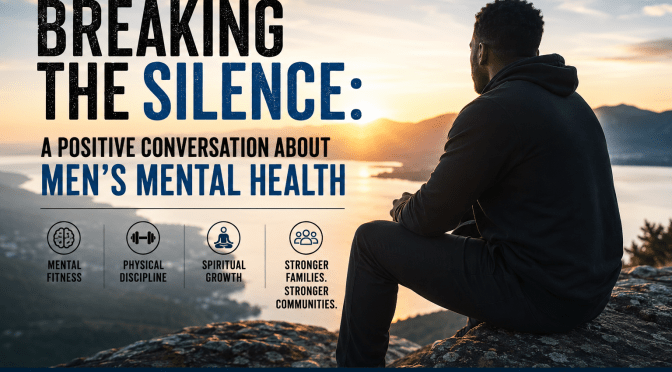
Breaking the Silence: A Positive Conversation About Men’s Mental Health

There are conversations men need to have that too many of us have avoided for too long. Men’s mental health is one of them.

For generations, men have been taught to carry weight quietly. We have been told to provide, protect, lead, endure, and keep moving no matter what is happening inside of us. There is honor in responsibility. There is dignity in discipline. There is strength in perseverance. But there is also danger when a man believes he must suffer silently in order to be considered strong.

I believe it is time to have a better conversation.

Men’s mental health is not a sign of weakness. It is not an excuse. It is not a trend. It is not something we should only talk about after crisis strikes. Men’s mental health is a foundation. It affects how we think, how we lead, how we love, how we serve, how we parent, how we work, how we worship, and how we show up for the people who depend on us.

When I talk about men becoming healthier, I am not talking about men becoming softer, less responsible, or less disciplined. I am talking about men becoming more whole. I am talking about men developing the spiritual, mental, and physical fitness needed to function at optimal levels for their families, their communities, and their purpose.

A man who is healthy internally is better equipped to lead externally.

Why Men’s Mental Health Matters

Men’s mental health matters because men matter.

That statement may sound simple, but it needs to be said clearly. Men are fathers, husbands, sons, brothers, mentors, coaches, pastors, business owners, employees, protectors, leaders, and servants. The condition of a man’s mind and spirit does not remain isolated inside him. It affects everyone connected to him.

If a man is angry, disconnected, exhausted, anxious, bitter, or quietly defeated, that emotional weight often spills into his home, his workplace, and his community. He may not intend to hurt anyone. He may even believe he is doing the right thing by pushing through. But unaddressed pressure has a way of coming out.

Sometimes it comes out as irritability. Sometimes it comes out as isolation. Sometimes it comes out as control. Sometimes it comes out as addiction, overworking, emotional distance, or destructive decision-making.

This is why men’s mental health cannot be treated like a private issue that has no public consequence. Healthy men help build healthy homes. Healthy homes help build healthy communities. Healthy communities help build a stronger society.

When men are mentally clear, spiritually grounded, and physically disciplined, they become more present, patient, and purposeful. They make better decisions. They listen more carefully. They lead with greater humility. They respond instead of react. They become the kind of men their families can trust and their communities can count on.

The Weight Men Carry in Silence

One of the biggest challenges men face is the pressure to appear fine even when they are not.

Many men wake up every day carrying financial pressure, family pressure, spiritual pressure, career pressure, physical pressure, and emotional pressure. They may feel responsible for everyone else while feeling unsure of where to take their own pain.

A man can be surrounded by people and still feel alone. He can have a family, a job, a platform, a ministry, or a mission and still feel like no one truly sees what he is carrying. He may be the one everyone calls when something goes wrong, yet he may not know who to call when he is the one struggling.

That kind of silence can become heavy.

I believe one of the most dangerous lies a man can believe is that he must handle everything by himself. Independence has value, but isolation is dangerous. Self-control is necessary, but emotional suppression is not the same as strength. There is a difference between being steady and pretending nothing affects you.

Real strength requires honesty.

A man must be able to look himself in the mirror and ask, “How am I really doing?” Not how do I appear to be doing. Not how do people assume I am doing. Not how do I want people to think I am doing. But how am I really doing?

That question can change a man’s life.

Mental Health Is Maintenance, Not Weakness

I look at mental health the same way I look at physical fitness. You do not work out once and expect to stay strong forever. You do not eat one healthy meal and expect your body to operate at its best for the rest of your life. You do not pray once, reflect once, or rest once and assume your spirit and mind never need attention again.

Health requires maintenance.

Mental health is mental maintenance. It is the daily work of paying attention to thoughts, emotions, stress, habits, relationships, and purpose. It is learning how to process life instead of simply reacting to it.

As men, we often respect physical strength because we can see it. We can measure it. We can track progress in the gym, on the scale, or through performance. But mental strength is often quieter. It looks like patience. It looks like clarity. It looks like self-control. It looks like forgiveness. It looks like asking for help before things fall apart. It looks like having the discipline to rest instead of running yourself into the ground.

A man who takes care of his mental health is not weak. He is responsible.

He understands that his family needs more than his income. They need his presence. They need his peace. They need his wisdom. They need his emotional maturity. They need his ability to lead without allowing stress, fear, or frustration to control the atmosphere of the home.

The Three Pillars of a Healthier Man

I believe a man functions best when he pays attention to three essential areas: spiritual fitness, mental fitness, and physical fitness.

These three areas are connected. When one is neglected, the others often suffer. When a man is spiritually dry, his mind can become unstable. When his mind is overwhelmed, his body can begin to break down. When his body is undisciplined, his thoughts and emotions can become harder to manage.

A healthier man does not separate these areas. He strengthens them together.

Spiritual Fitness

Spiritual fitness gives a man foundation.

For me, spiritual health means staying connected to God, purpose, truth, humility, and conviction. It means understanding that I am not just here to survive. I am here to serve. I am here to grow. I am here to become the man I was created to be.

A spiritually grounded man does not have to be perfect. He simply has to be willing to surrender pride, seek wisdom, and walk with purpose. Prayer, scripture, reflection, worship, gratitude, and repentance all help a man stay aligned.

When a man loses spiritual alignment, he can begin chasing things that never satisfy him. He may chase status, money, attention, control, pleasure, or approval, only to realize that none of those things can give him peace.

Spiritual fitness reminds a man who he is, whose he is, and why his life matters.

Mental Fitness

Mental fitness is the discipline of managing the inner life.

This includes thoughts, emotions, stress, perspective, decision-making, and self-awareness. A mentally fit man does not ignore his emotions. He learns how to understand them. He does not allow every feeling to dictate his actions. He learns how to respond with wisdom.

Mental fitness requires honesty. It requires a man to recognize when he is becoming overwhelmed, bitter, anxious, distracted, or disconnected. It requires him to stop pretending that being busy means being healthy.

A man can be productive and still be unhealthy. He can be successful and still be empty. He can be respected publicly and still be struggling privately.

Mental fitness helps a man become whole from the inside out.

Physical Fitness

Physical fitness matters because the body affects the mind.

When I take care of my body, I think more clearly. I manage stress better. I sleep better. I have more energy. I become more disciplined. Physical fitness does not mean every man has to look the same or train the same. It means every man should respect the body he has been given.

Movement, strength training, walking, stretching, proper sleep, hydration, and better nutrition are not just physical habits. They support mental and emotional health as well.

A man who is physically disciplined often develops confidence that carries into other areas of life. He learns consistency. He learns patience. He learns that growth takes time. He learns how to keep showing up even when motivation is low.

That lesson matters far beyond the gym.

How Men’s Mental Health Impacts the Family

A man’s mental health affects the atmosphere of his home.

When I am healthy, I am more patient. I listen better. I am slower to anger. I am quicker to apologize. I am more present. I am more consistent. I can lead without dominating. I can correct without crushing. I can love without making people feel like they have to earn my peace.

But when I neglect my mental health, my family can feel it. Stress can become sharp words. Exhaustion can become emotional distance. Pressure can become irritability. Fear can become control. Unprocessed pain can become silence.

That is a sobering truth, but it is also empowering.

It means that when a man chooses healing, his family benefits. When he chooses discipline, his family benefits. When he chooses counseling, accountability, prayer, rest, and growth, his family benefits. His children see a healthier example of manhood. His spouse or partner experiences greater emotional safety. The home becomes more peaceful because the man is no longer allowing unresolved internal battles to set the tone.

Men must understand that leadership begins with self-leadership. Before I can lead my family well, I must be willing to lead myself well.

How Men’s Mental Health Impacts the Community

Communities need healthy men.

We need men who mentor young men. We need men who show boys what discipline, respect, faith, courage, and emotional maturity look like. We need men who serve without needing applause. We need men who protect without controlling. We need men who speak truth without cruelty. We need men who lead with strength and compassion.

A mentally healthy man becomes an asset to his community. He is more likely to build, serve, teach, guide, and encourage. He is less likely to be ruled by pride, insecurity, bitterness, or anger. He becomes the type of man who can step into difficult situations and bring stability instead of chaos.

This is why men’s mental health is bigger than the individual. When men heal, communities heal. When men grow, younger generations gain better examples. When men become emotionally and spiritually grounded, they help break cycles that may have existed for years.

A healthy man does not just change his own life. He changes the environment around him.

Practical Ways Men Can Strengthen Their Mental Health

Improving mental health does not always require a dramatic life change. Sometimes it starts with small, consistent decisions made every day.

The first step is honesty. A man has to be willing to admit when something is off. He has to stop minimizing everything. He has to stop saying “I’m good” when he knows he is not. He has to stop treating exhaustion, anger, isolation, and emotional numbness like normal parts of manhood.

The second step is structure. Men need healthy rhythms. We need time to pray, think, move, rest, work, connect, and recover. Without structure, life can become reactive. We move from one demand to the next without ever checking the condition of our soul.

The third step is connection. Every man needs people he can talk to honestly. Not just people who laugh with him, work with him, or watch sports with him. He needs people who can ask deeper questions and hold him accountable.

The fourth step is action. Awareness matters, but action creates change. Make the appointment. Take the walk. Join the group. Call the brother. Start the routine. Open the Bible. Write down the thoughts. Apologize. Set the boundary. Get help.

Healing does not happen by accident. Growth requires participation.

A Better Definition of Strength

We need to redefine strength for men in a healthier way.

Strength is not pretending you never hurt. Strength is facing what hurts and refusing to let it rule you.

Strength is not silence. Strength is knowing when to speak.

Strength is not isolation. Strength is having the humility to receive support.

Strength is not anger. Strength is self-control.

Strength is not dominance. Strength is responsibility.

Strength is not perfection. Strength is growth.

The world does not need men who pretend to have no weaknesses. The world needs men who are willing to mature. Families do not need emotionally absent providers. They need present, grounded, loving, disciplined men. Communities do not need men who are driven by ego. They need men who are anchored in purpose.

A better standard of manhood is possible, but it requires men to do the inner work.

Final Thoughts: Breaking the Silence for the Next Generation

I believe we are living in a time when men must become more intentional about their health than ever before. Not just physical health. Not just financial health. Mental, spiritual, and emotional health as well.

We cannot afford to keep ignoring what is happening inside men. We cannot keep telling men to tough it out while families, communities, and future generations deal with the consequences of unaddressed pain. We need to create space for honest conversations without removing responsibility. We need to encourage men to seek help without shame. We need to remind men that healing is not weakness. Healing is wisdom.

My challenge to men is simple: take your mental health seriously before life forces you to.

Do not wait until you are burned out. Do not wait until your relationships are damaged. Do not wait until your anger has cost you trust. Do not wait until your body starts warning you. Do not wait until your family feels the weight of what you refused to face.

Start now.

Pray. Reflect. Exercise. Rest. Talk. Listen. Build discipline. Seek counsel. Strengthen your body. Renew your mind. Guard your spirit. Serve your family. Invest in your community.

A healthier man becomes a stronger man. A stronger man becomes a better husband, father, friend, leader, and servant. And when men become healthier, everyone connected to them benefits.

Breaking the silence around men’s mental health is not about creating excuses. It is about creating stronger men.

And stronger men help build a stronger world.

Embrace Boldness in Faith, Family, and Fitness: A Path to Courageous Living

Introduction:

Being bold isn’t just about making big, risky decisions or loud declarations. Boldness is about living courageously, stepping outside of comfort zones, and embracing the fullness of life God has intended for us. Whether it’s standing firm in your Christian faith, leading your family with confidence, or tackling fitness goals head-on, boldness is the key to unlocking your potential and fulfilling your purpose. In this post, I will explore what it means to be bold in faith, family, and fitness and how this boldness can transform your life.


What It Means to Be Bold

Being bold means stepping out of the ordinary and doing what others may hesitate to do. It is the courage to take risks, stand firm in your beliefs, and confidently face challenges. In the context of a Christian life, boldness is rooted in faith and reliance on God. Boldness is not self-centered or reckless; rather, it is about being grounded in truth, guided by integrity, and empowered by God’s strength.

The Bible calls us to be “bold as lions” (Proverbs 28:1), reminding us that we have a God-given right to live courageously. This type of boldness is not about seeking glory or self-promotion but about acting with conviction in the face of uncertainty. Boldness encourages us to speak the truth, stand firm in faith, and take steps toward fulfilling God’s purpose for our lives.

As Virgil once said, “Fortune favors the bold.” But as believers, we recognize that true fortune is found not in wealth or fame, but in living a life that reflects God’s will. Whether in faith, family, or fitness, boldness equips us to break through barriers and step into the fullness of what God has planned for us.


Boldness in Christian Faith

Standing Firm in Your Faith

Living boldly in your Christian faith means standing firm in a world that constantly challenges and tests your values. Today, more than ever, being a Christian requires boldness. Society may often encourage compromise, but God calls us to stand strong in His truth. As Joshua 1:9 reminds us: “Be strong and courageous. Do not be afraid; do not be discouraged, for the Lord your God will be with you wherever you go.”

Boldness in faith requires trusting that God is with you, even when the world feels against you. Whether it’s at work, in social circles, or even within family dynamics, standing boldly in your faith means not backing down from your beliefs, even when it’s difficult or unpopular.

Proclaiming Your Faith Without Fear

Another aspect of boldness in faith is sharing the gospel without fear or hesitation. Too often, Christians shy away from opportunities to share their faith because of fear of judgment or rejection. Yet, Scripture calls us to boldly proclaim the Good News to the world. Romans 1:16 states, “For I am not ashamed of the gospel, because it is the power of God that brings salvation to everyone who believes.”

Boldness enables you to share the gospel confidently, even when it seems intimidating. It’s not about being loud or confrontational but rather about living your faith authentically and allowing that faith to shine through your words and actions. When you proclaim your faith with boldness, you allow others to see God at work in your life.

Overcoming Spiritual Challenges Through Boldness

Living a bold Christian life doesn’t mean you won’t face challenges. In fact, living boldly for Christ often invites spiritual opposition. However, boldness gives you the strength to persevere through these trials. Ephesians 6:10-11 reminds us to “be strong in the Lord and in his mighty power. Put on the full armor of God, so that you can take your stand against the devil’s schemes.”

When you are bold in your faith, you trust that God will equip you to overcome any obstacles that come your way. Whether it’s dealing with doubt, persecution, or temptation, boldness helps you stay anchored in God’s truth. When faced with trials, remember that God is with you every step of the way, empowering you to endure and thrive.


Boldness in Family Leadership

Leading Your Family with Bold Conviction

As a leader in your family, you are called to be bold, not passive. Leadership within the family requires conviction, courage, and a willingness to make difficult decisions for the sake of your loved ones. The Bible teaches us that men and women alike are called to lead their families in love, truth, and service. Ephesians 6:4 speaks to parents specifically: “Fathers, do not exasperate your children; instead, bring them up in the training and instruction of the Lord.”

Being bold in family leadership doesn’t mean being harsh or overbearing; it means setting a godly example that your family can follow. Bold leadership in the home involves standing firm in your values, teaching your children about God, and making decisions that prioritize the spiritual and emotional well-being of your family. When you lead with boldness, you create a home that reflects God’s love and grace.

Making Tough Decisions with Courage

Boldness is especially important when it comes to making difficult decisions for your family. Whether it’s choosing a school, setting boundaries with extended family, or navigating life’s many challenges, boldness gives you the courage to make choices that align with your values and beliefs. These decisions are not always easy, but they are necessary for leading a healthy, spiritually grounded family.

The bold leader is one who, in partnership with God, discerns what is best for their family, even when it’s hard or unpopular. Trust that God will give you the wisdom to make the right decisions and the strength to stand by them. Remember, leadership is about serving others with love and integrity, and boldness equips you to do just that.

Boldness in Serving Your Community

Bold family leadership doesn’t stop at the front door of your home. It extends into your community. As Christians, we are called to serve others, and doing so requires a certain level of boldness. Boldness in service means stepping out of your comfort zone to meet the needs of others, whether that’s through volunteering at church, helping neighbors in need, or simply being a positive influence in your community.

When you lead your family with boldness, you inspire them to serve others courageously as well. A family that boldly serves God and others is a powerful testimony to His grace and love. In a world that is often divided and disconnected, your bold service can be a beacon of hope and unity.

Boldness in Fitness and Health

The Power of Boldness in Achieving Fitness Goals

When we think of boldness, it’s easy to picture spiritual or emotional courage, but boldness is just as crucial in our physical lives. To achieve fitness goals, whether it’s losing weight, building muscle, or maintaining a healthy lifestyle, you need to approach it with a bold mindset. Boldness pushes you to go further when you feel like giving up, to set higher goals when you’ve reached a plateau, and to keep moving forward even when the progress is slow.

Boldness in fitness starts with the decision to change. It takes courage to break unhealthy habits and start a new routine, especially when it feels overwhelming. But just like with faith, boldness in fitness is rewarded with growth, progress, and strength. When you take bold steps towards your fitness goals, you unlock the potential to live a healthier, happier life that allows you to serve God and others with energy and vitality.

Staying Consistent in Fitness Through Mental Toughness

Boldness in fitness isn’t just about the physical aspect; it’s also deeply connected to mental strength. Mental toughness is the foundation of consistency, which is essential for long-term fitness success. It’s easy to start a workout routine when you’re feeling motivated, but the real test of boldness comes on the days when motivation is low, and excuses are high.

Mental boldness helps you push past the barriers of procrastination, self-doubt, and fatigue. It reminds you of your “why”—whether it’s taking care of your body to serve your family, to honor God, or to achieve personal goals. Staying consistent requires a bold commitment to prioritize your health, even when life gets busy or challenging.

Aligning Physical Fitness with Your Spiritual Walk

Physical fitness doesn’t just benefit the body; it also enhances your spiritual life. The Bible tells us that our bodies are temples of the Holy Spirit (1 Corinthians 6:19-20), and caring for them is a way of honoring God. Being bold in fitness means recognizing that your physical health is a key part of your overall well-being, which includes your ability to serve others and fulfill God’s purpose.

By aligning your fitness journey with your spiritual walk, you can create a holistic approach to health. Boldness in this area means making time for exercise, nutrition, and rest, knowing that these actions not only benefit your body but also equip you for the good works God has prepared for you. Physical boldness supports spiritual boldness, giving you the strength and endurance to carry out your calling.


Building a Routine for Bold Living

Making Boldness a Daily Practice

Boldness, like any habit, needs to be nurtured and practiced daily. It’s not just about making one bold decision; it’s about choosing to live courageously in all areas of your life, day after day. To make boldness a daily practice, you need to incorporate it into your routines—whether it’s in your spiritual life, your family life, or your fitness goals.

Start by identifying areas where you feel hesitant or fearful and ask God to give you the strength to be bold. This might mean speaking up more in your workplace, stepping out in faith to start a new project, or being more consistent with your workouts. Whatever it is, the more you practice boldness, the more natural it becomes.

A daily routine that includes bold actions will gradually transform your mindset and your life. You’ll find yourself taking on new challenges with confidence, facing obstacles with faith, and pushing past limitations with determination.

Prayer as a Tool for Developing Boldness

Prayer is one of the most powerful tools for developing boldness. When we pray, we invite God into our fears, uncertainties, and challenges, and ask Him to give us the courage to move forward. Boldness in prayer means not holding back—asking God for big things, trusting Him with your deepest desires, and seeking His guidance in every aspect of your life.

Bold prayer is also about persistence. It’s not just about praying once and hoping for the best; it’s about continually bringing your needs, goals, and struggles before God, knowing that He hears you and will answer in His perfect timing. When you pray with boldness, you align your heart with God’s will, and you allow Him to work through you in powerful ways.


The Rewards of Boldness

The Spiritual Rewards of Being Bold

When you live boldly in your faith, you experience spiritual rewards that go beyond the temporary successes of this world. Boldness in faith deepens your relationship with God, opens doors to new opportunities, and strengthens your trust in His plan. The Bible is filled with stories of men and women who were rewarded for their boldness—think of David, who boldly faced Goliath, or Esther, who courageously risked her life to save her people.

Boldness leads to spiritual growth because it forces you to rely on God rather than your own strength. Every time you take a bold step in faith, you grow closer to God and experience the joy of walking in His purpose. Boldness in faith also attracts blessings, not just in terms of material provision, but in peace, wisdom, and divine favor.

How Boldness Transforms Your Family

The rewards of boldness extend to your family life as well. When you lead your family with courage and conviction, you create an environment where love, trust, and faith can flourish. Children learn by example, and when they see you living boldly—whether it’s in your faith, your work, or your health—they are inspired to do the same.

Boldness transforms families by fostering open communication, strong leadership, and a sense of purpose. It also creates a foundation of stability and security, as family members know they can trust you to make wise, courageous decisions that align with God’s will. When you live boldly for your family, you build a legacy of faith and strength that will impact future generations.

Boldness in Fitness Leads to a Healthier, Happier Life

Finally, boldness in fitness leads to both physical and emotional rewards. When you commit to taking care of your body, you experience increased energy, improved mental clarity, and a greater sense of accomplishment. Achieving fitness goals through bold determination also boosts your confidence, which can spill over into other areas of your life, such as work, relationships, and faith.

But beyond the physical benefits, boldness in fitness teaches you discipline, resilience, and perseverance. These traits are invaluable in every aspect of life, helping you face challenges with strength and optimism. A healthy, bold lifestyle not only improves your quality of life but also equips you to serve others and fulfill God’s purpose with vigor and joy.

Overcoming Fear and Doubt

Conquering Fear Through Faith

Fear is one of the greatest obstacles to boldness. It paralyzes, discourages, and makes you question your decisions. However, as believers, we know that God has not given us a spirit of fear but of power, love, and a sound mind (2 Timothy 1:7). Boldness in faith allows us to face fear head-on, knowing that we are not alone.

Conquering fear requires trusting that God is bigger than any challenge you face. It’s about stepping out even when the path ahead seems uncertain, trusting that God will guide your steps. Fear may never fully go away, but boldness enables you to move forward in spite of it. Whether it’s speaking up in a difficult conversation, taking on a new challenge, or stepping into an unknown future, boldness in faith gives you the confidence to overcome fear and press on.

Building Confidence in Boldness

Boldness is closely tied to confidence—not confidence in yourself, but in the God who equips you. Building confidence in boldness is a process that grows with experience. The more you step out in faith, the more you see God’s faithfulness, and the more confident you become in His ability to sustain you.

Each bold step you take strengthens your spiritual muscles, much like exercising builds physical strength. Over time, you develop a deep-seated trust that no matter what happens, God is with you. Confidence in boldness doesn’t mean that fear disappears, but it does mean that fear loses its power over you. With each act of boldness, you gain the assurance that you can handle whatever comes your way because God is with you.

Real-Life Examples of Boldness in Action

Boldness is not just theoretical—it’s something we see lived out in the lives of believers throughout history. From the early apostles who boldly preached the gospel in the face of persecution to modern-day Christians who stand firm in their faith despite societal pressures, boldness has always been at the heart of Christian living.

Look at figures like the Apostle Paul, who faced imprisonment and beatings but continued to proclaim the message of Christ with boldness. Or take the example of modern Christian leaders who courageously stand for truth and lead with integrity in their families and communities. These real-life examples show us that boldness is not only possible but powerful when rooted in faith.


Boldness is a Gift from God

Understanding That Boldness is a God-Given Trait

Boldness is not something we have to manufacture on our own. It’s a gift from God, available to every believer. When we step into our God-given boldness, we tap into a supernatural strength that allows us to do things we never thought possible. This is the boldness that Peter and John displayed in Acts 4:13 when others saw their courage and realized they had been with Jesus. Their boldness came not from their own abilities, but from their relationship with Christ.

God has called each of us to be bold, whether it’s in our faith, our family, or our health. When we rely on God’s strength rather than our own, boldness becomes a natural outflow of our relationship with Him. It is through His power that we can confidently face challenges, make difficult decisions, and lead with courage.

Nurturing and Growing in Boldness

Boldness, like any other gift, needs to be nurtured. It grows as we lean into our faith and trust God in every area of our lives. One way to nurture boldness is through regular prayer, asking God to increase our courage and give us the strength to act according to His will.

Another way to grow in boldness is through immersion in God’s Word. The Bible is filled with examples of bold faith, and by studying these stories, we gain insight and inspiration for our own lives. The more we know about God’s promises and His character, the bolder we become in stepping out and trusting Him.

Finally, surrounding ourselves with a community of believers can help foster boldness. When we see others living boldly, it encourages us to do the same. Fellowship, accountability, and mutual encouragement all play a vital role in helping us grow in boldness and live the courageous life God has called us to.


Encouragement for Bold Living

Encouraging Yourself and Others to Be Bold

Living boldly is not always easy, but it’s always worth it. When you encourage yourself to be bold, you step into a life of greater purpose, impact, and fulfillment. One way to build up your boldness is by regularly reminding yourself of God’s faithfulness. Reflect on times in your life when God came through for you, and let those memories fuel your courage for the future.

In addition to encouraging yourself, it’s important to encourage others to live boldly as well. When we support each other in our faith, family leadership, and fitness goals, we create a community of bold believers who can make a significant impact. Whether it’s through words of encouragement, acts of service, or simply being there for someone in their time of need, your boldness can inspire others to step into their God-given courage.

Practical Steps to Encourage Boldness

Encouraging boldness isn’t just about big, life-changing decisions—it’s about the small, daily choices that shape your life. Here are a few practical steps to encourage boldness in your daily walk:

  1. Set Bold Goals: Whether it’s in your faith, family, or fitness, set goals that stretch you beyond your comfort zone. Bold goals require bold action, and they will push you to grow in ways you never imagined.
  2. Embrace Challenges: Instead of avoiding difficult situations, face them with confidence. Remember that every challenge is an opportunity to grow in boldness and reliance on God.
  3. Speak Life: Use your words to speak boldly and positively about yourself, others, and your circumstances. Speak truth, encouragement, and hope, even in difficult situations.
  4. Take Action: Boldness requires action. Whether it’s sharing your faith with someone, taking a leadership role in your family, or pushing yourself in your fitness routine, boldness is demonstrated through what you do.
  5. Trust God: Above all, trust that God is with you. When you step out in boldness, you can be confident that God will guide and provide for you every step of the way.

Conclusion:

Boldness is a powerful force that transforms lives. Whether it’s in your faith, your family, or your fitness journey, embracing boldness equips you to live courageously, face challenges with confidence, and fulfill your God-given purpose. As you step out in faith, trust that God will provide the strength, guidance, and courage you need to live boldly for Him.

Boldness is not just about the big moments; it’s about the daily decisions to trust God, lead your family with conviction, and take care of your body as a temple of the Holy Spirit. With each bold step you take, you move closer to the life God has designed for you—a life of purpose, passion, and power.

So, be bold today—bold in your faith, bold in leading your family, and bold in pursuing your health and fitness goals. God has called you to a life of courage and strength, and with Him, all things are possible.

Frequently Asked Questions (FAQs)

1. How can I be bold in my Christian faith when I feel uncertain or afraid?

Boldness in faith comes from trusting God, even in the face of fear and uncertainty. Remember, it’s okay to feel afraid, but don’t let fear stop you from stepping out in faith. Pray for courage, meditate on God’s promises, and surround yourself with a supportive Christian community. Over time, your confidence in God’s plan for your life will help you overcome fear.

2. What are some practical ways to lead my family with boldness?

Bold leadership in your family involves setting a strong, godly example through your actions, words, and decisions. This can include teaching your children about faith, making courageous decisions for the well-being of your family, and leading with love and integrity. It’s important to pray for wisdom, communicate openly with your family, and always seek God’s guidance in your leadership.

3. How can boldness help me achieve my fitness goals?

Boldness in fitness means pushing past physical and mental limits, staying consistent even when it’s hard, and setting challenging goals for yourself. By adopting a bold mindset, you can break through barriers like self-doubt or procrastination and stay committed to your health. Additionally, aligning your fitness journey with your spiritual walk can provide greater motivation, knowing that taking care of your body honors God.

4. How do I develop boldness in everyday life?

Developing boldness starts with small steps. Begin by challenging yourself in areas where you typically feel hesitant—whether it’s speaking up at work, sharing your faith with a friend, or pushing yourself in your workout routine. Over time, these small acts of boldness build confidence and prepare you for larger, more challenging steps. Prayer, reflection, and consistent action are key to growing in boldness.

5. Can boldness be cultivated through prayer?

Absolutely! Prayer is one of the most powerful ways to develop boldness. When you pray, you invite God to work in your heart, strengthen your spirit, and empower you with courage. Bold prayers—those that ask for big things, trust God with difficult situations, and seek His will—are essential for nurturing boldness. Through prayer, you gain the confidence to live boldly, knowing that God is with you.